AI Music Videos and Copyright: What Creators Should Know in 2026
Learn how AI music video copyright and licensing work in 2026, and how creators can protect their rights with Soundverse Trace.
AI Music Videos and Copyright: What Creators Should Know
Artificial intelligence is revolutionizing every aspect of creative production—from writing scripts and composing melodies to editing videos and building entire visual narratives. In 2026, AI-generated music videos have become a mainstream medium for independent creators, film producers, and musicians. However, as this technology advances, one critical question has moved to the forefront: who owns the copyrights when AI creates part or all of your music video?
This article unpacks everything independent creators, musicians, and video producers should understand about AI music video copyright, AI video licensing, and AI-generated music rights in 2026. We'll also show how tools like Soundverse Trace help creators prevent copyright infringement, verify attribution, and preserve ownership throughout the production lifecycle.
Why is Copyright So Important for AI Music Videos in 2026?
As AI-generated content continues to flood platforms such as YouTube, TikTok, and Instagram Reels, disputes about creative ownership have become increasingly common. The key issue lies in distinguishing between human creativity and machine generation. When an AI model helps you compose a song or generate visuals, the resulting output may involve datasets whose original creators deserve credit or royalties. As noted in Music Copyright in the Gen AI Age: Where Are We Now?, intellectual property debates have intensified around dataset origin and creative overlap.
The 2025 updates to international copyright law for creators clarified certain points: AI outputs without substantial human input may fall outside traditional copyright protection. As discussed in Copyright and Artificial Intelligence | U.S. Copyright Office, this determination plays a major role in authorship claims. However, if a creator provides creative direction—selecting prompts, curating visuals, editing tracks, and determining the final output—they can claim some degree of ownership. This makes AI content ownership a blended concept, combining human direction with machine generation.
What Are the Core Copyright Challenges in AI Music Video Production?
AI-assisted video production integrates multiple layers of creative content—music, visuals, and text. Each component may involve its own unique licensing challenge. Let's break them down:
- Music Ownership: If an AI audio generator uses trained models that include copyrighted songs, the output could contain recognizable segments subject to licensing conflicts.
- Visual Licensing: AI-generated visuals sometimes borrow styles or details from existing artwork or video datasets. Without transparency, it’s difficult to identify whether any copyrighted visuals were used.
- Voice and Vocal Rights: Many AI voice models replicate human voices. Some jurisdictions now require consent and licensing agreements when using voice models to protect against unauthorized likeness usage.
By 2026, creators are expected to ensure due diligence across every layer of production — from the licensed background track to the AI renderer used for video synthesis.
How Does AI Video Licensing Work in 2026?
AI video licensing is now more standardized than just two years ago. Licensing frameworks allow both creators and data owners to track how AI assets are reused in derivative works. Typically, there are three license models:
- Open AI Licensing: AI tools that clearly declare all dataset sources and allow users to create derivative works for commercial purposes, often under Creative Commons-like guidelines.
- Private Dataset Licensing: Proprietary AI platforms that grant creators limited use licenses for generated content, where the model’s owner retains some rights.
- Royalty-Linked Licensing: Emerging under ethical AI regimes such as Soundverse’s Content Partner Program, this model ensures rights-holders receive recurring royalties when their data is used in AI training or production.
Creators must understand the licensing model behind every AI video or music tool they use to avoid future disputes or takedowns.
Who Owns AI-Generated Music Rights?
In most regions, authorship still hinges on human involvement. The more direct creative control a human exercises, the higher the likelihood that intellectual property rights apply. For example:
- If you use an AI model to render instrumental tracks but select, structure, and mix the composition manually, you can claim copyright ownership over the final output.
- If the AI system operates autonomously, with minimal human direction, i.e., fully generative with no meaningful curation, then most legal systems classify the output as public domain or machine-generated content without exclusive rights.
Therefore, documenting your process—prompts used, editing choices made, and revisions performed—can demonstrate creative authorship should any ownership challenge arise. This approach aligns with interpretations outlined in AI-Generated Content and Copyright Law: What We Know.
You can also dive deeper into how AI generators are transforming music across genres in this article on AI music in film and television or explore creative uses in music industry trends. For a deeper dive, watch our guide on creating Deep House music, and the next tutorial on how to make music.
How to Make AI Music Videos Legally Safe
The key to a legally secure project lies in traceability and transparency. Follow these principles:
- Check AI Tool Licensing: Always verify that the AI tool you’re using has proper dataset consent and usage rights. Many credible services now include datasets from licensed audio sources.
- Preserve Attribution: Even if an AI model combines multiple datasets, ensure it provides acknowledgment metadata or credits for each source.
- Use Rights-Tracking Tools: Tools like Soundverse Trace automate detection of copyrighted segments and preserve licensing metadata.
- Avoid Mixing Unlicensed Materials: If importing clips, music stems, or generated elements, avoid mixing assets from different platforms with incompatible licenses.
- Export with Rights Metadata: Embed licensing data in your final export file to streamline verification in case of disputes.
If you’re new to AI-based composition, you can also reference this guide on creating AI-generated music or the feature on AI Magic Tools. You can further explore system functionality with our “Explore” tab tutorial.
What Happens If You Violate AI Music Video Copyrights?
Copyright violations in 2026 are handled more stringently by streaming platforms and rights agencies. Automated content ID systems now use sophisticated AI detection to flag generative overlaps in melody, rhythm, and visual style. A flagged AI music video can face immediate takedown requests, revenue freezes, or compulsory royalty redirection toward the original data owner. Case analyses like Top Noteworthy Copyright Stories from January 2026 show the growing legal attention on these issues.
The most common missteps occur when creators assume that simply using an AI generator grants them full ownership. In reality, your rights depend on the AI platform’s dataset transparency, your creative involvement, and local jurisdictional copyright rules.
How to Make AI Music Videos with Soundverse Trace
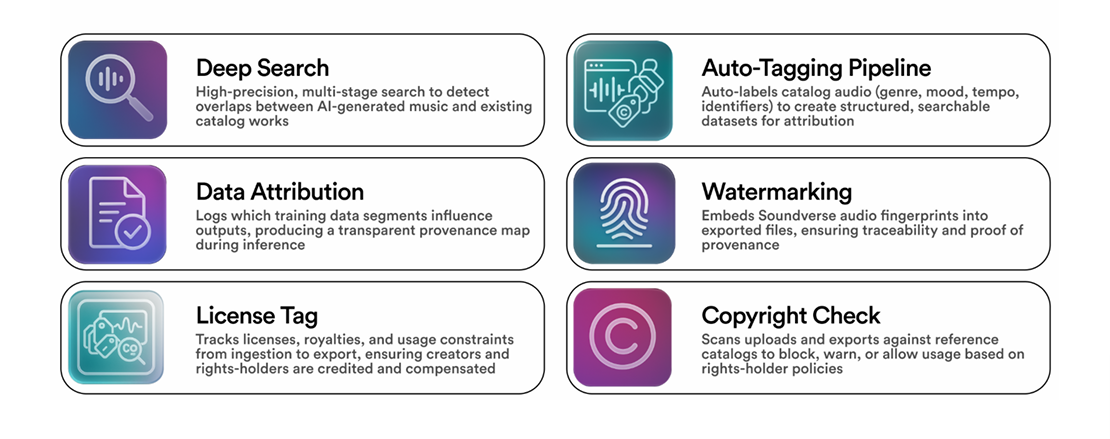
Soundverse Trace is a comprehensive trust layer designed for the AI music ecosystem in 2026. It ensures that creators can safely produce, distribute, and monetize AI-generated content without copyright risks.
What Is Soundverse Trace?
Soundverse Trace embeds attribution, deep search, and rights protection throughout the music creation process—from dataset ingestion to final export. Its asynchronous workflow allows creators to upload or record their audio, then process and receive detailed analysis reports.
Core Capabilities:
- Deep Search (1:1 / 1:N Scanning): Detects identical or similar segments between your composition and global catalogs, helping identify overlaps before publishing.
- Data Attribution: Tracks and logs which training datasets may have influenced your final output, ensuring transparent ownership lineage.
- Audio Watermarking: Embeds inaudible fingerprints into the output audio to protect provenance and confirm authorship.
- License Tagging: Attaches rights metadata from start to finish—avoiding metadata loss during exporting or distribution.
Key Use Cases:
- Preventing inadvertent copyright infringement.
- Tracking catalog usage for royalty automation.
- Verifying provenance of AI-generated or mixed compositions.
- Automating fair compensation or takedowns for data owners participating in the ecosystem.
When combined with the Ethical AI Music Framework and Content Partner Program, Soundverse Trace provides an end-to-end structure that rewards artists fairly while maintaining creative freedom in AI production.
For creators exploring AI-assisted projects, the system also complements features like Soundverse Assistant and the highly flexible Soundverse Arrangement Studio, giving a unified environment for making and protecting AI-driven music.
Start Creating Copyright-Safe AI Music Today
Avoid copyright hassles and make your next music video legally sound. Generate unique, royalty-free tracks using Soundverse’s advanced AI tools designed for modern creators.
Create Copyright-Free Music Now
Related Articles
- Enhancing YouTube Content with Royalty-Free and Copyright-Free Music Using Soundverse AI: Learn how to use AI-generated royalty-free music to elevate your YouTube videos and stay clear of copyright issues.
- Copyright-Free vs. Royalty-Free Music: What Creators Should Know: Understand the difference between copyright-free and royalty-free music to make informed creative decisions.
- The Role of AI Music in Film and Television: Explore how AI-generated compositions are redefining soundtracks and creative workflows in film and TV.
- Navigating the World of Royalty-Free and Copyright-Free Music Using Soundverse AI: A complete guide to sourcing copyright-safe music for your projects through Soundverse AI.
Here's how to make AI Music with Soundverse
Video Guide
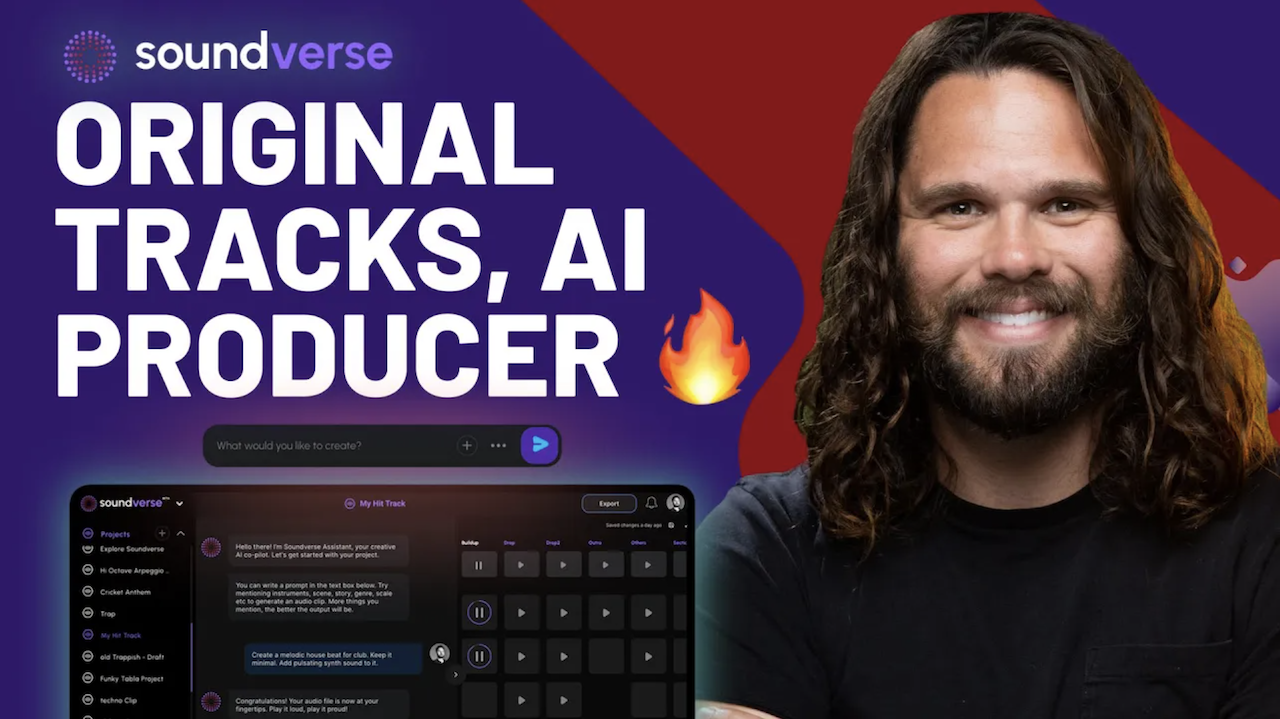
Here’s another long walkthrough of how to use Soundverse AI.
Text Guide
- To know more about AI Magic Tools, check here.
- To know more about Soundverse Assistant, check here.
- To know more about Arrangement Studio, check here.
Soundverse is an AI Assistant that allows content creators and music makers to create original content in a flash using Generative AI.
With the help of Soundverse Assistant and AI Magic Tools, our users get an unfair advantage over other creators to create audio and music content quickly, easily and cheaply.
Soundverse Assistant is your ultimate music companion. You simply speak to the assistant to get your stuff done. The more you speak to it, the more it starts understanding you and your goals.
AI Magic Tools help convert your creative dreams into tangible music and audio. Use AI Magic Tools such as text to music, stem separation, or lyrics generation to realise your content dreams faster.
Soundverse is here to take music production to the next level. We're not just a digital audio workstation (DAW) competing with Ableton or Logic, we're building a completely new paradigm of easy and conversational content creation.
TikTok: https://www.tiktok.com/@soundverse.ai Twitter: https://twitter.com/soundverse_ai Instagram: https://www.instagram.com/soundverse.ai LinkedIn: https://www.linkedin.com/company/soundverseai Youtube: https://www.youtube.com/@SoundverseAI Facebook: https://www.facebook.com/profile.php?id=100095674445607
Join Soundverse for Free and make Viral AI Music
We are constantly building more product experiences. Keep checking our Blog to stay updated about them!
Image Steps: []