AI Music for Multi-Mode Audio Devices: How Adaptable Sound Defines 2026
Explore how AI music technology powers hybrid and transformable audio devices in 2026.
AI Music for Multi-Mode Audio Devices
In 2026, the boundaries between hardware and software have blurred entirely, giving rise to a new generation of multi-mode audio devices powered by AI music technology. These hybrid systems adjust to listening environments, respond to user intent, and deliver transformable audio experiences. From headphones that adapt spatial sound profiles to portable speakers generating mood-based playlists, the era of adaptable sound is reshaping the audio landscape.
What is driving the evolution of multi-mode audio devices in 2026?
The global audio technology industry has matured rapidly since 2024. By mid-2026, audio device manufacturers increasingly integrate AI music technology to redefine user interaction. AI-generated soundscapes are no longer novelties. They are essential in modern devices that shift from personal listening modes to ambient environmental playback. Developers leverage real-time adaptive algorithms to ensure music textures match the listener’s context — whether commuting, gaming, meditating, or working.
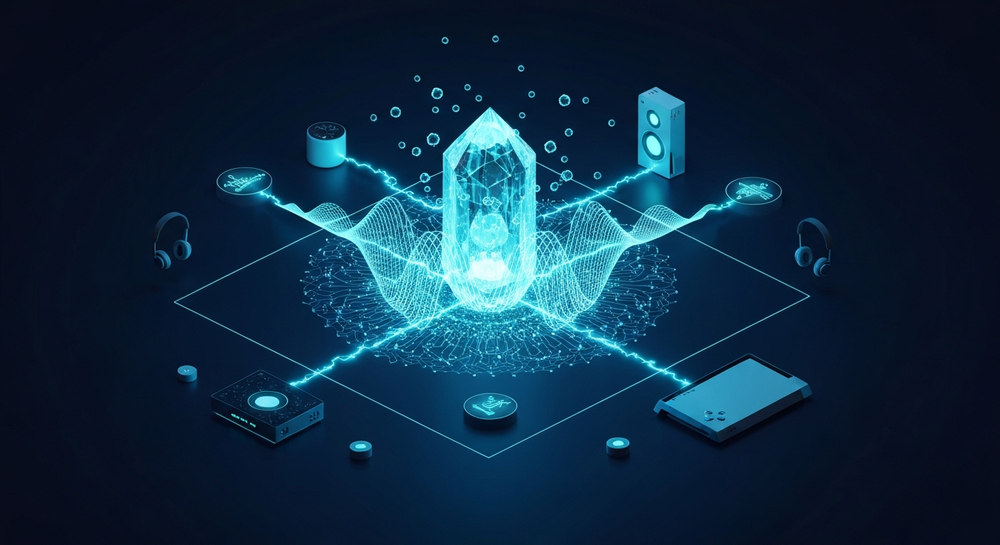
This evolution is powered by several converging factors:
- Edge AI Processing: Compact chips now enable devices to generate or reformat music locally using models trained on millions of sound samples.
- Multi-Mode Architecture: Devices switch between stereo, surround, and immersive spatial sound depending on the activity.
- Transformable Audio AI: Systems identify content type and select ideal sound response automatically.
- Smart Audio Innovation: Products combine voice control, gesture input, and environment sensors to drive seamless transitions.
Brands such as Sony, Bose, and JBL have embraced AI-assisted adaptability, but what distinguishes future-ready platforms in 2026 is their dynamic integration of ambient sound generation rather than static playback. As explored in Headphone Technology In 2026: Immersive Sound And AI Integration, AI enables real-time sound personalization and adaptive noise cancellation, tailoring audio to your hearing profile and environment instantly.
How does AI music technology empower hybrid and transformable devices?
AI music technology introduces a new level of sonic customization. It enables hardware devices to produce, modify, and loop instrumental tracks dynamically, without relying on traditional music libraries. Developers embed AI models capable of generating background music or ambient scores based on contextual data. When a device detects that a user is relaxing, the AI generates smooth meditation soundscapes. For gaming sessions, it might switch to energetic loops optimized for engagement.
This technology is crucial in hybrid device music systems — those capable of switching between listening, broadcasting, and environmental awareness. Such adaptability supports transformable audio AI, designing sound not as a fixed piece but as a living texture responding to mood and activity. AI-generated soundscapes make each interaction distinct, merging functional design with creative innovation.
For instance, smart speakers now integrate text-to-music generators that let users describe the desired ambience: “Create a futuristic lofi beat for working.” The device processes the command, producing a loopable soundtrack tailored to the request. The convenience and personalization offered by these directly enhance engagement metrics for manufacturers and consumer platforms.
For deeper practical insights, watch our Soundverse Tutorial Series - 9. How to Make Music or explore the guide on creating Deep House music to see generative music customization in action.
How Soundverse AI Music Generator enables adaptable sound creation
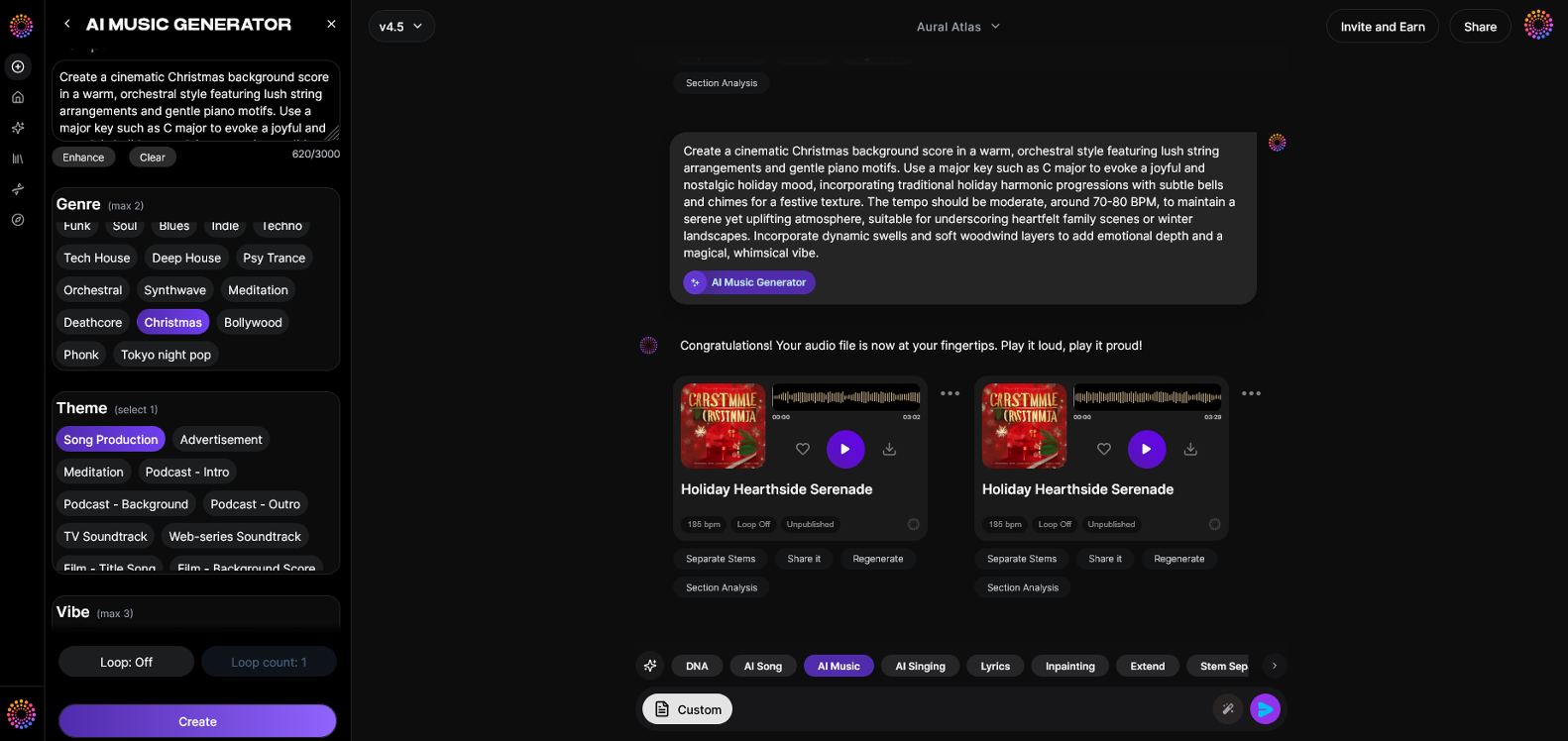
Soundverse’s AI Music Generator represents the central innovation connecting AI music technology with multi-mode functionality. Designed to create fully produced instrumental tracks from text prompts, it is particularly efficient for generating background soundscapes adaptable across devices. The system’s versatility lies in its four essential capabilities:
- Text-to-Music Generation: Users describe the genre, mood, or instrument components; the generator converts these textual cues into finished audio compositions.
- Loop Mode: Perfect for multi-mode devices, Loop Mode ensures seamless repetition and continuity without noticeable breaks.
- Detailed Control: Developers can fine-tune parameters, defining genre, intensity, and instrumental composition.
- Model Versions (V4 and V5): Users select different generation models optimized for sound design precision and style diversity.
These capabilities support use cases like video scoring, game soundtrack creation, meditation tracks, and advertising. For hybrid devices capable of adjusting playback context, having access to instant text-driven audio production radically enhances flexibility.
To understand multi-model creativity deeper, explore how AI generation scales within video and game production through AI-generated music trends. Also, read How Do AI Music Generators Work in 2026? for technical details on text-to-music mechanics.
How does Soundverse integrate across smart audio ecosystems?
Soundverse isn’t confined to a single application. Its ecosystem connects through complementary technologies:
- Soundverse DNA: An artist-trained generation system ensuring original and ethically sourced outputs. DNA allows creators and device developers to embed licensed sonic identities into their products, amplifying brand uniqueness and legal safety.
- Soundverse Agent: A conversational assistant orchestrating complex music workflows using multi-step reasoning, turning natural commands into executable sequences like “generate ambient background, then extend duration.”
- Soundverse API: Enterprise-level integration for manufacturers and app developers. Through this API, companies automate scalable text-to-music generation inside smart speakers or headphones.
Manufacturers implementing these APIs find immediate synergy between hardware and adaptive sound AI. For example, devices can use DNA to render genre-consistent loops while the Agent simplifies user customization in conversational form.
If you’re exploring how Soundverse compares with other AI music generators, visit Mubert alternatives or review Soundraw alternatives for a feature comparison.
For a visual overview, check our Soundverse Tutorial Series - 8. "Explore" Tab, showing multi-mode integration workflows.
What applications benefit most from transformable audio AI?
In 2026, transformable audio AI supports growing markets:
- Gaming Hardware: Real-time loop generation supports game consoles and headsets needing instant adaptive scores.
- Smart Home Systems: Ambient background audio dynamically changes based on sensor-detected activity.
- Wellness Devices: Wearables and meditation tools use AI-generated soundscapes to synchronize with biometrics.
- Automotive Audio: Cars integrate adaptable music responding to driving conditions or user profiles.
- Commercial Installations: Retail spaces create immersive brand environments through variable instrumental tracks.
These applications rely on the consistency and copyright-safe generation system that Soundverse DNA offers. They also make practical use of looped, mood-based instrumental tracks generated through the core Soundverse AI Music Generator models.
For developers refining contextual sound, the tutorial Generate AI music with Soundverse Text-to-Music provides prompt writing patterns to optimize results.
How AI-generated soundscapes are shaping creative pipelines
AI-generated soundscapes redefine content creation workflows. In 2026, instead of sourcing pre-recorded loops, digital sound engineers deploy systems that produce unique tracks matching a device’s real-time needs. The compositional integrity remains professional-grade thanks to model iterations V4 and V5, enabling genre fluid transitions and audio contextualization.
Developers benefit from fewer dependencies on licensed stock libraries, while artists find new monetization paths through the Soundverse DNA licensing structure. This convergence fosters a sustainable balance between creative autonomy and commercial scalability. As explored in music industry trends, adaptive AI generation has become one of the most transformative technologies redefining content accessibility and legal frameworks.
The future of adaptable sound in 2026 and beyond
By late 2026, AI music technology continues merging deeper into multi-mode architectures, giving rise to fully responsive ecosystems. These devices no longer just play songs; they interpret contexts, generate harmonically informed textures, and shape atmospheres dynamically. Smart audio innovation has matured into a new design standard where adaptability drives emotional and social connection.
Manufacturers and producers aiming to build on this wave leverage systems like Soundverse to maintain creative flexibility, ethical boundaries, and design consistency. The ability to instantly turn textual descriptions into genre-specific, loopable compositions gives creative engineers unmatched control.
With transformable audio AI, multi-mode devices are evolving from passive players to active interpreters of sonic expression — a revolution where sound becomes intelligent, connected, and perpetually customized.
Experience the Future of AI Music Creation Today
Transform your multi-mode audio devices into intelligent music generators. Create, remix, and optimize sound instantly using Soundverse’s advanced AI music technology tools.
Related Articles
- How AI-Generated Music Is Transforming the Music Industry — Discover how AI-driven tools are redefining creativity and production across the music landscape.
- AI Music Generator and Human Composers: A Future Together — Explore the evolving collaboration between AI music systems and human creativity in modern composition.
- Soundverse AI Revolutionizing Music Creation for New Age Content Creators — See how Soundverse empowers creators to produce high-quality tracks through adaptive AI music technology.
- The Role of AI Music in Film and Television — Learn how AI music technology is reshaping sound design, scoring, and atmosphere in visual media.
Here's how to make AI Music with Soundverse
Video Guide
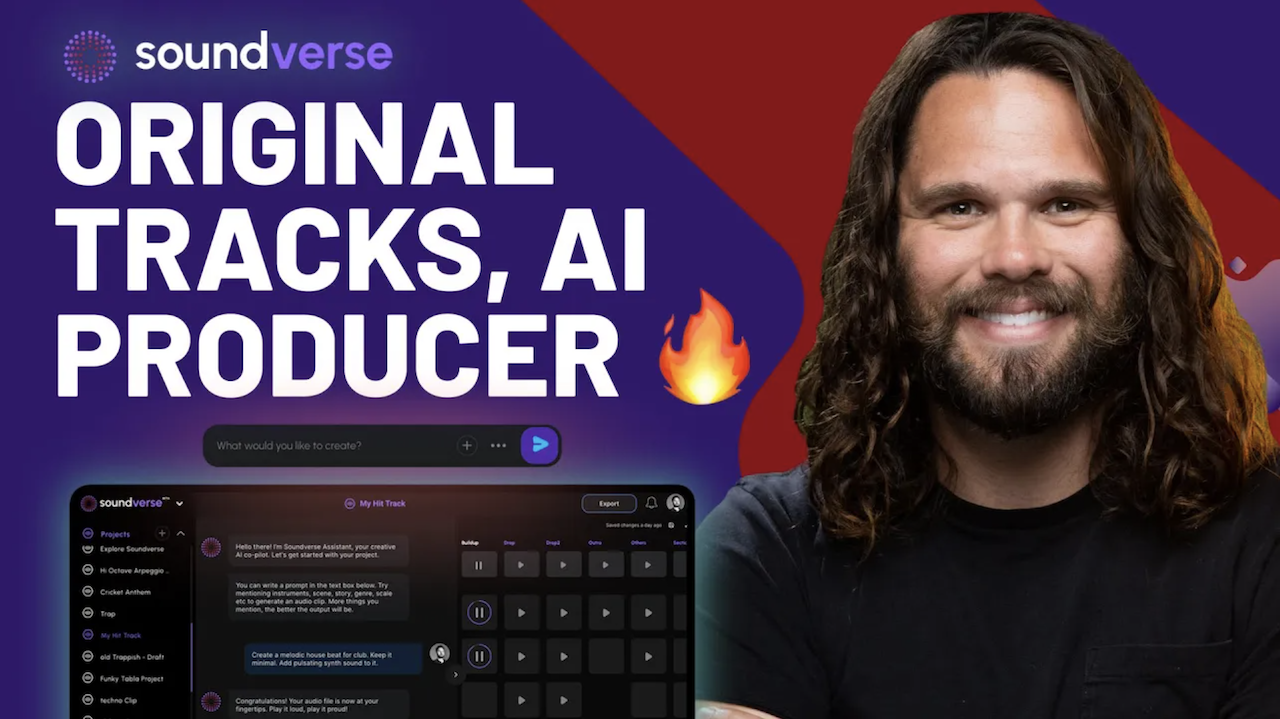
Here’s another long walkthrough of how to use Soundverse AI.
Text Guide
- To know more about AI Magic Tools, check here.
- To know more about Soundverse Assistant, check here.
- To know more about Arrangement Studio, check here.
Soundverse is an AI Assistant that allows content creators and music makers to create original content in a flash using Generative AI. With the help of Soundverse Assistant and AI Magic Tools, our users get an unfair advantage over other creators to create audio and music content quickly, easily and cheaply. Soundverse Assistant is your ultimate music companion. You simply speak to the assistant to get your stuff done. The more you speak to it, the more it starts understanding you and your goals. AI Magic Tools help convert your creative dreams into tangible music and audio. Use AI Magic Tools such as text to music, stem separation, or lyrics generation to realise your content dreams faster. Soundverse is here to take music production to the next level. We're not just a digital audio workstation (DAW) competing with Ableton or Logic, we're building a completely new paradigm of easy and conversational content creation.
TikTok: https://www.tiktok.com/@soundverse.ai
Twitter: https://twitter.com/soundverse_ai
Instagram: https://www.instagram.com/soundverse.ai
LinkedIn: https://www.linkedin.com/company/soundverseai
Youtube: https://www.youtube.com/@SoundverseAI
Facebook: https://www.facebook.com/profile.php?id=100095674445607
Join Soundverse for Free and make Viral AI Music

We are constantly building more product experiences. Keep checking our Blog to stay updated about them!