Why Does AI Struggle With Metal Music?
Explore why AI struggles with metal music and how Soundverse DNA helps overcome genre limitations for heavy music creators.
Why Does AI Struggle With Metal Music?
Artificial intelligence has transformed the music industry, but one genre continues to defy even the most advanced models — metal. In 2026, despite breakthroughs in text-to-music generation and voice modeling, many producers and researchers still notice that AI systems struggle to capture the raw intensity and complex sonic identity of heavy music. The challenge of AI and metal music runs deeper than mere distortion levels or fast tempos; it touches on emotion, structure, rhythm precision, and even the philosophical essence of rebellion that defines the genre.
What makes metal music uniquely difficult for AI?
Metal music poses a unique test for machine creativity because of its density and complexity. Unlike pop or electronic genres, metal heavily relies on human nuance — the subtle imperfections of guitar riffs, the unpredictable phrasing of growls, and the textured dynamics between aggression and control.

From a technical perspective, AI metal problems often arise due to inadequate training data. Most public or commercial datasets lean toward clean, melodic, or mainstream styles. The chaotic energy of metal — especially subgenres like deathcore, djent, or black metal — presents highly varied production styles that resist pattern-based generation. Rhythmic irregularities, unconventional time signatures, and extreme dynamic ranges make it difficult for models to learn consistent production rules.
AI researchers have noted that heavy music AI systems require expanded representations of distortion behaviors, drum resonance, and vocal timbre realism. Without balanced coverage of these aspects, algorithms tend to produce flat, sterile sounding metal imitations.
Why do traditional AI models fail to capture metal's emotional depth?

A critical barrier lies in emotion and intent. Metal expresses anger, rebellion, compassion, and existential exploration through sound design. These emotions depend on subtle cues in tone, speed, and harmony, which typical text-to-music models interpret as technical parameters rather than emotional contexts.
When you instruct an AI generator to create “aggressive metal,” it often exaggerates volume or tempo instead of emotional contour. The outcome can sound machine-like rather than cathartic. This is not simply a data issue—it’s also philosophical. Metal music was historically born from resistance, not conformity. Machine learning systems, by default, seek to conform to learned patterns, whereas metal thrives on deviation.
How do production techniques intensify AI's challenge?
Metal production involves extreme sonic conditions. Consider how guitar distortion interacts with tube amplifiers, microphone placement, and analog mastering chains. These physical characteristics define tonal authenticity. AI models, which learn from digital datasets, often lack exposure to the analog irregularities that create metal’s warmth and grit.
Additionally, drum performances in metal are more expressive and intense than those typically represented in electronic music. Double kicks, blast beats, and nuanced cymbal work are painful for AI to model realistically. Even minor timing inconsistencies, which give metal drumming its human feel, get smoothed out during generation—leading to mechanical patterns instead of organic chaos.
If you compare this to other genres, like EDM or hip-hop, AI systems perform much better because repetition and pattern regularity are easier to learn mathematically. Metal’s genius lies in layering unpredictability — something algorithmic logic struggles to emulate. For a deeper dive, watch our Soundverse Tutorial Series - How to Make Music for insights into creative workflow structuring and genre modeling.
What genre limitations highlight AI's struggle with heavy music?
AI’s genre limitations become especially visible when transitioning between metal subgenres. For example, generating doom metal requires slow tempos and sustained textures, while generating technical thrash demands frantic speeds and precise structure. If an AI model isn’t trained specifically for these nuances, it merges characteristics incorrectly, resulting in sonic confusion.
This mismatch illustrates why genre-aware AI music generation is vital. Tools must recognize the internal diversity of heavy music instead of treating it as a single label. Metal isn’t just “loud” or “fast” — it’s deeply expressive in its own hierarchy of emotional speeds and frequencies. Learn more in How to Make a Metal Song: Step-by-Step Guide for 2026.
How have trends evolved between 2024 and 2026?
Between 2024 and 2025, AI music generation reached mainstream acceptance across pop, jazz, and ambient genres. Many tools, such as Soundverse, expanded their datasets and licensing models. But by 2026, creators began reporting discrepancies when producing metal and rock-based styles.
While other categories improved using transformer-based architectures, heavy music AI models still lagged behind in realism. The most common complaint? Generated guitar tones lacked body, vocals sounded artificial, and transitions felt static. This reveals that the industry is still in a transitional phase where AI can imitate surface features but rarely the feel of a live performance.
For producers seeking inspiration, blending AI generation with human post-processing is the prevailing workaround. Platforms like Soundverse have made progress toward more authentic outputs through ethical training methods and creative DNA modeling. As cited in AI & Music Tech In 2026, over a third of creators express concern about losing individuality through AI tools — Soundverse DNA aims to mitigate that risk.
How Soundverse DNA addresses AI and metal music challenges
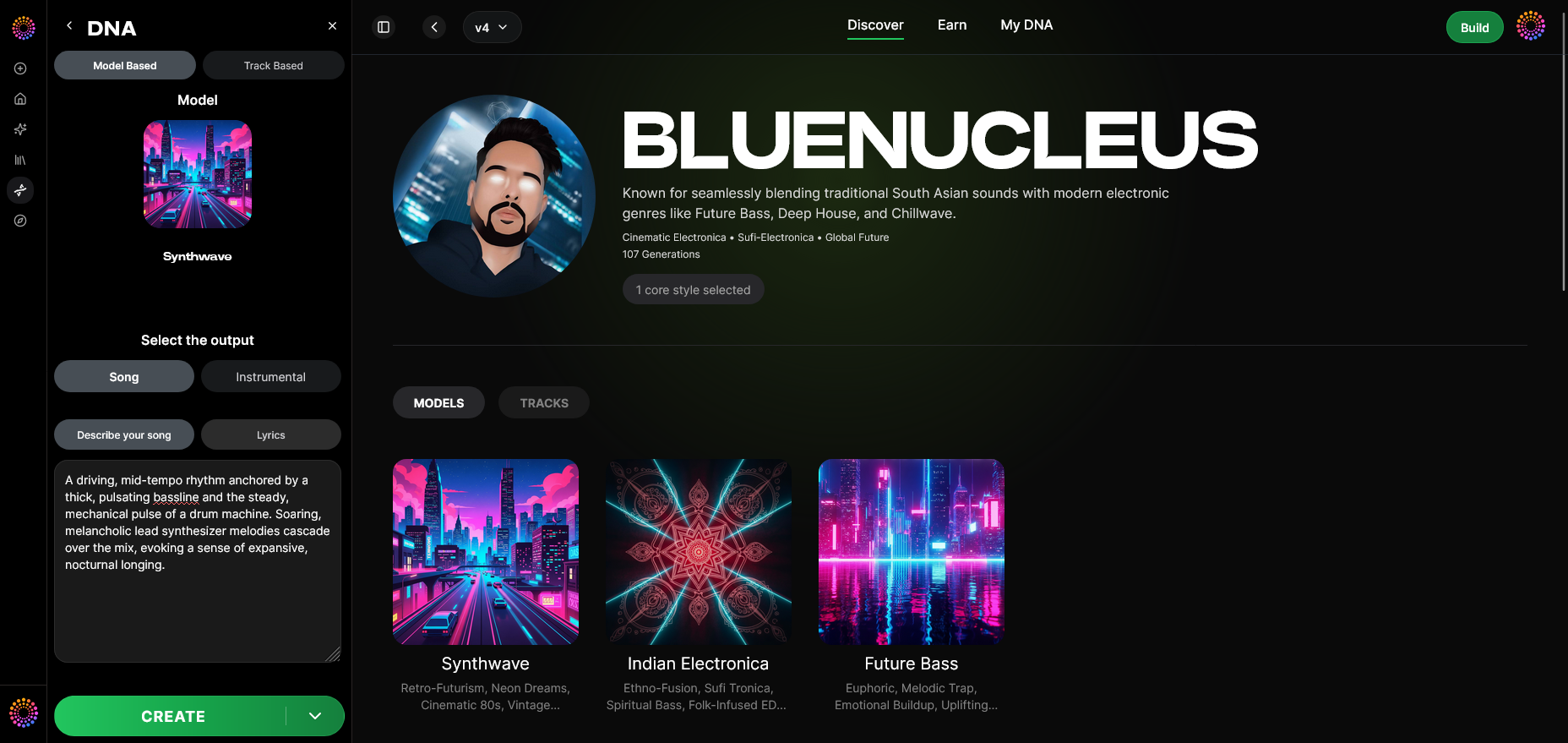
Soundverse DNA is a unique system designed to enhance AI’s understanding of artist-specific sonic identities. Instead of relying on generic genre datasets, Soundverse trains models using licensed catalogs from real artists. That means each model carries the detailed texture and personality of its creator — benefiting both authenticity and ethical standards.
Soundverse DNA offers several features that address heavy music ai issues:
- Full DNA: This mode captures an artist’s complete sound signature, including instrumentation, production style, and tone balance. When a metal artist trains their DNA, the system becomes capable of reproducing the intensity and structure unique to their band identity.
- Voice DNA: Metal vocals are notoriously difficult for AI. This feature allows creators to model specific vocal timbres and aggressive growl styles through licensed audio uploads.
- DNA Marketplace: Artists can monetize their style by licensing their DNA models to others. For fans of heavy metal, this opens collaboration opportunities with authentic sounds directly linked to their favorite creators.
- Sensitivity Selector: This tool clusters catalog data into eras — essential for artists who evolved their style across albums. A 2026 metal producer could adjust sensitivity to emphasize either early thrash tone or modern progressive sound.
- Private Mode: Enables secure co-creation for professional projects without data exposure.
These capabilities make Soundverse one of the most adaptive frameworks for overcoming genre limitations. By absorbing a creator’s DNA instead of statistical patterns, Soundverse generates compositions that carry legitimate emotion and human touch.
For those exploring related workflows, check guides like How to Create Metal Music with AI, Generate AI Music with Soundverse Text-to-Music, or The Role of AI Music in Film and Television. Each expands on how Soundverse enhances creative authenticity across different genres.
How do researchers and producers collaborate through Soundverse?
Metal music’s complexity demands hybrid workflows. Soundverse enables researchers to study cross-genre pattern transfer while producers retain direct control through DNA models. This collaboration has allowed discoveries about distortion representation, spectral layering, and dynamic feedback optimization.
Furthermore, features like the AI Music Generator and Similar Song Generator assist in early-stage ideation. These tools create instrumental frameworks or style-matched soundscapes without infringing copyrights — a critical factor in heavy music reproduction. As highlighted in AI Content Strategy for Metal Music Blogs (2026 Guide), AI tools can also support content generation for subgenres, artist bios, and gear reviews.
By merging ethical training with artist participation, Soundverse contributes to redefining what metal generation means in 2026. It's not about replacing musicians; it’s about empowering them to create faster, cleaner, and legally protected sound experiences.
What’s the future for AI and metal music?
Looking ahead to late 2026, experts predict that artist-trained systems will dominate metal generation workflows. As hardware accelerates audio computation and Soundverse’s DNA Marketplace expands, personalization will become the driving force behind realistic metal AI. Visit What Is AI Metal? for a deeper look at emerging trends driving this movement.
Instead of relying solely on mass datasets, the next generation of heavy music AI will learn emotional correlation — connecting distortion character to lyrical depth or energy. Platforms integrating private co-creation like Soundverse DNA will lead this transition.
New researchers are already exploring hybrid systems combining transformer models with analog emulation to achieve more lifelike guitar tones and drum dynamics. The goal by 2027 is not perfect imitation but co-creation with humans where AI enhances creativity rather than replaces it.
Create Your Own AI-Generated Metal Track Today
Unlock the power of Soundverse’s advanced text-to-music tools to design intense riffs, dynamic drum patterns, and powerful vocals that capture true metal energy. Experiment freely and push the limits of AI creativity.
Related Articles
- Create Metal Music with AI: Discover how to generate authentic, high-energy metal tracks using Soundverse’s AI technology.
- AI Music Generator and Human Composers: A Future Together: Explore how AI collaborates with human musicians to shape the next era of creative composition.
- What AI Can Generate Songs: Learn which AI tools are capable of crafting complete songs across multiple genres and styles.
- How AI-Generated Music Is Transforming the Music Industry: Understand how AI-driven creativity is revolutionizing music production and distribution workflows.
Here's how to make AI Music with Soundverse
Video Guide
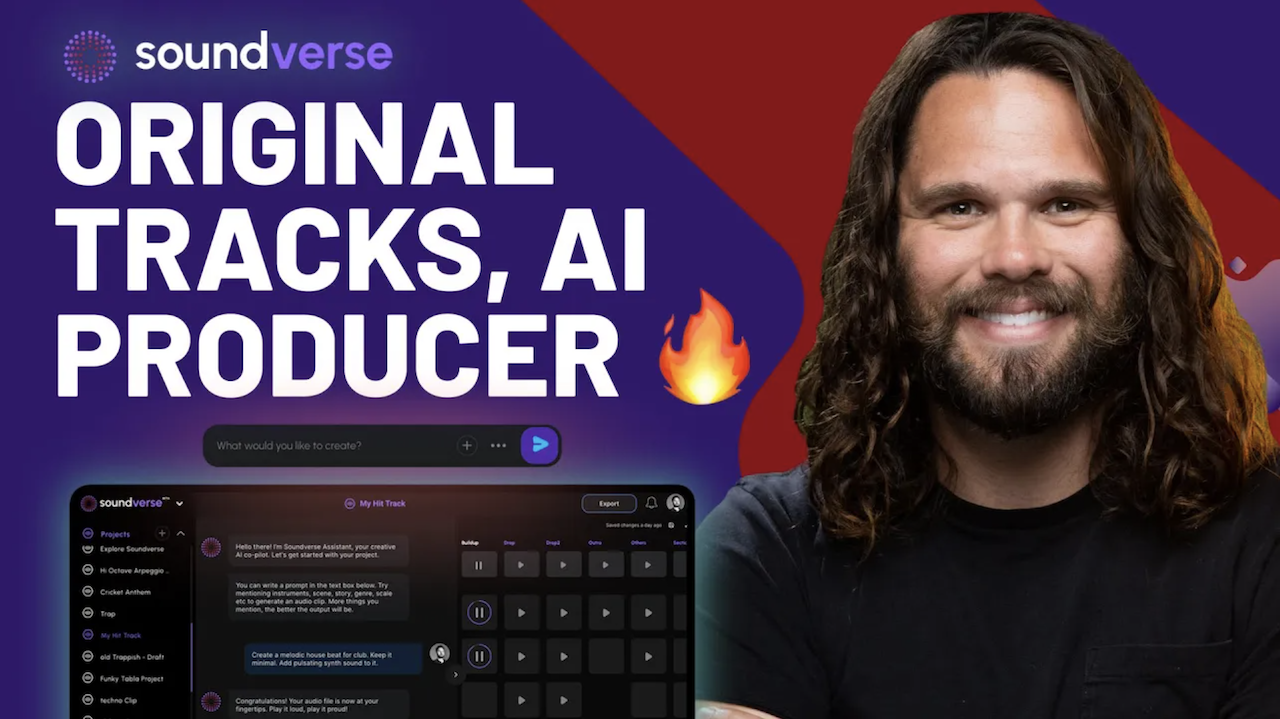
Here’s another long walkthrough of how to use Soundverse AI.
Text Guide
- To know more about AI Magic Tools, check here.
- To know more about Soundverse Assistant, check here.
- To know more about Arrangement Studio, check here.
Soundverse is an AI Assistant that allows content creators and music makers to create original content in a flash using Generative AI. With the help of Soundverse Assistant and AI Magic Tools, our users get an unfair advantage over other creators to create audio and music content quickly, easily and cheaply. Soundverse Assistant is your ultimate music companion. You simply speak to the assistant to get your stuff done. The more you speak to it, the more it starts understanding you and your goals. AI Magic Tools help convert your creative dreams into tangible music and audio. Use AI Magic Tools such as text to music, stem separation, or lyrics generation to realise your content dreams faster. Soundverse is here to take music production to the next level. We're not just a digital audio workstation (DAW) competing with Ableton or Logic, we're building a completely new paradigm of easy and conversational content creation.
TikTok: https://www.tiktok.com/@soundverse.ai
Twitter: https://twitter.com/soundverse_ai
Instagram: https://www.instagram.com/soundverse.ai
LinkedIn: https://www.linkedin.com/company/soundverseai
Youtube: https://www.youtube.com/@SoundverseAI
Facebook: https://www.facebook.com/profile.php?id=100095674445607
Join Soundverse for Free and make Viral AI Music

We are constantly building more product experiences. Keep checking our Blog to stay updated about them!