Voice Cloning for Maintaining Vocal IP Ownership in 2026
Explore how voice cloning empowers artists to protect and monetize their vocal identity in 2026.
Voice Cloning for Maintaining Vocal IP Ownership
In 2026, the rise of AI-generated voices and synthetic voice technology has radically changed how artists, voice actors, and creators manage their identity. Voice cloning, once a futuristic concept, is now central to discussions about digital ownership and creative integrity. For professionals across music, film, and digital media, understanding how to control and protect vocal IP has never been more critical.
What is voice cloning and why does it matter in 2026?
Voice cloning refers to the process of replicating a person's vocal characteristics using artificial intelligence. In practical terms, it allows an AI model to generate speech or singing that mimics the tone, accent, pitch, and emotional nuance of the original performer. While this technology creates remarkable opportunities for content production, localization, and entertainment, it also creates risks—especially around consent, ownership, and misuse.
In 2026, countless cases of unauthorized AI voice reproductions have demonstrated how vulnerable vocal identities can be. With deepfake voices becoming indistinguishable from real ones, creators and performers are demanding legal and technological frameworks that ensure their voices cannot be used without their permission. The conversation has evolved from mere innovation to protection.
How does voice cloning intersect with vocal ownership AI and digital voice rights?
The concept of vocal ownership AI centers on returning agency to the creator. Rather than AI companies harvesting voices without consent, vocal ownership frameworks ensure that individuals can register, tokenize, and monetize their distinct sound profiles. This shift parallels earlier discussions in image rights, music licensing, and the growing emphasis on ethical data sourcing in AI.
Digital voice rights represent a new layer of intellectual property—an identity that deserves the same respect as a songwriter’s composition or an actor’s image. For artists, vocal IP protection ensures their timbre and style cannot be exploited for advertisements, songs, or virtual characters without approval or compensation.
What challenges are creators facing with synthetic voice technology?
AI-generated voices are now capable of delivering studio-grade narration or singing within seconds. However, as convenience grows, confusion surrounding ownership intensifies. Some challenges faced by creators include:
- Unconsented Training Datasets: Many early AI systems built models by scraping vast libraries of audio online, often including copyrighted or personal recordings without permission.
- Commercial Misuse: A cloned voice might be used to endorse products or generate music that contradicts an artist’s values or brand.
- Attribution Issues: Without embedded traceability, it’s difficult to prove which voice model generated what content.
- Royalties and Compensation: Even when authorized, creators need mechanisms to ensure recurring revenue when their synthetic voice is used across multiple applications.
Why is AI voice protection essential for artists and entertainers?
AI voice protection isn’t just about preventing theft—it’s about sustainability. In 2026’s hyperconnected media landscape, artists often release music, perform live streams, or voice interactive characters across dozens of platforms. A single unauthorized model can dilute a voice’s market value, confuse audiences, or even enable fraud.
By implementing AI voice protection, creators establish verifiable control points. This approach ensures that every interaction involving their cloned voice includes attribution, consent, and payment tracking. It also strengthens trust between artists, brands, and audiences.
How Soundverse DNA ensures vocal IP integrity
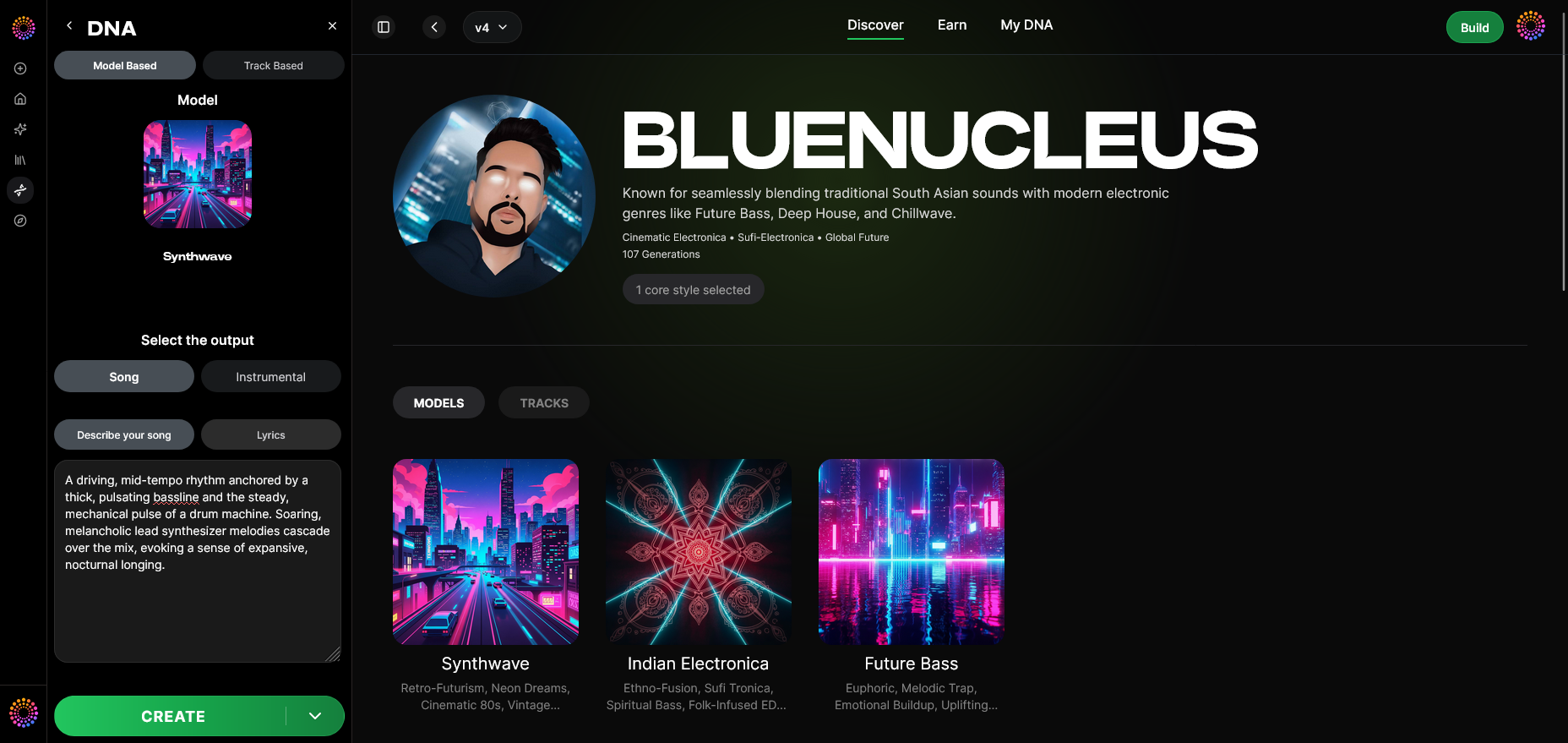
Soundverse DNA is an artist-trained AI music generation system designed specifically to solve ethical AI challenges in creative production. Instead of scraping public data, it is trained only on licensed catalogs—enabling artists to retain full ownership of their style while licensing it safely.
Soundverse DNA empowers creators through several key capabilities:
- Full DNA: Combines artist-specific musical and vocal traits to generate songs or instrumentals that reflect the creator’s sonic identity.
- Voice DNA: Focuses on vocal timbre and stylistic details, creating a digital signature that can be applied in collaborations or production.
- DNA Marketplace: Lets artists license their sound style to fans or other professionals, generating passive income each time their DNA model is used.
- Sensitivity Selector: Allows creators to cluster their catalog into eras (e.g., early works vs. new sound) to control how closely the AI emulates them.
- Private Mode: Secures models for internal projects, ensuring private or exclusive co-creations never leave the artist’s workspace.
By building on ethical data foundations, Soundverse DNA offers a clear route to reclaiming creative control in the AI era. For a deeper dive, watch our guide on how to make music or explore tab tutorial from the Soundverse YouTube channel.
How does Soundverse connect voice cloning with revenue generation?
When an artist builds their Voice DNA using Soundverse DNA, it becomes part of a traceable and monetizable ecosystem. Other users who wish to generate content using that voice must license it, ensuring artists receive ongoing compensation. The built-in sensitivity settings also prevent overfitting or extreme replication, keeping output consistent but unique.
This infrastructure ties closely to Soundverse Trace, a complementary tool that embeds attribution data across the entire music lifecycle—from dataset creation to exported tracks. Through this, every cloned vocal generation can be verified, protecting both the artist and the user.
What ethical safeguards are built into Soundverse's AI ecosystem?
Soundverse aligns all its tools with The Ethical AI Music Framework, which introduces transparency and accountability into synthetic media creation. This framework includes six stages—consent-based training, transparent attribution, compensation tracking, and secure data pipelines—to ensure AI benefits creators instead of exploiting them.
When used alongside tools like Voice Swap, which replaces voice identities in existing recordings while retaining natural expression, creators can remix or reinterpret content responsibly. Notably, Voice Swap works asynchronously: users upload or record first, then AI processes the result—avoiding real-time impersonation risks.
How does voice cloning strengthen brand identity for professionals?
Artists and voice actors are increasingly seen as multidimensional brands. A recognizable voice can serve as a sonic logo, instantly signaling authenticity. Voice cloning conducted ethically, with tools like Soundverse DNA, empowers professionals to maintain consistent brand presence across games, ads, podcasts, and virtual shows—without manually recording every line.
This aligns with trend analyses discussed in How AI-generated music is transforming the music industry and Music industry trends. The shift toward identity-driven sound design marks one of 2026’s defining evolutions in entertainment.
How to make voice cloning secure and effective with Soundverse DNA
To maintain vocal IP ownership effectively, creators can use Soundverse DNA as their control center for voice cloning. Here’s how:
- Create Your Voice DNA: Upload authorized recordings to train your personal model. The system analyzes timbre, tone, and stylistic nuances while ensuring data remains private and ethically sourced.
- Adjust Sensitivity Levels: Use the Sensitivity Selector to cluster different recording eras or tonal characteristics, allowing nuanced replication of your older or newer sound.
- License and Monitor Usage: List your Voice DNA on the DNA Marketplace, track who uses it, and earn revenue through transparent smart contracts.
- Protect Through Traceability: Use Soundverse Trace to embed metadata and verification layers into your cloned output, preventing unauthorized redistributions.
- Collaborate Securely: Enable Private Mode when co-creating, ensuring joint projects remain locked within authorized environments.
These steps help creators maintain creative freedom while reaping financial benefits from legitimate AI collaborations.
To explore related creation techniques, see guides like How to Create EDM with Soundverse AI and Generate AI Music with Text-to-Music.
What is the future of voice ownership and synthetic voice technology?
By 2026, legislation around vocal likeness and synthetic identity is maturing. The industry is moving toward standardized frameworks that require model provenance and consent documentation for voice cloning. This legal evolution strengthens vocal IP and ensures fair participation in AI-driven ecosystems.
Creators who establish their digital voice rights now are positioning themselves ahead of a fast-approaching wave. Owning one’s synthetic voice model will soon be as essential as registering a trademark or copyright.
Protect Your Voice. Own Your Sound.
Leverage Soundverse’s advanced voice cloning tools to create, customize, and secure your vocal identity. Stay in control of your sound while using AI that respects your creative ownership.
Related Articles
- Soundverse Introduces Stem Separation AI Magic Tool: Discover how Soundverse’s AI Magic Tool separates stems with precision—unlocking new creative and remixing possibilities.
- Soundverse SAAR: The AI Voice Assistant: Learn how Soundverse SAAR simplifies music creation by helping you generate original audio and manage AI voices effortlessly.
- How AI-Generated Music Is Transforming the Music Industry: Explore how AI music tools are redefining production workflows, artistic collaboration, and copyright ownership.
- The Role of AI Music in Film and Television: See how AI-driven soundscapes and compositions are reshaping entertainment production for streaming, film, and advertising.
Here's how to make AI Music with Soundverse
Video Guide
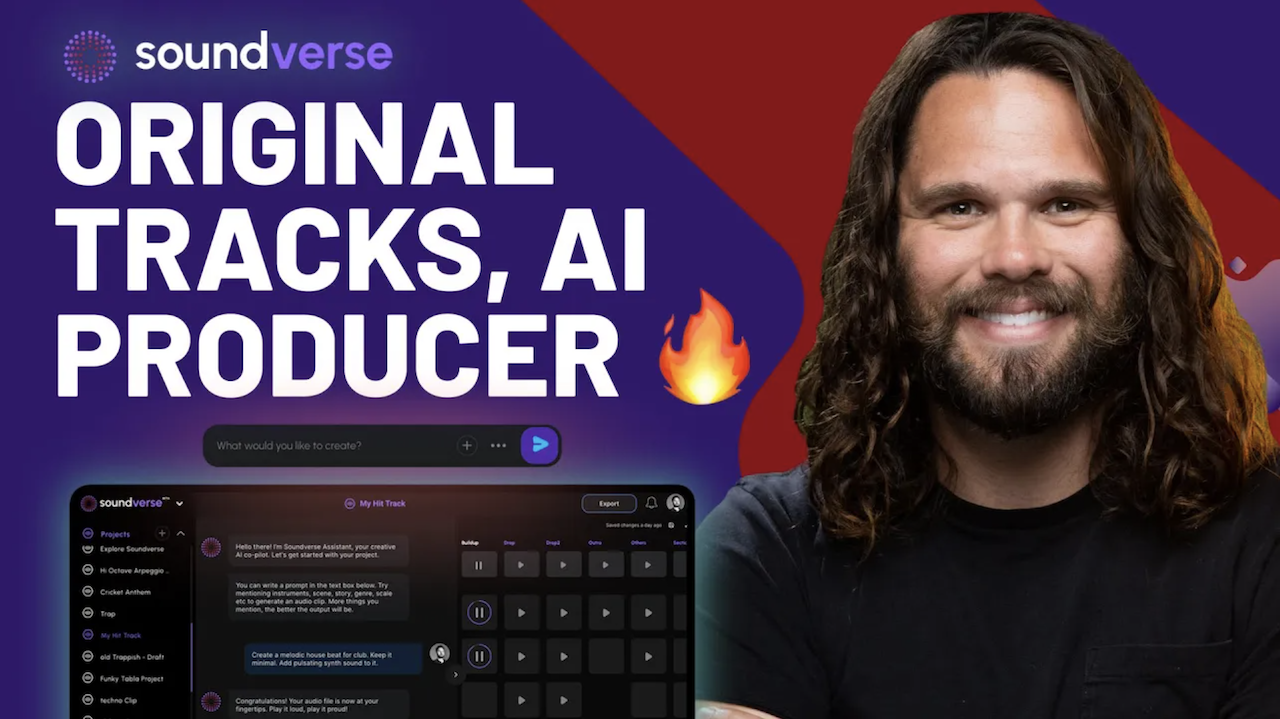
Here’s another long walkthrough of how to use Soundverse AI.
Text Guide
- To know more about AI Magic Tools, check here.
- To know more about Soundverse Assistant, check here.
- To know more about Arrangement Studio, check here.
Soundverse is an AI Assistant that allows content creators and music makers to create original content in a flash using Generative AI. With the help of Soundverse Assistant and AI Magic Tools, our users get an unfair advantage over other creators to create audio and music content quickly, easily and cheaply. Soundverse Assistant is your ultimate music companion. You simply speak to the assistant to get your stuff done. The more you speak to it, the more it starts understanding you and your goals. AI Magic Tools help convert your creative dreams into tangible music and audio. Use AI Magic Tools such as text to music, stem separation, or lyrics generation to realise your content dreams faster. Soundverse is here to take music production to the next level. We're not just a digital audio workstation (DAW) competing with Ableton or Logic, we're building a completely new paradigm of easy and conversational content creation.
TikTok: https://www.tiktok.com/@soundverse.ai
Twitter: https://twitter.com/soundverse_ai
Instagram: https://www.instagram.com/soundverse.ai
LinkedIn: https://www.linkedin.com/company/soundverseai
Youtube: https://www.youtube.com/@SoundverseAI
Facebook: https://www.facebook.com/profile.php?id=100095674445607
Join Soundverse for Free and make Viral AI Music

We are constantly building more product experiences. Keep checking our Blog to stay updated about them!