How to Convert Text to Music: A Complete Guide for 2026
Learn text to music conversion using AI tools like Soundverse to create instrumental tracks from words in 2026.
How to Convert Text to Music
What is text to music conversion?
Text to music conversion is the process of transforming written descriptions, words, or prompts into fully composed instrumental music using artificial intelligence. In 2026, this technology has matured into a powerful creative tool for musicians, video creators, and developers. Instead of manually composing notes or using loops, users can describe what they want—for example, “ambient electronic track with soft pads and rhythmic percussion”—and AI music generation models produce an original composition that matches the description.

This innovation sits at the intersection of music composition, AI sound design, and generative art. It’s different from lyric-based music creation because it focuses on sound textures and arrangements rather than vocal melodies. For creators, this unlocks rapid prototyping, royalty-free soundscapes, and experimentation with genres that previously required advanced production skills.
How does text to music conversion work in 2026?
The technology behind text to music conversion involves neural networks trained on massive datasets of musical patterns and genre contexts. These models learn how to map descriptive text inputs to the acoustic elements found in music—tempo, rhythm, instrument layers, and harmonic progression.
AI systems interpret keywords such as “cinematic brass,” “lofi beat,” or “dark ambient” and generate a fitting output that’s coherent and musically pleasing. Deep generative audio architectures, now common in 2026, handle the sound design, arrangement, and mastering stages entirely through algorithmic processing. As showcased by advancements in AI music generation, this technological leap has turned natural language into a compositional instrument.
For a deeper dive, watch our Soundverse Tutorial Series - How to Make Music and Make Deep House Music on the Soundverse YouTube channel to explore how text-based prompts translate into musical structure.
What are the main applications of text-based composition?
Text-based composition offers a range of uses across creative industries:
- Video Production – Filmmakers and content creators use AI-generated background music to match visual scenes, tone, or mood without licensing complications.
- Game Development – Developers create dynamic, looping soundtracks tailored to environments or gameplay intensity.
- Meditation & Wellness – Practitioners generate soothing ambient tracks for relaxation or therapy sessions.
- Advertising & Branding – Marketers convert brand moods (“energizing,” “sophisticated,” “warm”) into distinct musical textures for campaigns.
- Education & Experimentation – Students and creators explore music theory, tone, and arrangement through generative sound design. Each use case demonstrates how converting words into songs or soundscapes expands creative accessibility beyond traditional music training.
What tools enable text to music conversion today?
As of 2026, several platforms offer AI-powered music creation tools. Here are some leading examples:
- Soundverse – Comprehensive suite for text-to-music and song generation.
- AIVA – Known for orchestral and cinematic compositions.
- Mubert – Combines streaming and AI generation for producers.
- Soundraw – Focused on adaptive background music for creators.
- Udio – Text-to-song generator with vocal synthesis.
For readers exploring alternatives, see best Splash Pro alternative and Mubert alternatives to understand the evolving ecosystem of creative AI platforms.
External sources like Text to Music AI Explained: How Machines Turn Words Into Sound and AI Song Generator: Turn Lyrics into Full Songs in 2026 describe how AI-based composition is reshaping the global music creation landscape.
How to start converting text to music: Step-by-step guide
To help you grasp the workflow, here’s how a typical AI-driven text to music conversion process works. These steps focus on the Soundverse AI Music Generator interface.
Step 1: Feature Overview
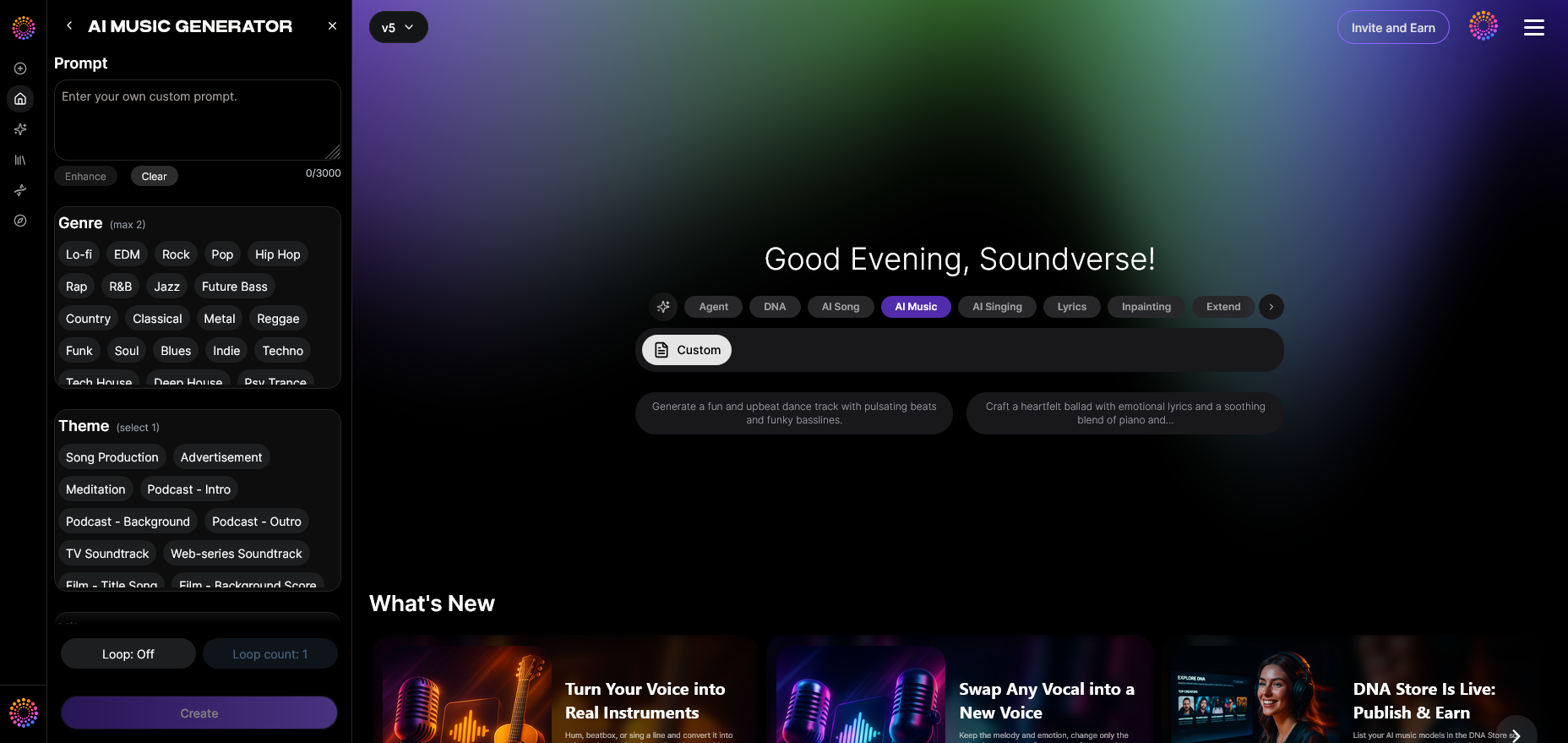
Access the AI Music Generator from the Soundverse main menu. This tool specializes in instrumental tracks—ideal for background use, game loops, or commercial scoring. It operates asynchronously: users submit prompts, and the AI processes them to deliver the music output afterward.
Step 2: Description Input
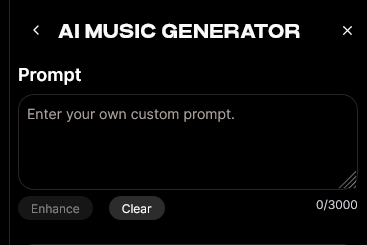
Enter a clear description of the desired music. Text-based composition relies heavily on descriptive clarity. Include elements such as genre (electronic, jazz, classical), mood (uplifting, dreamy, tense), and instruments (guitar, synths, drums). For inspiration, explore 100 text-to-music prompts to refine your ideas.
Step 3: Style & Duration
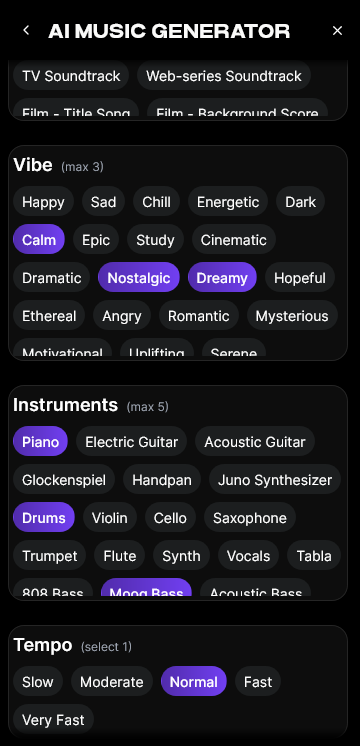
Select your preferred style and track length. Soundverse offers genre and mood modifiers that deeply influence the generated output. In 2026, many creators focus on shorter looping sections for social media content and longer continuous tracks for video production.
Step 4: Generation
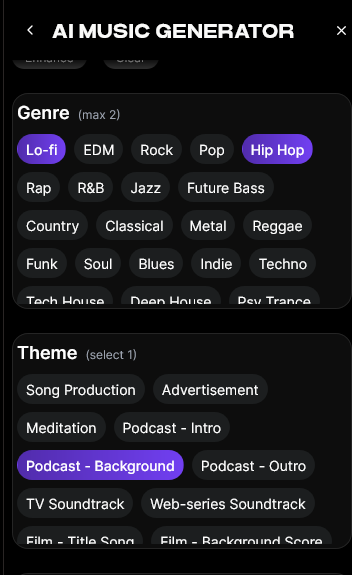
Click Generate to let the AI interpret your description. The Soundverse engine analyzes semantic meaning, mood descriptors, and instrument expectations to build layers of melody, harmony, and rhythm consistent with your input. It doesn’t require manual adjustments or sound libraries.
Step 5: Export Options
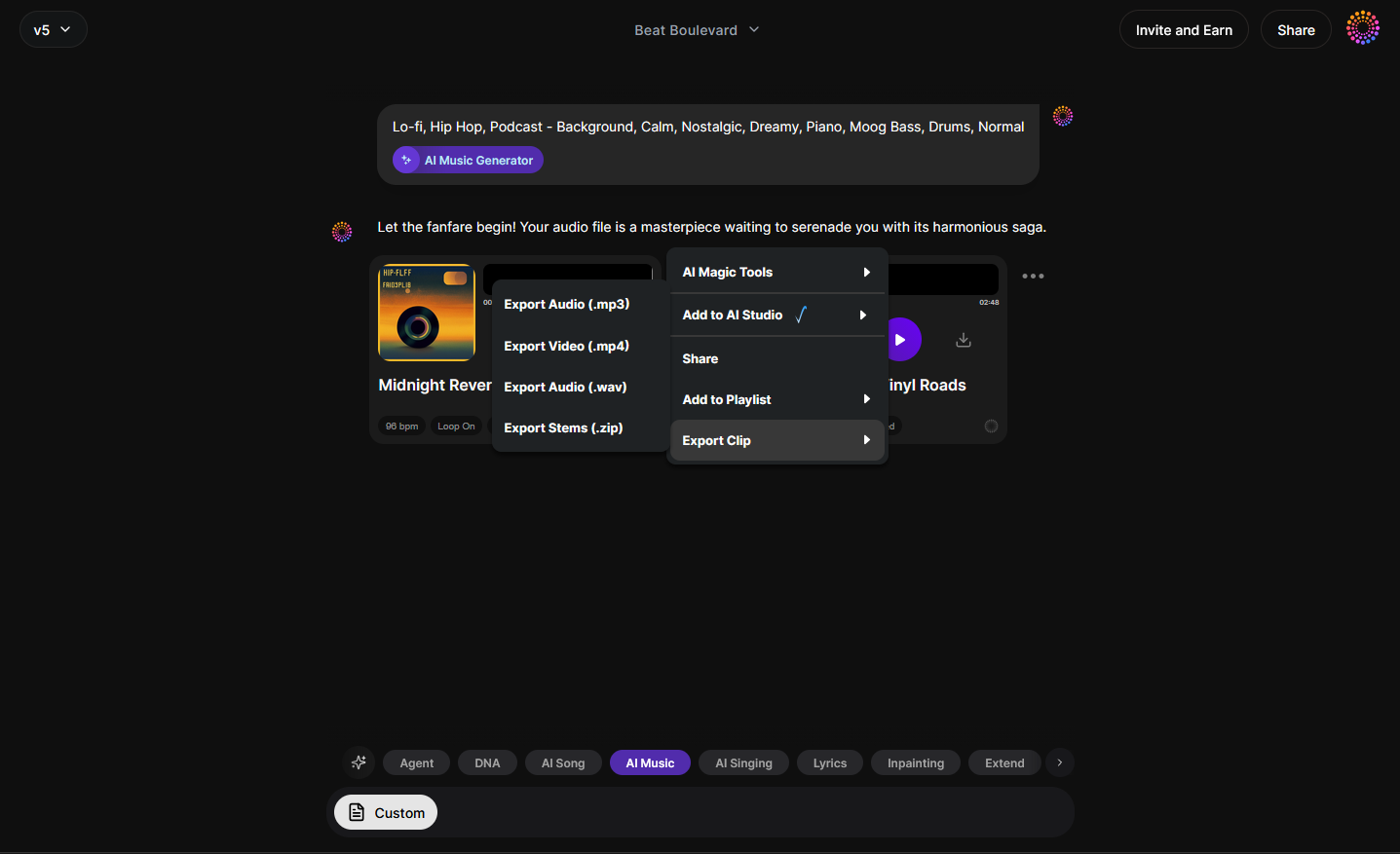
After generation, download the produced instrumental track. You can choose formats suited for integration into editing software or game engines. Loop Mode ensures smooth repetition, making the track suitable for immersive soundscapes.
How to make text to music with Soundverse AI Music Generator
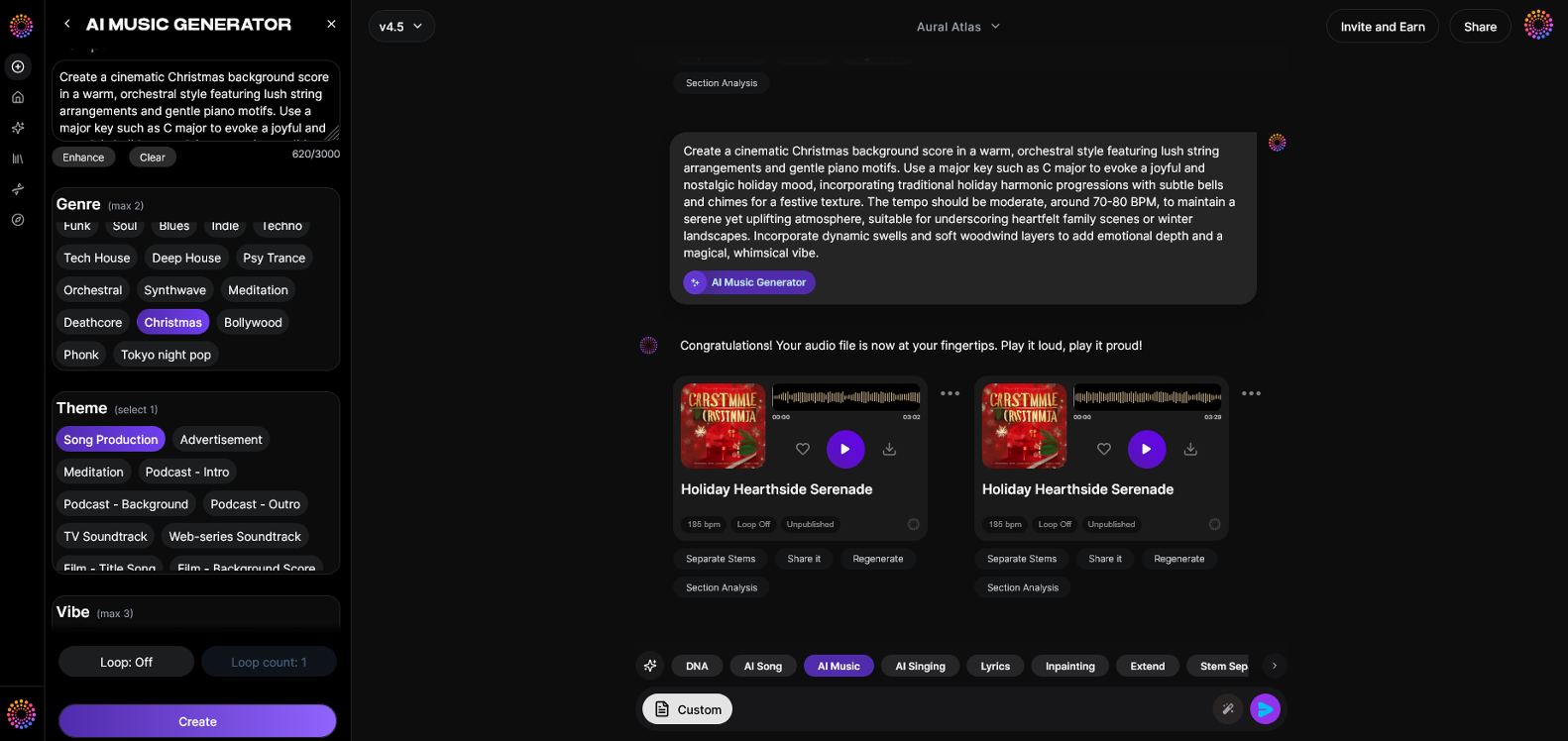
Now that you understand the fundamentals of converting text to music, here’s how Soundverse accelerates that process instantly.
The Soundverse AI Music Generator creates fully produced instrumental music directly from text prompts. It’s designed for users who want loopable, genre-specific material without vocals. The system supports both V4 and V5 model variants, offering improved control over genre, mood, and instrumentation.
Core Capabilities:
- Text-to-music generation
- Loop Mode for seamless repetition
- Detailed genre/mood/instrument control
- Choice between V4 and V5 model architectures
Primary Use Cases:
- Video background scoring
- Game soundtracks and interactive loops
- Meditation and wellness compositions
- Advertising or brand sound identity
By combining text interpretation and structured sound generation, Soundverse empowers creators to focus on imagination rather than manual composition. It bridges human creativity with algorithmic assistance, as discussed in how an AI music generator inspires creative fusion and AI music generation evolution.
For more tips, check out our Explore Tab tutorial on YouTube to see how Soundverse’s text-to-music tools can be customized in real time.
Why text to music conversion matters in 2026
The global creative market increasingly values adaptive, fast-paced content production. AI systems are not replacing musicians—they are enhancing their workflow. Artists now mix acoustic and AI-generated layers, while developers integrate generative sound design into digital experiences.
In 2026, the line between composer and technologist is blurred. Platforms like Soundverse lead this transition by making tools accessible for anyone interested in creating music evoking the desert or constructing complex EDM loops without prior production experience.
Text to music conversion is therefore not simply about automation—it’s about redefining creativity through collaboration between human intent and machine intelligence.
Start Creating Music from Text Instantly
Transform your words into studio-quality music with Soundverse’s AI-powered text-to-music conversion platform. No instruments or production skills needed—just your imagination.
Related Articles
- Generate AI Music with Soundverse Text to Music — Discover how Soundverse converts words into music tracks using advanced AI composition tools.
- 100 Text to Music Prompts That Will Help You Create Viral Music — Jumpstart your creativity with 100 expertly designed prompts for text-to-music generation across genres.
- Soundverse Assistant: Your AI Music Co-Producer — Learn how Soundverse Assistant helps you effortlessly co-produce songs from text ideas to final stems.
- Soundverse AI Revolutionizing Music Creation for New Age Content Creators — Explore how Soundverse’s AI is transforming how influencers, filmmakers, and musicians produce original sound.
Here's how to make AI Music with Soundverse
Video Guide
Here’s another long walkthrough of how to use Soundverse AI.
Text Guide
- To know more about AI Magic Tools, check here.
- To know more about Soundverse Assistant, check here.
- To know more about Arrangement Studio, check here.
Soundverse is an AI Assistant that allows content creators and music makers to create original content in a flash using Generative AI.
With the help of Soundverse Assistant and AI Magic Tools, our users get an unfair advantage over other creators to create audio and music content quickly, easily and cheaply.
Soundverse Assistant is your ultimate music companion. You simply speak to the assistant to get your stuff done. The more you speak to it, the more it starts understanding you and your goals.
AI Magic Tools help convert your creative dreams into tangible music and audio. Use AI Magic Tools such as text to music, stem separation, or lyrics generation to realise your content dreams faster.
Soundverse is here to take music production to the next level. We're not just a digital audio workstation (DAW) competing with Ableton or Logic, we're building a completely new paradigm of easy and conversational content creation.
TikTok: https://www.tiktok.com/@soundverse.ai
Twitter: https://twitter.com/soundverse_ai
Instagram: https://www.instagram.com/soundverse.ai
LinkedIn: https://www.linkedin.com/company/soundverseai
Youtube: https://www.youtube.com/@SoundverseAI
Facebook: https://www.facebook.com/profile.php?id=100095674445607
Join Soundverse for Free and make Viral AI Music
We are constantly building more product experiences. Keep checking our Blog to stay updated about them!