Text to Music AI Explained: How Machines Turn Words Into Sound
Discover how text to music AI transforms words into sound in 2026, reshaping music creation for artists and producers.
Text to Music AI Explained
In 2026, the boundaries between text and sound have nearly vanished. What once required studios, producers, and complex audio software can now begin with a simple sentence. Text to music AI technologies interpret written words—descriptive phrases, moods, or abstract ideas—and turn them into full instrumental compositions. This revolution is changing how artists, film creators, and game designers produce and experiment with sound.
What is Text to Music AI?
Text to music AI is a generative audio technology that allows users to create music by providing text prompts. Instead of manually composing with traditional instruments or MIDI controllers, users type descriptions like “ambient electronic beat for meditation” or “cinematic orchestral tension” and let the system generate an instrumental track accordingly. The most advanced systems, such as those developed by platforms like Soundverse, rely on deep learning models trained on licensed musical data to generate royalty-safe outputs.

From 2024 to 2025, AI music tools began appearing in mainstream creative workflows, but by 2026 the precision and quality have approached professional levels. Producers now integrate AI music generation directly into creative software or DAWs, using text-based sound generation as a fast way to prototype or finalize ideas. This idea aligns with Text to Music AI Explained: Turn Simple Words Into Professional ..., illustrating how written descriptions translate into complete compositions.
How Does Text to Music AI Work?
At its core, text to music AI functions through multimodal neural networks that map linguistic meaning to sound features. These neural systems translate adjectives and descriptive language into musical parameters such as tempo, instrumentation, rhythm, and arrangement. For example:
- “Warm acoustic folk guitar” might generate plucked guitar patterns with gentle percussion.
- “Dark synthwave” could lead to analog bass pulses and reverb-heavy pads.
- For a deeper dive, watch our guide on creating Deep House music or the introductory tutorial on making music from Soundverse’s YouTube series.
This process is known as prompt music AI, where textual prompts guide production. Key technical stages typically include:
- Text Encoding – The input phrase is converted into numerical representations for computational analysis.
- Music Mapping – The system uses pretrained models to associate words with genre, instrument timbre, and rhythm.
- Audio Rendering – The mapped data is synthesized into a waveform and exported as listenable music.
Advancements in diffusion-based and transformer models have led to richer tonal complexity and natural transitions, removing the robotic feel of early 2024 prototypes.
What Are the Applications of Text to Music AI in 2026?
Musicians and producers use text to music AI across varied creative scenarios:
- Video Background Scoring – Filmmakers rapidly generate ambient backdrops tailored to narrative tension or mood.
- Game Soundtracks – Developers produce infinite-loop background tracks synchronized with gameplay atmospheres.
- Meditation and Wellness Music – Guided relaxation creators use calming descriptors to generate serene compositions.
- Advertising and Social Media – Content creators instantly produce copyright-free jingles and audio branding.
- Concept Exploration for Artists – Composers use textual prompts as inspiration starters for larger projects.
The technology’s growth mirrors trends explored in AI-generated music transformation and reports on music industry trends, both showing how generative sound is influencing creative economics.
What Makes 2026 a Turning Point for AI Music Generation?
The year 2026 marks maturity for artificial music synthesis. After years of experimentation, text to music AI systems achieved:
- Genre Control – Users specify genres like EDM, Jazz, or Lo-Fi (see how-to guides).
- Mood Tagging – Input tags like “hopeful” or “mysterious” now accurately translate to tonal emotion.
- Precision Looping – Perfectly seamless loops suitable for games and apps.
- Instrument Customization – Detailed control over sound layers such as bass, synth, and percussion.
These capabilities support creative freedom without infringing on existing compositions, since modern frameworks prioritize ethical and licensed database training. A discussion on this trend also appears in Best AI Music Generators in 2026: Create Professional Audio with AI.
What Is the Difference Between Text to Music AI and AI Song Generation?
While text to music AI focuses on producing instrumentals and ambient backdrops, AI song generation expands into multi-element composition including vocals and lyrics. Systems like Soundverse AI Song Generator process lyrics, melody, and arrangement stages, resulting in complete songs, not just instrumental tracks.
Similarly, the AI Singing Generator specializes in vocal synthesis, enabling acapella or stylized sound textures such as whisper tones or creative animalistic effects. Each product serves different creative objectives—together forming a full-stack AI music environment. Learn more in The Rise of AI-Driven Audio Technology in 2026 - Vicomma.
Ethical Considerations in Music Creation with AI
One question constantly emerges: How can artists benefit from this automation without losing creative ownership? Modern frameworks like Soundverse DNA address this issue by training models on licensed catalogs rather than scraping online libraries. This ensures generated works are copyright-safe while allowing artists to monetize their sonic identity. As outlined in articles such as Navigating Copyright-Free Music, ethical use remains central to AI’s integration in music.
How to Make Text to Music Instantly Using Soundverse AI Music Generator
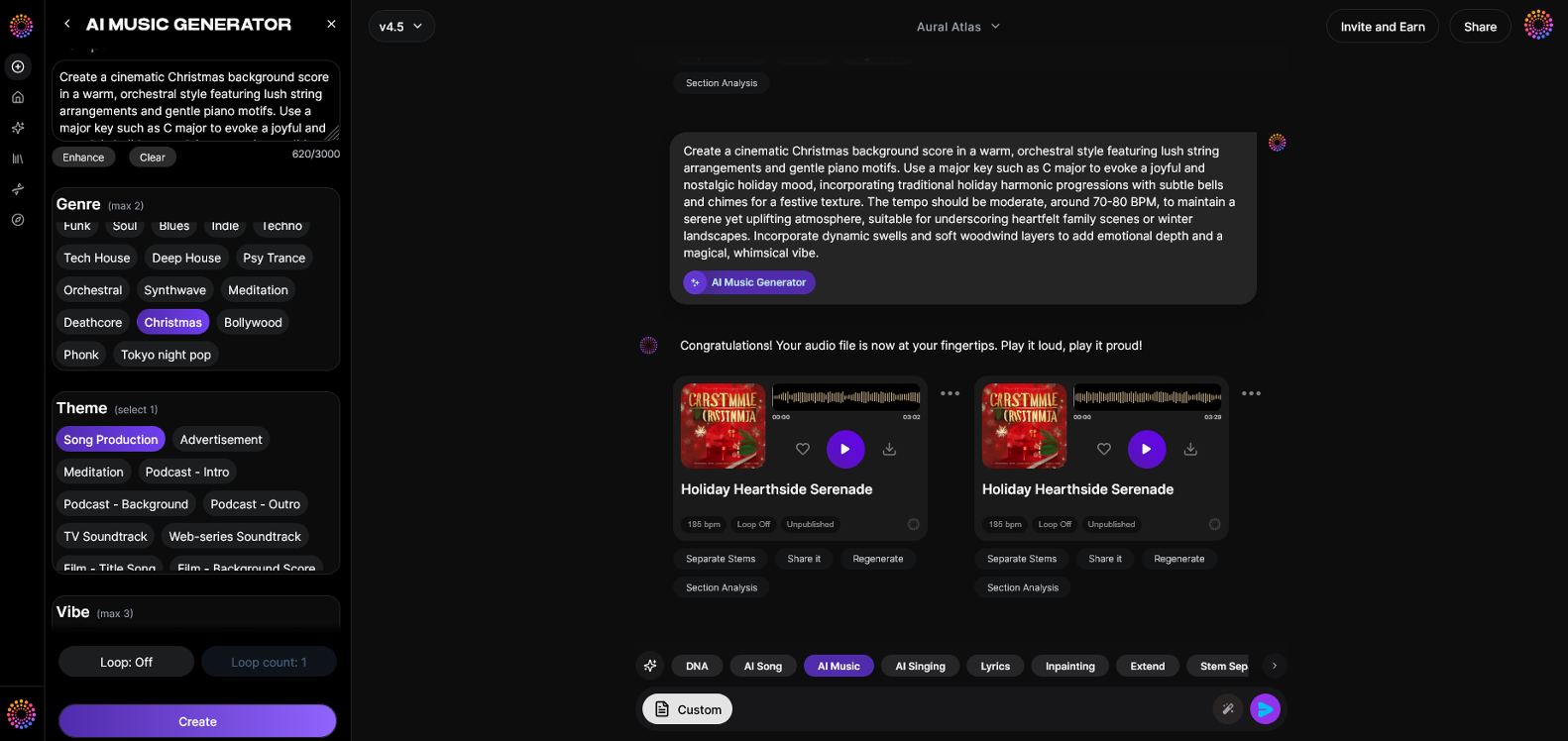
Now that you understand the basis of text to music AI, here’s how you can create it yourself using Soundverse’s AI Music Generator. Soundverse’s generator creates full instrumental music from text prompts—ideal for games, videos, meditation sessions, and ads. It specializes in producing background soundscapes, beats, and genre-based compositions without vocals.
Step 1: Feature Overview
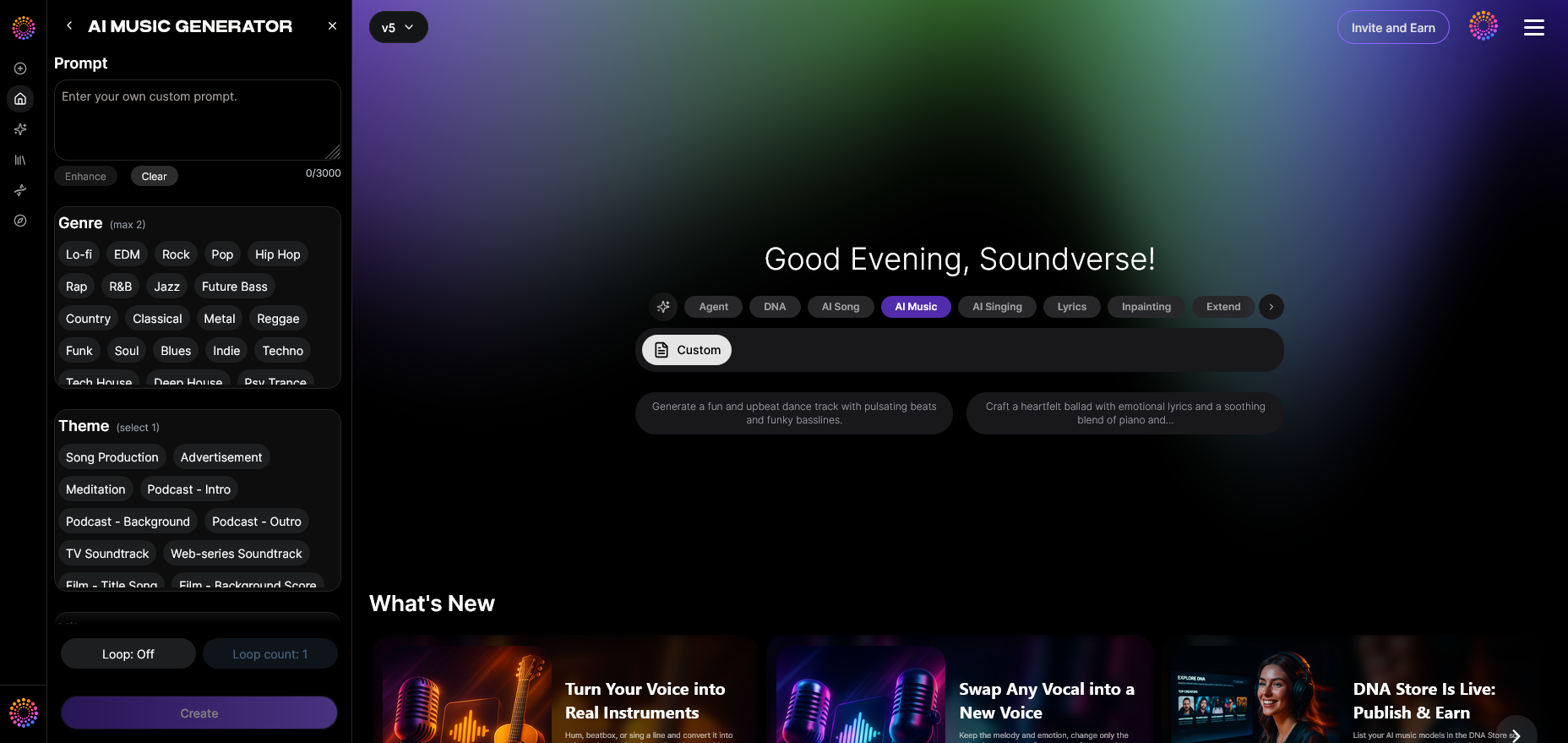
Access the AI Music Generator from Soundverse’s main menu. The interface welcomes users with project templates designed for instrumental production across multiple genres.
Step 2: Description Input
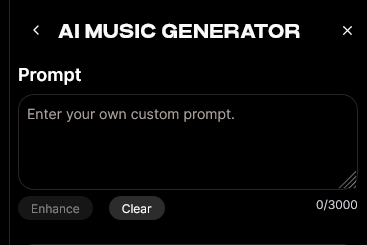
Enter a text description summarizing your sound vision. You might type phrases like “energetic electronic rhythm with futuristic synths” or “soft piano ambient loop for relaxation.” The system interprets adjectives, tone, and context to define compositional constraints.
Step 3: Style & Duration
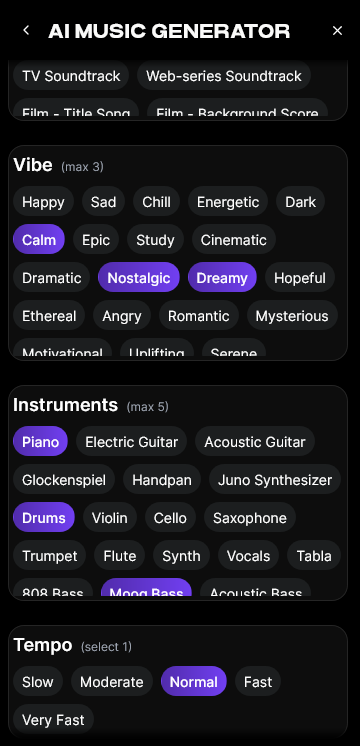
Select your preferred genre, whether Lo-Fi, EDM, Jazz, or cinematic, and specify track duration. This helps the model define progression and looping behavior.
Step 4: Generation
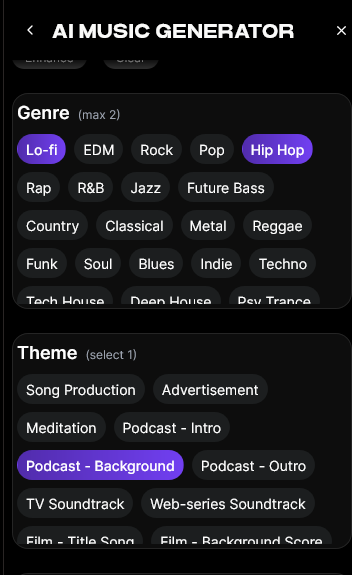
Click Generate to initiate the AI processing. The system asynchronously analyzes your description and converts it into a fully produced instrumental track. This process respects compositional balance between tone, tempo, and instrumentation.
Step 5: Export Options
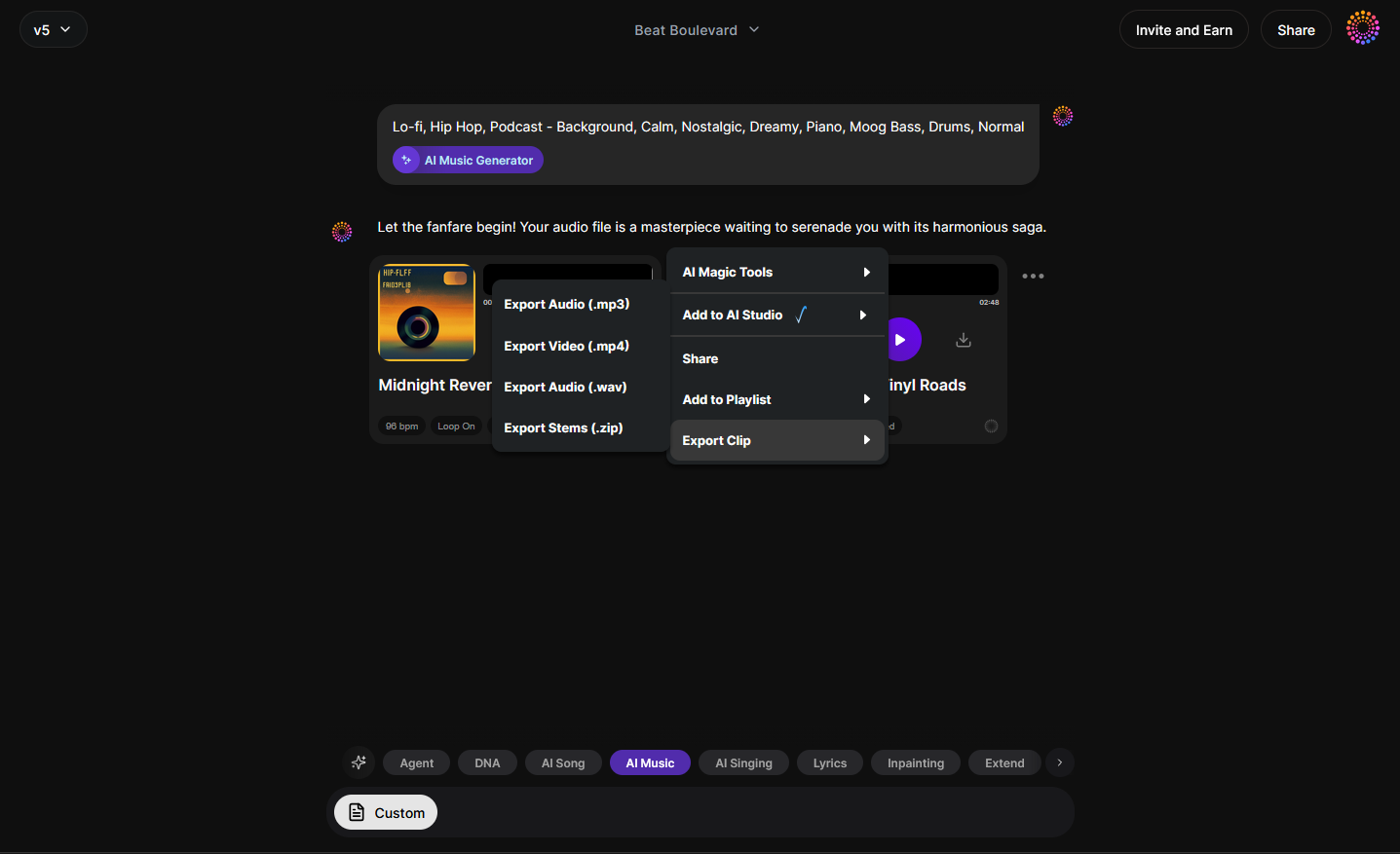
Once generation completes, you can preview and export loopable tracks. Choose between V4 or V5 model outputs depending on tonal richness and genre fidelity. The final product can be directly integrated into videos, games, or relaxation playlists. The loop mode ensures seamless repetition for background or score use. For additional ideas on thematic or genre-based AI creation, explore guides like 100 Text to Music Prompts or Lo-Fi Music Creation.
Start Creating Music Instantly with Text to Music AI
Transform your ideas into original soundtracks effortlessly. With Soundverse's cutting-edge text to music AI, you can generate unique, royalty-free compositions in seconds. Unleash creativity without limits.
- Generate AI Music with Soundverse Text to Music — Discover how Soundverse’s text to music AI lets you turn words and ideas into full compositions instantly.
- 100 Text-to-Music Prompts That Will Help You Create Viral Music — Explore creative prompts designed to spark your imagination and produce viral AI-generated songs.
- Soundverse AI Revolutionizing Music Creation for New Age Content Creators — Learn how Soundverse is transforming the way creators make music through intuitive AI-driven experiences.
- How an AI Music Generator Inspires Creative Fusion — Uncover how AI music generators blend genres and styles to inspire fresh musical collaborations.
Here's how to make AI Music with Soundverse
Video Guide
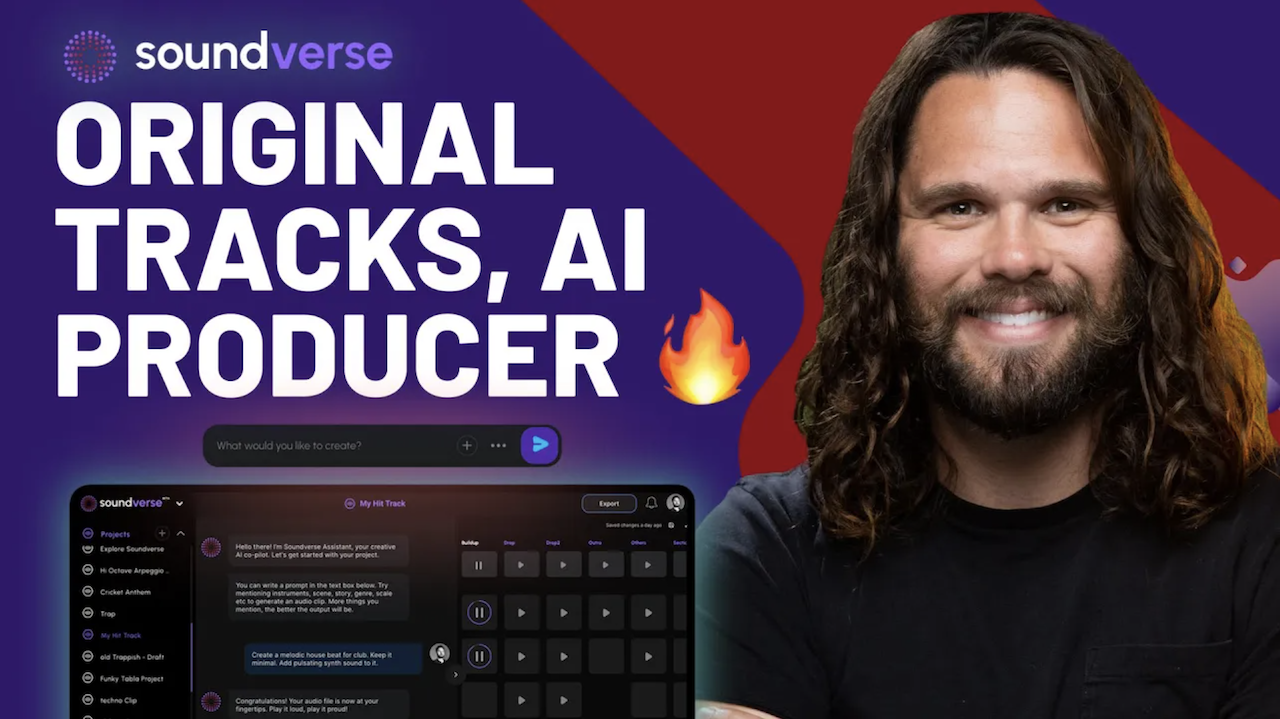
Here’s another long walkthrough of how to use Soundverse AI.
Text Guide
- To know more about AI Magic Tools, check here.
- To know more about Soundverse Assistant, check here.
- To know more about Arrangement Studio, check here.
Soundverse is an AI Assistant that allows content creators and music makers to create original content in a flash using Generative AI. With the help of Soundverse Assistant and AI Magic Tools, our users get an unfair advantage over other creators to create audio and music content quickly, easily and cheaply. Soundverse Assistant is your ultimate music companion. You simply speak to the assistant to get your stuff done. The more you speak to it, the more it starts understanding you and your goals. AI Magic Tools help convert your creative dreams into tangible music and audio. Use AI Magic Tools such as text to music, stem separation, or lyrics generation to realise your content dreams faster. Soundverse is here to take music production to the next level. We're not just a digital audio workstation (DAW) competing with Ableton or Logic, we're building a completely new paradigm of easy and conversational content creation.
TikTok: https://www.tiktok.com/@soundverse.ai
Twitter: https://twitter.com/soundverse_ai
Instagram: https://www.instagram.com/soundverse.ai
LinkedIn: https://www.linkedin.com/company/soundverseai
Youtube: https://www.youtube.com/@SoundverseAI
Facebook: https://www.facebook.com/profile.php?id=100095674445607
Join Soundverse for Free and make Viral AI Music

We are constantly building more product experiences. Keep checking our Blog to stay updated about them!