How Record Labels Are Licensing AI Training Data in the Music Industry
Explore how record labels are licensing AI training data and shaping ethical music AI models in 2026.
How Record Labels Are Licensing AI Training Data
In 2026, the intersection between artificial intelligence and music has evolved beyond experimentation—it has become an established economic model. Record labels worldwide are entering data licensing agreements to allow AI systems to train on protected catalogs, a practice once seen as controversial but now critical to driving innovation responsibly. The central topic reshaping this transformation is AI training data licensing in the music industry, where rights management, ethical frameworks, and transparent royalty structures define the next phase of collaboration between artists and technology firms.
What Does AI Training Data Licensing Mean for the Music Industry in 2026?
AI training data licensing refers to formal agreements that permit AI developers to use copyrighted music for model training under specific legal and ethical terms. Rather than unauthorized scraping or dataset construction from public platforms, labels now negotiate structured partnerships to share music data securely. These deals give rights-holders control over how recordings, compositions, and production elements contribute to AI engine learning.

In 2026, these agreements have become fundamental components of music label AI deals—governing not just access, but also compensation, attribution, and the long-term sustainability of artificial intelligence in creative industries. The shift began around 2024 when debates surrounding AI-generated songs and copyright ownership peaked. Two years later, the music ecosystem has reached a collaborative stage, transforming disputes into opportunities for recurring digital royalties.
Why Are Record Labels Licensing AI Training Data?
Record labels see licensing AI training data as both a defensive and progressive strategy. By granting rights to use catalog audio for AI development, labels protect intellectual property and earn direct revenue from training cycles rather than watching their content used without consent.

The motivation behind this wave of record label data partnerships includes:
- Revenue Diversification: Labels monetize archival catalogs that once had limited income potential. These assets now fuel AI growth and generate royalties per data interaction.
- Ethical AI Development: Licensing frameworks promote transparency, ensuring creators consent to data use and receive compensation through structured royalty systems.
- Regulatory Alignment: With multiple global jurisdictions implementing new AI data protection legislation, licensed access helps music companies comply with data ethics standards.
- Cultural Preservation: Curated datasets ensure AI models reflect accurate cultural soundscapes instead of biased or misused source materials.
These motivations align closely with new systems like Soundverse’s Content Partner Program, which exemplifies how rights-holders can join the AI economy responsibly. According to Music Industry Fractures Over AI Licensing as Labels Deploy YouTube-style revenue models, training an AI system on legally licensed music data eliminates many technical and legal complications compared to scraping public sources.
What Are the Typical Components of Music Industry AI Agreements?
Modern music industry AI agreements typically revolve around technical transparency and measurable outputs. Unlike traditional sync or master use licenses, AI data partnerships are dynamic—they include continued usage tracking and royalties derived from generated content.
A standard AI licensing agreement involves:
- Defined Dataset Access: AI platforms use labeled data sets authorized by the record label.
- Tiered Licensing Models: Access levels vary by type of usage or technology stage, such as initial model training vs. derivative content generation.
- Attribution Mechanisms: Metadata tags trace which artist catalog contributed to training outputs.
- Recurrence Royalties: Compensation is not one-time; it continues with each use or AI generation derived from the partner’s audio.
- Transparency Reports: Rights-holders receive analytics detailing where and how their data appears across artificial compositions.
Such contractual precision moves AI music from experimental boundaries to a governed, rights-centered economy. Two of the three major music companies, Universal Music Group and Warner Music Group, are reportedly nearing landmark AI music licensing deals with AI platforms.
How Have Record Label AI Deals Evolved Between 2024 and 2026?
Between 2024 and 2025, most AI music partnerships were experimental pilot programs. Labels tested limited releases with AI composers to measure outcomes and safeguard copyrights. By 2026, however, music label AI deals have become standardized business frameworks.
The evolution includes:
- Shift from Trials to Subscription Revenue Models: Recurring payments per generation replaced one-time licensing.
- Integration of Attribution Tech: Platforms like Soundverse and Soundraw introduced auditable attribution layers tied to track metadata.
- Expansion Across Genres: From pop archives to jazz stems, labels now support AI music training across diversified catalogs.
- Legal Standardization: Entertainment lawyers now recognize training datasets under distinct licensing categories—neither performance nor mechanical, but AI computational rights.
These trends define how training data rights have become legitimate components of the international rights exchange ecosystem. For a deeper dive into the technical side, watch our Soundverse Tutorial - How to Make Music and Deep House Music guide on YouTube.
What Challenges Do Record Labels Face in AI Training Data Licensing?
Despite the progress, challenges remain across several categories:
- Rights Complexity: Music often involves multiple co-owners; data training may require clearance from composers, performers, and producers simultaneously.
- Valuation Models: Determining how much each dataset influences model performance remains subjective, complicating royalty calculation.
- Global Harmonization: Different regions interpret AI usage differently, leading to fragmented regulations.
- Piracy Risks: Even licensed datasets can be mirrored or misused if protection layers are inadequate.
Soundverse Trace aims to resolve several of these issues by embedding attribution and protection into digital audio processing, ensuring creators’ rights persist beyond initial licensing events.
How Record Labels Are Using Tiered Licensing and Attribution in 2026
Tiered licensing defines flexible access to audio training data depending on model maturity or intended use. A Tier 1 license might support early-stage model calibration using isolated stems, while Tier 6 could include full mixed tracks for advanced neural model refinement. Each tier carries distinct royalty rates and attribution parameters.
Attribution models democratize revenue—artists contributing popular sounds receive proportional earnings based on AI generation counts. This influence-based payout system pioneered by Soundverse has become an industry standard for ethically managing training data rights.
Labels adopting these frameworks enjoy dual benefits: transparency in dataset usage and sustained monetization long after initial licensing. Reports like Udio and Merlin Formalize AI Music Licensing Partnership - WIKB highlight similar partnerships shaping the AI music landscape.
How to Make AI Training Data Licensing Work with Soundverse Content Partner Program
Soundverse’s Content Partner Program provides a practical path for rights-holders to participate ethically in AI model development. It’s an opt-in licensing framework allowing record labels and artists to contribute audio data for training while earning recurring, usage-based royalties linked to attribution.
Through the program, participants can monitor data use through real-time dashboards, analyze transparent reports, and select from six licensing tiers to match specific levels of access and compensation. The program transforms passive catalog assets into active revenue generators while maintaining artist integrity.
Key Capabilities of the Soundverse Content Partner Program
- Influence-Based Payouts: Pay per AI generation, ensuring proportional compensation for higher-impact datasets.
- Tiered Licensing (Tiers 1–6): Customizable authorization levels for dataset access.
- Real-Time Dashboards: Asynchronous data visibility showing earnings trends and usage patterns.
- Transparency Reports: Track how audio is utilized across models and downstream creative outcomes.
By adopting this program, music industry stakeholders can join an ethical AI training ecosystem that respects creative ownership.
How Soundverse’s Broader AI Ecosystem Strengthens Data Licensing Integrity
Soundverse complements its Content Partner Program with two essential tools that reinforce legal trust and creative control:
- The Ethical AI Music Framework: This infrastructure implements consent, attribution, and recurring compensation in a transparent six-stage pipeline. It replaces traditional black-box model training with open accountability.
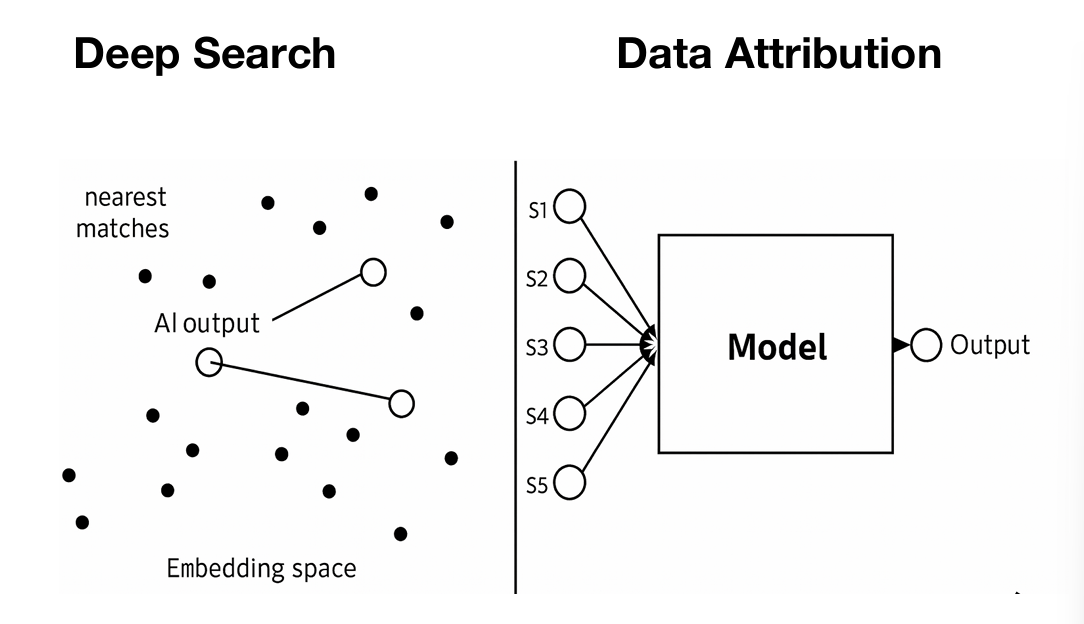
- Soundverse Trace: A trust layer embedding attribution, deep search, and rights protection throughout a song’s lifecycle—from dataset ingestion to export, making unauthorized dataset replication nearly impossible.
Together, these systems align with Soundverse’s wider initiatives described in articles like AI Music in the USA and How AI-generated Music Is Transforming the Industry, reflecting consistent efforts toward ethical AI adoption.
Start Creating Music Smarter with AI
Join Soundverse today and unlock tools that help you produce, remix, and license music effortlessly. Experience the next generation of AI-driven creativity built for modern artists and producers.
Related Articles
- How AI-Generated Music Is Transforming the Music Industry — Discover how artificial intelligence is reshaping production, distribution, and creativity across the global music scene.
- AI Music Generator and Human Composers: A Future Together — Explore how AI tools can empower composers rather than replace them, creating a promising new era of collaboration.
- The Role of AI Music in Film and Television — Learn how the entertainment industry is leveraging AI-generated music for dynamic scoring and cost-efficient production.
- Navigating the World of Royalty-Free and Copyright-Free Music Using Soundverse AI — Understand how creators can safely use AI-generated tracks while respecting licensing and copyright boundaries.
Here's how to make AI Music with Soundverse
Video Guide
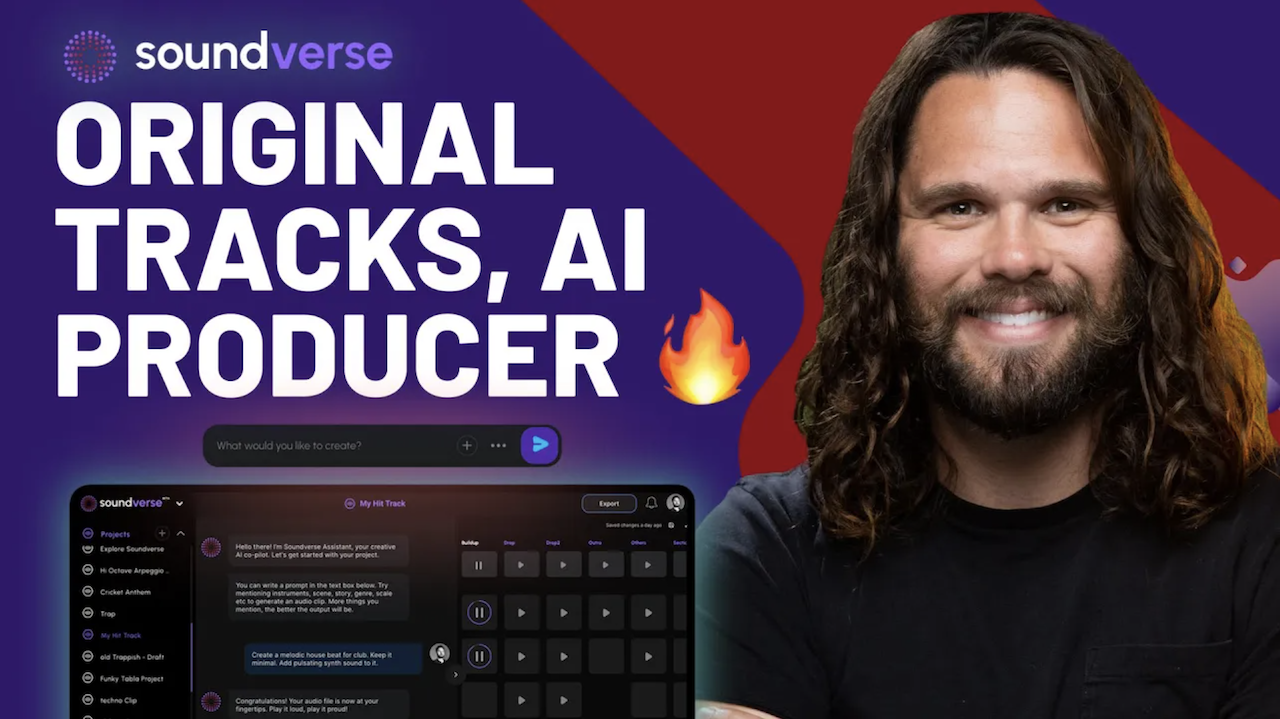
Here’s another long walkthrough of how to use Soundverse AI.
Text Guide
- To know more about AI Magic Tools, check here.
- To know more about Soundverse Assistant, check here.
- To know more about Arrangement Studio, check here.
Soundverse is an AI Assistant that allows content creators and music makers to create original content in a flash using Generative AI. With the help of Soundverse Assistant and AI Magic Tools, our users get an unfair advantage over other creators to create audio and music content quickly, easily and cheaply. Soundverse Assistant is your ultimate music companion. You simply speak to the assistant to get your stuff done. The more you speak to it, the more it starts understanding you and your goals. AI Magic Tools help convert your creative dreams into tangible music and audio. Use AI Magic Tools such as text to music, stem separation, or lyrics generation to realise your content dreams faster. Soundverse is here to take music production to the next level. We're not just a digital audio workstation (DAW) competing with Ableton or Logic, we're building a completely new paradigm of easy and conversational content creation.
TikTok: https://www.tiktok.com/@soundverse.ai Twitter: https://twitter.com/soundverse_ai Instagram: https://www.instagram.com/soundverse.ai LinkedIn: https://www.linkedin.com/company/soundverseai Youtube: https://www.youtube.com/@SoundverseAI Facebook: https://www.facebook.com/profile.php?id=100095674445607
Join Soundverse for Free and make Viral AI Music
We are constantly building more product experiences. Keep checking our Blog to stay updated about them!
Image Steps: []