How Music Deserts Are Shaping the Future of Cultural Diversity
Explore how music deserts impact cultural diversity, access to music education, and community programs shaping future music equality.
How Music Deserts Are Shaping the Future of Cultural Diversity
What are music deserts, and why are they a growing concern in 2026?
Music deserts refer to geographic or social areas where individuals have limited or no access to music education, instruments, live performances, or community music programs. In 2026, this concept is gaining attention among cultural policymakers and educators. As urban areas flourish with digital music creation tools and access to diverse genres, rural and economically challenged regions are struggling to maintain the same cultural vibrancy. The widening gap in access to music resources is influencing how cultural diversity evolves worldwide. “Music Deserts” by Everardo Francisco Reyes highlights how these regions are deprived of artistic benefits vital for community welfare.
Music deserts can emerge for several reasons: underfunded schools, lack of community music programs, absence of local venues or instructors, and insufficient internet access for digital learning platforms. The result is a generation of youth detached from musical exploration and expression—a factor that directly impacts cultural preservation and creativity at large.
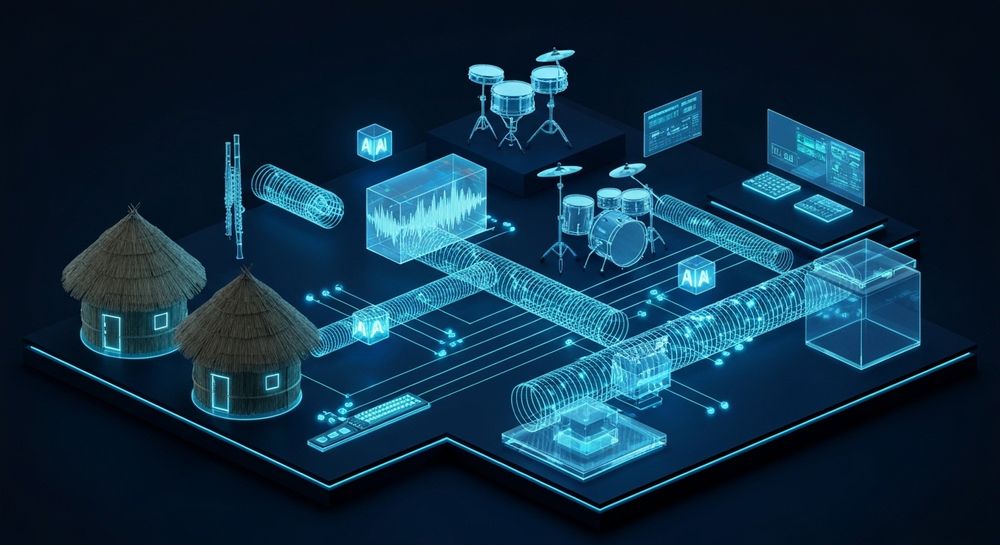
How do music deserts affect cultural diversity in music?
Music diversity thrives when people from different backgrounds share and develop their sonic traditions. When entire communities are excluded due to music inequality, their sound disappears from the global stage. This creates cultural monocropping—where mainstream sounds dominate and local styles vanish.
In 2026, this effect is particularly visible in small towns and rural districts where dwindling arts funding has forced schools to cut music programs. Without access to music education, emerging artists lack the foundation to innovate or express regional heritage. Millions of U.S. Students Denied Access to Music Education reinforces that millions of students currently miss out on essential creative instruction. Cultural researchers note that when music deserts persist, the broader ecosystem loses unique voices—from folk traditions to tribal rhythms and local fusion genres.
The loss doesn’t stop at creativity—it extends to cultural identity. Music has always been a storytelling tool and social connector; when one community’s music fades, its stories fade too.
What are the causes of music inequality in 2026?
Music inequality remains a multifaceted challenge. Among the major causes are:
- Economic disparities: Wealthier districts can afford instruments, recording spaces, and music instructors; poorer ones cannot.
- Rural isolation: Lack of infrastructure, venues, and transportation creates literal music deserts—regions that are too distant for regular arts engagement.
- Digital divide: Despite widespread AI and streaming platforms, some communities still lack stable broadband access for online music learning.
- Policy neglect: In some areas, music and arts programs are viewed as non-essential, and grants often prioritize core academic subjects.
- Cultural underrepresentation: Minority communities sometimes face exclusion from mainstream platforms or funding, dulling the spectrum of global music diversity.
By 2026, several cultural organizations and NGOs have proposed frameworks to address these imbalances through scholarships, portable studios, and virtual mentorships. However, widespread implementation remains uneven.
How is access to music education transforming cultural representation?
In regions breaking free from music desert conditions, access to music education acts as a cultural catalyst. When communities gain instruments or digital resources, creative activity blooms. For example, community music programs that integrate traditional sounds with digital tools have revived interest in local heritage among younger learners.
Music educators are experimenting with hybrid teaching models—combining local workshops with online platforms powered by AI composition tools. This hybridization, especially since advancements made in 2025, has democratized learning by bridging physical distance. Rural music access is progressively increasing through low-bandwidth collaborative platforms where remote instruction helps small schools nurture talent.
Cultural diversity in music is evolving with this digital empowerment—students learn world music theory while applying native rhythms, resulting in a globalized yet localized musical identity.
What community music programs are bridging the gap in music deserts?
Across continents, the rise of community music programs has reshaped how education and diversity interlink. Nonprofits and municipal arts departments have started ‘mobile music labs’—converted vans filled with instruments and recording devices traveling to isolated areas. These mobile studios allow local youth to learn sound production and instrument basics without leaving their town.
Online initiatives are equally impactful. Some programs partner with universities and tech firms to deliver virtual classes on composition and production. By integrating AI tools, students can experiment with genres from classical to jazz using simple text prompts.
Related educational articles, such as Music Industry Trends and How AI-Generated Music Is Transforming the Music Industry, demonstrate how AI-driven accessibility creates new learning pathways in previously underserved locations.
This approach not only curbs music inequality but also encourages cultural collaboration—students in Kenya can co-compose digital songs with peers in Canada, blending languages and rhythms that once existed worlds apart.
For hands-on creative learning, Soundverse tutorials are available—check out Soundverse Tutorial Series - 9. How to Make Music and Soundverse Tutorial Series - 8. "Explore" Tab for deeper insights on creating and sharing music efficiently.
How can technology address rural music access and inequality?
By 2026, technology has become a key equalizer in bridging music deserts. Affordable mobile devices, low-data applications, and AI-assisted learning engines allow users to compose or practice music from remote areas. Tools like Soundverse’s AI Music Generator, alongside similar solutions from companies such as Mubert and Soundraw, serve as bridges to creativity.
Digital platforms eliminate geographical barriers, offering intuitive user experiences where students can turn text descriptions into melodies or soundscapes. Articles such as Generate AI Music with Soundverse Text-to-Music and Soundverse Introduces Stem Separation AI Magic Tool explain how composers and educators use these systems to analyze and build musical layers, empowering communities to rediscover self-expression.
The intersection of digital equality and artistic access means that even regions with minimal resources can now create and share music globally, reinforcing their cultural identity.
How to make culturally inspired music using Soundverse AI Music Generator
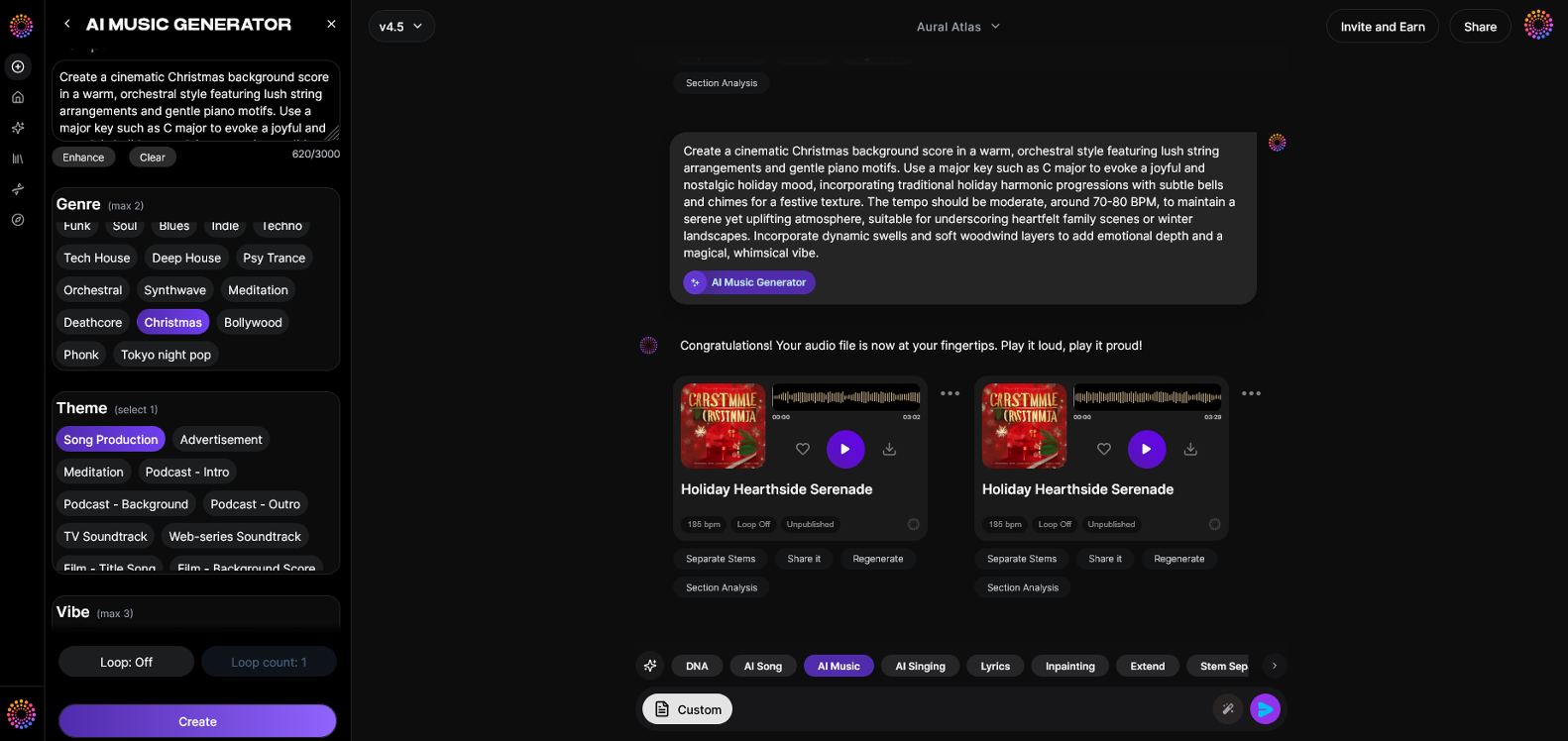
Now that you understand how music deserts shape cultural diversity, here is how to create cultural soundscapes instantly using the Soundverse AI Music Generator.
Soundverse’s AI Music Generator is a text-to-music tool that allows users to create fully produced instrumental music from simple prompts. It specializes in background tracks, beats, and immersive soundscapes, with options for looping seamlessly. You can control genre, mood, and instruments using either the V4 or V5 model.
Educators and community leaders can use it to simulate or recreate culturally inspired music for lessons, cultural festivals, or research projects on sound identity. For example:
- Enter prompts describing regional instruments or moods (“soft desert flute and ambient percussion”) to generate an educational sample.
- Use Loop Mode to craft continuous playback for meditative or cultural storytelling experiences.
- Choose genre and duration control to fit lesson plans or exhibitions.
Similar tools, such as the Similar Music Generator, can produce original instrumental compositions inspired by reference tracks—ideal for matching locally recorded pieces with professional soundscapes.
By embracing such technology, music deserts gradually transform into creative ecosystems—where access gaps shrink and cultural voices rise anew.
Discover Soundverse and Bridge the Music Gap
Join creators redefining global music culture with AI-powered tools that make music creation accessible, diverse, and boundary-free. Start composing your next track in seconds.
Related Articles
- How to Create Music Evoking the Desert — Explore how AI can help you craft soundscapes that capture the vast emotion of desert environments.
- AI Music in the USA — Dive into trends shaping the American music landscape as AI redefines creativity and accessibility.
- How AI-Generated Music Is Transforming the Music Industry — Learn how artificial intelligence is altering the way artists, producers, and listeners experience music.
- How an AI Music Generator Inspires Creative Fusion — Discover how technology fosters creative collaboration and new genre blending in global music scenes.
Here's how to make AI Music with Soundverse
Video Guide
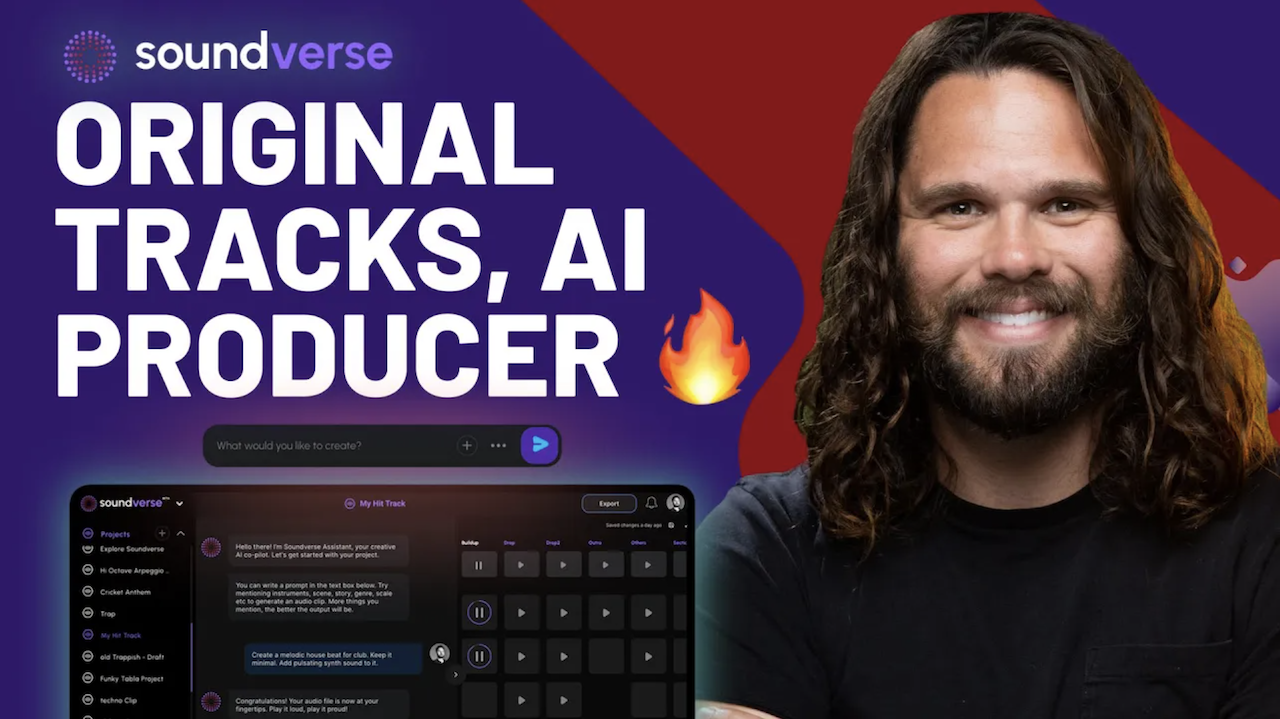
Here’s another long walkthrough of how to use Soundverse AI.
Text Guide
- To know more about AI Magic Tools, check here.
- To know more about Soundverse Assistant, check here.
- To know more about Arrangement Studio, check here.
Soundverse is an AI Assistant that allows content creators and music makers to create original content in a flash using Generative AI. With the help of Soundverse Assistant and AI Magic Tools, our users get an unfair advantage over other creators to create audio and music content quickly, easily and cheaply. Soundverse Assistant is your ultimate music companion. You simply speak to the assistant to get your stuff done. The more you speak to it, the more it starts understanding you and your goals. AI Magic Tools help convert your creative dreams into tangible music and audio. Use AI Magic Tools such as text to music, stem separation, or lyrics generation to realise your content dreams faster. Soundverse is here to take music production to the next level. We're not just a digital audio workstation (DAW) competing with Ableton or Logic, we're building a completely new paradigm of easy and conversational content creation.
TikTok: https://www.tiktok.com/@soundverse.ai
Twitter: https://twitter.com/soundverse_ai
Instagram: https://www.instagram.com/soundverse.ai
LinkedIn: https://www.linkedin.com/company/soundverseai
Youtube: https://www.youtube.com/@SoundverseAI
Facebook: https://www.facebook.com/profile.php?id=100095674445607
Join Soundverse for Free and make Viral AI Music

We are constantly building more product experiences. Keep checking our Blog to stay updated about them!