How Billboard Counts Streams, Sales, and Radio Plays in 2026
Learn how Billboard counts streams, sales, and radio plays in 2026 and how Soundverse Trace ensures data transparency and rights protection.
How Billboard Counts Streams, Sales, and Radio Plays
Billboard charts have long been the gold standard for measuring success in the music industry. From Top 100 singles to genre-specific rankings, these charts tell the story of how popular songs rise, peak, and decline over time. But as the industry becomes increasingly data-driven, questions like "how are Billboard charts calculated?" or "how does streaming impact Billboard rankings?" have gained significant importance—especially in 2026.
In this article, we’ll explore in detail how the Billboard chart calculation works, including the weighting system for streams, sales, and radio airplay. We’ll also dive into how technologies like Soundverse Trace are helping to make music data tracking and attribution more transparent for creators, label executives, and AI music platforms.
What is the Billboard Chart Calculation Process?
The Billboard chart calculation process combines multiple data streams into a composite metric that ranks songs and albums based on popularity and engagement. By 2026, Billboard’s methodology includes three major pillars: streaming activity, music sales tracking, and radio airplay metrics.

1. Streaming Activity: The Core of Billboard Rankings Today
Streaming remains the dominant factor in chart performance. Whether from platforms like Spotify, Apple Music, YouTube, or Amazon Music, all qualified streams contribute to chart placement. However, Billboard uses a tiered system to weight streams differently based on context:
- Paid subscription streams count the most. These include plays from any listener with a premium paid membership.
- Ad-supported (free-tier) streams count less but still influence rankings.
- Video streams are integrated, but Billboard adjusts the weighting depending on verified engagement.
In 2026, Billboard continues to fight artificial manipulation such as bot plays or looping behaviors. Platforms must provide verified, identified user activity data that meet Billboard’s transparency requirements. AI-generated audio content, a growing category, is also now included if registered via verified distributor channels that provide proper rights metadata.
For insights into how AI music fits into this ecosystem, check out How AI-generated music is transforming the music industry.
According to Billboard Announces Major Chart Rule Change, the company rolled out major updates beginning January 2026, emphasizing transparent stream reporting. On-demand streams to count more under Billboard's new method confirms that a subscription stream counts as equal to 2.5 free/ad-supported streams—further highlighting the dominance of premium plays.
For additional insights on how these shifts impact online streaming metrics, A change to YouTube's inclusion on the U.S. Billboard charts outlines how YouTube video plays are now weighed more accurately within the Hot 100.
For a deeper dive, watch our guide on creating Deep House music or explore the Soundverse Tutorial Series - How to Make Music.
2. Music Sales Tracking in 2026

Although streaming dominates, music sales—both digital and physical—remain vital for chart metrics. Billboard collects these figures via the Luminate (formerly Nielsen Music) system, which monitors retail scans and digital purchase data.
Sales categories include:
- Digital single purchases (like iTunes downloads)
- Physical formats (CDs, vinyl, and even limited-edition cassettes)
- Direct-to-consumer sales from artist websites or exclusive bundles
These numbers feed into the music sales tracking element of the Billboard chart calculation. In some genres, particularly country and rock, physical sales still hold substantial influence. You can read more about evolving trends in genre sales in Music Industry Trends.
3. Radio Airplay: Measuring Real-World Reach
Radio airplay metrics remain essential for Billboard’s chart methodology, giving insight into public exposure across demographics. Data providers measure the number of spins a song receives across national radio networks and local stations.
Each spin's impact varies depending on factors such as:
- Station audience size
- Market ranking
- Daypart weighting (prime listening hours count more)
In 2026, Billboard continues using a multi-tier broadcast scoring model that accounts for reach and repetition. Radio still plays a major role in determining long-term hits, even in a streaming-first era.
How Does Billboard Prevent Chart Manipulation?
With digital platforms dominating consumption, Billboard has implemented tighter audit and verification processes. Data providers must meet rigorous security and transparency standards before submitting reports. Billboard specifically excludes suspicious patterns, including mass looping, paid streaming farms, and AI-generated traffic anomalies.
This evolution aligns with today’s broader demand for verified attribution in music data processing—something tools like Soundverse Trace were built to support.
What is the Weight Distribution Between Streams, Sales, and Airplay?
While Billboard doesn't publish the exact algorithms or multipliers, industry analysts estimate the approximate influence ratio in 2026 as:
- Streaming: ~65–70%
- Sales: ~20%
- Airplay: ~10–15%
However, this distribution varies by chart. For example:
- The Hot 100 focuses on a balanced combination of all three metrics.
- Billboard Global 200 leans heavily toward streaming.
- Genre-specific charts may adjust weighting to reflect fan behavior (e.g., country fans buy more physical albums).
These methodologies continuously evolve to reflect changes in listening behavior, as seen in new ranking innovations discussed in The Role of AI Music in Film and Television.
How Are AI-Generated Songs Treated by Billboard in 2026?
AI-generated music entered Billboard’s chart discussions as early as 2024, but by 2026, formal frameworks are in place. The recording must:
- Be released on a recognized distributor platform.
- Provide rights metadata identifying all involved creators (including AI models if relevant).
- Use verified data reporting for stream and sale counts.
AI-generated songs that meet transparency criteria are fully eligible for charts. This underscores why tools that track provenance—like Soundverse Trace—are becoming key to ensuring fairness between human and AI creators.
What Makes Music Ranking Methodology Complex in 2026?
Modern music ranking methodology now merges a diverse dataset of global behaviors. Billboard receives billions of data points weekly—ranging from playlist adds and survey ratings to attribution logs and listening durations. AI-based fraud detection ensures that only legitimate human engagement contributes to rankings.
In fact, in today’s environment, data authenticity is just as important as popularity. Without reliable metadata, songs risk exclusion from major rankings—making tools that guarantee accurate attribution more valuable than ever.
How to Make Billboard Chart Calculation More Transparent with Soundverse Trace
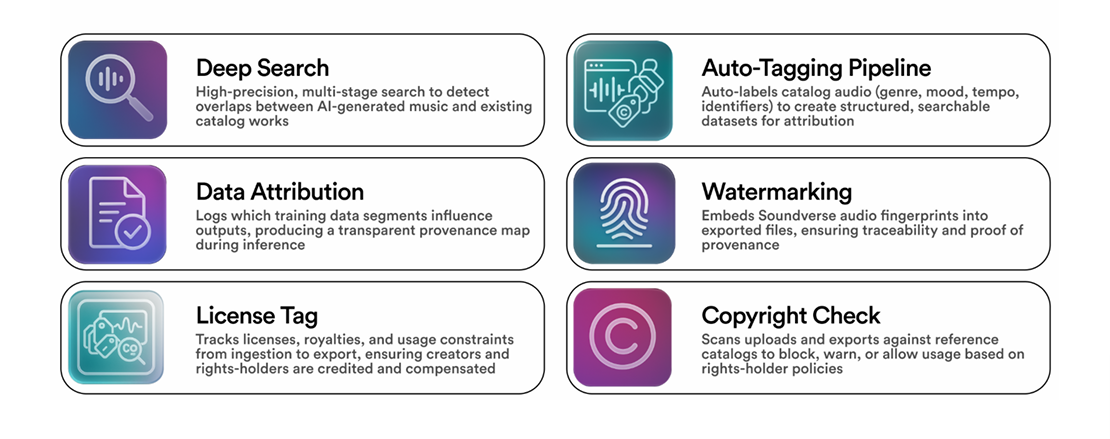
Soundverse Trace is a comprehensive trust layer for AI music that helps make the entire music analytics ecosystem more transparent. It embeds attribution, deep search capabilities, and rights protection from the earliest stages of dataset creation to final exports.
Core Capabilities:
- Deep Search: Offers 1:1 and 1:N high-precision audio scanning to detect overlaps in datasets or catalog usage. This ensures that music played or streamed aligns with verified source data.
- Data Attribution: Logs which training or source data influenced an AI model’s outputs, making it possible to trace lineage for each sound or segment.
- Audio Watermarking: Embeds inaudible yet robust fingerprints for tracking usage across platforms and verifying authenticity.
- License Tagging: Preserves rights metadata from ingestion to export, ensuring every use case—from collaborative production to downstream AI remixing—maintains copyright integrity.
By adding Soundverse Trace into the equation, musicians and data scientists can ensure fair recognition for all contributors while simplifying downstream licensing. When Billboard or data aggregators receive usage reports, they can verify the legitimacy of AI or user-generated content through metadata logs—eliminating doubts around misattributed or manipulated plays.
Soundverse Trace also integrates easily into broader frameworks such as The Ethical AI Music Framework and the Content Partner Program, ensuring that contributors receive royalties when their samples, stems, or datasets fuel chart-ranking songs.
For creators curious about producing chart-ready music that follows ethical AI standards, see Generate AI Music with Soundverse Text-to-Music or explore What AI can generate songs for deeper insights.
Create Your Own Chart-Worthy Music with Soundverse
Turn your musical ideas into fully produced tracks in minutes. Use AI-powered tools to craft sound that rivals industry hits—not just play them, make them.
Start Creating Today
Related Articles
- How AI-Generated Music Is Transforming the Music Industry: Discover how artificial intelligence is reshaping how artists produce, distribute, and measure success in today’s music world.
- The Role of AI Music in Film and Television: Learn how filmmakers and showrunners use AI-generated soundtracks to elevate mood and storytelling.
- How an AI Music Generator Inspires Creative Fusion: Explore how AI tools enable artists to blend genres and create new sonic identities through intelligent composition.
- Most Popular Music Genres: A data-driven look into the most streamed and celebrated genres shaping global music trends.
Here's how to make AI Music with Soundverse
Video Guide
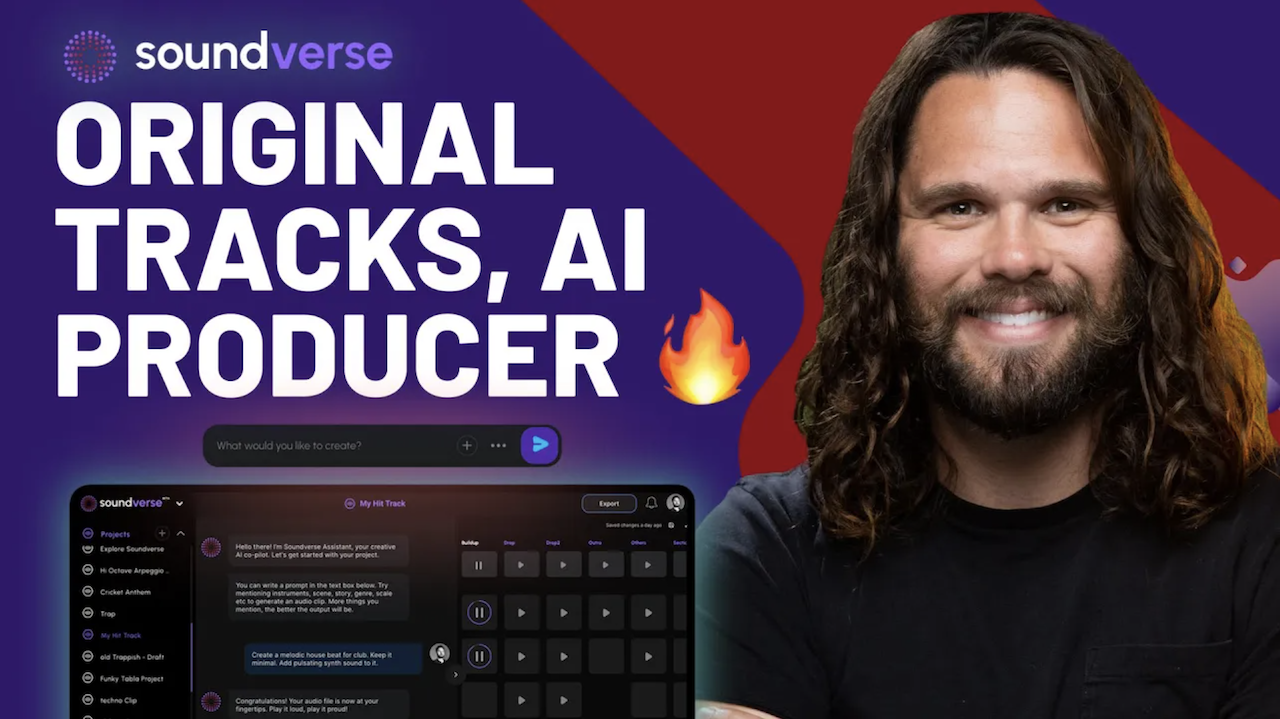
Here’s another long walkthrough of how to use Soundverse AI.
Text Guide
- To know more about AI Magic Tools, check here.
- To know more about Soundverse Assistant, check here.
- To know more about Arrangement Studio, check here.
Soundverse is an AI Assistant that allows content creators and music makers to create original content in a flash using Generative AI. With the help of Soundverse Assistant and AI Magic Tools, our users get an unfair advantage over other creators to create audio and music content quickly, easily and cheaply. Soundverse Assistant is your ultimate music companion. You simply speak to the assistant to get your stuff done. The more you speak to it, the more it starts understanding you and your goals. AI Magic Tools help convert your creative dreams into tangible music and audio. Use AI Magic Tools such as text to music, stem separation, or lyrics generation to realise your content dreams faster. Soundverse is here to take music production to the next level. We're not just a digital audio workstation (DAW) competing with Ableton or Logic, we're building a completely new paradigm of easy and conversational content creation.
TikTok: https://www.tiktok.com/@soundverse.ai
Twitter: https://twitter.com/soundverse_ai
Instagram: https://www.instagram.com/soundverse.ai
LinkedIn: https://www.linkedin.com/company/soundverseai
Youtube: https://www.youtube.com/@SoundverseAI
Facebook: https://www.facebook.com/profile.php?id=100095674445607
Join Soundverse for Free and make Viral AI Music

We are constantly building more product experiences. Keep checking our Blog to stay updated about them!