How AI Music Can Reduce Production Costs in 2026
Learn how AI music production reduces expenses and enables low-cost music creation for producers and artists.
How AI Music Can Reduce Production Costs
In 2026, AI music production has become one of the most transformative forces in the audio creation ecosystem, helping producers, engineers, and artists drastically reduce expenses while maintaining consistent quality. The costs associated with studio rentals, musician sessions, mixing engineers, and licensing fees have traditionally been significant barriers — especially for independent creators. With advanced music production automation powered by AI, those barriers are fading fast.
Why Is AI Music Production Changing Cost Structures?
Until a few years ago, producing a professional-sounding track required access to skilled personnel and high-end equipment. Every stage of production—from arranging and tracking to mixing and mastering—could consume days of manual labor and thousands of dollars. However, since the rapid adoption of AI in the music industry between 2024 and 2025, production pipelines have evolved. By 2026, many companies and individual creators rely heavily on automated composition tools that allow for low-cost music production without compromising creativity.
AI systems can now generate instrumental tracks, loops, and even entire arrangements tailored to specific moods or genres. This automation significantly minimizes human intervention, which in turn reduces the total number of paid studio hours, rental periods, and post-production costs. The result? A democratized environment where audio creators can generate commercial-quality soundscapes at a fraction of traditional pricing.
What Are the Major Cost Drivers in Traditional Music Production?
Music production expenses typically come from:
- Studio and Equipment Rentals – Professional studios charge hourly or daily rates. By contrast, AI tools only require subscription access.
- Musician and Producer Fees – Hiring performers, engineers, and composers accumulates over time. AI generation eliminates many of these stages.
- Licensing and Rights Management – Securing royalty-free or copyrighted material adds complexity and cost. AI-generated compositions can be used freely under clear terms.
- Editing and Post-Processing – Manual mixing and editing can take hours. AI solutions handle mix balancing automatically.

By automating these stages, the new wave of AI in music industry workflows drastically shortens timelines and cuts redundant costs.
How AI Music Production Automates Creativity
Modern AI algorithms interpret descriptive text prompts—like “uplifting ambient soundscape with electronic textures”—and generate music matching those parameters. This method mimics human creativity but executes at machine speed. Advanced platforms like Soundverse empower users to experiment with multiple genres and production styles simultaneously.
When compared to other tools featured in recent Soundverse AI blog reports, the automation workflow revealed a 60–80% cost reduction in small-scale production setups by removing redundant human-intensive labor. For a deeper dive, watch our guide on creating Deep House music or introduction tutorial on how to make music from the Soundverse channel.
What Are Key Benefits for Independent Artists?
Independent artists have especially benefited from AI-assisted music creation technology. Instead of hiring collaborators or paying for lengthy studio time, they can:
- Prototype tracks instantly.
- Generate professional instrumental arrangements.
- Experiment with genre fusions for unique brand identity.
This flexibility allows small creators to compete with larger recording studios on equal creative footing. Similar technological advantages are visible across tools discussed in Soundverse’s guide to AI music generation. You can also explore how creators use the Explore Tab walkthrough to find inspiring audio styles quickly.
How to Make Cost-Efficient Music with Soundverse AI Music Generator
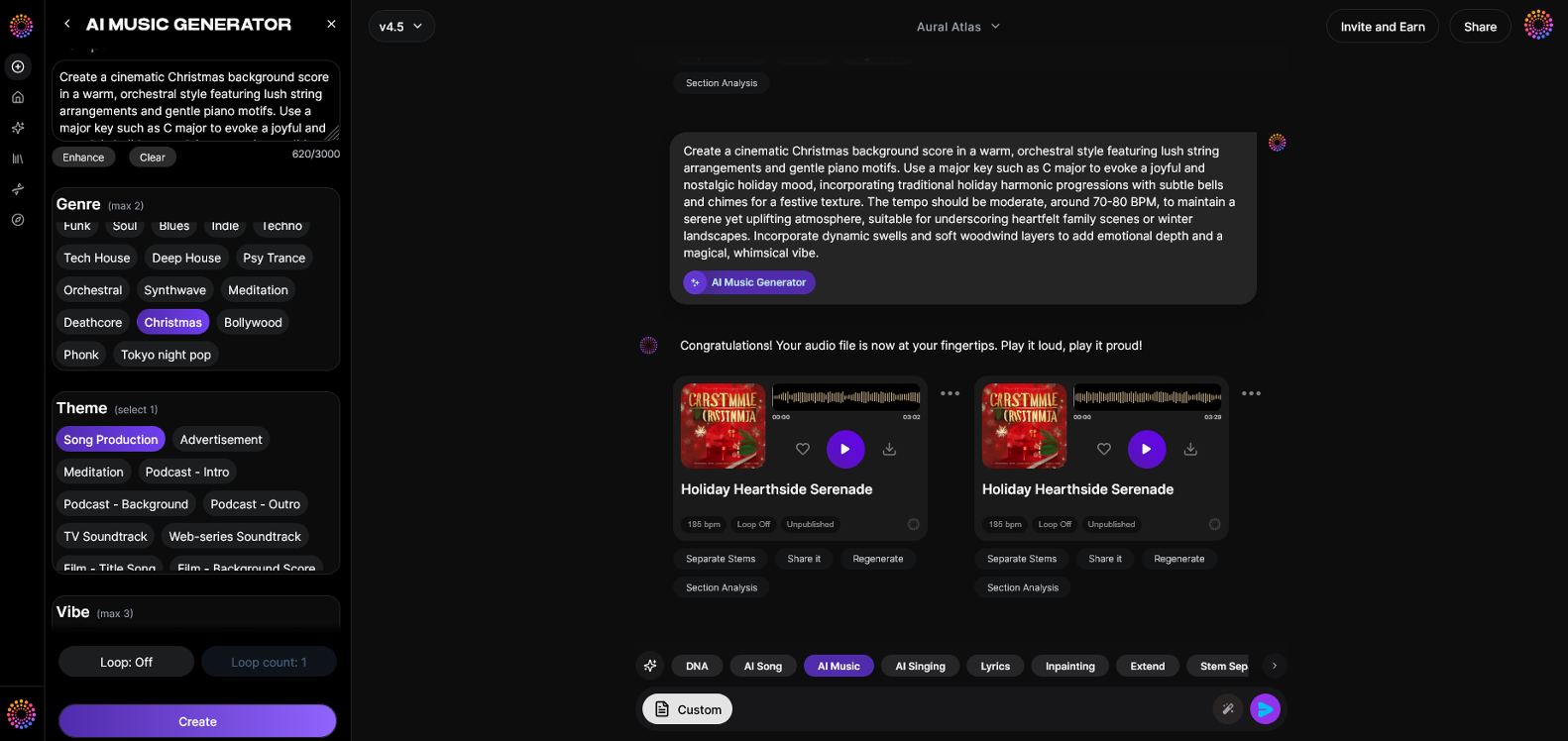
The Soundverse AI Music Generator is designed specifically for producers and brands aiming to reduce production costs without sacrificing sound quality. This flagship tool creates fully produced instrumental music from text prompts. It specializes in background tracks, beats, and soundscapes—ideal for videos, games, wellness, and advertisements.
Core Capabilities
- Text-to-Music Conversion: Users simply type a descriptive prompt, and the AI algorithm interprets mood, tempo, and instruments to produce original music.
- Loop Mode: Perfect for game developers and commercial editors who require seamless repetition.
- Detailed Genre/Mood/Instrument Control: Choose precise sonic parameters that fit your brand or project tone.
- V4 and V5 Model Options: Select between AI versions optimized for different complexity levels or artistic nuance.
The AI Music Generator eliminates the need for human instrumentalists when producing ambient themes or rhythmic beds. This means creators no longer have to pay separate fees for hiring instrumentalists or renting recording spaces. For global production companies, this is a breakthrough in achieving scalable and low-cost music production pipelines.
How Does AI Reduce Expenses Across the Production Chain?
AI-driven composition streamlines the entire workflow. Here’s how:
- Reduced Human Dependency: One AI system can handle multiple production tasks — arrangement, mixing, and mastering — previously requiring a team.
- Faster Production Timeline: What used to take days in human-based editing can now take minutes.
- No Licensing Hassles: Tools like Soundverse DNA ensure copyright-safe music production using licensed training catalogs, eliminating downstream legal fees.
- Automated Versioning: AI can instantly generate multiple versions for different durations or moods, lowering costs for iterative editing.
Through this combination of automation and scale, producers maintain creative freedom while drastically minimizing fixed costs.
What Are Real-World Examples of Cost-Efficient AI Music Use?
In the last two years, advertising agencies have increasingly shifted toward AI-scored music. A simple descriptive input can yield cinematic background tracks perfect for ads, cutting both turnaround time and production budgets.
Similarly, gaming studios use looping modes from AI systems to create adaptive soundtracks for in-game scenes. This evolution allows small developers to generate expansive sound environments for a fraction of traditional composition costs.
Meditation content creators, featured in the guide to healing music, rely extensively on automated ambient generation for digital platforms. These cases highlight how music production automation drives profitability.
Why Production Companies Are Migrating to AI-Based Systems in 2026
Major production houses recognize the scalability AI provides. With minimal overhead, they can meet client demands across multiple genres. Furthermore, ethical AI frameworks – like Soundverse DNA – resolve classic copyright issues, which used to require extensive legal teams.
As 2026 progresses, more mid-size studios adopt hybrid AI-human models: AI generates the core arrangements, while human producers fine-tune details. The overall impact is unmistakable—dramatic reduction in fixed costs and faster project delivery.
Comparing AI Solutions for Cost Efficiency
While tools such as Mubert and Soundraw offer different models for AI music generation, Soundverse distinguishes itself by enabling precise mood and genre customization. For deeper product comparisons, see Soundverse’s detailed article on Mubert alternatives and Soundraw alternative features.
How Soundverse Helps Businesses Scale
Soundverse’s offerings extend beyond the AI Music Generator. Related modules like the AI Song Generator craft full vocal tracks, while Similar Music Generator supports directors who need music resembling an existing reference. These integrated tools form a complete suite of cost-efficient AI composition options for brands and creators aiming to cut down expenses and enhance productivity.
For those managing multi-platform assets, automated solutions built on Soundverse DNA simplify copyright-safe production, allowing artists to monetize their creative style while maintaining authenticity.
Start Creating Smarter with AI Music Production
Cut costs, accelerate creativity, and unlock endless musical possibilities using Soundverse’s AI-powered tools. Empower your next project with intelligent sound creation today.
Related Articles
- How AI-Generated Music Is Transforming the Music Industry — Discover how AI is revolutionizing the music industry with faster production times and lower costs for creators.
- The Benefits of Composing with AI Music Generator — Learn how AI-assisted composition can improve productivity and creativity for modern producers.
- AI Music Generator and Human Composers: A Future Together — Explore how AI complements human creativity, boosting output without compromising artistic integrity.
- Soundverse Assistant: Your AI Music Co-Producer — Find out how Soundverse Assistant helps streamline the music production process by automating creative tasks.
Here's how to make AI Music with Soundverse
Video Guide
Here’s another long walkthrough of how to use Soundverse AI.
Text Guide
- To know more about AI Magic Tools, check here.
- To know more about Soundverse Assistant, check here.
- To know more about Arrangement Studio, check here.
Soundverse is an AI Assistant that allows content creators and music makers to create original content in a flash using Generative AI.
With the help of Soundverse Assistant and AI Magic Tools, our users get an unfair advantage over other creators to create audio and music content quickly, easily and cheaply.
Soundverse Assistant is your ultimate music companion. You simply speak to the assistant to get your stuff done. The more you speak to it, the more it starts understanding you and your goals.
AI Magic Tools help convert your creative dreams into tangible music and audio. Use AI Magic Tools such as text to music, stem separation, or lyrics generation to realise your content dreams faster.
Soundverse is here to take music production to the next level. We're not just a digital audio workstation (DAW) competing with Ableton or Logic, we're building a completely new paradigm of easy and conversational content creation.
TikTok: https://www.tiktok.com/@soundverse.ai
Twitter: https://twitter.com/soundverse_ai
Instagram: https://www.instagram.com/soundverse.ai
LinkedIn: https://www.linkedin.com/company/soundverseai
Youtube: https://www.youtube.com/@SoundverseAI
Facebook: https://www.facebook.com/profile.php?id=100095674445607
Join Soundverse for Free and make Viral AI Music

We are constantly building more product experiences. Keep checking our Blog to stay updated about them!