AI Music Watermarking Standards (C2PA Explained)
Explore AI music watermarking standards and how Soundverse Trace applies C2PA protocols for trusted, rights-protected audio workflows.
AI Music Watermarking Standards (C2PA Explained)
Artificial intelligence has transformed music creation, distribution, and authentication. Yet with this innovation comes a critical challenge—how do we verify the authenticity and origin of AI-generated audio? By 2026, the music industry has turned to AI music watermarking standards and frameworks like C2PA (Coalition for Content Provenance and Authenticity) to ensure transparency in digital sound.
Why are AI Music Watermarking Standards Important in 2026?
The proliferation of AI models capable of generating convincing compositions has blurred lines between original human artistry and machine outputs. Watermarking standards now serve as the foundation for trust and accountability. These systems embed invisible data in audio files, confirming authorship, source, licensing rights, and whether an AI model was involved in production.
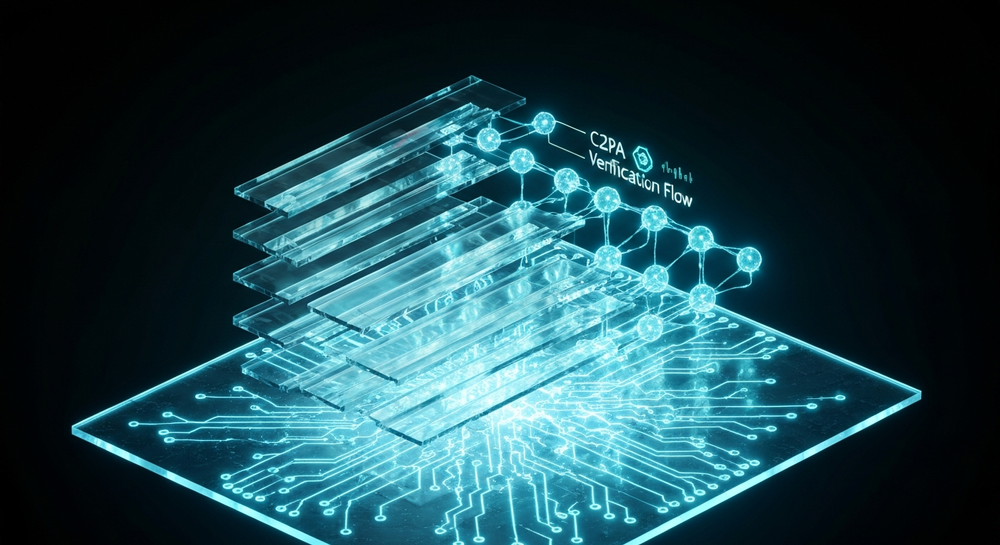
The rise of deepfake vocals, synthetic samples, and generative stems has made the verification of authenticity a necessity instead of an afterthought. The shift from traditional copyright checks to embedded watermarking allows rights-holders and developers to track ownership at scale, greatly reducing infringement risks.
What Does C2PA Mean for Music Authentication?
C2PA stands for Coalition for Content Provenance and Authenticity—a global alliance that establishes protocols for verifying the origin and manipulation of digital media. Originally developed for visual content and journalism, it now plays a vital role in music and audio workflows.
In 2026, adoption of C2PA music credentials enables creators, distributors, and AI companies to attach secure metadata across every stage of production. This metadata includes content credentials, timestamps, creator details, and rights-holder authentication. Essentially, it makes digital audio traceable and tamper-resistant.
C2PA integration guidance ensures that even when AI models remix or regenerate sound elements, the original licensing and attribution data remain intact. It bridges compliance between creative integrity and algorithmic transformation.
How Do Audio Watermarks Reinforce AI Content Credentials?
Audio watermarks have evolved from basic signal embedding techniques into sophisticated, multi-layered identifiers aligned with C2PA protocols. These invisible signatures survive compression, remastering, or partial sampling—making them essential in verifying AI-generated outputs.
The concept of AI content credentials refers to securely attaching verifiable metadata to every generated sound. When combined with watermarking, credentials allow platforms, rights organizations, and distributors to automatically authenticate source identity and contribution.
By 2026, audio watermarks aren’t just technical enhancements—they’re a reliability standard. They help:
- Identify the original dataset that trained an AI model.
- Detect derivative audio that matches existing copyrighted patterns.
- Validate licensing agreements for commercial releases.
- Support fair royalty distribution based on traceable attribution.
These developments reflect a growing movement toward ethical AI music creation—protecting both human artists and machine creators. For a deeper dive, watch our guide on creating Deep House music.
How are C2PA-Based Standards Changing Music Rights Management?
Since 2024, watermarking protocols have transitioned from passive metadata tags to active trust layers embedded directly within file structures. In 2026, C2PA compliance has become standard practice for publishers, sync licensors, and AI music providers.
This framework simplifies rights validation, enabling automated systems to perform deep checks for ownership conflicts before any sound is commercially deployed. Labels and streaming platforms can now cross-reference AI-generated tracks against global catalogs to verify rights integrity instantly.
For example, Soundverse integrates this principle throughout its ecosystem. By enforcing AI music watermarking standards, the company ensures attribution and transparency from model input to final export.
How to make AI Music Watermarking Standards Work with Soundverse Trace
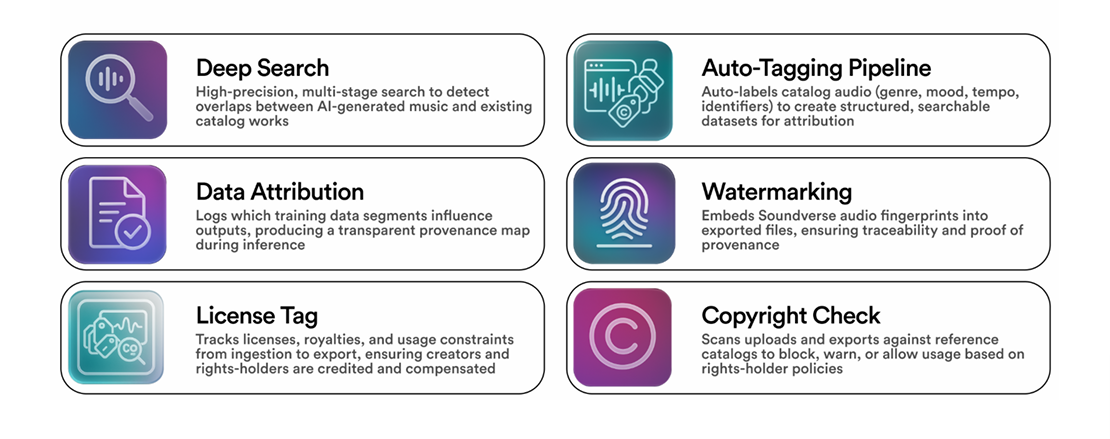
Soundverse Trace serves as a comprehensive trust infrastructure for AI-generated music. It integrates audio watermarking, dataset attribution, deep search, and license tagging—fully aligned with C2PA principles.
What Soundverse Trace Does:
- Deep Search: Executes 1:1 and 1:N scanning to identify overlapping content between training sets and generated audio. This enables rights-confirmation at extraordinary precision.
- Data Attribution: Automatically logs which datasets influenced a musical output, ensuring auditability at dataset and model levels.
- Audio Watermarking: Embeds inaudible fingerprints into every exported track, retaining authorship and provenance even through format changes or compression.
- License Tagging: Preserves rights metadata from ingestion to export, allowing creators and rights managers to automate royalties or takedowns.
These capabilities are asynchronous—users submit audio for processing, and Soundverse Trace returns verification data once finished. This structured workflow delivers accuracy without real-time monitoring claims.
Soundverse Trace supports use cases critical to modern rights infrastructure, including preventing copyright infringement, authenticating provenance, and automating compliance operations. Learn more in related articles like AI Music Generator and Human Composers: A Future Together and How AI-Generated Music is Transforming the Music Industry. For practical insights from users, see our Soundverse tutorial on creating music.
How Does Soundverse Align with Ethical AI Music Frameworks?
The Soundverse ecosystem doesn’t stop at Trace—it extends into broader governance layers such as the Ethical AI Music Framework and the Content Partner Program.
- Ethical AI Music Framework: Establishes transparent data pipelines to ensure consent and recurring compensation. It replaces traditional black-box models with clear traceability across six stages: ingestion, licensing, training, output, attribution, and payment.
- Content Partner Program: Allows rights-holders to license content for AI training securely, receiving royalty payouts based on the system’s attribution detection.
Together, these programs align with evolving industry expectations for creator fairness and algorithmic accountability. They make AI development sustainable while protecting moral and legal rights.
If you want to explore creative applications of AI watermarking and ethical data sourcing, check out resources like Soundverse Assistant: Your AI Music Co-Producer or Soundverse Introduces Stem Separation AI Magic Tool.
How Are Industry Professionals Using Watermarking Standards?
Music producers, AI developers, digital rights managers, and research teams in 2026 increasingly rely on watermark verification to confirm originality and allow for transparent licensing.
Labels utilize watermarking to flag AI-generated tracks before distribution. Streaming services adopt C2PA credentials to authenticate catalog ownership without manual auditing. AI creators integrate embedded rights tags to maintain creative chain-of-custody across multiple tools and remix stages.
For research institutions and content authenticity initiatives, watermarking provides verifiable evidence trails necessary for court or arbitration contexts. As AI models grow more advanced, these records ensure accountability and ethical transparency.
What’s Next for AI Music Authentication?
The next evolution of AI watermarking involves interoperability across global content frameworks. By the end of 2026, most professional AI music systems are expected to integrate C2PA alignment directly into their file exports, creating universal provenance standards.
Platforms like Soundverse are leading this transition, establishing the benchmark infrastructure for reliable data tracing and attribution logging. As innovation accelerates, trust will become the competitive advantage that distinguishes responsible AI music engines from unverified generators.
Ultimately, AI watermarking standards are less about control and more about empowerment—rebuilding the integrity of digital creativity through verifiable truth.
Start Creating Watermark-Compliant AI Music Today
Generate professional, secure, and compliant AI music with Soundverse’s powerful suite of creative tools designed for modern musicians and content creators.
Related Articles
- How AI-Generated Music Is Transforming the Music Industry — Discover how artificial intelligence is revolutionizing music creation and reshaping industry standards across genres.
- Navigating the World of Royalty-Free and Copyright-Free Music Using Soundverse AI — Learn how to legally and ethically use AI-generated music for your content with Soundverse’s royalty-free options.
- The Role of AI Music in Film and Television — Explore how AI-generated compositions are becoming key elements in modern media production and entertainment.
- Copyright-Free vs Royalty-Free Music: What Creators Should Know — Understand the crucial differences between copyright-free and royalty-free music to protect your creative work.
Here's how to make AI Music with Soundverse
Video Guide
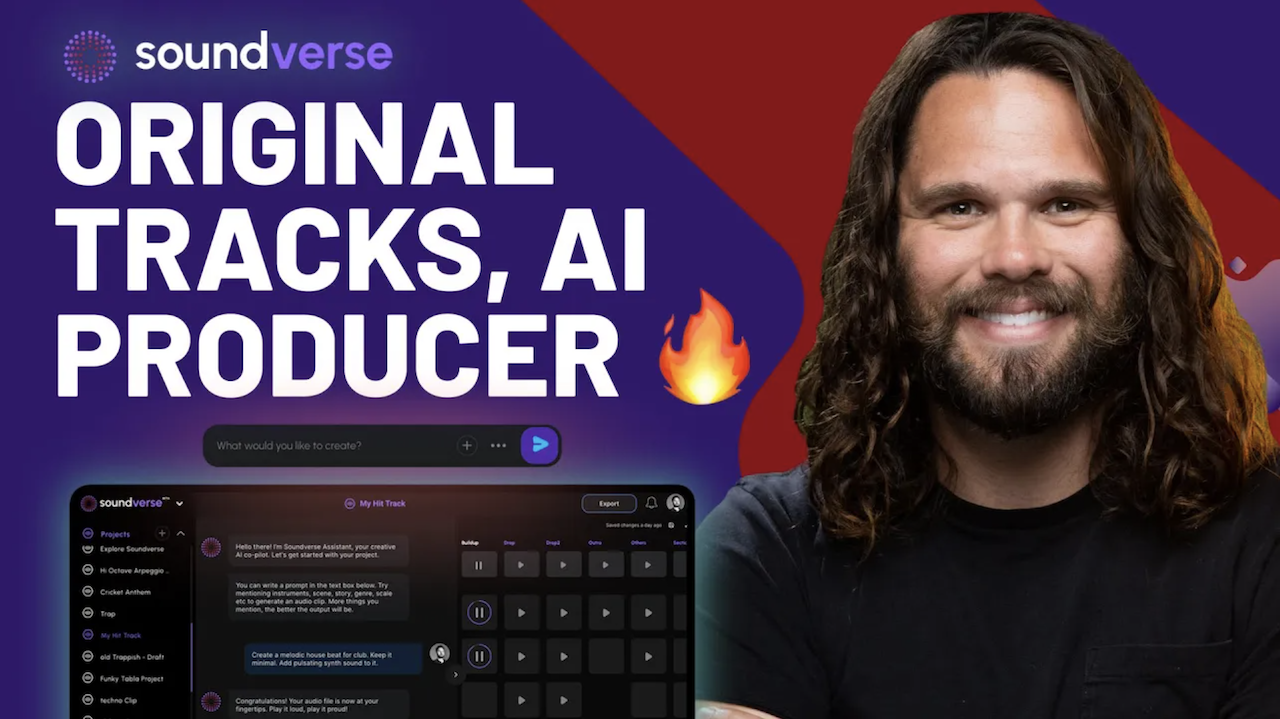
Here’s another long walkthrough of how to use Soundverse AI.
Text Guide
- To know more about AI Magic Tools, check here.
- To know more about Soundverse Assistant, check here.
- To know more about Arrangement Studio, check here.
Soundverse is an AI Assistant that allows content creators and music makers to create original content in a flash using Generative AI. With the help of Soundverse Assistant and AI Magic Tools, our users get an unfair advantage over other creators to create audio and music content quickly, easily and cheaply. Soundverse Assistant is your ultimate music companion. You simply speak to the assistant to get your stuff done. The more you speak to it, the more it starts understanding you and your goals. AI Magic Tools help convert your creative dreams into tangible music and audio. Use AI Magic Tools such as text to music, stem separation, or lyrics generation to realise your content dreams faster. Soundverse is here to take music production to the next level. We're not just a digital audio workstation (DAW) competing with Ableton or Logic, we're building a completely new paradigm of easy and conversational content creation.
TikTok: https://www.tiktok.com/@soundverse.ai
Twitter: https://twitter.com/soundverse_ai
Instagram: https://www.instagram.com/soundverse.ai
LinkedIn: https://www.linkedin.com/company/soundverseai
Youtube: https://www.youtube.com/@SoundverseAI
Facebook: https://www.facebook.com/profile.php?id=100095674445607
Join Soundverse for Free and make Viral AI Music
We are constantly building more product experiences. Keep checking our Blog to stay updated about them!