AI Music for Ethical Audio Infrastructure: Building a Transparent Future in 2026
Explore ethical AI music systems shaping audio infrastructure in 2026.
AI Music for Ethical Audio Infrastructure
The landscape of artificial intelligence and music has evolved dramatically by 2026. The dialogue has shifted from pure innovation to responsibility—focusing on AI music ethics and how audio infrastructure must evolve to support creators, researchers, and technologists in an ethically sound digital future. As the demand for generative AI grows, industries face the critical question: How do we innovate without compromising integrity, artist rights, and consent?
What is AI Music Ethics in 2026?
AI music ethics refers to the principles guiding how artificial intelligence interacts with creative expression. These principles address data sourcing transparency, consent from artists, fair licensing, and recurring compensation for creative contributions. Since 2024, this subject has transitioned from academic theory to an active implementation challenge. Enterprises and independent labels now seek frameworks that ensure every audio asset used for AI training or composition meets ethical and legal standards.

In 2026, AI music ethics is no longer optional—it is a compliance and trust requirement. Audio engineers and developers need assurance that the material they use in AI-powered environments is sourced, processed, and distributed responsibly. Ethical AI systems within music technology prioritize fairness, explainability, and accountability across the entire audio lifecycle.
Why Does Audio Infrastructure Need an Ethical Foundation?
Modern audio infrastructure involves complex pipelines—from data ingestion and model training to output distribution. In prior years, the lack of transparency exposed vulnerabilities such as data scraping, copyright infringement, and untraceable model outputs. Today’s ethical audio infrastructure integrates accountability into every touchpoint.
For instance, traceability ensures creators receive proper attribution when their sonic style contributes to AI-generated tracks. Licensing frameworks offer monetization opportunities through recurring royalties. Ethical AI systems bridge human creativity with machine intelligence, securing legal and moral footing for digital music futures.
The integration of ethical audio design also benefits enterprises and content creators who depend on trustworthy AI outputs. Technologies like watermarking and explainable inference strengthen user confidence while enabling scalability. Essentially, ethical audio infrastructure transforms the technological backbone of digital sound into an equitable ecosystem.
How Have Music Technology and Ethics Evolved Since 2024?
Between 2024 and 2025, the rise of AI-generated music exposed the fragility of copyright enforcement. Many services relied on non-consensual data scraping, leaving artists questioning their role in the generative process. In 2026, regulatory frameworks now demand transparency and measurable ethical compliance.
Compared to 2024, when black-box AI models were dominant, 2026 emphasizes explainable systems—where data lineage and attribution are traceable. This isn’t a simple trend; it reflects a deeper industry transformation aligned with responsible innovation principles.
Platforms are increasingly adopting permission-based data frameworks similar to initiatives seen in Soundverse’s introduction of stem separation tools and ethical AI-driven creation. These advances show that when ethical mechanisms underpin technological growth, creativity expands in sustainable ways.
For a deeper dive, watch our guide on creating Deep House music and how to make music using AI from Soundverse’s tutorial series.
What Do Audio Engineers and AI Researchers Need to Know About Responsible Innovation?
Responsible innovation in AI audio design combines transparency with user empowerment. It encourages researchers and audio engineers to adopt practices ensuring traceability and consent.
Key pillars include:
- Data Licensing: Using approved datasets with clear artist permissions.
- Attribution Transparency: Maintaining visible lineage for every generated sound.
- Watermarking Outputs: Embedding identifiable metadata that confirms ethical origins.
- Recurring Compensation Models: Rewarding content partners when their sonic identity contributes to machines’ creative output.
By applying these standards, professionals avoid inadvertent misuse of content. Ethical AI systems not only prevent exploitation but encourage collaboration—where both creators and algorithms benefit.
These principles have guided advancements seen in applications such as AI-generated music for film and television and experimental sound modeling across genres. They ensure that innovation remains harmonized with ethical practices.
How to Make AI Music for Ethical Audio Infrastructure with Soundverse The Ethical AI Music Framework
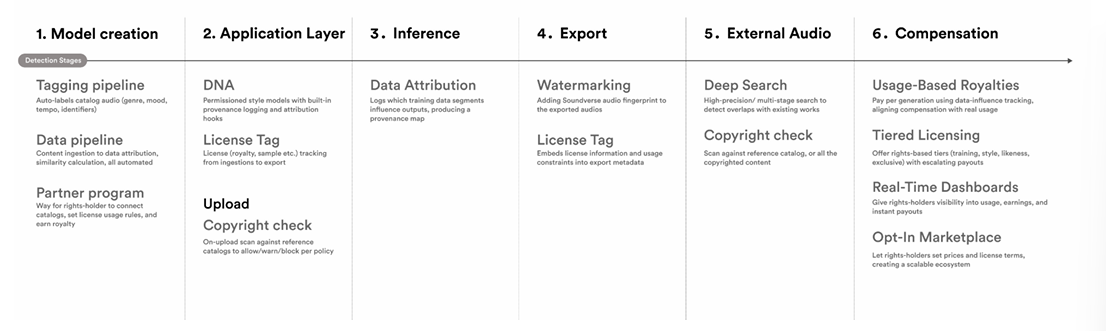
The Ethical AI Music Framework by Soundverse exemplifies the complete alignment between creativity and ethics. It forms the bridge between innovation and integrity, delivering transparent mechanisms that embed consent, attribution, and recurring compensation throughout every stage.
This framework replaces opaque black-box models with a six-stage pipeline:
- Licensed Data Sourcing (No scraping) – All data comes from verified, approved rights-holders. This ensures artistic consent and legal integrity.
- Permissioned Models (DNA) – Models are trained using the Soundverse DNA system, where artists opt-in to license their sonic identity for ethical training.
- Explainable Inference (Attribution) – Every generated output references its data origins, offering full transparency into creative derivation.
- Traceable Export (Watermarking) – Each exported piece embeds secure metadata linking back to contributors and dataset licenses.
- Deep Search (External Scanning) – The system continuously checks external networks to identify usage, attribution gaps, or unauthorized replication.
- Recurring Compensation (Partner Program) – Artists receive ongoing royalty payments each time their creative DNA supports a new generation.
Through these mechanisms, the Ethical AI Music Framework supports enterprises, developers, and artists in building transparent, legally safe music systems. It turns ethical audio infrastructure from an abstract concept into an actionable software protocol.
Soundverse complements this framework with accompanying tools:
- Soundverse Trace: A trust layer embedding attribution and rights protection across dataset creation and distribution.
- Content Partner Program: A monetization pathway enabling artists to benefit from AI usage.
- Soundverse DNA: A model system that generates artist-aligned original music using licensed input catalogs.
Together, these features establish the definitive ethical infrastructure for the growing AI music economy.
What Impact Will Ethical Audio Systems Have on Music Technology in 2026?
Ethical audio systems redefine how both creators and technologists interact with AI-generated content. Engineers gain structured systems to audit models, researchers access transparent processes, and artists recover the ability to monetize their unique contributions.
Audio infrastructure powered by ethics is also driving trends in immersive music creation, adaptive soundscapes, and corporate compliance. Labels and software developers now choose frameworks like Soundverse for legal assurance and brand reputation management. The broader community recognizes that ethical design is not a limitation—it is an accelerator of creativity.
By embedding consent and compensation into digital sound systems, 2026 is shaping an environment where machine learning honors culture as much as code.
For those exploring broader music innovations, check out AI music creation methods and trends in the evolving music industry. They demonstrate how technology and ethics combine to reshape musical economies worldwide.
Build an Ethical AI Music Future Today
Explore how Soundverse empowers musicians and creators to generate, edit, and share AI music responsibly—without compromising creativity or ethics.
Get Started Free
Related Articles
- How AI-Generated Music is Transforming the Music Industry — Discover how AI is reshaping production, performance, and creativity across the global music landscape.
- AI Music Generator and Human Composers: A Future Together — Explore how AI and human creativity can coexist to compose meaningful and original music.
- Copyright-Free vs. Royalty-Free Music: What Creators Should Know — Learn the key differences between copyright-free and royalty-free music to license your AI creations ethically.
- The Role of AI Music in Film and Television — See how AI-generated music is revolutionizing soundtracks and production in the entertainment industry.
Here's how to make AI Music with Soundverse
Video Guide
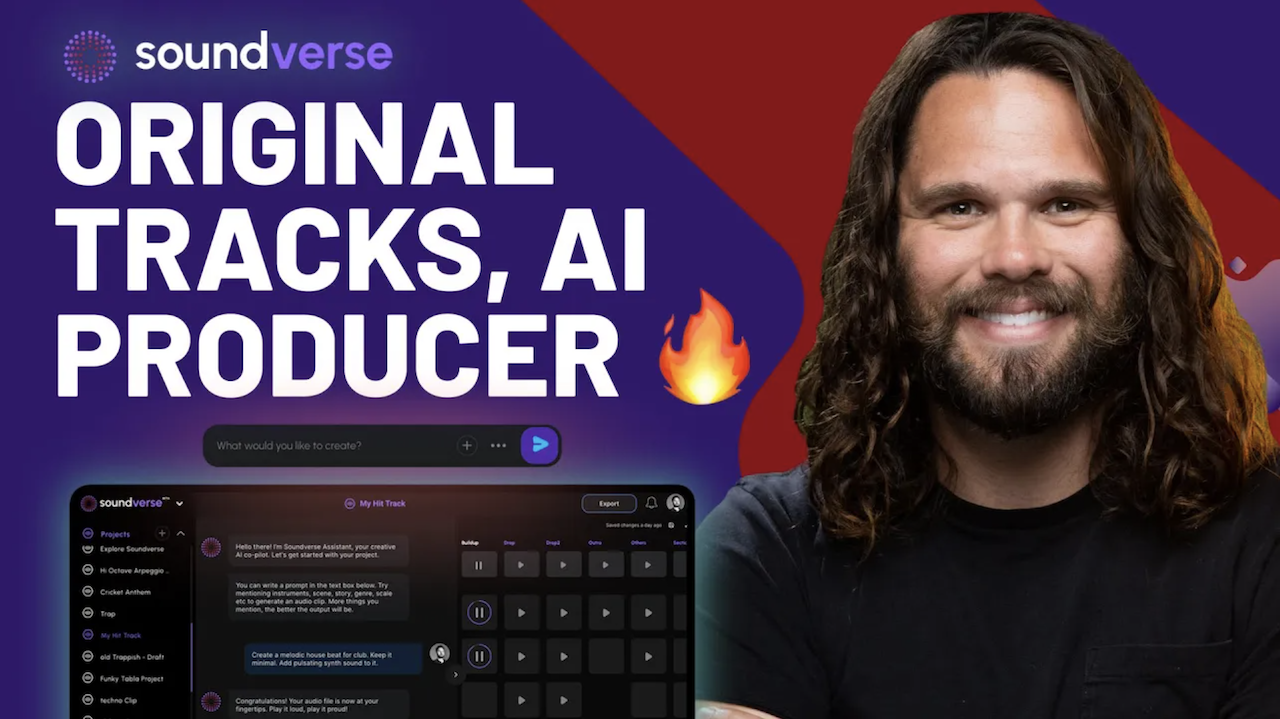
Here’s another long walkthrough of how to use Soundverse AI.
Text Guide
- To know more about AI Magic Tools, check here.
- To know more about Soundverse Assistant, check here.
- To know more about Arrangement Studio, check here.
Soundverse is an AI Assistant that allows content creators and music makers to create original content in a flash using Generative AI. With the help of Soundverse Assistant and AI Magic Tools, our users get an unfair advantage over other creators to create audio and music content quickly, easily and cheaply. Soundverse Assistant is your ultimate music companion. You simply speak to the assistant to get your stuff done. The more you speak to it, the more it starts understanding you and your goals. AI Magic Tools help convert your creative dreams into tangible music and audio. Use AI Magic Tools such as text to music, stem separation, or lyrics generation to realise your content dreams faster. Soundverse is here to take music production to the next level. We're not just a digital audio workstation (DAW) competing with Ableton or Logic, we're building a completely new paradigm of easy and conversational content creation.
TikTok: https://www.tiktok.com/@soundverse.ai
Twitter: https://twitter.com/soundverse_ai
Instagram: https://www.instagram.com/soundverse.ai
LinkedIn: https://www.linkedin.com/company/soundverseai
Youtube: https://www.youtube.com/@SoundverseAI
Facebook: https://www.facebook.com/profile.php?id=100095674445607
Join Soundverse for Free and make Viral AI Music

We are constantly building more product experiences. Keep checking our Blog to stay updated about them!