How AI Music is Transforming Educational Content in 2026
Discover how AI music enhances e-learning audio and educational content.
AI Music for Educational Content
Introduction: Why AI Music Matters for Modern Learning
In 2026, the educational landscape continues to evolve rapidly, driven by technology, personalization, and the increasing demand for engaging content. One of the most exciting advancements in this space is AI music—a powerful tool that is revolutionizing how educators design, produce, and deliver learning experiences. From immersive e-learning audio to dynamic educational sound design, AI-generated background music has become a strategic asset for learning developers and course creators.
AI music isn’t just about creating melodies; it’s about reinforcing comprehension, emotional engagement, and retention. Studies from previous years (2024–2025) already highlighted that learners retain information better when multisensory elements—especially sound—are integrated effectively. In 2026, this insight has matured into practical application, made possible through accessible AI platforms like Soundverse.
What is AI Music and Why is it Changing E-Learning in 2026?
AI music refers to musical compositions generated or assisted by artificial intelligence systems that analyze data and patterns to produce original soundtracks. These systems can interpret natural language prompts—such as “create uplifting background music for an interactive physics module”—and instantly generate audio that aligns with a desired mood, genre, and pacing.
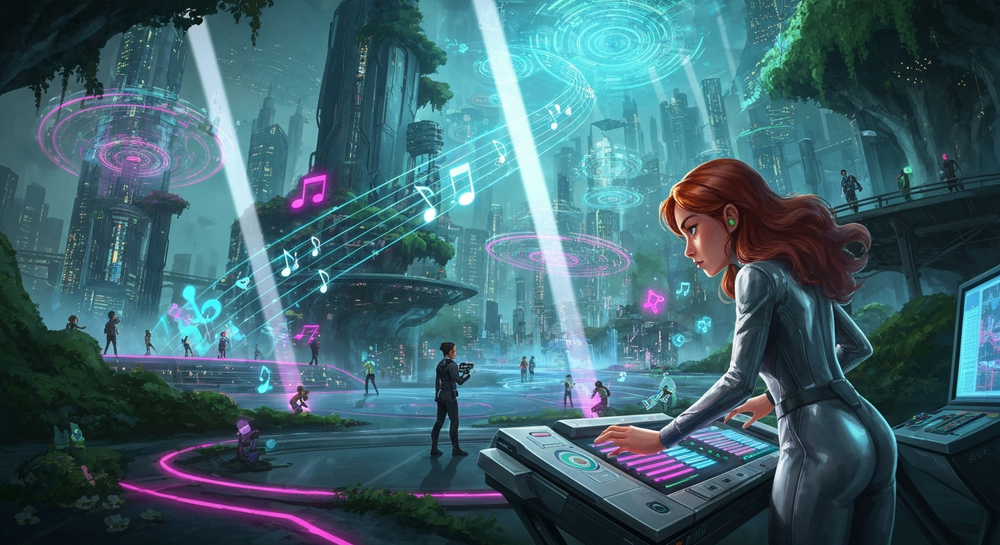
For e-learning professionals, this development is transformative. In 2026, learners expect personalized, gamified, and emotionally resonant educational experiences. Traditional stock music libraries often fail to capture the nuanced atmosphere of educational storytelling, while hiring full-scale composers can be costly and time-consuming. AI-generated background music bridges this gap by offering speed, affordability, and precise alignment with content objectives.
Here are a few areas where AI music is making tangible impact:
- Microlearning Modules: Quick custom sound transitions for bite-sized lessons enhance immersion without distracting from content.
- Gamified Learning Environments: Dynamic background scores that shift based on learner achievement create emotional continuity.
- Language and Music Courses: Real-time examples or tonal demonstrations powered by AI help illustrate theory concepts interactively.
- Corporate Training: Branded sonic identities tailored automatically to match tone guidelines.
How Does AI Music Improve Educational Sound Design?
Educational sound design is more than just adding background tracks—it’s about crafting an auditory narrative that supports learning outcomes. AI tools today can analyze a lesson’s tone, pacing, and emotional intent, helping instructional designers fine-tune compositions that resonate with target audiences.
For example:
- Rhythmic pacing: Music tempo can enhance learner alertness during key concepts.
- Emotion modulation: Calm, low-frequency instrumental layers can reduce cognitive overload during complex topics.
- Cue-based reinforcement: Custom sound cues for quiz responses, transitions, or feedback improve engagement without manual audio editing.
AI’s role in sound design between 2025 and 2026 has evolved from a novelty to a necessity. Many instructional platforms now integrate AI audio tools into their course authoring environments to maintain consistency and improve accessibility across multiple media formats.
What Are the Benefits of Using AI-Generated Background Music in Online Courses?
When used strategically, AI-generated background music transforms online courses from static slide decks into multi-dimensional learning experiences. Key benefits include:
- Personalization at Scale: Educators can easily adjust background tone and intensity to match difficulty levels or emotional tone across different modules.
- Time Efficiency: Instead of sifting through thousands of royalty-free tracks, AI can generate a perfect-fit soundtrack in seconds.
- Licensing Clarity: Because music is AI-generated, creators retain full commercial usage rights, simplifying publishing policies.
- Enhanced Retention: Sound markers help learners recall key information more effectively.
- Continuous Iteration: Educators can test multiple variations quickly, adjusting music dynamically based on learner feedback.
If you’re curious how these principles extend beyond education, you might explore how AI-generated music is transforming the music industry itself or how innovative creators use it for diverse content forms like YouTube videos. For a deeper dive, watch our guide on creating Deep House music or explore the Soundverse Tutorial Series - How to Make Music.
The Role of AI Music in Inclusive and Accessible Learning
One of 2026’s major educational design imperatives is inclusivity. AI music can enhance accessibility by adjusting rhythm, frequency, and tonal range for neurodiverse learners. Some creators experiment with adaptive e-learning soundscapes that change tone or pacing based on learner stress indicators or completion progress.
Additionally, AI-generated loops suited for students with sensory sensitivities offer calm, predictable auditory patterns—an element critical for accessibility-focused UX design.
How to Make AI Music for Educational Content with Soundverse Agent
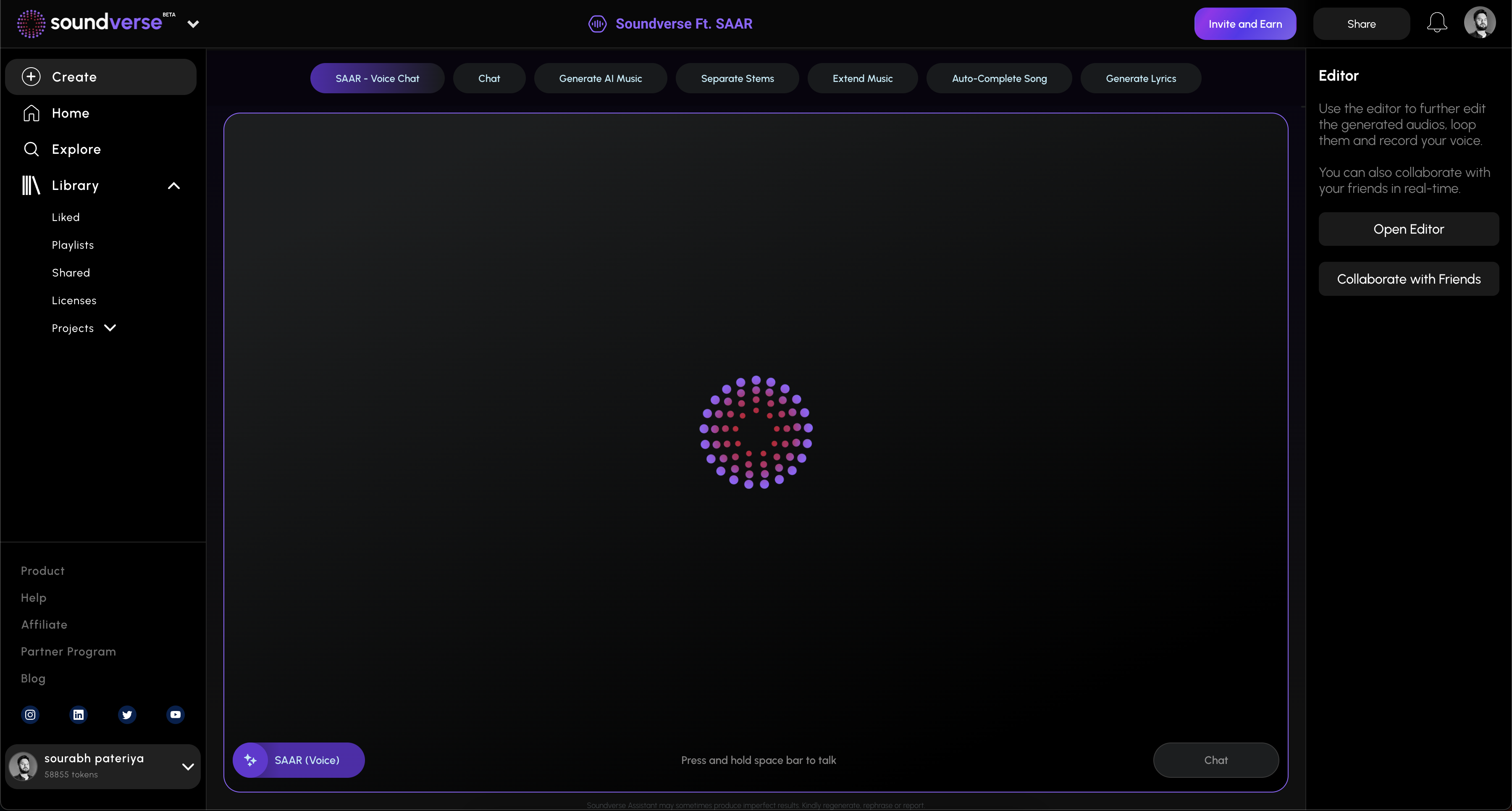
Soundverse’s Agent is a conversational AI music assistant designed as a centralized controller across Soundverse’s creative ecosystem. Using multi-step reasoning and contextual memory, the Agent can interpret natural language inputs such as “generate relaxing instrumental background music for a language lesson” or “remove drums from the math tutorial soundtrack.” It orchestrates the best tools—like the AI Music Generator or the AI Song Generator—to handle complex workflows automatically.
Core capabilities include:
- Multi-step orchestration: The Agent sequences multiple tools intelligently (e.g., generate, separate, extend).
- Contextual memory: It remembers previous requests, which is essential for educators refining music through iterations.
- Voice input: Enables users to issue requests hands-free—a valuable feature for content creators multitasking during production.
- Workflow automation: Cross-tool integration means educators can move seamlessly from concept to final export without manual setup.
Primary educational use cases:
- Helping beginners and non-musicians craft soundtracks for instructional videos.
- Supporting music teachers in demonstrating theory concepts interactively.
- Automating revision and refinement cycles across an entire e-learning series.
Educators who value iteration, speed, and creativity quickly realize how Soundverse Agent transforms static educational audio into evolving, personalized sound environments.
Why Soundverse Agent Excels in E-Learning Audio Production
Unlike traditional standalone generators, the Agent doesn’t just create a single music track—it manages a holistic process. For instance, after generating instrumental backing, it can automatically suggest removing percussion elements or looping segments to synchronize perfectly with the lesson duration. This orchestration capacity distinguishes Soundverse from linear tools like Soundraw or other generators that require manual refinement.
Educators benefit from:
- Automation without compromise: High-quality sound even at high production speeds.
- Cross-tool synergy: Integration with other Soundverse creative utilities through the Agent’s orchestration.
- Export flexibility: Outputs compatible with video editing software or Learning Management Systems (LMS).
For professionals comparing different solutions, Soundverse has become one of the top Mubert alternatives thanks to its conversational intelligence, workflow control, and educational relevance.
The Future of AI Music in Education: Trends to Watch in 2026 and Beyond
By mid-2026, adaptive AI audio engines are beginning to integrate directly with LMS data, enabling live adjustment of background scores to match learner engagement metrics. For instance, if a student appears disengaged, the system could subtly modify tempo or harmony to recapture focus.
We’re also seeing experimentation with “AI sound companions”—interactive modules allowing students to guide their own sound environment preferences. Paired with generative technologies like Soundverse’s pipeline, these trends hint at fully adaptive audio ecosystems that respond not just to instructors, but learners themselves.
For further insights, explore the 1st Workshop on Emerging AI Technologies for Music, AIMC 2026 – Conference on AI Music Creativity, or Second International AI Music Studies Conference which highlight emerging academic perspectives on this transformation.
Bring the Power of AI Music to Your Classroom
Create an engaging learning environment with royalty-free AI-generated music tailored to your lessons, videos, and e-learning projects. Elevate student experience with Soundverse’s intuitive tools.
Start Creating with Soundverse
Related Articles
- Enhancing YouTube Content with Royalty-Free and Copyright-Free Music Using Soundverse AI: Discover how to use AI music to enrich your video content while staying copyright-compliant and professional.
- The Role of AI Music in Film and Television: Explore how AI-generated music is reshaping the soundscape of film and educational video production alike.
- How AI-Generated Music Is Transforming the Music Industry: Learn how AI music is revolutionizing music creation across industries, including education and content development.
- Generate AI Music with Soundverse Text-to-Music: See how Soundverse’s text-to-music feature can help educators easily generate background tracks for lessons or videos.
Here's how to make AI Music with Soundverse
Video Guide
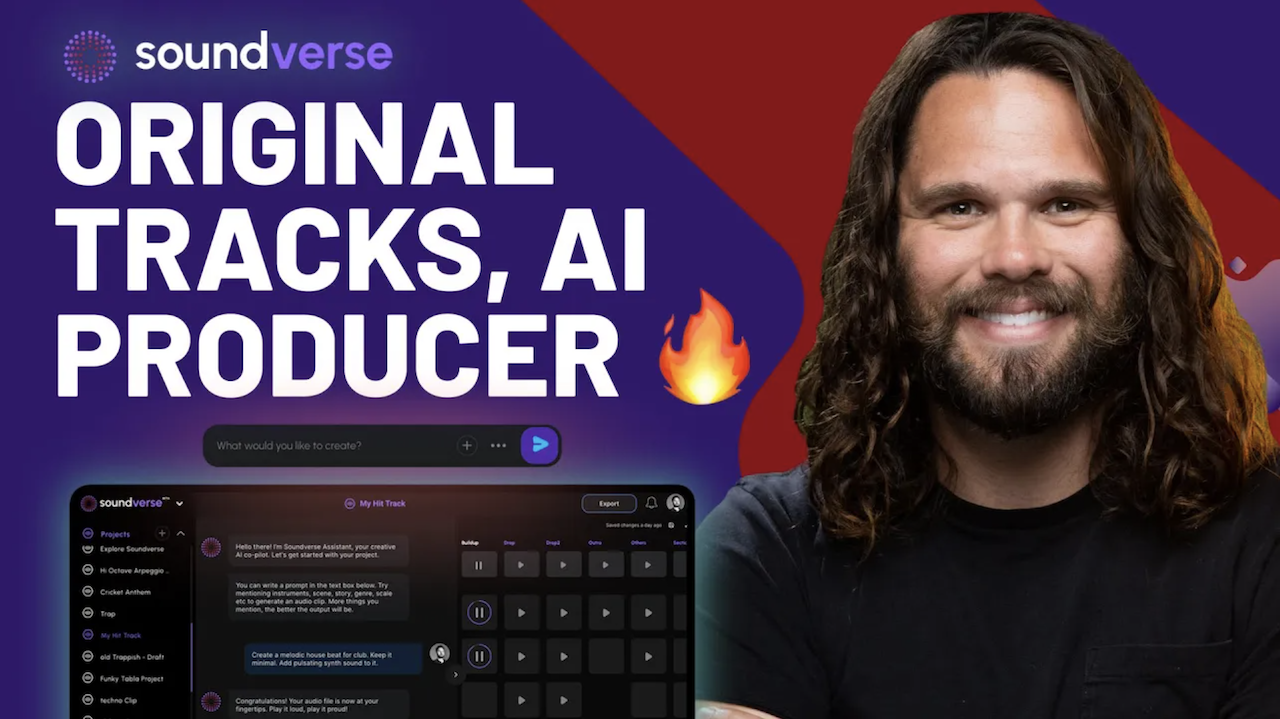
Here’s another long walkthrough of how to use Soundverse AI.
Text Guide
- To know more about AI Magic Tools, check here.
- To know more about Soundverse Assistant, check here.
- To know more about Arrangement Studio, check here.
Soundverse is an AI Assistant that allows content creators and music makers to create original content in a flash using Generative AI. With the help of Soundverse Assistant and AI Magic Tools, our users get an unfair advantage over other creators to create audio and music content quickly, easily and cheaply. Soundverse Assistant is your ultimate music companion. You simply speak to the assistant to get your stuff done. The more you speak to it, the more it starts understanding you and your goals. AI Magic Tools help convert your creative dreams into tangible music and audio. Use AI Magic Tools such as text to music, stem separation, or lyrics generation to realise your content dreams faster. Soundverse is here to take music production to the next level. We're not just a digital audio workstation (DAW) competing with Ableton or Logic, we're building a completely new paradigm of easy and conversational content creation.
TikTok: https://www.tiktok.com/@soundverse.ai
Twitter: https://twitter.com/soundverse_ai
Instagram: https://www.instagram.com/soundverse.ai
LinkedIn: https://www.linkedin.com/company/soundverseai
Youtube: https://www.youtube.com/@SoundverseAI
Facebook: https://www.facebook.com/profile.php?id=100095674445607
Join Soundverse for Free and make Viral AI Music
We are constantly building more product experiences. Keep checking our Blog to stay updated about them!