How to Create a Tribal or Ethnic Song With AI Music
Learn how to make a tribal or ethnic song using AI music creation tools like Soundverse Voice to Instrument in 2026.
How to Create a Tribal or Ethnic Song With AI Music
In the evolving landscape of 2026, AI music creation has become one of the most exciting tools for producers, sound designers, and artists exploring culturally inspired soundscapes. With artificial intelligence in music, creators can now develop intricate tribal rhythms, ethnic melodies, and world music fusion without needing specialized instrumental skills. Whether you’re drawn to African drums, Indian sitar tones, Native American flutes, or Andean panpipes, AI tools make it easier than ever to merge global cultural elements into contemporary tracks.
Cultural and tribal music has always celebrated human connection, rhythmic storytelling, and emotional resonance. In an era where technology amplifies creativity, understanding how to combine traditional influences with AI-generated sound can unlock infinite possibilities for modern producers.
What makes tribal and ethnic music special?
Tribal and ethnic music reflects the unique spirit of communities around the world. It’s the sound of rituals, ceremonies, and stories passed down through generations. These sounds often rely on natural timbres, such as wooden percussion, skin drums, or wind instruments carved from bone or bamboo. Common features include:
- Polyrhythms and Percussion Layers: Repeated rhythmic cycles form the heartbeat of many tribal sounds.
- Modal Melodies: Unlike modern major/minor scales, many ethnic traditions use modal tuning systems.
- Call-and-Response Vocals: Vocal interplay adds emotional movement and authenticity.
- Organic Instrumentation: Instruments like the djembe, tabla, bansuri, or didgeridoo infuse tracks with depth and cultural identity.
When producers blend these elements using AI cultural music tools, they can reimagine age-old traditions through a digital lens—preserving authenticity while evolving into new sonic territories.
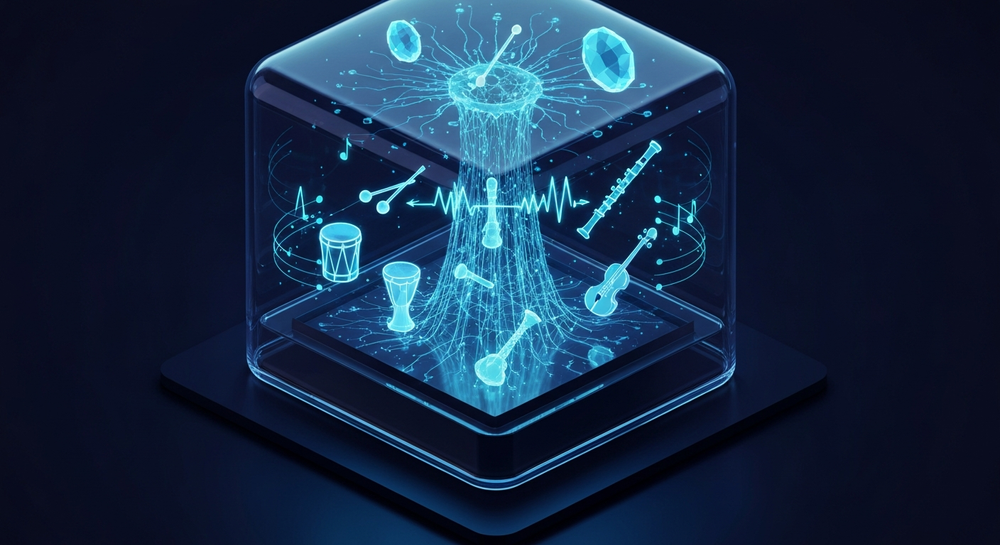
How does AI music creation help in cultural or tribal sound generation?
AI music creation technology provides several benefits for ethnic music production. Modern AI platforms allow users to describe a desired track using prompts like “ancient tribal chanting with African percussion” or “cinematic Indian fusion with sitar and flute.” The AI then generates corresponding melodies, percussive textures, and environmental soundscapes.
The technology enhances accessibility, enabling creators without extensive instrumental experience to build layered, culturally inspired compositions. It also reduces production time, letting you experiment freely with different timbres and rhythmic patterns before refining the final arrangement.
Key advantages include:
- Rapid sound prototyping: Generate sketches and refine them with AI music tools.
- Cultural sound expansion: Access instruments from multiple world cultures in one environment.
- High consistency and repeatability: Maintain coherent tone palettes across projects.
- Integration with voice-based creativity: Turn simple vocal ideas into playable instruments.

How to make tribal or ethnic music with Soundverse Voice to Instrument
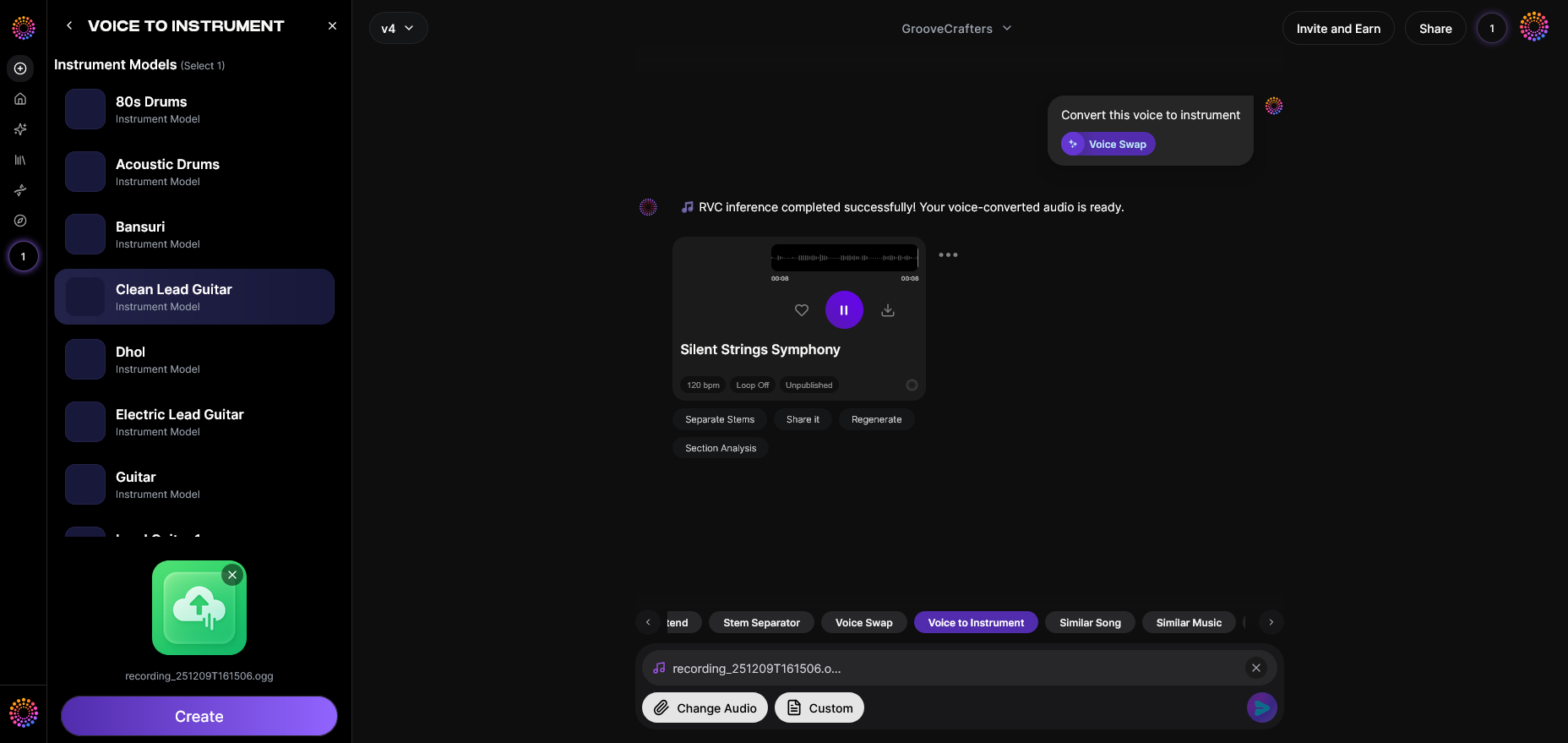
If you're exploring tribal sound generation or ethnic music production, Soundverse’s Voice to Instrument feature offers an intuitive pathway for AI-driven cultural composition.
What is Voice to Instrument?
The Voice to Instrument feature from Soundverse transforms your vocal input—whether humming, beatboxing, or singing—into realistic instrumental performances. Through timbre transfer, this tool analyzes your voice’s pitch and phrasing, then maps it to your chosen instrument. A wide library of Western and ethnic instruments means you can turn a simple melody into a sitar, flute, or djembe rendition.
Core Capabilities:
- Timbre transfer for realistic sound conversion.
- Extensive library including both Western and ethnic instruments.
- Works with melodic and rhythmic vocal input.
Primary Use Cases:
- Sketch ideas instantly by humming.
- Build demos without needing instrumental training.
- Create textures and world music fusions.
Step 1: Feature Overview
Access the Voice to Instrument tool in Soundverse. It is part of the AI Magic Tools collection designed for transforming audio into new sound forms. This step introduces you to the dashboard where you can use your voice as an instrument-based input source.
Step 2: Instrument Selection
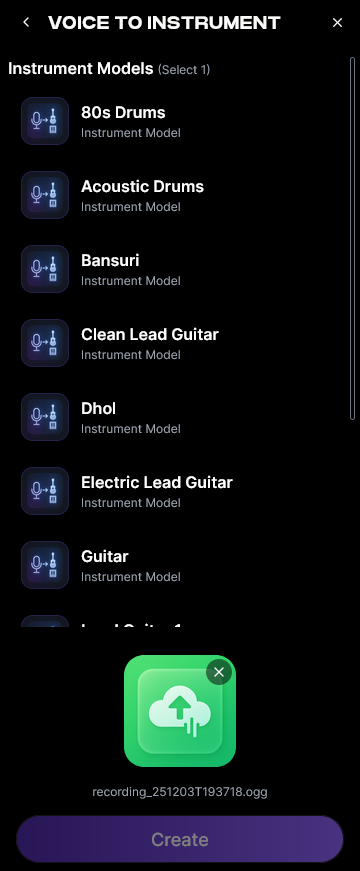
Choose your target instrument from the library. If your goal is tribal or ethnic sound generation, explore instruments like sitar, bansuri, djembe, udo drum, or pan flute. Each selection influences tonal color and expressive capability, setting the cultural mood for your composition.
Step 3: Upload Target Audio
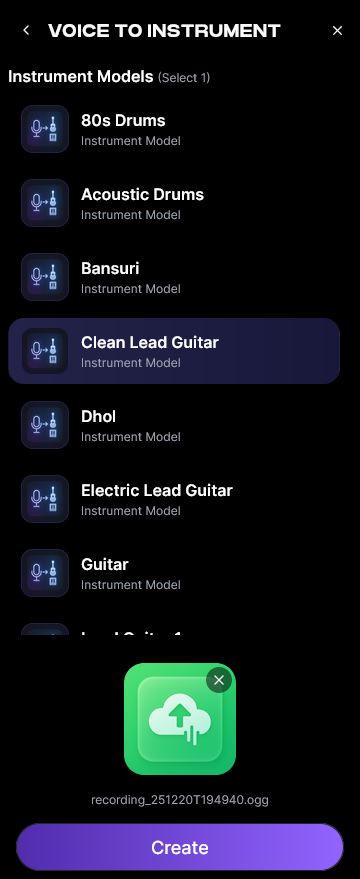
Record or upload your vocal idea – you can hum a melody, chant rhythmic syllables, or beatbox patterns. Soundverse processes this file (not in real-time), interpreting both pitch progression and phrasing before applying timbral transformation.
Step 4: Generation
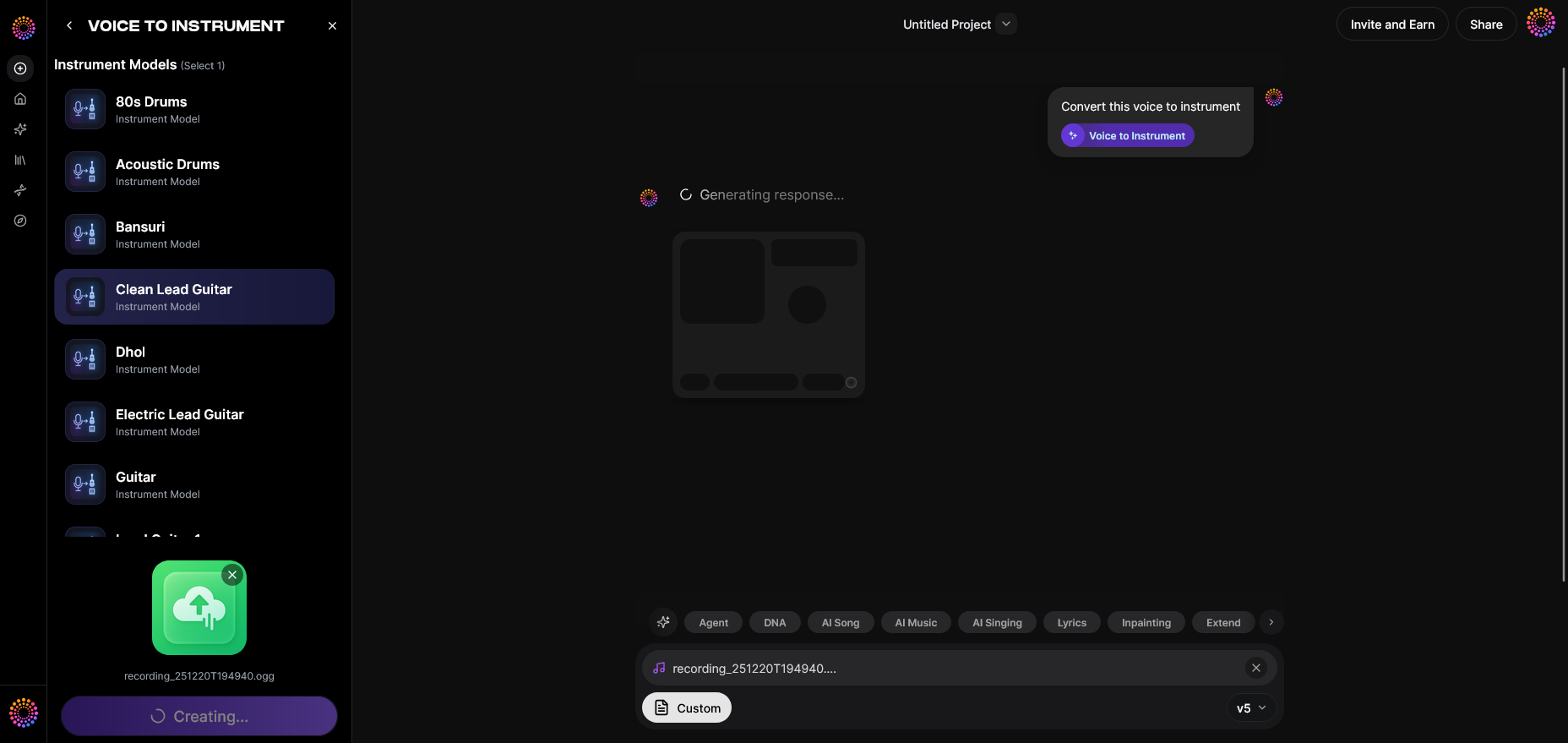
Click ‘Generate’ to let the AI convert your vocal track into the chosen instrument’s sound. Depending on the complexity, Soundverse will return a downloadable audio file representing your voice as a fully rendered instrumental performance.
Step 5: Download Result

Once the AI music tool has performed the transformation, download your result and import it into your DAW (Digital Audio Workstation). From here, you can layer additional harmonies, percussion, or vocal textures. For a hands-on integration example, watch our Soundverse Tutorial Series - 9. How to Make Music.
How to combine AI tools for complete ethnic music production
While the Voice to Instrument feature is central to creating authentic instrumental layers, world music productions often involve multiple complementary textures. Soundverse offers related tools to expand creative possibilities:
- AI Music Generator: Use text prompts to generate complete backing instrumentals. You might instruct the model to produce “tribal ambient percussion with nature-inspired drones.” This tool is ideal for building rhythmic or harmonic frameworks.
- AI Singing Generator: If your track requires chant-like or ethereal vocals, this feature generates realistic singing styles without needing a live vocalist.
- Soundverse DNA: For artists wanting consistency across tracks, Soundverse DNA allows AI music creation aligned with a specific sonic identity. This ensures that your ethnic or tribal theme remains cohesive across albums or projects.
For a walkthrough on mixing AI-generated instruments visually, check our Soundverse Tutorial Series - 8. "Explore" Tab.
Pro tips for creating authentic tribal or ethnic AI music in 2026
To build a composition that feels emotionally and culturally resonant, follow these expert strategies:
- Respect cultural roots: Understand the cultural background behind the tribal sounds you’re using. A respectful approach adds depth and meaning.
- Layer organic and synthetic textures: Combine Soundverse-generated instruments with real-world samples or field recordings for added realism.
- Experiment with rhythm: Use polymeters and asymmetrical time signatures to achieve authentic tribal grooves.
- Atmospheric design: Add spatial reverb, wood or nature samples to recreate environmental acoustics.
- Iterate frequently: Generate several variations and refine the most musically coherent results.
For inspiration on blending styles, check out guides such as How to Create Music Evoking the Desert or How to Create Country Music with Soundverse AI. These examples reveal how adaptive the AI music creation workflow has become across genres.
Integrating AI cultural music into the 2026 creative landscape
As AI continues to shape music industry trends in 2026, artists no longer see technology as competition but as collaboration. Producers worldwide are now using tribal and ethnic influences in cinematic scores, electronic fusion, and wellness soundscapes. For deeper exploration into how this shift is influencing creators, visit How AI-Generated Music Is Transforming the Music Industry.
Blending cultural identity with AI not only enhances creative diversity but ensures musical traditions find new forms of preservation and innovation.
Start Creating Tribal and Ethnic Tracks with AI Today!
Unlock your musical creativity with Soundverse’s advanced AI music creation tools. Effortlessly generate authentic tribal beats, ethnic melodies, and vibrant soundscapes customized to your vision.
Related Articles
- How to Create Country Music with Soundverse AI — Discover how to craft powerful country music tracks using AI tools that enhance storytelling and emotion.
- How to Create Music Evoking the Desert — Learn how to generate atmospheric compositions inspired by desert tones and ethnic influences using Soundverse AI.
- How to Create Jazz Music with Soundverse AI — Explore AI-powered techniques to produce smooth, authentic jazz pieces complete with improvisational flair.
- How an AI Music Generator Inspires Creative Fusion — Find out how AI music generators spark creative cross-cultural collaboration and genre blending.
Here's how to make AI Music with Soundverse
Video Guide
Here’s another long walkthrough of how to use Soundverse AI.
Text Guide
- To know more about AI Magic Tools, check here.
- To know more about Soundverse Assistant, check here.
- To know more about Arrangement Studio, check here.
Soundverse is an AI Assistant that allows content creators and music makers to create original content in a flash using Generative AI. With the help of Soundverse Assistant and AI Magic Tools, our users get an unfair advantage over other creators to create audio and music content quickly, easily and cheaply. Soundverse Assistant is your ultimate music companion. You simply speak to the assistant to get your stuff done. The more you speak to it, the more it starts understanding you and your goals. AI Magic Tools help convert your creative dreams into tangible music and audio. Use AI Magic Tools such as text to music, stem separation, or lyrics generation to realise your content dreams faster. Soundverse is here to take music production to the next level. We're not just a digital audio workstation (DAW) competing with Ableton or Logic, we're building a completely new paradigm of easy and conversational content creation.
TikTok: https://www.tiktok.com/@soundverse.ai
Twitter: https://twitter.com/soundverse_ai
Instagram: https://www.instagram.com/soundverse.ai
LinkedIn: https://www.linkedin.com/company/soundverseai
Youtube: https://www.youtube.com/@SoundverseAI
Facebook: https://www.facebook.com/profile.php?id=100095674445607
Join Soundverse for Free and make Viral AI Music

We are constantly building more product experiences. Keep checking our Blog to stay updated about them!