Smart Contracts for AI Music Licensing: The 2026 Blueprint for Ethical and Transparent Rights Management
Explore how smart contracts for AI music licensing redefine blockchain licensing and automated rights management in 2026.
Smart Contracts for AI Music Licensing
As AI-generated music continues to dominate creative industries in 2026, the way music rights are managed, licensed, and monetized has evolved dramatically. Traditional contracts—once slow, opaque, and legally complex—are giving way to blockchain-powered smart contracts for AI music licensing. These digital agreements bring precision, transparency, and automation to an industry undergoing rapid technological transformation.
What are smart contracts for AI music licensing?
Smart contracts for AI music licensing are self-executing digital agreements embedded within blockchain infrastructure. They define how musical content can be used, licensed, and monetized automatically without relying on intermediaries. Once predefined conditions are met—such as a song generation request or dataset usage—the contract triggers actions like payments or attribution instantly.

In the context of AI-generated music, these contracts govern the relationship between rights-holders, AI platforms, and end-users. For example, when an artist's catalog is used to train AI models, smart contracts ensure that revenue from the resulting AI compositions flows back to the original rights-holders. This process represents a significant step toward ethical AI and transparent music ecosystems.
Why is blockchain licensing becoming essential in 2026?
In 2026, blockchain licensing has become a standard mechanism across web3 music platforms. It enables immutable records of ownership, tracks automated usage logs, and creates an open ledger for transactions. Unlike traditional licensing models dependent on centralized agencies, blockchain licensing allows decentralization of trust.
Music industry professionals are turning to blockchain because of its:
- Transparency: Every license and royalty transaction is publicly verifiable.
- Efficiency: Instant micropayments remove lengthy administrative cycles.
- Security: Immutable ledgers ensure legal accountability across jurisdictions.
- Interoperability: Blockchain data can sync with AI systems and digital copyright registries.
The fusion of blockchain licensing and smart contracts means less friction and greater protection of intellectual property in AI music generation workflows.
How do smart contracts automate rights management?
Traditional rights management has long struggled with data opacity and manual royalty distribution. Automated rights management through smart contracts replaces these processes with programmable transactions.
Once a smart contract is deployed for a certain musical work, royalties can be distributed automatically based on usage metrics. For AI-generated tracks, these metrics may include generation count, type of remix, or derivative use. The result is a fully autonomous royalty stream without human intervention.
Music creators benefit from:
- Usage-based payouts: Artists earn every time their licensed material contributes to an AI music generation.
- Attribution-driven rewards: Smart contracts track and credit dataset contributions across multiple AI generations.
- Reduced legal disputes: Transparent conditions prevent ambiguity in licensing terms.
This automation has become central to digital copyright solutions that align with ethical and transparent economies. For creators who want to see this automation in practice, watch our Soundverse tutorial on making music to see how smart contract logic integrates into modern creative workflows.
What challenges in AI-generated music are smart contracts solving?
AI-generated music raises intricate questions about originality, ownership, and compensation. Who gets paid when an algorithm produces a new melody influenced by thousands of prior recordings? Smart contracts address these challenges by introducing code-based rules that account for contribution and derivation.
Key problems solved by smart contracts include:
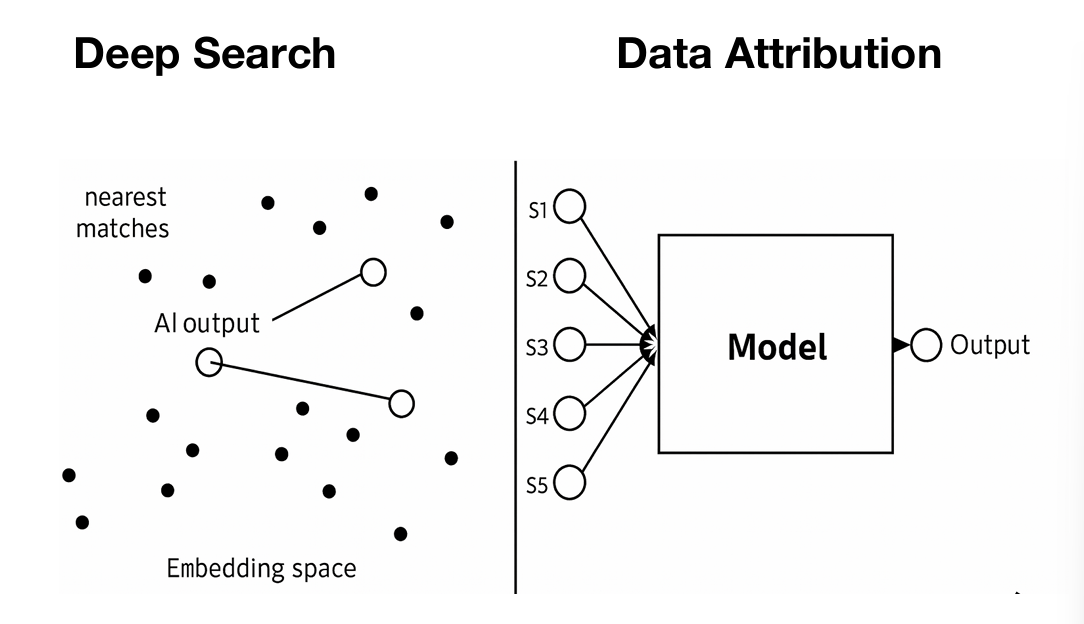
- Attribution clarity: Blockchain traces influence sources within AI training data.
- Royalty fairness: Rights-holders are paid proportionally to their dataset impact.
- Cross-platform licensing: Artists can license music globally through interoperable blockchain registries.
In 2026, these mechanisms underpin web3 music economies, where artists can both protect and monetize their intellectual property while enabling AI creative systems. These trends align strongly with insights from AI Music in Web3 & NFTs: How Blockchain Reshapes Creative ..., which explores how blockchain merges digital ownership and NFTs for creators.
How to make ethical AI licensing with Soundverse Content Partner Program
Soundverse’s Content Partner Program is a leading proof of how smart contracts for AI music licensing can work efficiently and ethically.
This opt-in licensing framework allows rights-holders to contribute their audio catalogs for AI model training while retaining full control and recurring royalty benefits. Soundverse’s implementation embodies transparency, fairness, and technical precision.
Key Features:
- Influence-Based Payouts: Earnings are calculated based on how often an artist’s contribution influences generated music.
- Tiered Licensing (Tiers 1–6): Contributors can select different levels of usage permissions depending on how broadly they wish their music to be licensed.
- Real-Time Dashboards: Rights-holders monitor their royalty accruals and usage data.
- Transparency Reports: Full disclosure on how data contributes to AI model training cycles.
This program helps creators transform existing back catalogs into perpetual revenue sources. It also ensures ethical AI model training through explicit consent and clear compensation flows.
Closely linked Soundverse tools—like Soundverse Trace, which embeds attribution and rights metadata directly into AI outputs, and The Ethical AI Music Framework, which enforces consent and fairness from dataset creation to distribution—bolster this system.
For a deeper dive into AI tool integration, check out our tutorial on the “Explore” tab.
Together, these tools form the backbone of responsible AI music licensing infrastructure, preventing misuse and ensuring compliance with global digital copyright standards.
Where do web3 music and smart contracts intersect?
Web3 music represents the decentralized evolution of music distribution and monetization. It allows artists to own direct relationships with listeners, automate payments, and embed licensing logic directly into tracks. Smart contracts serve as the operational core of web3 music ecosystems.
They regulate tokenized music assets, facilitate NFT-based ownership transfers, and manage recurring royalty streams for AI-generated works. As web3 platforms increasingly integrate AI capabilities, smart contracts guarantee transparent flow across creation, attribution, and monetization stages.
For readers exploring the broader impact of AI music, related insights can be found in How AI-Generated Music is Transforming the Music Industry and The Role of AI Music in Film and Television, which discuss creative use cases shaping content production. This progression in blockchain licensing echoes themes from Blockchain Music Verification: Protecting Human-Made Creativity in ....
What do digital copyright solutions look like in 2026?
Digital copyright solutions in 2026 combine cryptographic tracking, AI attribution mapping, and data transparency layers. Services now rely on blockchain smart contracts to certify consent at every phase of AI model training and generation.
These frameworks standardize metadata formats, simplify dispute resolution, and adapt to global digital rights regulations. The goal is not only to secure royalties but also to build trust between artists and AI developers.
For example, an AI composition generated on a Soundverse platform can embed traceable metadata linking every musical influence back to original dataset contributors. This verification builds confidence among both creators and regulators in an increasingly hybrid creative economy.
If you’re interested in ethical sound design or AI-powered creative tools, explore guides such as Soundverse AI Magic Tools Create Content Quickly with AI and Soundverse Introduces Stem Separation AI Magic Tool for deep dives into automation and transparency in creation.
How are industry professionals adopting smart contracts for music in 2026?
Major labels, independent artists, and AI platforms now rely on smart contracts for their day-to-day licensing needs. Blockchain-based systems are not confined to tech startups. Established rights organizations integrate them to streamline royalty statements and minimize conflicts.
This adoption has led to collaborative models where multiple contributors share fractional rights over AI music outputs. Through interoperable smart contracts, revenue from streams, remixes, or media placements can flow directly to each contributor according to predefined ratios.
Decentralized music libraries and cross-chain proof-of-use systems mean every artist, regardless of size, can ensure fair compensation at scale. Findings across resources like Blockchain in Media and Entertainment Market Size Report and A Complete Guide to Entertainment Tokenization in 2026 illustrate how blockchain innovation scales ethical music monetization.
Start Creating with AI-Powered Music Tools Today!
Leverage Soundverse to generate, license, and manage music with AI seamlessly. Empower your creative projects while maintaining transparent ownership through intelligent music automation.
Sign Up Free
Related Articles
- How AI-Generated Music Is Transforming the Music Industry — Explore how AI is reshaping music creation, distribution, and licensing at every level of the industry.
- Navigating the World of Royalty-Free and Copyright-Free Music Using Soundverse AI — Learn how creators can confidently source and license music using Soundverse’s AI-powered royalty-free tools.
- Copyright-Free vs. Royalty-Free Music: What Creators Should Know — Understand the key differences between copyright-free and royalty-free music to make smarter licensing decisions.
- The Role of AI Music in Film and Television — Discover how AI-generated music and licensing are revolutionizing production workflows in film and TV.
Here's how to make AI Music with Soundverse
Video Guide
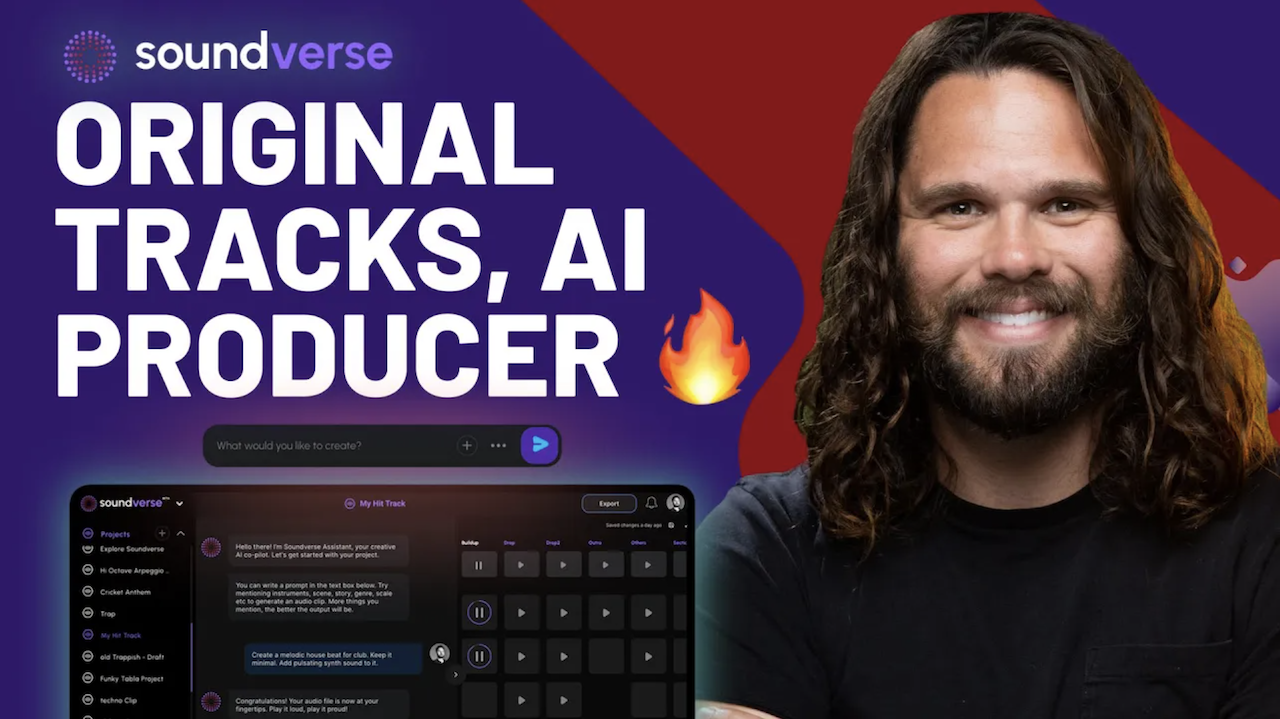
Here’s another long walkthrough of how to use Soundverse AI.
Text Guide
- To know more about AI Magic Tools, check here.
- To know more about Soundverse Assistant, check here.
- To know more about Arrangement Studio, check here.
Soundverse is an AI Assistant that allows content creators and music makers to create original content in a flash using Generative AI. With the help of Soundverse Assistant and AI Magic Tools, our users get an unfair advantage over other creators to create audio and music content quickly, easily and cheaply. Soundverse Assistant is your ultimate music companion. You simply speak to the assistant to get your stuff done. The more you speak to it, the more it starts understanding you and your goals. AI Magic Tools help convert your creative dreams into tangible music and audio. Use AI Magic Tools such as text to music, stem separation, or lyrics generation to realise your content dreams faster. Soundverse is here to take music production to the next level. We're not just a digital audio workstation (DAW) competing with Ableton or Logic, we're building a completely new paradigm of easy and conversational content creation.
TikTok: https://www.tiktok.com/@soundverse.ai
Twitter: https://twitter.com/soundverse_ai
Instagram: https://www.instagram.com/soundverse.ai
LinkedIn: https://www.linkedin.com/company/soundverseai
Youtube: https://www.youtube.com/@SoundverseAI
Facebook: https://www.facebook.com/profile.php?id=100095674445607
Join Soundverse for Free and make Viral AI Music
We are constantly building more product experiences. Keep checking our Blog to stay updated about them!