AI Music in Web3 & NFTs: How Blockchain Reshapes Creative Ownership in 2026
Explore how AI music in Web3 merges blockchain, NFTs, and digital ownership for creators in 2026.
AI Music in Web3 & NFTs
Artificial intelligence and blockchain are converging to redefine music creation, distribution, and ownership. In 2026, the fusion of AI music in Web3 represents one of the most transformative trends for musicians, developers, and audio innovators. While 2024 and 2025 introduced early NFT music platforms, this year marks the maturity of decentralized musical ecosystems that reward creativity transparently and ethically.
What is AI music in Web3?
AI music in Web3 is the integration of artificial intelligence-based music generation with blockchain infrastructure. It allows artists and creators to generate, mint, and share AI-generated songs as NFTs while retaining verifiable digital music ownership. Unlike traditional streaming systems controlled by intermediaries, blockchain music AI empowers artists to manage royalties, attribution, and usage data directly on decentralized ledgers.
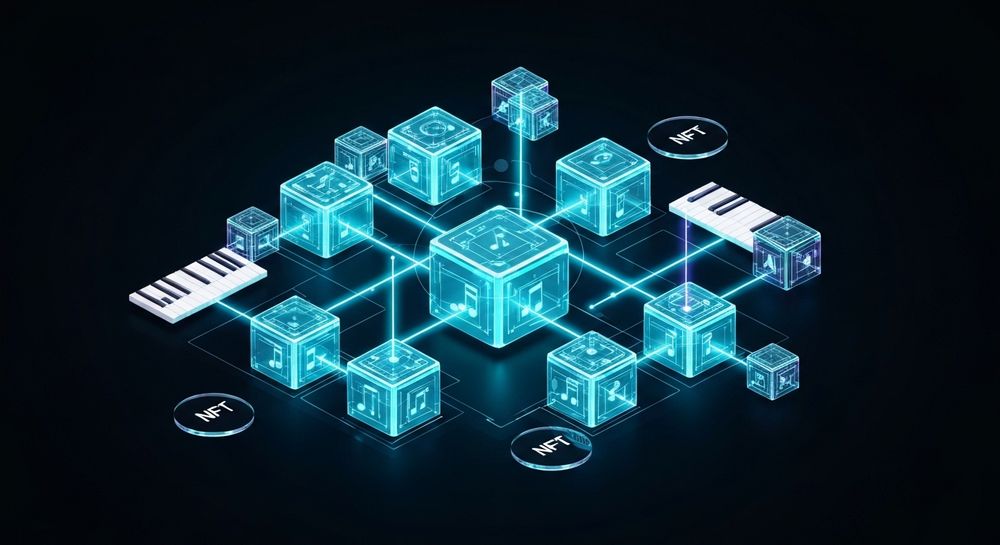
In Web3 environments, AI models can be trained on licensed or opted-in datasets that respect creators’ rights. Smart contracts automatically ensure fair payout distribution. This eliminates opaque licensing pathways that were dominant a few years ago, offering musicians greater autonomy.
How blockchain strengthens the AI music economy
Blockchain serves as a transparent accounting layer that authenticates AI-driven music workflows. Every generated track, remix, or sample can be timestamped and attributed to its original data source. With advances in decentralized identity management, blockchain music AI now anchors creative participation through verified ownership.
Some benefits include:
- Dynamic royalties: Smart contracts issue payments automatically whenever AI-generated songs are used in content or playlists.
- Immutable attribution: Each piece of audio carries metadata identifying rights-holders, enabling transparent usage tracking.
- Decentralized collaboration: Musicians worldwide can co-create AI tracks without relying on centralized organizations.
- Permanent digital provenance: Blockchain ensures every musical idea has a documented origin and evolution trail.
For deeper insight into how Web3 audio systems operate, explore B2B Web3 music projects and metaverse music solutions.
What are NFT music platforms and how do they function?
NFT music platforms enable creators to tokenize their works into non-fungible tokens (NFTs). In 2026, many Web3 audio creators host limited-edition stems, loops, and AI-enhanced compositions using NFT frameworks. Buyers obtain not only ownership proof but also embedded royalties from secondary sales.
Whereas early NFT experiments in 2024 focused on speculative art, modern NFT music ecosystems prioritize utility—such as licensing access or remix permissions. This helps artists monetize participation instead of selling static collectibles.
NFT music platforms also integrate deep analytics, showing how frequently sound assets are remixed or regenerated by AI models. Popular ones often partner with ethical frameworks to guarantee data consent from rights-holders. Learn more in Top NFT Marketplaces 2026 for Artists, Gamers & Collectors.
What trends define AI-generated songs in 2026?
AI-generated songs continue to evolve across genre boundaries. 2026 marks a year when AI composition tools merge authentic emotion with algorithmic precision. AI music creators utilize systems like Soundverse Assistant to automate arrangement and mix optimization while protecting rights.
Key trends include:
- Style merging algorithms that blend vintage genres like jazz and electronic house.
- Prompt-based generation, allowing musicians to customize mood and instrumentation directly from text inputs, as explained in generate AI music with Soundverse text-to-music.
- Ethical AI training models focusing on licensed back catalogs for fair compensation.
- On-chain licensing models that bind audio usage to wallet addresses.
In this context, AI-generated songs are not merely synthetic—but co-created works where human artistry meets algorithmic interpretation. For creators interested in mastering EDM workflows, check our Soundverse Tutorial Series - Make Deep House Music and guide on how to make music.
Why digital music ownership matters in the Web3 era
Digital ownership ensures that rights-holders can claim verifiable control over their creations no matter how many derivative AI versions exist. As generative models expand, ownership metadata becomes critical for identifying the originator. Web3 provides cryptographic signatures, ensuring each remix or regeneration ties back to source contributors.
For music tech entrepreneurs, this means sustainable participation in future AI ecosystems—whether training voice models or releasing collaborative NFT drops. Ethical transparency builds consumer trust and drives new marketplaces beyond traditional labels. For comparison, see Why Startups Are Switching to AI + Web3 Website Design in 2026.
How to make AI music in Web3 with Soundverse Content Partner Program
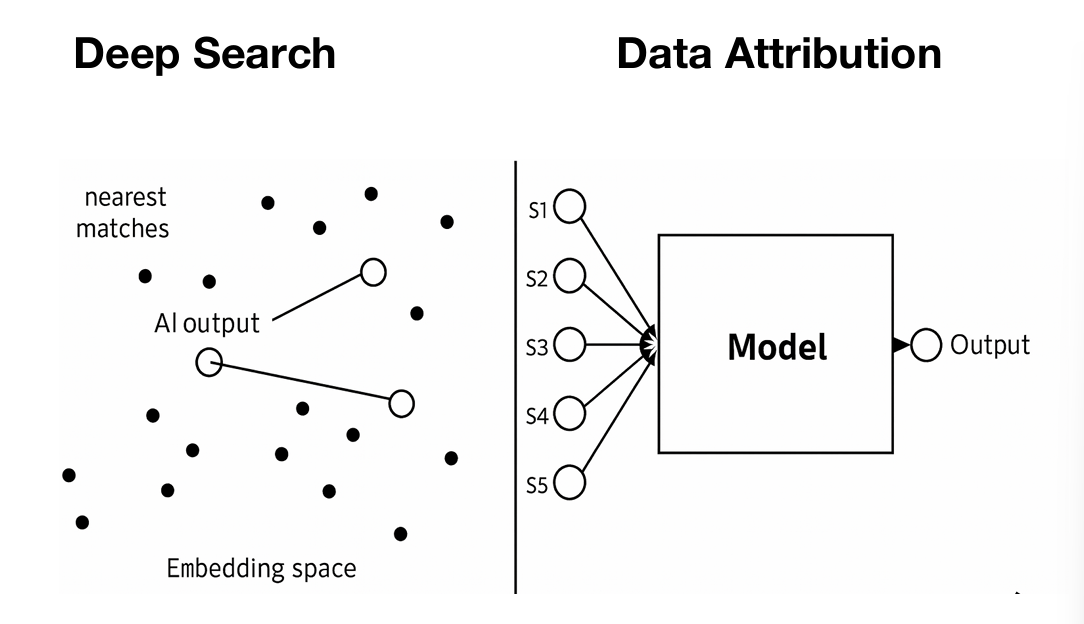
Now that you understand how AI music operates in Web3, here’s how Soundverse enables creators to participate responsibly and profitably.
The Soundverse Content Partner Program is an opt-in licensing framework that allows rights-holders to contribute audio catalogs for AI training in exchange for recurring usage-based royalties driven by attribution. This program embodies the ethical AI principles required for future Web3 development.
Core Capabilities
- Influence-Based Payouts (Pay per generation): Artists earn royalties every time their licensed material influences AI-generated music.
- Tiered Licensing (Tiers 1–6): Rights-holders can select involvement depth—from general dataset inclusion to exclusive model co-training.
- Real-Time Dashboards: Participants view earnings and attribution analytics, providing full transparency about how data is utilized.
- Transparency Reports: These detail dataset composition and training impact for complete ethical assurance.
Primary Use Cases
- Recurring revenue for back catalogs: Musicians monetize old recordings by authorizing ethical AI reuse.
- Ethical AI training: Stable, consent-driven datasets replace black-box generative models.
- Protection of rights: Soundverse ensures that participation aligns with attribution-based royalty frameworks.
Soundverse complements this program through its extended ecosystem:
- Ethical AI Music Framework: Establishes end-to-end compliance in consent, attribution, and compensation.
- Soundverse Trace: Embeds robust tracking and rights protection through AI dataset creation and export phases.
- Soundverse DNA: Creates artist-trained models, letting musicians define unique sonic identities.
Together, these components transform how AI music in Web3 functions—making decentralized creativity sustainable.
For those exploring alternative solutions, see Mubert alternatives: Soundverse comparison or learn about music industry trends shaping global adoption. You can also understand the technical advantages through Soundverse AI Magic Tools, which outline fast creation workflows for advanced users.
Start Creating Your Own AI Music in Web3 Today
Unlock limitless creativity with Soundverse’s advanced AI tools that empower artists to compose, remix, and share music seamlessly in the new digital economy.
Get Started Free
Related Articles
- How AI-Generated Music Is Transforming the Music Industry — Discover how artificial intelligence is redefining how professionals and creators produce and consume music worldwide.
- AI Music Generator and Human Composers: A Future Together — Explore the harmony between human creativity and AI-assisted composition shaping tomorrow’s music landscape.
- The Role of AI Music in Film and Television — Learn how AI compositions are enhancing storytelling and production quality across modern visual media.
- Navigating the World of Royalty-Free and Copyright-Free Music Using Soundverse AI — Understand the advantages of leveraging AI to create and manage music that’s safe and ready for commercial use.
Here's how to make AI Music with Soundverse
Video Guide
Here’s another long walkthrough of how to use Soundverse AI.
Text Guide
- To know more about AI Magic Tools, check here.
- To know more about Soundverse Assistant, check here.
- To know more about Arrangement Studio, check here.
Soundverse is an AI Assistant that allows content creators and music makers to create original content in a flash using Generative AI.
With the help of Soundverse Assistant and AI Magic Tools, our users get an unfair advantage over other creators to create audio and music content quickly, easily and cheaply.
Soundverse Assistant is your ultimate music companion. You simply speak to the assistant to get your stuff done. The more you speak to it, the more it starts understanding you and your goals.
AI Magic Tools help convert your creative dreams into tangible music and audio. Use AI Magic Tools such as text to music, stem separation, or lyrics generation to realise your content dreams faster.
Soundverse is here to take music production to the next level. We're not just a digital audio workstation (DAW) competing with Ableton or Logic, we're building a completely new paradigm of easy and conversational content creation.
TikTok: https://www.tiktok.com/@soundverse.ai
Twitter: https://twitter.com/soundverse_ai
Instagram: https://www.instagram.com/soundverse.ai
LinkedIn: https://www.linkedin.com/company/soundverseai
Youtube: https://www.youtube.com/@SoundverseAI
Facebook: https://www.facebook.com/profile.php?id=100095674445607
Join Soundverse for Free and make Viral AI Music
We are constantly building more product experiences. Keep checking our Blog to stay updated about them!