How to Write Effective Prompts for AI Music Generation
Learn AI music prompt writing techniques to create better music using Soundverse’s AI Music Generator.
How to Write Effective Prompts for AI Music Generation
AI music prompt writing has become one of the most valuable skills for digital creators in 2026. As tools like Soundverse’s AI Music Generator evolve to translate text into fully produced instrumental tracks, knowing how to craft effective prompts directly determines the quality of your output. Whether you’re a music producer, composer, or sound designer, understanding prompt engineering for music is what turns random sounds into intentional composition.
What Is AI Music Prompt Writing?
AI music prompt writing is the art of crafting descriptive, precise text instructions that guide an AI model to produce music matching your creative vision. Just as visual artists now rely on text-to-image tools to generate artwork, musicians use AI music generation technology to produce original music by describing mood, genre, and instrumentation.
The prompt serves as the blueprint. A well-written prompt tells the AI exactly what you want — for example, “a dreamy ambient soundtrack with gentle piano and textured synth layers for meditation.” Through descriptive phrases, emotional cues, and stylistic references, the AI interprets and translates these elements into sound.
Why Is Prompt Writing Crucial for AI Music Generation in 2026?
Since 2024, AI models have rapidly improved in text understanding. In 2026, tools like Soundverse’s V4 and V5 models allow creators to specify minute details such as rhythm intensity, instrument hierarchy, or mood transitions. However, these capabilities only perform as intended when users provide clear textual guidance.
Poorly defined prompts may result in generic or mismatched audio. On the other hand, well-engineered prompts unlock precision — helping AI produce tracks optimized for background scoring, advertising, games, or meditative soundscapes. With music AI tools becoming a regular part of production pipelines, mastering prompt writing has become a creative skill as important as mixing and mastering.
What Makes a Good AI Music Prompt?
An effective prompt balances creativity and clarity. Below are key components for successful prompt engineering for music:
- Genre Context – Mention the musical style explicitly: jazz, EDM, orchestral, lofi, cinematic. Genre selection informs the rhythmic and tonal structure.
- Mood and Emotion – Describe how you want listeners to feel: calm, energetic, nostalgic, mysterious.
- Instrumentation – Specify instruments or sonic textures: acoustic guitar, electric bass, analog synths, percussion loops.
- Purpose or Use Case – Indicate the intended setting: background for a YouTube tutorial, video game loop, brand jingle, or meditation track.
- Structure and Flow – If needed, reference tempo, transitions, or looping requirements.
- Descriptive Language – Use adjectives and analogies instead of technical jargon. For instance, “a pulsing electronic beat with shimmering pads” is better than “fast tempo EDM.”
Combining these details ensures the AI model interprets your vision accurately.
How Do You Write AI Music Prompts That Match Your Creative Vision?
Writing effective prompts for music creation involves translating emotion and context into structured text. Consider this workflow:
Step 1: Define the Creative Purpose
Ask yourself: what is this music for? A short video introduction will demand punchy energy, while a longer meditation soundtrack needs relaxation and spaciousness.
Step 2: Choose Genre and Mood Keywords
Pick genre terms that anchor the musical identity (e.g., classical, trap, synthwave) and pair with emotional descriptors like uplifting, serene, or suspenseful.
Step 3: Add Instrumentation and Sonic Detail
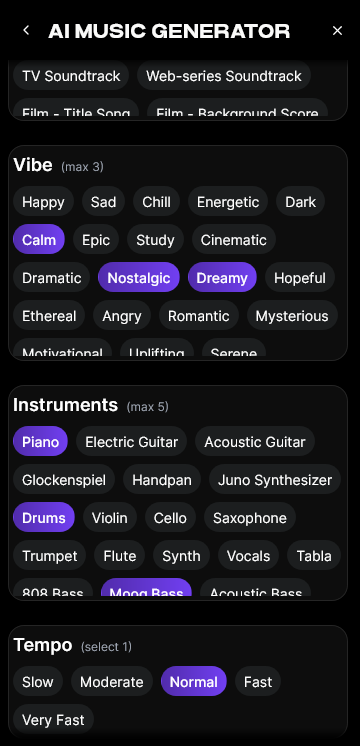
In AI composition tips, specificity is key. The difference between “electronic beat” and “deep house rhythm with muted bass” drastically changes results.
Step 4: Clarify the Output Requirements
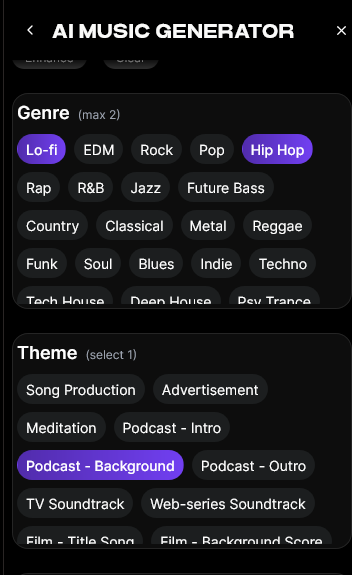
Mention if you want looping music or a complete instrumental production. Modern tools like Soundverse include a Loop Mode for seamless repetition — ideal for background and game tracks.
Step 5: Review and Refine
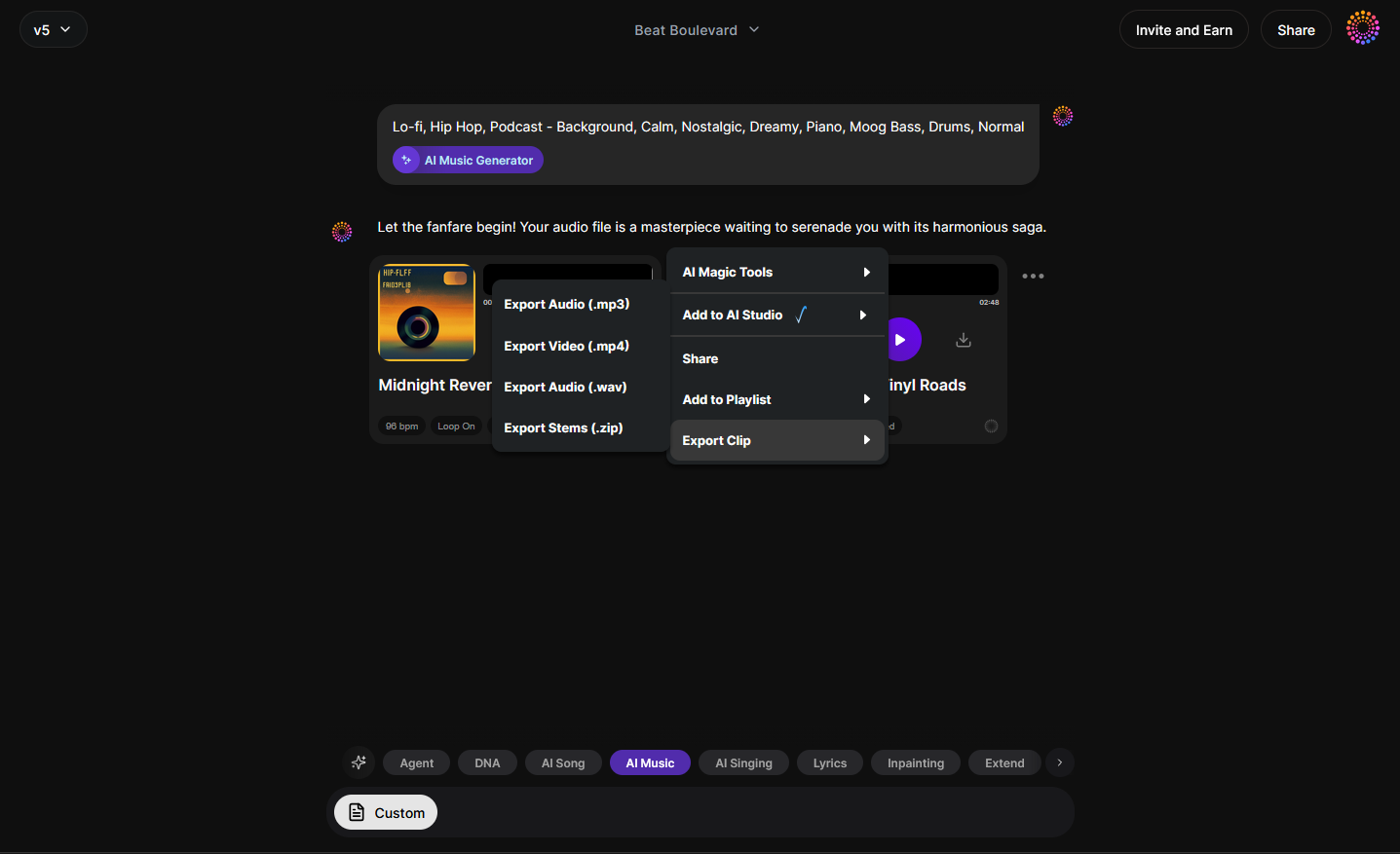
Rerun generations with varied descriptors. Each iteration provides insight into how the AI interprets tone and structure, which helps you refine your language. For a deeper dive, watch our guide on creating Deep House music and the tutorial on how to make music available on the Soundverse YouTube channel.
Common Mistakes in AI Music Prompt Writing
Even experienced creators sometimes miscommunicate with AI systems. Beware of:
- Overloaded Prompts: Too many conflicting details confuse the model.
- Vague Descriptions: “Cool beat” or “nice melody” lacks actionable information.
- Ignoring Context: A music track intended for commercials may need clean rhythmic consistency rather than artistic complexity.
- Missing Instrument Control: Forgetting to specify instruments may lead to mixed genre outputs.
Learning the nuances behind prompt engineering for music separates average results from professional-grade sound.
Examples of Well-Written Prompts
- “Ambient soundtrack with soft piano, airy pads, and gentle rhythm for meditation and relaxation.”
- “Cinematic orchestral piece building from quiet strings to powerful brass and percussion for film trailer.”
- “Upbeat electronic pop instrumental with catchy synth layers and driving bassline for social media ads.”
- “Dark techno beat with atmospheric textures and evolving sequence, ideal for cyberpunk gaming clips.”
For more ideas, see 100 Text-to-Music Prompts That Will Help You Create Viral Music or its sequel posts with genre-specific prompt examples.
How to Make AI Music Prompt Writing More Creative
To enhance creativity:
- Draw inspiration from cinematic storytelling.
- Mix genre descriptors: “Jazz-infused lo-fi chill.”
- Use color and visual imagery: “crimson sunset-inspired synthwave.”
- Reference vibe or era: “80s dancefloor energy.”
AI models interpret these abstract ideas as tonal and structural cues. In 2026, producers often combine emotional metaphors and technical references for more expressive results.
How to Make AI Music Prompt Writing with Soundverse AI Music Generator
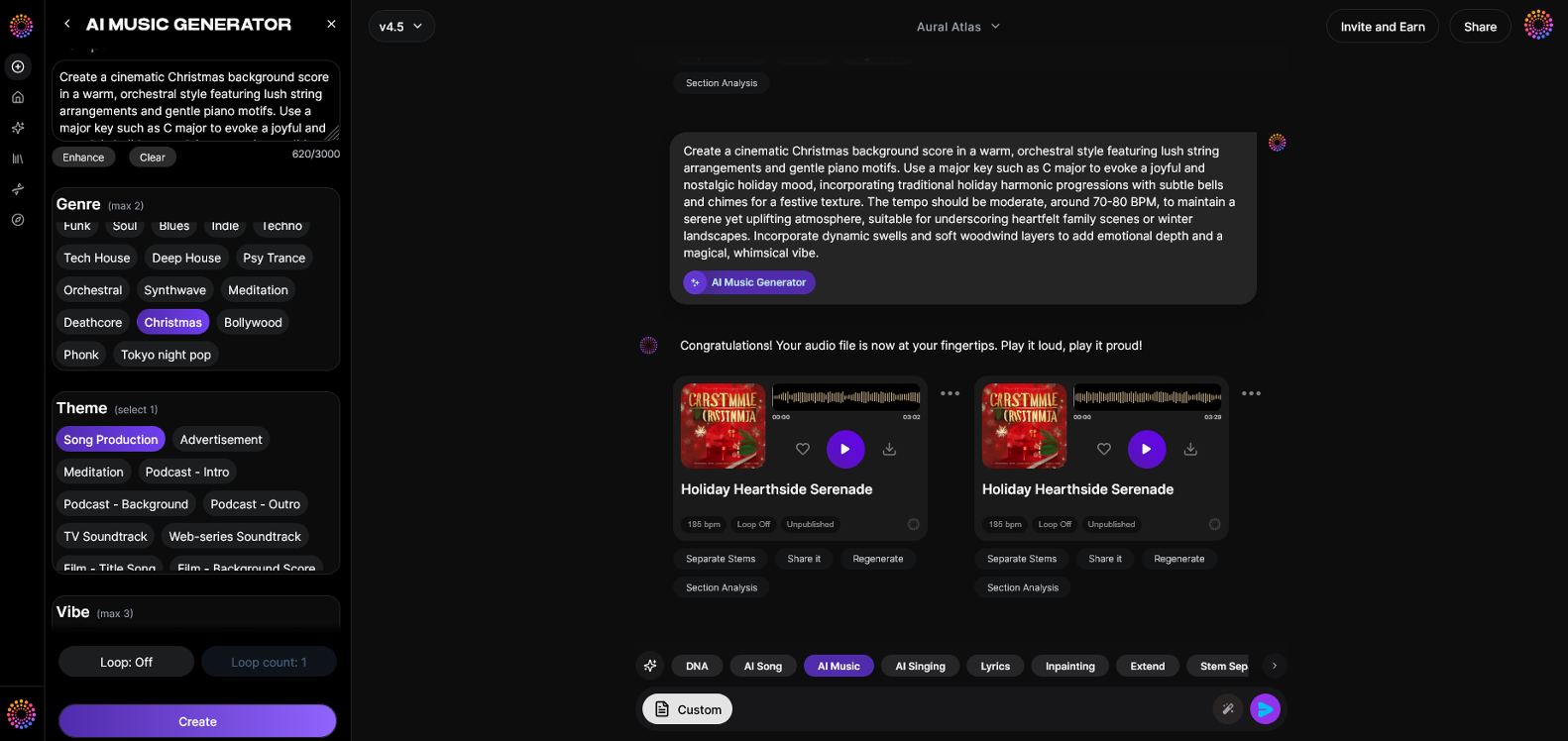
Now that you understand the essence of effective prompt writing, here’s how you can bring your ideas to life instantly using Soundverse.
Step 1: Feature Overview
Access the AI Music Generator directly from the Soundverse main menu. It’s specialized for instrumental music generation — perfect for video backgrounds, meditation tracks, game loops, or brand scoring. Learn more on the Soundverse Features page.
Step 2: Description Input
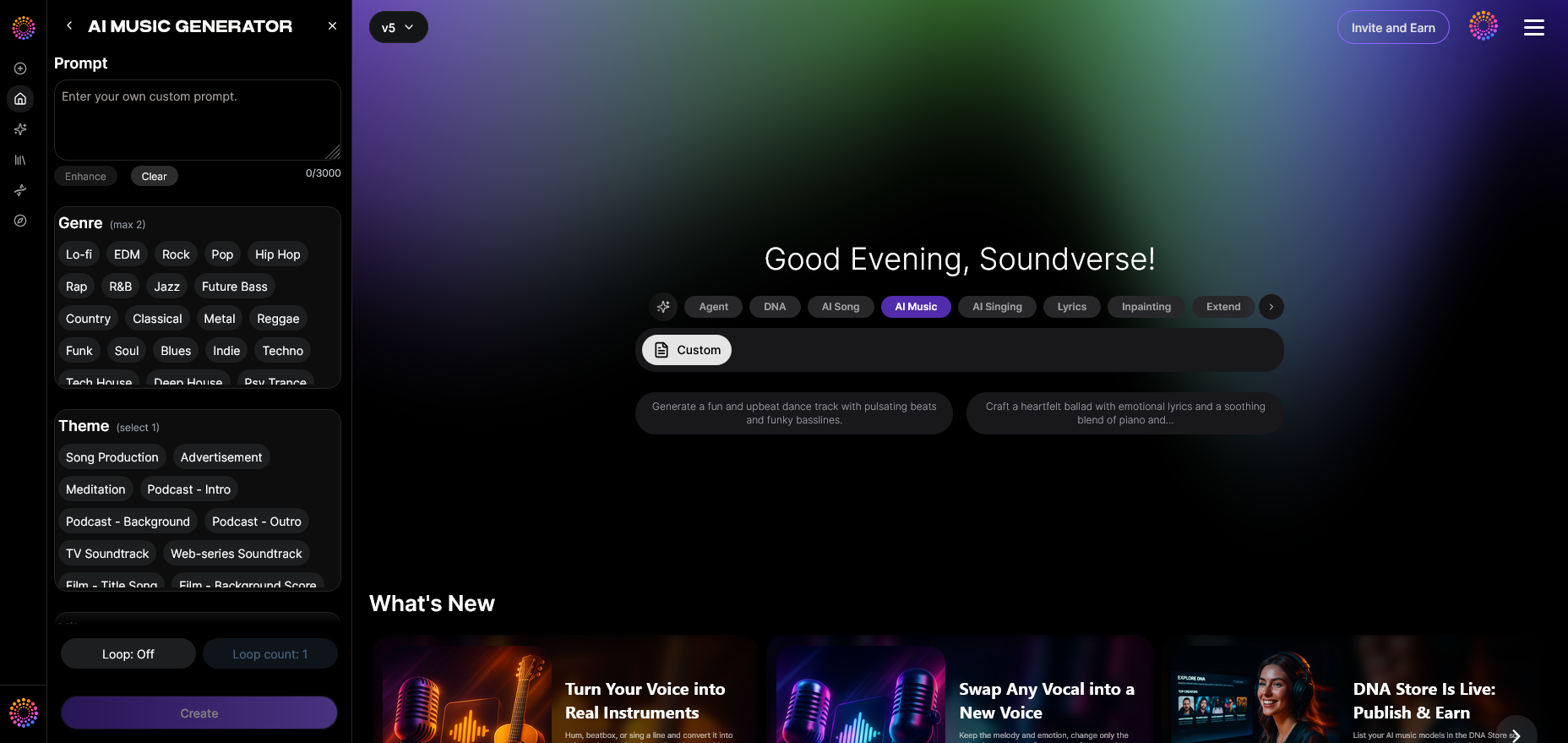
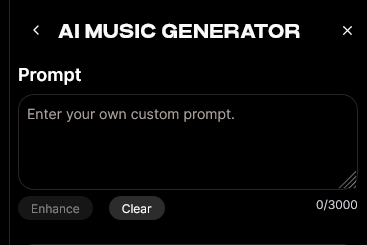
Enter your text prompt describing the desired track. Example: “peaceful ambient loop with soft pads and distant piano.” Craft the description with genre, mood, and instrument detail.
Step 3: Style & Duration
Select your preferred music style, duration, and loop mode (if needed). Soundverse allows detailed control over genre, tempo, and mood intensity, ensuring precision.
Step 4: Generation
Initiate generation. The AI converts your text into a fully produced instrumental composition asynchronously — meaning you’ll receive a processed track, not a live preview.
Step 5: Export Options
Download your final music track. Export loops or extended versions suitable for platforms like YouTube, film, or gaming environments. You can also use other Soundverse tools like the AI Song Generator for vocal compositions, the AI Lyrics Writer for lyrical ideation, and the Soundverse Agent to coordinate multi-step creative tasks automatically.
Explore related guides such as Generate AI Music with Soundverse Text-to-Music, Soundverse AI Revolutionizing Music Creation for New Age Content Creators, or Soundverse Introduces Stem Separation AI Magic Tool. To see a product walkthrough, visit the Explore Tab tutorial.
Final Thoughts
In 2026, AI music generation has reached a level where creativity depends more on language than coding. Knowing how to write effective prompts bridges imagination and technical output. Every adjective, tempo term, and emotional nuance shapes the sound you receive. For creators who adapt to this expressive workflow, AI becomes not just a tool — but a true extension of musical thought.
Through deliberate prompt engineering for music and powerful tools like Soundverse’s AI Music Generator, musicians and digital creators can produce professional, royalty-free soundscapes faster than ever. The skill lies not merely in what you ask but how clearly you communicate — because, in the age of music AI tools, words compose the score.
Start Creating Music with the Perfect AI Prompt Today!
Unlock the full power of AI music generation with Soundverse’s intuitive text-to-music tools. Turn your creative ideas into studio-quality tracks in seconds—no production experience required.
Try Soundverse for Free
Related Articles
- Generate AI Music with Soundverse Text-to-Music — Learn how to craft prompts that instantly transform text ideas into professional AI-generated music.
- 100 Text-to-Music Prompts That Will Help You Create Viral Music — Explore a collection of ready-to-use prompts to spark creativity and make your next AI-generated track go viral.
- Soundverse Assistant: Your AI Music Co-Producer — Discover how Soundverse’s AI assistant helps you refine prompts and co-produce professional-grade music effortlessly.
- Soundverse AI Magic Tools: Create Content Quickly with AI — Find out how Soundverse’s Magic Tools streamline music creation using advanced AI automation.
Here's how to make AI Music with Soundverse
Video Guide
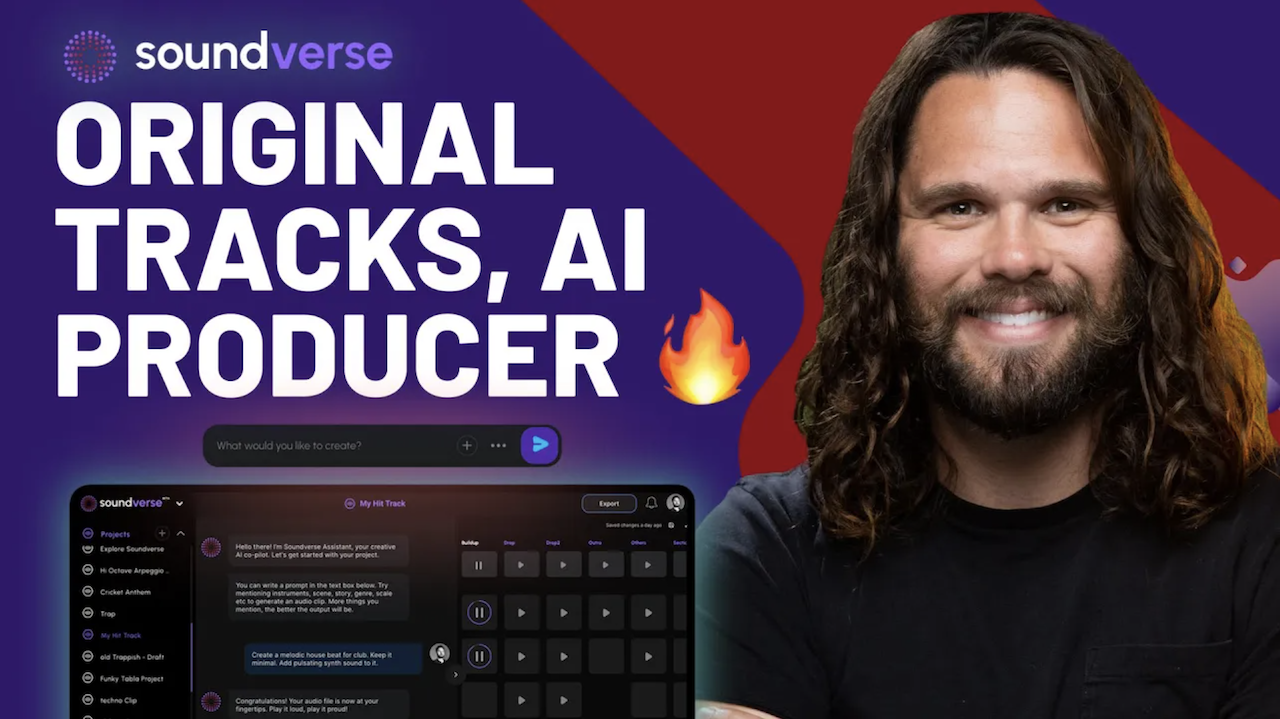
Here’s another long walkthrough of how to use Soundverse AI.
Text Guide
- To know more about AI Magic Tools, check here.
- To know more about Soundverse Assistant, check here.
- To know more about Arrangement Studio, check here.
Soundverse is an AI Assistant that allows content creators and music makers to create original content in a flash using Generative AI.
With the help of Soundverse Assistant and AI Magic Tools, our users get an unfair advantage over other creators to create audio and music content quickly, easily and cheaply.
Soundverse Assistant is your ultimate music companion. You simply speak to the assistant to get your stuff done. The more you speak to it, the more it starts understanding you and your goals.
AI Magic Tools help convert your creative dreams into tangible music and audio. Use AI Magic Tools such as text to music, stem separation, or lyrics generation to realise your content dreams faster.
Soundverse is here to take music production to the next level. We're not just a digital audio workstation (DAW) competing with Ableton or Logic, we're building a completely new paradigm of easy and conversational content creation.
TikTok: https://www.tiktok.com/@soundverse.ai
Twitter: https://twitter.com/soundverse_ai
Instagram: https://www.instagram.com/soundverse.ai
LinkedIn: https://www.linkedin.com/company/soundverseai
Youtube: https://www.youtube.com/@SoundverseAI
Facebook: https://www.facebook.com/profile.php?id=100095674445607
Join Soundverse for Free and make Viral AI Music
We are constantly building more product experiences. Keep checking our Blog to stay updated about them!