How to Verify Music Authenticity in the Web3 Era
Learn how music authenticity verification works in Web3 using blockchain and Soundverse Trace.
How to Verify Music Authenticity in the Web3 Era
In 2026, the music industry has evolved beyond traditional distribution models. Web3 technologies are reshaping how creators protect and verify their works in decentralized environments. Music producers, blockchain developers, and AI artists all face a critical challenge — how to ensure music authenticity verification across networks where ownership and provenance often blur. When AI-generated sounds and decentralized assets coexist, verifying originality demands a transparent, immutable infrastructure.
Why Music Authenticity Verification Matters in 2026
Authenticity verification connects directly to value and trust. With the rapid growth of AI-driven composition and NFT-based asset trading, music validation is now essential for maintaining integrity in digital ecosystems. Artists are no longer simply creating songs; they are minting data-rich assets with traceable histories. In the Web3 space, where remix culture thrives and samples circulate freely, authenticity proof avoids disputes and gives clear ownership rights.
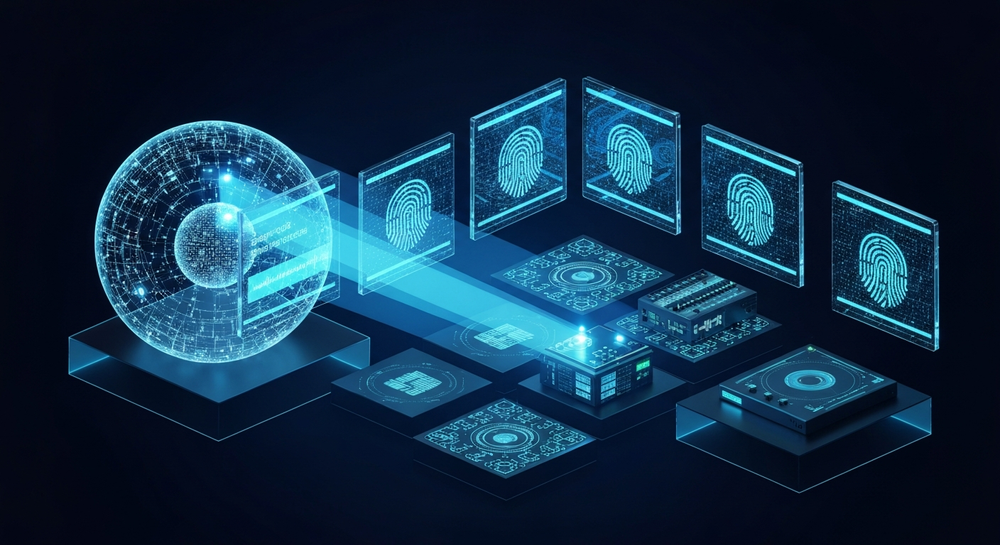
From 2024 to 2025, multiple incidents of dataset misuse demonstrated how opaque AI training could lead to copyright challenges. 2026 brings a strong pivot toward transparent attribution — verifying not just the music’s originality but its source lineage.
How Does Blockchain Enable Authenticity Proof for Music?
Blockchain verification introduces an immutable layer of proof for artistic origin. Each track can be linked to a verifiable timestamp and author identity on-chain. When creators mint music NFTs or use decentralized platforms, authenticity proof depends on recording metadata at every stage of creation — composition, edit, and publication.

Smart contracts automate this validation by linking a music file’s unique fingerprint to ownership details. Every sample, stem, and vocal can carry embedded license data. Instead of relying on centralized systems that can be manipulated, blockchain offers transparent audit trails. This allows users to validate who created what, when, and under what license. For instance, blockchain music verification ensures authenticity and protects human-made creativity in 2026.
Moreover, cross-chain interoperability in 2026 means creators can move their verified works between platforms without losing authenticity history. This supports fair trade, royalty distribution, and credibility for AI-generated compositions.
How to Make Music Authenticity Verification with Soundverse Trace
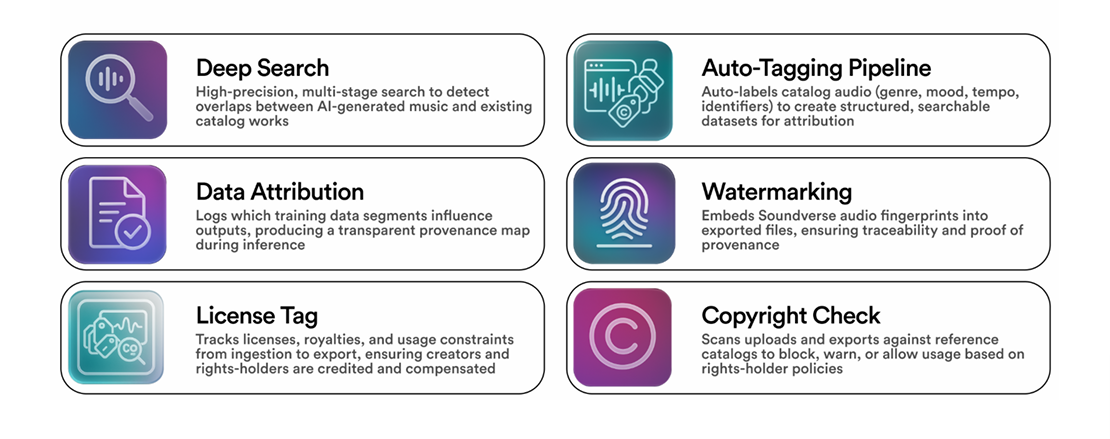
Soundverse Trace functions as a comprehensive trust layer for AI music. It ensures end-to-end music validation through blockchain verification and intelligent attribution. This allows creators and platforms to anchor originality even in highly automated pipelines.
1. Deep Search Engine for Overlap Detection
The Deep Search function enables high-precision scanning (1:1 and 1:N) of datasets and audio outputs. Producers can verify if their generated music overlaps with existing catalogs. It’s especially useful for preventing unintentional copyright infringement when using AI models. For a deeper dive, watch our guide on creating Deep House music.
2. Data Attribution Layer
Soundverse Trace logs which training data influenced generated outputs. This transparency ensures compliance with ethical AI standards. Producers can validate the provenance of each acoustic element used, preserving trust between rights-holders and AI developers.
3. Audio Watermarking Technology
Through inaudible fingerprinting, Soundverse Trace embeds invisible markers inside audio files. These watermarks survive compression, remixing, and distribution, proving authenticity at any point in the music’s lifecycle. It enables automated takedowns or royalty tracking when assets circulate online.
4. License Tagging System
Rights metadata stays intact from ingestion to export. This ensures consistent royalty attribution, even when the track gets remixed or redistributed in secondary markets. License Tagging simplifies compliance between creators and Web3 platforms.
Together, these capabilities provide a strong foundation for music authenticity verification. For those already exploring AI-based creation, articles like Now Generate Music with Filters Such as Genre, Theme, Instruments, or Even Vibe and Soundverse AI Magic Tools: Create Content Quickly with AI explain how authenticity fits into broader production workflows.
What Are the Challenges in Music Validation on Web3 Platforms?
The decentralized nature of Web3 presents both innovation and challenges. While data integrity improves through distributed ledgers, the complexity of verifying multi-source AI sound generation increases. Artists mix hundreds of datasets when creating new music, sometimes unintentionally blending licensed and public-domain elements.
Without structured authenticity proof, these AI creations risk violating rights. Blockchain developers therefore focus on protocols that validate not only ownership but the influence of source datasets. Such standards are aligned with AI music in Web3 merging blockchain, NFTs, and digital ownership for creators in 2026.
Creators also face interoperability issues — how to ensure that assets verified on one blockchain remain authenticated when transferred to another. Soundverse Trace's cross-engine watermarking and attribution records offer a sustainable solution, maintaining metadata integrity beyond single-chain systems.
What Best Practices Ensure Accurate Music Validation?
- Record Metadata Early: Capture creator identities and timestamps during initial composition.
- Embed Fingerprints Immediately: Use watermarking tools like Soundverse Trace before publishing.
- Store Provenance On-Chain: Anchor data in blockchain verification systems for immutable records.
- Perform Regular Deep Searches: Continuously compare catalog entries to detect overlaps.
- Validate Licenses: Ensure license tagging follows proper rights attribution and expiration frameworks.
By doing so, artists protect their catalog from plagiarism and establish transparent royalty channels. The process also encourages ethical AI music practices aligned with the Ethical AI Music Framework, an initiative that upholds consent and recurring compensation throughout AI production. For workflow guidance, check our Explore Tab tutorial.
How Can Web3 Developers Enhance Cross-Platform Music Authentication?
Developers integrating blockchain verification into streaming and NFT ecosystems should focus on multisource validation support. In 2026, interoperable protocols like cross-chain verification enable the authenticity proof to travel seamlessly across marketplaces.
APIs can integrate Soundverse Trace to confirm audio provenance before minting. Enterprises using NFT frameworks can attach watermarked sound assets directly to token metadata, ensuring persistent validation across trading layers.
Furthermore, the Soundverse Assistant: Your AI Music Co-Producer offers advanced companion functionality to simplify metadata consistency during export, reinforcing long-term authenticity.
The Role of Ethical AI in Music Authenticity Verification
Authenticity verification is not only a technical mission but an ethical principle. As AI increasingly co-produces music, proving rightful source influence becomes vital to maintain artist integrity. The Ethical AI Music Framework, aligned with Soundverse Trace, replaces black-box generation models with transparent attribution pipelines.
This synergy ensures every participant in the digital value chain — from dataset contributors to listeners — can trust that music validation reflects real authorship. Additionally, Soundverse’s Content Partner Program lets rights-holders license their catalogs for AI training, receiving recurring royalties anchored by attribution markers.
For developers building next-gen authenticity proof systems, combining blockchain verification with ethical attribution frameworks establishes long-lasting legitimacy.
Start Verifying Music Authenticity with Soundverse
Empower your creative process with tools built to protect originality and ensure transparency in the Web3 era. Join Soundverse and experience secure, verifiable music creation powered by AI.
- How AI-Generated Music Is Transforming the Music Industry — Explore how AI is reshaping how music is created, authenticated, and shared in today’s digital landscape.
- Navigating the World of Royalty-Free and Copyright-Free Music Using Soundverse AI — Learn how to legally use and distribute music with tools that prioritize authenticity and creator rights.
- Copyright-Free vs. Royalty-Free Music: What Creators Should Know — Understand the differences between copyright-free and royalty-free music to protect your creative work.
- The Role of AI Music in Film and Television — Discover how AI-generated music is verified, licensed, and used in visual media projects across the Web3 ecosystem.
Here's how to make AI Music with Soundverse
Video Guide
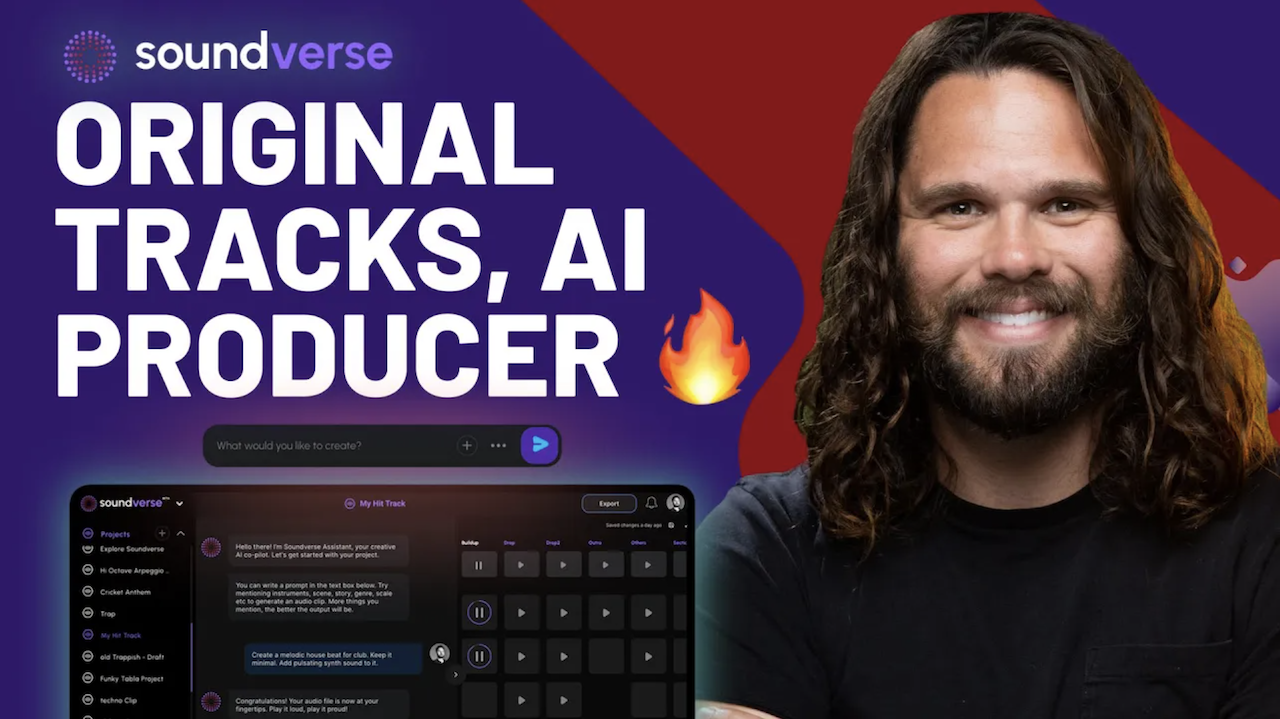
Here’s another long walkthrough of how to use Soundverse AI.
Text Guide
- To know more about AI Magic Tools, check here.
- To know more about Soundverse Assistant, check here.
- To know more about Arrangement Studio, check here.
Soundverse is an AI Assistant that allows content creators and music makers to create original content in a flash using Generative AI. With the help of Soundverse Assistant and AI Magic Tools, our users get an unfair advantage over other creators to create audio and music content quickly, easily and cheaply. Soundverse Assistant is your ultimate music companion. You simply speak to the assistant to get your stuff done. The more you speak to it, the more it starts understanding you and your goals. AI Magic Tools help convert your creative dreams into tangible music and audio. Use AI Magic Tools such as text to music, stem separation, or lyrics generation to realise your content dreams faster. Soundverse is here to take music production to the next level. We're not just a digital audio workstation (DAW) competing with Ableton or Logic, we're building a completely new paradigm of easy and conversational content creation.
TikTok: https://www.tiktok.com/@soundverse.ai
Twitter: https://twitter.com/soundverse_ai
Instagram: https://www.instagram.com/soundverse.ai
LinkedIn: https://www.linkedin.com/company/soundverseai
Youtube: https://www.youtube.com/@SoundverseAI
Facebook: https://www.facebook.com/profile.php?id=100095674445607
Join Soundverse for Free and make Viral AI Music

We are constantly building more product experiences. Keep checking our Blog to stay updated about them!