How to Master AI Music for Spatial Audio in 2026
Learn AI music mastering and spatial audio production using Soundverse tools.
How to Master AI Music for Spatial Audio
In 2026, spatial audio has become the gold standard for immersive listening experiences, powering everything from virtual reality soundscapes to Dolby Atmos cinema mixes. Music producers and audio engineers are rapidly adopting AI music mastering tools to create multi-dimensional sound environments that envelop listeners. Understanding how to master AI music for spatial audio is now a core skill for professionals aiming to lead the next era of 3D sound production.
What does AI music mastering mean in 2026?
AI music mastering refers to the process of using artificial intelligence to optimize, balance, and enhance audio tracks automatically. By analyzing the frequency response, dynamic range, and spatial characteristics of a mix, AI systems can refine sound to professional mastering standards faster than traditional manual workflows. In 2026, this technique has evolved beyond stereo — it now involves spatial mastering and 3D audio production for immersive systems like Dolby Atmos and Ambisonics.

Unlike the static masters of the past, AI systems today use data-driven algorithms to optimize sound dynamically, adapting mixes to headphones, VR experiences, and cinema environments. Producers are taking advantage of atmos mixing AI platforms to position each instrument precisely in the sonic field, creating an expanded palette of depth, motion, and presence.
Why spatial mastering and 3D audio production matter today

Spatial mastering ensures that listeners experience sound as it was intended — not just left and right, but above, below, and behind. In the era of VR concerts, 360° audio for games, and immersive podcasts, spatial sound design defines how the audience feels connected to the performance. Combining AI music mastering with spatial audio tools allows creators to:
- Control the perception of movement and direction.
- Achieve cinematic realism without manual spatial panning.
- Accelerate workflow for Atmos or Ambisonic outputs.
- Maintain consistent loudness and EQ balance across complex soundscapes.
By leveraging AI systems trained on thousands of spatial mixes, engineers can now automate the tedious aspects of mastering while keeping creative control over artistic decisions. This hybrid approach — part machine, part musician — sets the tone for AI-assisted mastering workflows dominating 2026.
How AI changed spatial and Atmos mixing workflows
Prior to 2024, spatial audio was considered a high-end luxury due to its technical complexity and hardware constraints. By 2026, however, AI-powered mastering tools have simplified deep-layer sound creation. The rise of cloud-based 3D mixing systems and intelligent spatial analyzers enables faster iteration, better dynamic accuracy, and unprecedented creative freedom.
In practical terms, atmos mixing AI now assists engineers in converting stereo stems into full Atmos mixes automatically. The system interprets energy distribution across frequencies and positions instruments in virtual space. Combined with AI mastering engines, this delivers coherent and emotionally resonant mixes suitable for immersive experiences.
For instance, a game sound designer can upload looping ambient sound created via an AI generator, then use spatial mastering algorithms to adapt it for 3D environments. The result is a soundscape that transforms ordinary background music into a living sound dimension.
How to make AI music for spatial audio with Soundverse AI Music Generator
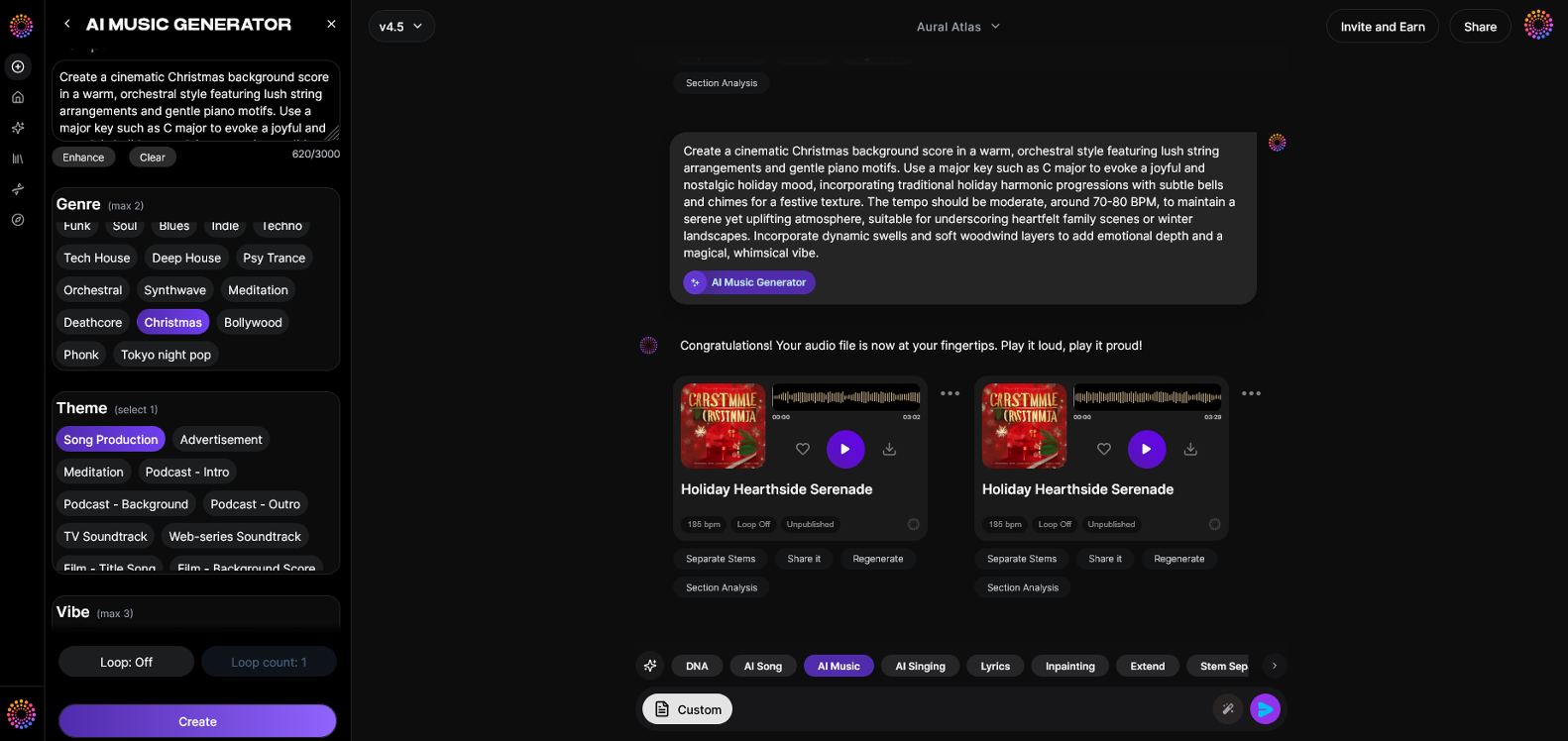
Soundverse’s AI Music Generator serves as the foundation for spatial music mastering workflows. This tool creates fully produced instrumental music from text prompts, specializing in background tracks, beats, and soundscapes designed for looping. Its precise genre, mood, and instrument controls make it perfect for immersive applications where tone continuity and spatial placement are critical.
Step 1: Feature Overview
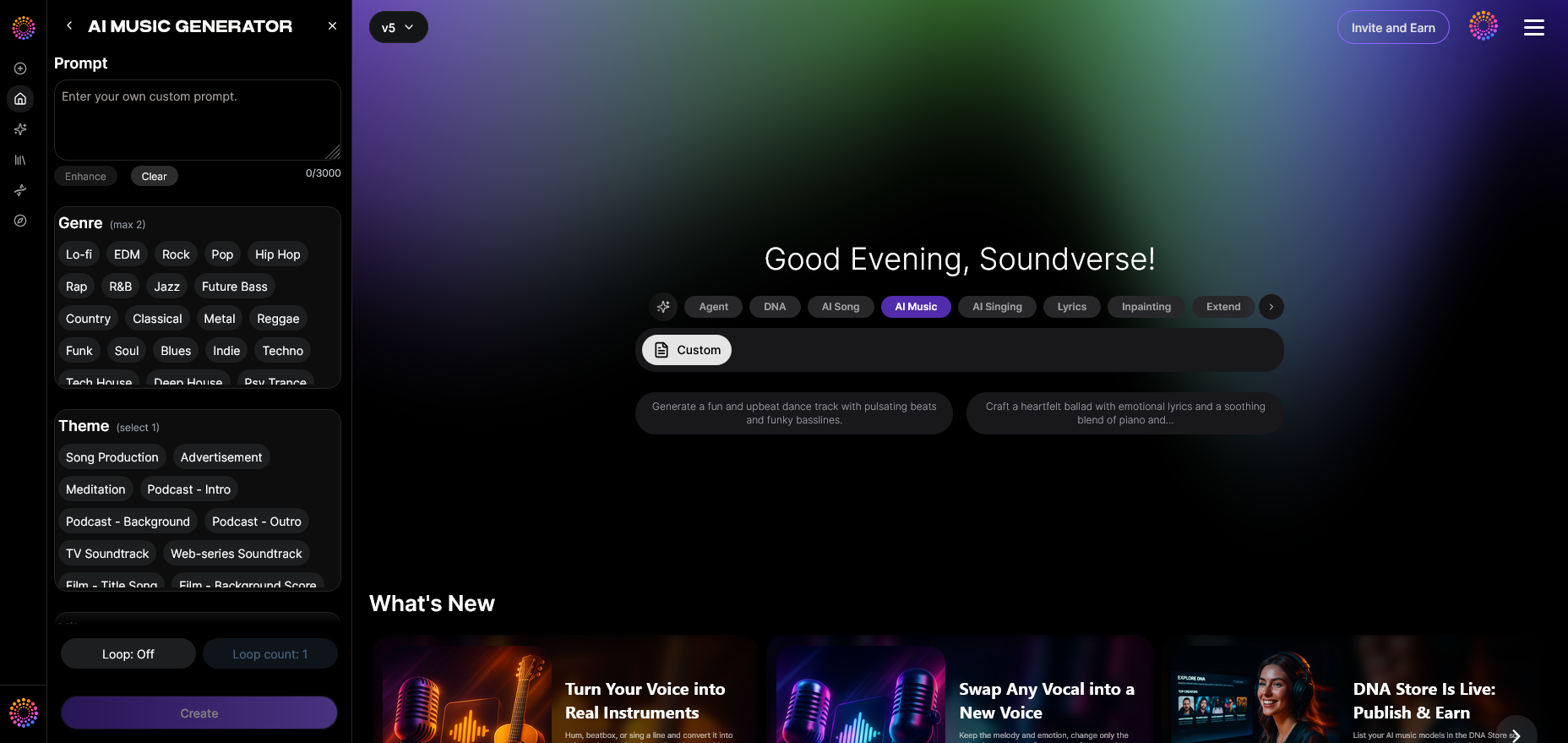
Access the AI Music Generator directly from Soundverse’s main menu. Once inside, you’ll find options for Text-to-Music creation, Loop Mode, and model selections (V4 or V5). This entry point is ideal for producers preparing source material for spatial mastering because it produces clean, well-balanced instrumentals ready for multichannel processing.
Step 2: Description Input
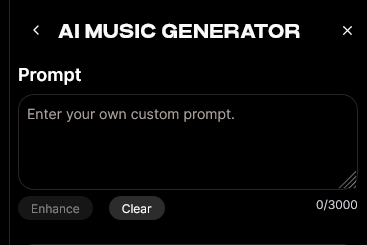
Describe the atmosphere or space you want to sonically create. For spatial projects, use detailed prompts such as “ambient forest texture with gentle percussion moving across space” or “electronic pulse floating in 3D motion.” The AI interprets descriptive language to generate tonal, rhythmic, and thematic elements that match the intended spatial dynamic.
Step 3: Style & Duration
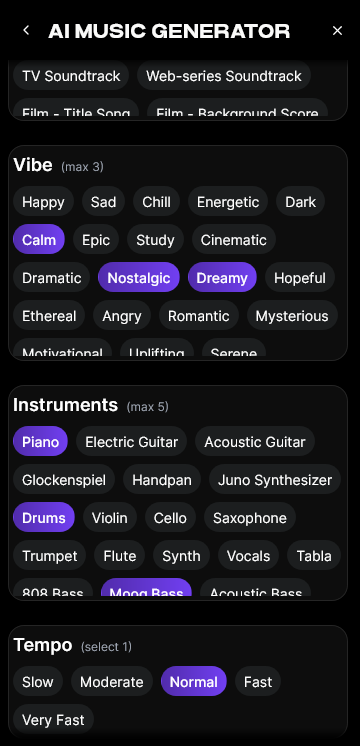
Select your preferred style and track length. Spatial audio environments often benefit from medium-length looping tracks for seamless transition. Loop Mode ensures the generated composition repeats without audible seams, crucial for immersive scenes or installations where audio continuity defines immersion quality.
Step 4: Generation
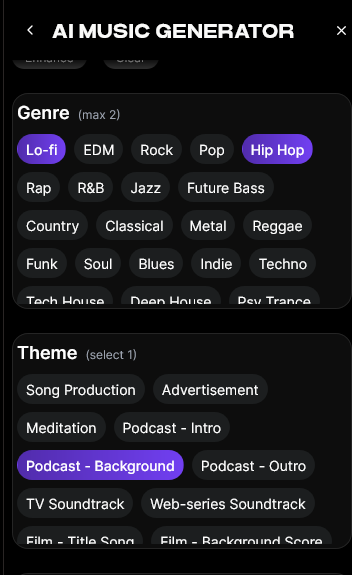
Click Generate to create the instrumental music based on your input. Within moments, Soundverse’s asynchronous system processes the audio. This step results in downloadable high-quality instrumentals that can later be imported into Dolby Atmos or 3D audio editing software for spatial mastering.
Step 5: Export Options

Once generation is complete, download your new instrumental track in preferred formats for integration into spatial audio pipelines. These assets can be opened in Soundverse Arrangement Studio for section rearrangement or imported into mixing platforms for Atmos mastering. Combined with tools like Similar Music Generator for style reference and Soundverse DNA for licensed tone modeling, users can produce consistent, copyright-safe spatial mixes.
Pro tips for mastering AI-generated compositions for 3D and Atmos
- Start with coherent stems. Use AI-generated instrumentals with strong stereo imaging before expanding to spatial channels.
- Leverage loop-based workflows. Continuous loops preserve immersion in VR and 360° experiences.
- Integrate dynamic automation. Use movement and modulation automation for objects to simulate natural environments.
- Apply psychoacoustic filters cautiously. Over-processing can destroy spatial depth.
- Validate with binaural monitors. Always preview your Atmos mixes with proper decoding.
For more technical inspiration, explore related insights like how AI music generation is transforming the industry or browse creative prompt guides such as 100 text-to-music prompts and AI Magic Tools for creators. For a deeper dive, watch our guide on creating Deep House music, and check the Explore tab tutorial to learn how to browse generated tracks efficiently.
How Soundverse’s ecosystem supports spatial audio professionals
Soundverse tools integrate seamlessly across production stages. After creating foundational instrumentals, Arrangement Studio lets you refine structure, while Soundverse DNA ensures style authenticity and licensing compliance. For those mirroring cinematic directors’ preferences, the Similar Music Generator helps replicate the vibe of reference tracks legally.
This interconnected ecosystem simplifies complex audio tasks — turning concept descriptions into finished immersive assets. Whether you’re creating relaxing wellness ambiences, dynamic game loops, or futuristic advertising scores, Soundverse empowers high-quality production with minimal friction.
Start Mastering Your AI Music Today
Unlock professional-grade mastering for your AI-generated tracks with Soundverse. Enhance clarity, depth, and spatial precision—all powered by advanced AI technology for next-level sound.
Try Soundverse for Free
Related Articles
- The Role of AI Music in Film and Television: Discover how AI-powered tools are reshaping sound design and music scoring for modern media.
- AI Music Generator and Human Composers: A Future Together: Explore the collaboration between human creativity and AI innovation shaping the music industry.
- Soundverse Assistant: Your AI Music Co-Producer: Learn how Soundverse Assistant helps you produce, arrange, and refine music effortlessly using AI.
- Soundverse Introduces Stem Separation AI Magic Tool: Find out how the new Stem Separation tool lets you isolate vocals, instruments, and beats for precise mixing and mastering.
Here's how to make AI Music with Soundverse
Video Guide
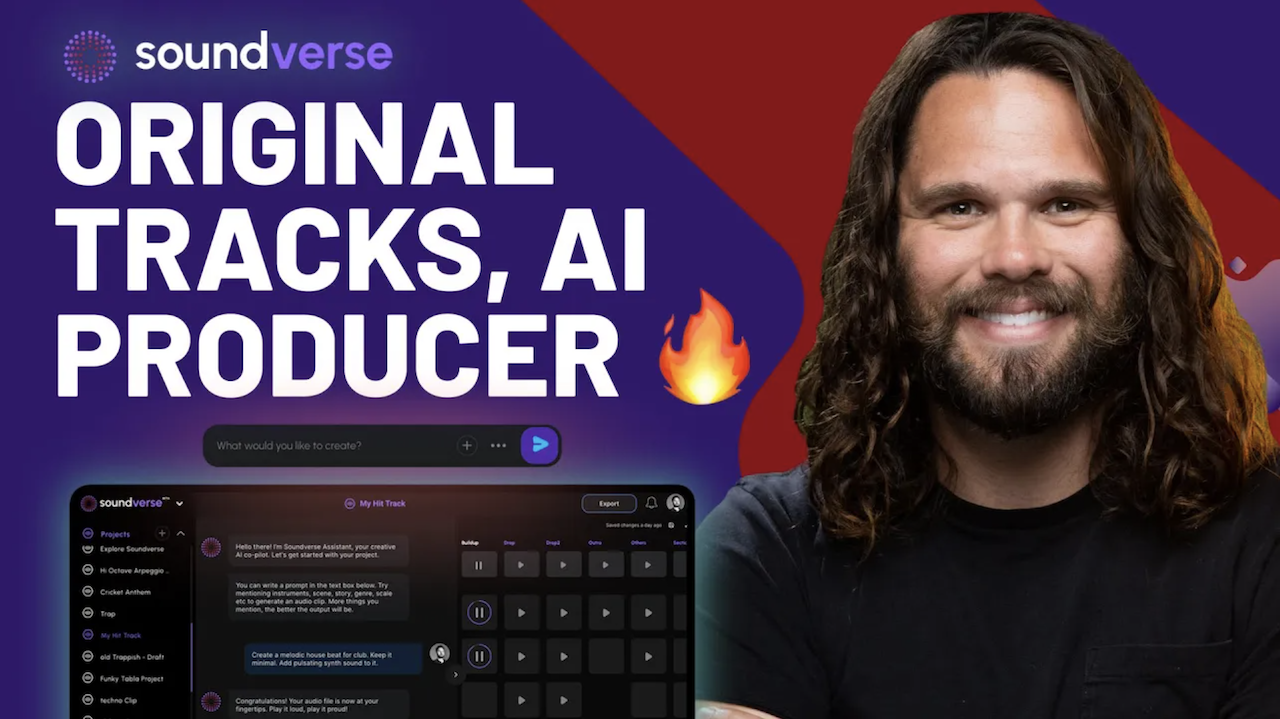
Here’s another long walkthrough of how to use Soundverse AI.
Text Guide
- To know more about AI Magic Tools, check here.
- To know more about Soundverse Assistant, check here.
- To know more about Arrangement Studio, check here.
Soundverse is an AI Assistant that allows content creators and music makers to create original content in a flash using Generative AI. With the help of Soundverse Assistant and AI Magic Tools, our users get an unfair advantage over other creators to create audio and music content quickly, easily and cheaply. Soundverse Assistant is your ultimate music companion. You simply speak to the assistant to get your stuff done. The more you speak to it, the more it starts understanding you and your goals. AI Magic Tools help convert your creative dreams into tangible music and audio. Use AI Magic Tools such as text to music, stem separation, or lyrics generation to realise your content dreams faster. Soundverse is here to take music production to the next level. We're not just a digital audio workstation (DAW) competing with Ableton or Logic, we're building a completely new paradigm of easy and conversational content creation.
TikTok: https://www.tiktok.com/@soundverse.ai
Twitter: https://twitter.com/soundverse_ai
Instagram: https://www.instagram.com/soundverse.ai
LinkedIn: https://www.linkedin.com/company/soundverseai
Youtube: https://www.youtube.com/@SoundverseAI
Facebook: https://www.facebook.com/profile.php?id=100095674445607
Join Soundverse for Free and make Viral AI Music

We are constantly building more product experiences. Keep checking our Blog to stay updated about them!