How to Make Music with AI in 2026: A Complete Guide for Creators
Learn AI music creation using intelligent music generation tools and Soundverse AI Music Generator.
How to Make Music with AI
Artificial intelligence has become a transformative force in music production. In 2026, AI music creation is no longer an experimental niche—it has become a practical and accessible tool for musicians, producers, and content creators worldwide. From generating background tracks for video projects to composing beats for commercial releases, AI empowers creators to turn ideas into polished soundscapes instantly.
What is AI Music Creation?
AI music creation refers to the use of artificial intelligence algorithms to compose, arrange, and produce music automatically or semi-automatically. These systems learn patterns from massive music datasets and then generate new compositions that follow genre-specific and stylistic cues. Unlike traditional software synthesizers or digital audio workstations (DAWs), AI composers can interpret human language, moods, and descriptive prompts to create full musical arrangements.
Why is AI Transforming Music Production in 2026?
During 2024 and 2025, AI-driven audio tools gained momentum. By 2026, integration with creative workflows has reached maturity. AI music software is now used by both professional producers and independent artists to speed up ideation, avoid creative blocks, and diversify their sound palettes. Artificial intelligence in music production enables:
- Rapid composition for projects on deadlines (like advertising and film scoring)
- Affordable access to royalty-free tracks through automatic generation
- Creative collaboration between human and machine for niche genres
- Personalization of musical output based on taste and tone preferences
To explore how this evolution happened, you can visit articles such as How AI-Generated Music is Transforming the Music Industry and The Role of AI Music in Film and Television. These explain how AI has become central to sound design and commercial music production workflows.

What Tools Are Used for AI Music Creation?
Several types of tools exist within the AI music generation space:
- AI Music Generators – text-to-music platforms capable of creating instrumental compositions based on genre and mood.
- AI Song Generators – tools that generate full songs from lyrics and structure, including vocals and instrumentals.
- AI Singing Generators – create voice performances and acapella tracks directly from typed lyrics.
- Music Generation Tools for Producers – integrate AI stems, loops, or samples with DAWs for hybrid creativity.
In 2026, key platforms include Soundverse, Amper Music (ampermusic.com), and Aiva (aiva.ai). Each offers unique strengths—from real-time mixing support to multi-model composition frameworks. However, the rise of Soundverse’s artist-trained AI system, known as Soundverse DNA, leads the field in ethical, copyright-safe creation.
For a detailed comparison between several generators, explore Best AI Music Generator: Top Picks and Review.
For a deeper dive, watch our Soundverse Tutorial Series - 9. How to Make Music or Soundverse Tutorial Series - 10. Make Deep House Music to see practical generation workflows.
How to Create AI Music Step-by-Step
Creating AI music involves a combination of creative input and smart technology selection. Below, we outline the practical process to produce music using any modern system.
Step 1: Feature Overview
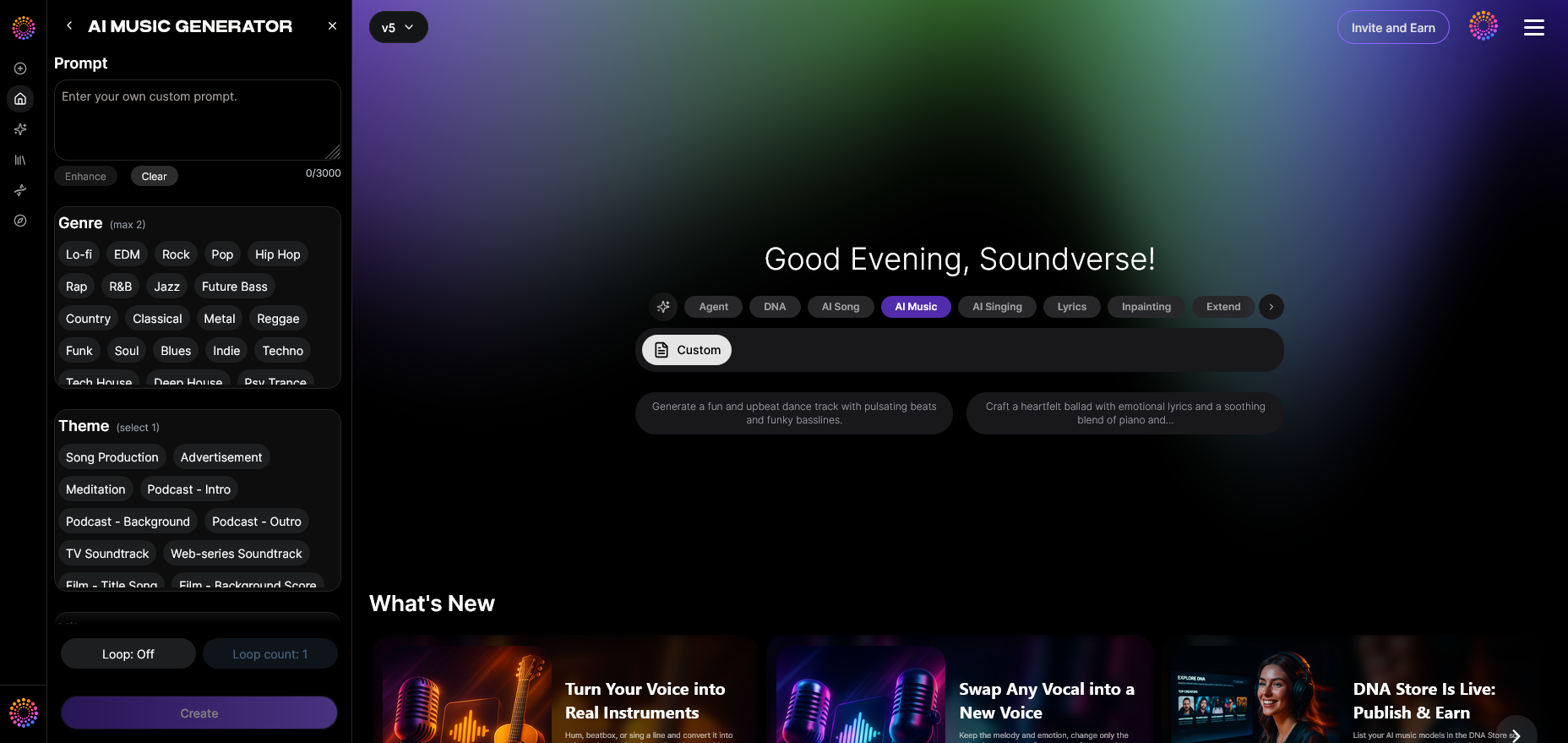
Begin by accessing your chosen AI music generation platform—like Soundverse’s AI Music Generator—from the main menu. This environment is designed specifically to create instrumental tracks and soundscapes. Unlike traditional DAWs that need manual MIDI input, this interface interprets textual commands.
Step 2: Description Input
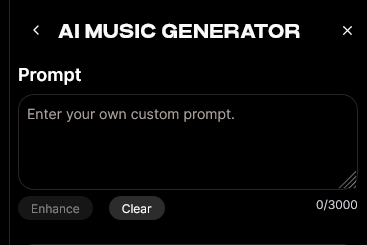
Enter a detailed text description of the music you want to create. The more specific the prompt, the better your output. You might describe genre (ambient, jazz, EDM), mood (uplifting, cinematic, melancholic), and instrumentation (synths, guitars, drums). AI composers rely on this information to structure melodies and harmonic progressions effectively.
For example, prompts like “ethereal ambient music for meditation with soft pads and gentle piano” or “energetic techno beat suitable for gaming soundtrack” yield targeted compositions. You can refer to 100 Text-to-Music Prompts That Will Help You Create Viral Music to refine your creative input.
Step 3: Style & Duration
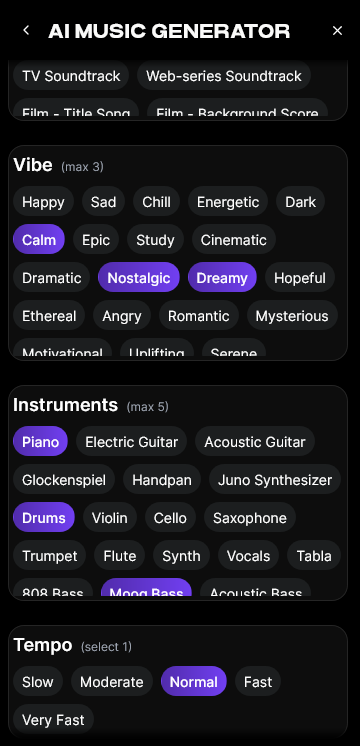
Select your preferred musical style and the duration of the track. Most AI music software supports genres from lo-fi and orchestral scoring to trap and acoustic pop. Duration controls are vital if you are creating loops for video backgrounds or meditation tracks.
In 2026, AI software often lets users toggle between preset “moods” or “scenes”—options like cinematic, relaxing, dark, or festive. This enables precision crafting of music for marketing campaigns or content creation.
Step 4: Generation
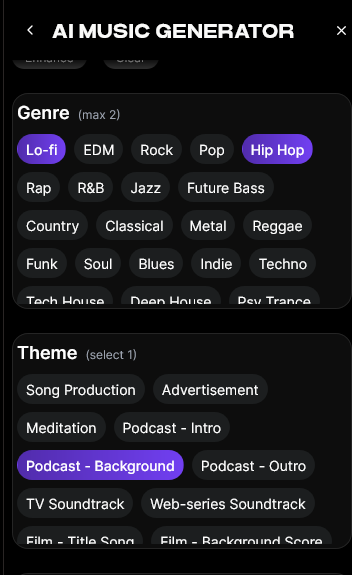
Once your parameters are set, initiate the generation process. The AI system will analyze your description and style, then create an instrumental composition that meets your specifications. These models—such as Soundverse’s V4 and V5—transform linguistic prompts into structured harmonic progressions and rhythmic layers.
Generation time varies depending on complexity. A short beat may take seconds, while a full cinematic soundscape can require longer processing. This step is asynchronous—you receive a finalized output after the AI completes rendering.
Step 5: Export Options
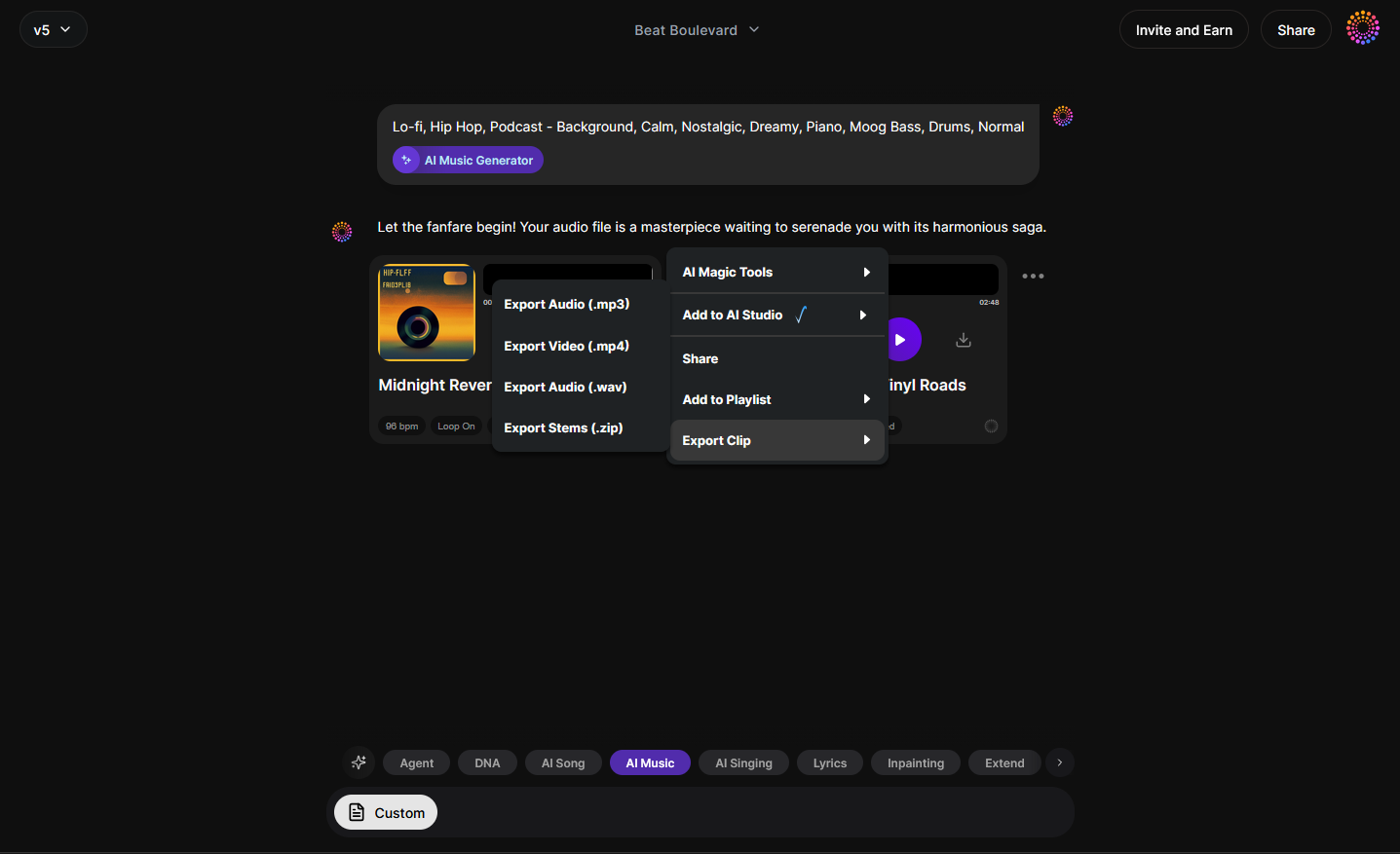
After generation, export your track in preferred file formats. AI music generators generally provide downloadable WAV or MP3 options. In Soundverse, you can also enable Loop Mode for seamless repetition—ideal for games or wellness environments.
Exported music is ready for integration into video editing software, podcasts, or even mobile apps. This step is where creators blend AI output with human adjustments, achieving professional results efficiently.
How to Make Music with Soundverse AI Music Generator
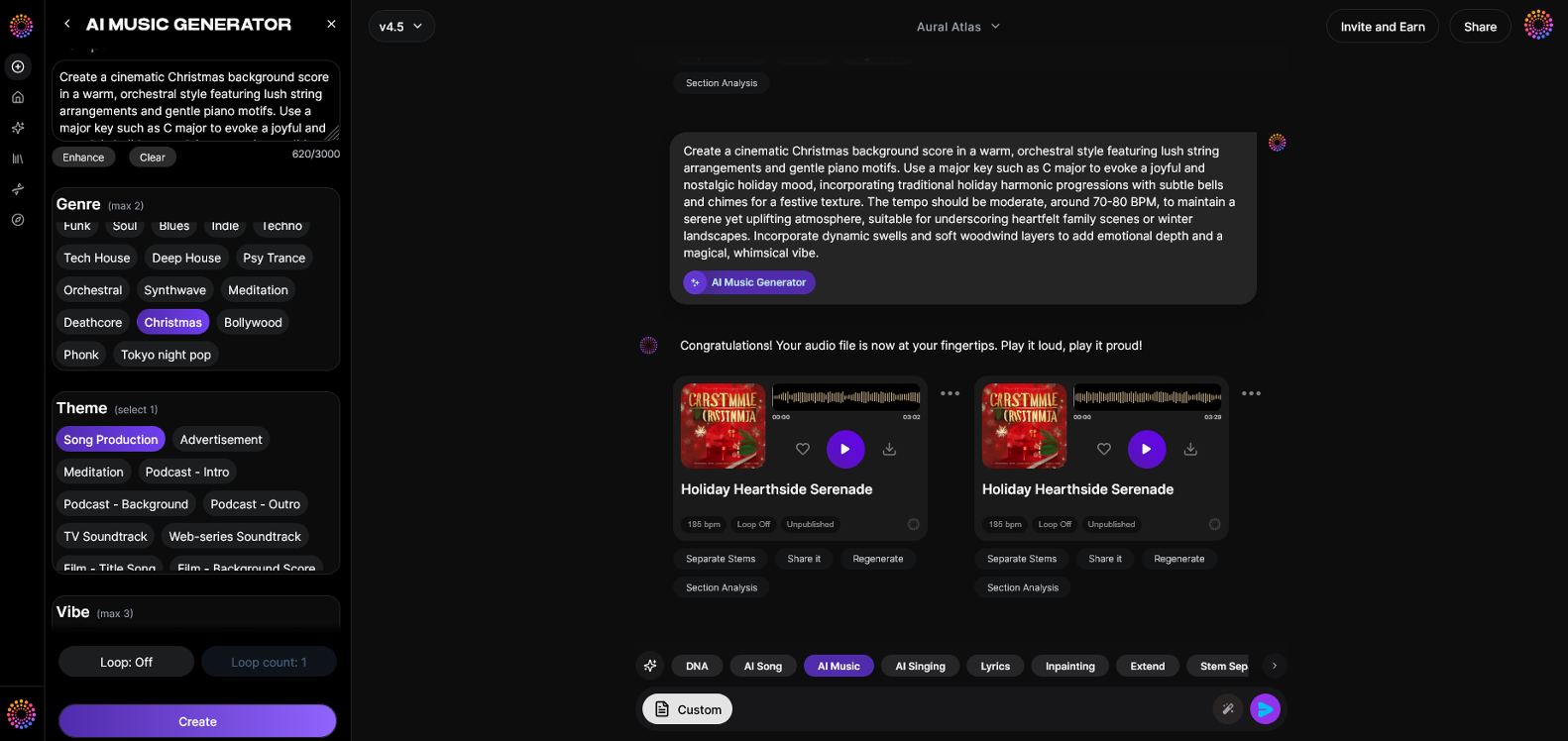
Now that you understand the process of AI music creation, here is how to create it instantly using Soundverse.
Soundverse’s AI Music Generator enables users to produce fully realized instrumental tracks directly from text prompts. It specializes in crafting background music, beats, and loopable soundscapes without vocals. Key features include:
- Text-to-Music Creation: Input any descriptive phrase, and Soundverse generates music aligning to specified genre, mood, and instrumentation.
- Loop Mode: Allows for seamless repetition—perfect for continuous playback in games, meditation, or video backgrounds.
- Genre and Mood Control: Customizable settings make it possible to refine the sonic characteristics of your track.
- V4 and V5 Model Options: Choose different generation models for stylistic variation and production depth.
Primary use cases include video background scores, advertising, wellness meditation tracks, and game loops. Unlike typical AI platforms, Soundverse’s artist-trained system, Soundverse DNA, ensures all generated music remains copyright-safe while allowing artists to monetize their styles ethically.
For creators exploring other Soundverse capabilities, you can check Soundverse AI Magic Tools to Create Content Quickly with AI and Soundverse AI Assistant: Your AI Music Co-Producer to understand how the ecosystem empowers audio experimentation.
For visual guidance, you can also explore our Soundverse Tutorial Series - 8. "Explore" Tab.
Why Choose AI Music in Your Creative Workflow?
In 2026, using AI tools for music production is not just about speed—it’s about innovation. Artificial intelligence enhances diversity of sound while enabling efficient scalability. For musicians, AI bridges creativity with data-driven sonic design, offering limitless possibilities:
- Generate new genres and hybrid compositions instantly.
- Personalize background scores to match content mood.
- Utilize ethical AI systems like Soundverse DNA for commercial safety.
To dive deeper into how AI generation coexists with human artistry, visit AI Music Generator and Human Composers: A Future Together. It explains the synergy between technology and creative intuition.
Start Creating Music with AI Today
Unlock unlimited musical creativity using Soundverse’s AI-powered tools. Generate, arrange, and refine music in minutes — no studio required.
Related Articles
- Generate AI Music with Soundverse Text-to-Music — Learn how to turn your ideas and text prompts into fully produced songs using Soundverse’s text-to-music feature.
- How to Make AI-Generated Music — Discover the practical steps for composing, arranging, and mastering songs with advanced AI music generation tools.
- Soundverse Assistant: Your AI Music Co-Producer — Explore how the Soundverse Assistant helps creators collaborate with AI for streamlined music production and creativity.
- The Benefits of Composing with AI Music Generator — Understand how AI music generators simplify workflow and enhance musical experimentation for every creator.
Here's how to make AI Music with Soundverse
Video Guide
Here’s another long walkthrough of how to use Soundverse AI.
Text Guide
- To know more about AI Magic Tools, check here.
- To know more about Soundverse Assistant, check here.
- To know more about Arrangement Studio, check here.
Soundverse is an AI Assistant that allows content creators and music makers to create original content in a flash using Generative AI.
With the help of Soundverse Assistant and AI Magic Tools, our users get an unfair advantage over other creators to create audio and music content quickly, easily and cheaply.
Soundverse Assistant is your ultimate music companion. You simply speak to the assistant to get your stuff done. The more you speak to it, the more it starts understanding you and your goals.
AI Magic Tools help convert your creative dreams into tangible music and audio. Use AI Magic Tools such as text to music, stem separation, or lyrics generation to realise your content dreams faster.
Soundverse is here to take music production to the next level. We're not just a digital audio workstation (DAW) competing with Ableton or Logic, we're building a completely new paradigm of easy and conversational content creation.
TikTok: https://www.tiktok.com/@soundverse.ai
Twitter: https://twitter.com/soundverse_ai
Instagram: https://www.instagram.com/soundverse.ai
LinkedIn: https://www.linkedin.com/company/soundverseai
Youtube: https://www.youtube.com/@SoundverseAI
Facebook: https://www.facebook.com/profile.php?id=100095674445607
Join Soundverse for Free and make Viral AI Music

We are constantly building more product experiences. Keep checking our Blog to stay updated about them!