How to Convert Text into a Song in 2026: A Complete Guide to AI-Powered Music Creation
Learn how text to song conversion works with AI music tools and Soundverse’s AI Song Generator.
How to Convert Text into a Song
Music creation has undergone a revolutionary transformation over the past few years. In 2026, converting written text into a fully produced song has become one of the most exciting applications of artificial intelligence. Through text to song conversion, creators of all skill levels can turn lyrical ideas, emotional descriptions, or even random sentences into melodies, vocals, and full instrumental arrangements. Whether you're a seasoned songwriter or a curious tech enthusiast, understanding how this process works can help you harness modern creative automation tools effectively.
What does text to song conversion mean?
Text to song conversion refers to the process of transforming written content—such as lyrics, prose, or descriptive text—into an entire musical piece using AI-driven technologies. Instead of manually composing each part of a song, these intelligent systems interpret language patterns, sentiment, and rhythm hints within the text and map them to musical structures. The output usually includes melody lines, accompaniment, harmonies, and even expressive vocal performances.
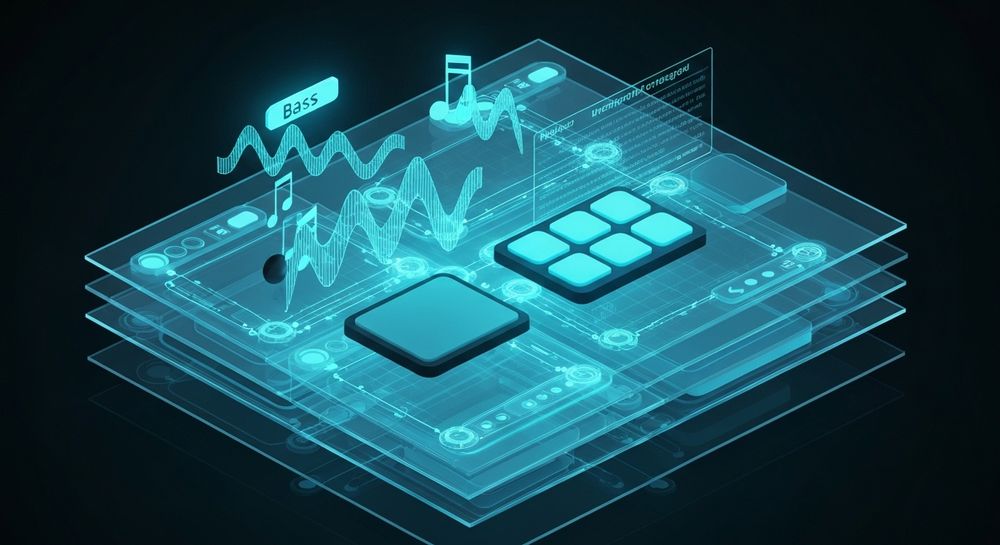
This creative approach falls within the broader domain of AI music generation, which has expanded rapidly since 2024. As of 2026, AI models trained on vast datasets of music and lyrics are capable of generating compositions that match human-level emotional depth and stylistic precision. Leading tools employ neural networks that analyze tone, mood, and word emphasis to pick keys, tempos, and instrumental arrangements that complement the text’s emotional arc.
Why is text to song conversion popular in 2026?
Several trends have pushed text-based songwriting into the mainstream:
- Creative Speed: Musicians and content creators can instantly prototype ideas without instruments or studio time.
- Accessible Production: High-quality AI vocals and instruments make music creation affordable to independent creators worldwide.
- Cross-Language Composition: Modern generators support multilingual input, allowing songs in multiple languages and styles.
- Social Media Integration: Viral short-form videos in 2026 often use AI-generated songs as soundtracks or background jingles.
- Personalization: Custom greetings, thematic compositions, and digital gifts can now be made from text alone.
For deeper insight into how this trend influences creators worldwide, explore AI music generation and human composers and music industry trends.
How does AI interpret text to create music?
The underlying mechanism involves several layers of processing:
- Text Analysis: AI parses the meaning, emotions, and rhythm of sentences. Positive or energetic words may lead to faster tempos and major keys, while subdued descriptions may inspire minor keys and slower beats.
- Melodic Mapping: Systems use statistical and generative models to translate syllable flow and punctuation into melodic contours.
- Arrangement Generation: Once melody and lyrics are set, virtual instruments are assigned to structure the composition: drums for rhythm, bass for depth, and strings or synths for atmosphere.
- Vocal Rendering: Advanced modules convert the text into sung performances, matching pitch and timing to the generated melody.
- Mixing and Mastering: Auto-adjusted levels and reverb give the final output a studio-polished sound.
In practice, this process means that AI can take a romantic poem or a product description and generate a pop ballad, EDM track, or lo-fi anthem with authentic human-like tonality.
For a hands-on demonstration, watch our Soundverse Tutorial Series - How to Make Music and Make Deep House Music guides on YouTube.
What tools enable song creation from text?
As of 2026, various platforms support text-based music generation. Some popular categories include:
- AI Song Generators (like Soundverse): Handle lyrics-to-song conversion with vocals and instruments.
- Lyrics Generation Tools: Ideal for brainstorming and refining lyrics before production.
- Instrumental AI Music Generators: Create background tracks without vocals for videos or podcasts.
Outside Soundverse, alternatives such as Mubert, Amper Music, and AIVA allow specific audio generation workflows. However, many creators find integrated systems more efficient because they bundle text analysis, melody creation, and mixing into one interface.
If you are exploring alternatives, check out Mubert alternatives for Soundverse and Soundraw Alternative for detailed comparisons.
How can creators efficiently convert text to song step by step?
Let’s walk through the fundamental approach of turning text into a musical composition using AI tools.
Step 1: Feature Overview
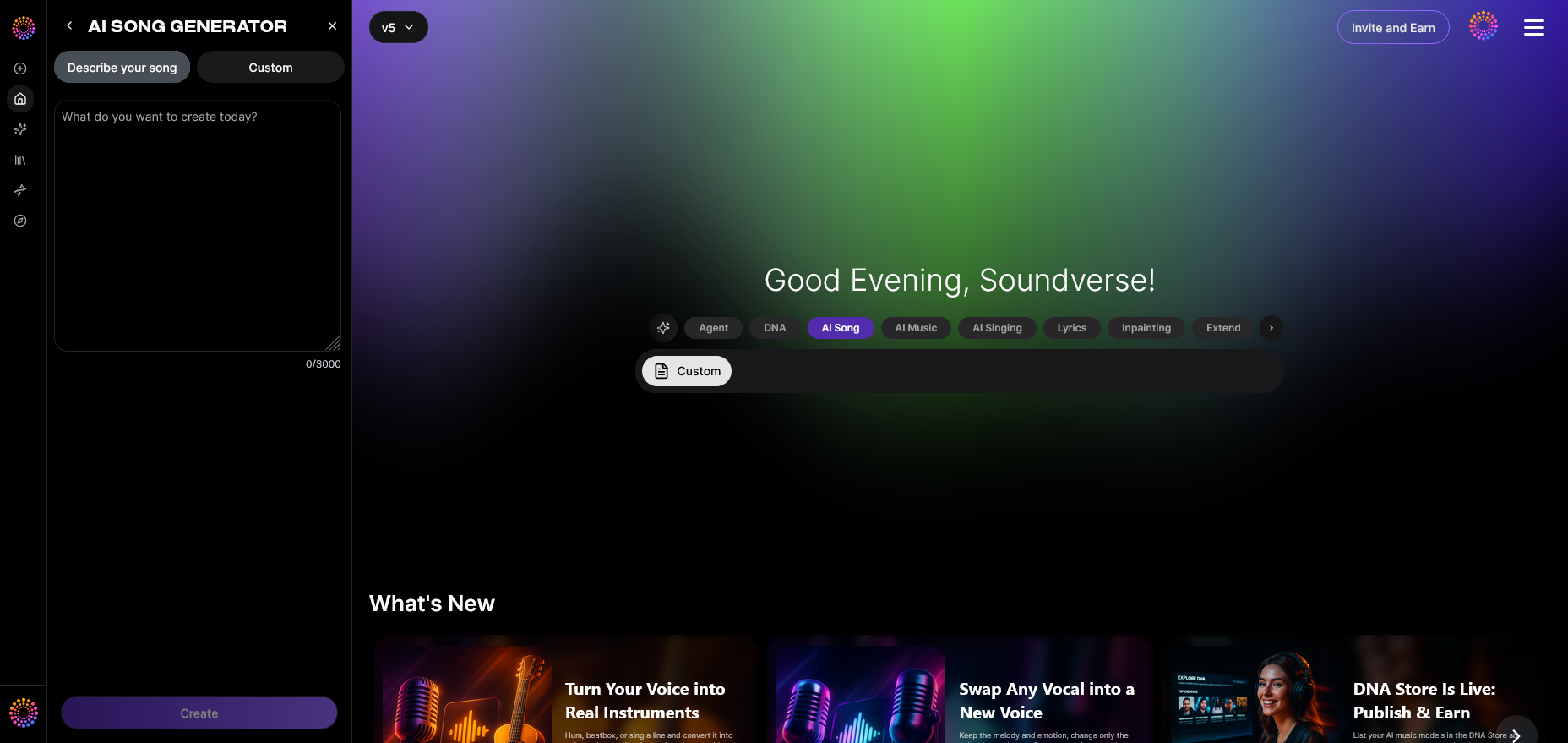
Start by accessing the AI Song Generator from the main menu of your chosen platform. This tool is dedicated to transforming written content into complete songs featuring vocals and instrumental tracks.
Step 2: Lyrics Input
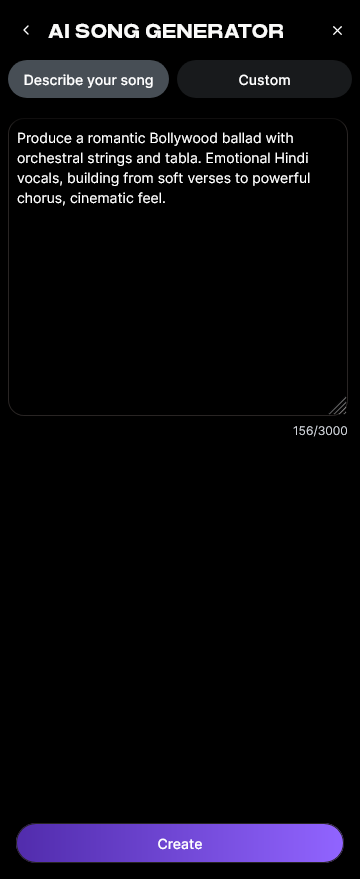
Enter or paste the text you want to convert. This could be ready-made lyrics, a poetic paragraph, or an imaginative description. The AI interprets rhythm and emotion from the text to begin constructing melodic ideas. You can also integrate lyric writing assistance using a feature similar to Soundverse’s Help Me Write, powered by its AI Lyrics Writer module.
Step 3: Style Selection
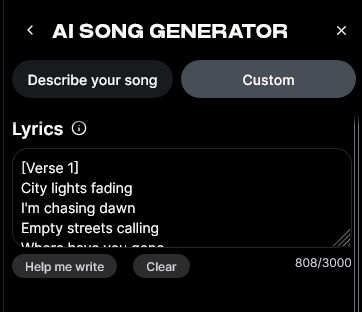
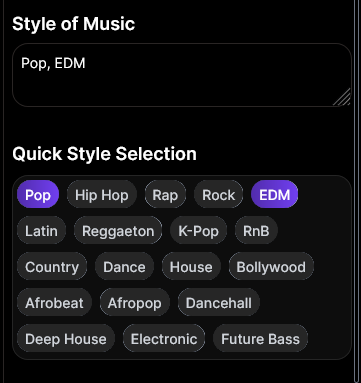
Choose a musical genre or style such as Pop, Rock, EDM, Jazz, or Ambient. The style determines the base rhythm structure, instrumentation, and vocal tone. If you’re exploring deliberate genre experiments, check guides like How to Create EDM with Soundverse AI or How to Create Jazz Music with Soundverse AI.
Step 4: Configuration
Define key parameters such as tempo, emotion profile, and vocal type. Some systems also allow uploading reference audio for stylistic guidance, enabling matching rhythms and textures. Use this stage to specify whether you want melodic singing, whisper-style vocals, or experimental textures.
Step 5: Generation
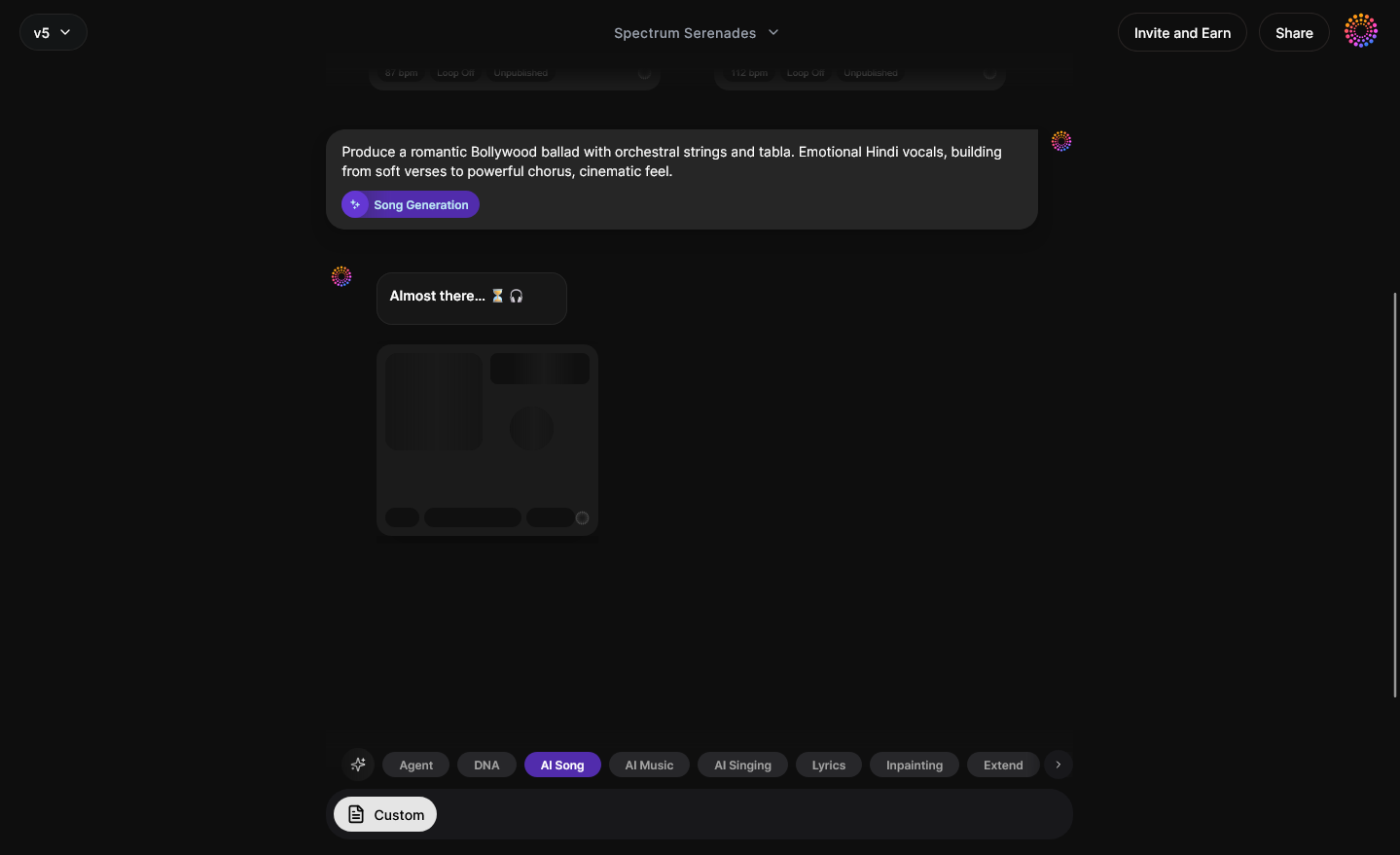
Initiate the generation process. The AI now handles composition, vocal synthesis, arrangement, and mixing asynchronously. Once processing completes, you’ll receive a preview-able result. The system models the emotion and phrasing found in text to craft a natural musical flow.
Step 6: Generation Complete
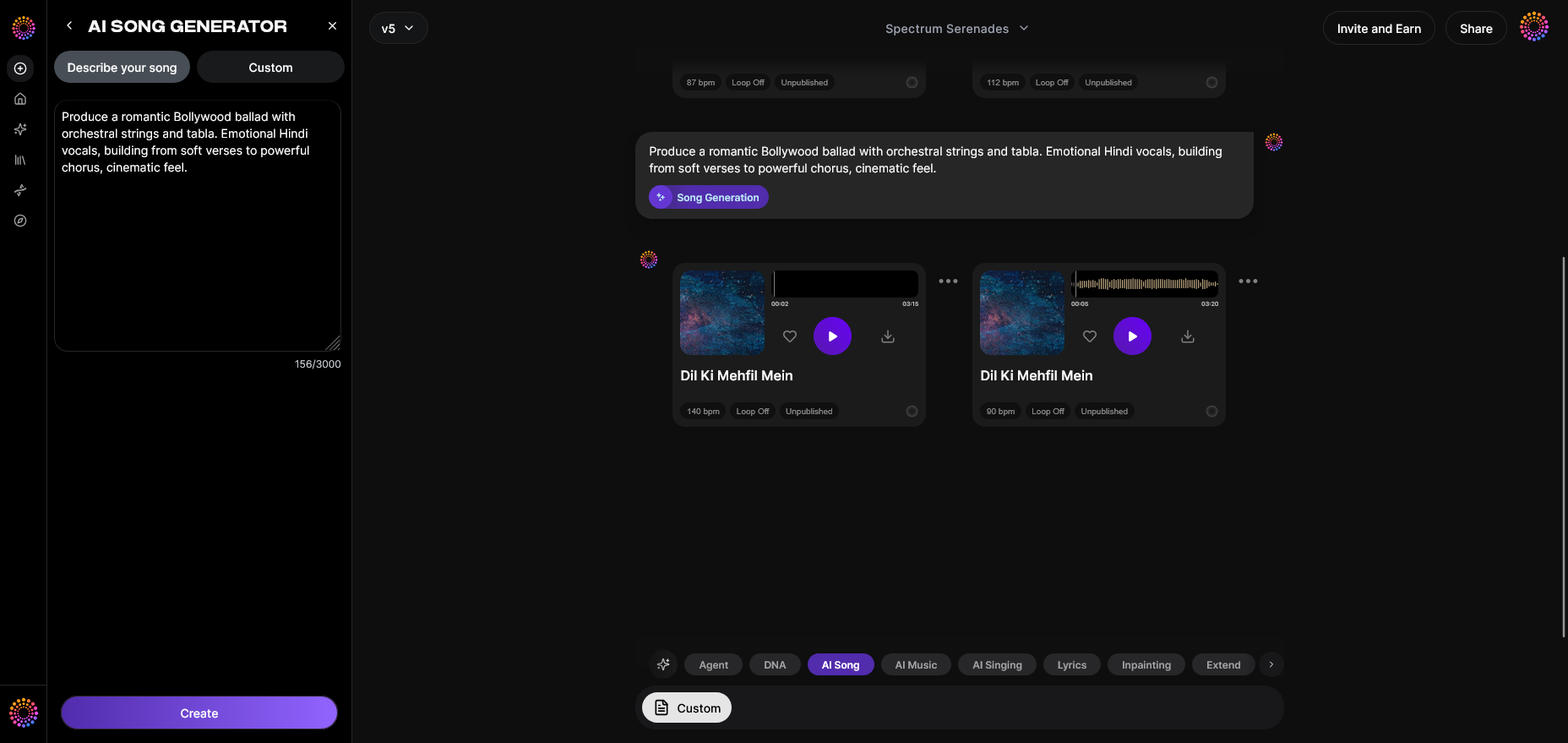
After completion, review your generated song. Assess vocal tone, instrumental layering, and emotional match. You can re-run the process with different parameters to test variations. This stage is great for prototyping ideas rapidly.
Step 7: Export Results
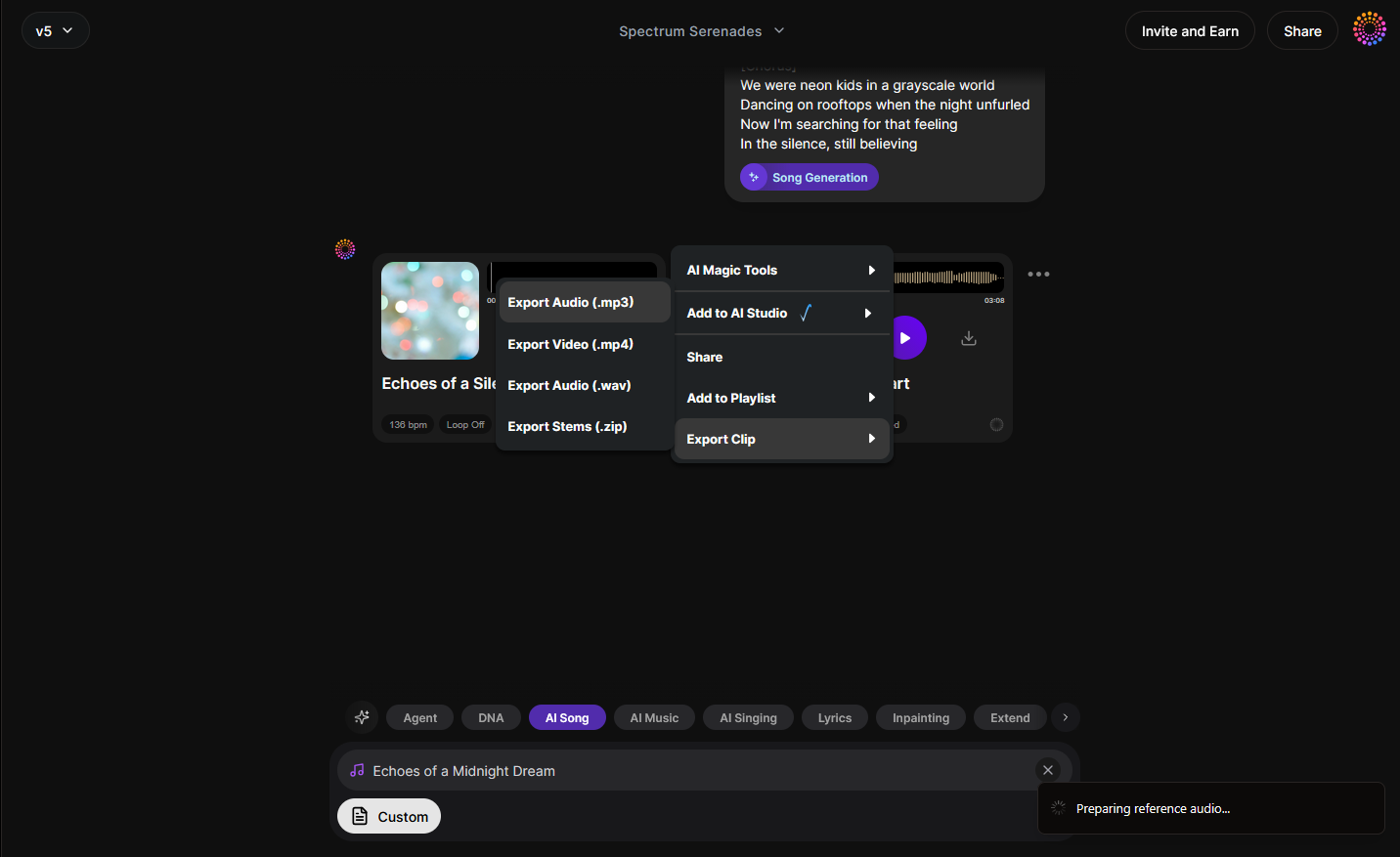
Finally, export the generated song into preferred formats such as audio files suitable for streaming or video integration. This enables immediate use across creative projects, social posts, and professional demos.
How to make text to song conversion seamless with Soundverse AI Song Generator
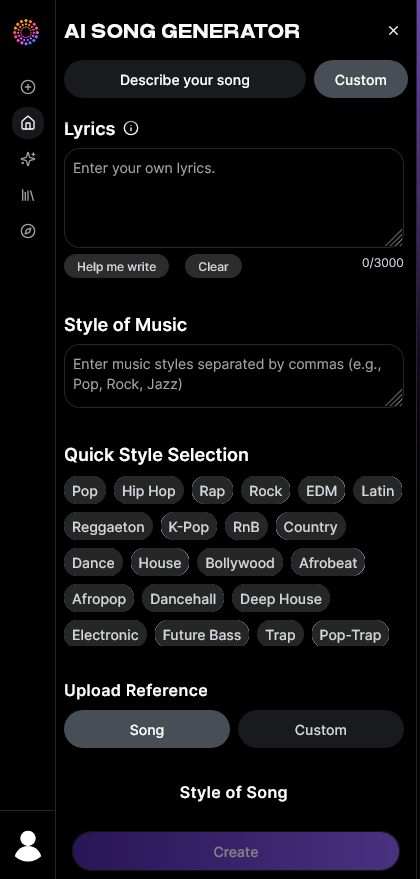
Now that you understand the process, here’s how Soundverse makes it instant and powerful. Soundverse’s AI Song Generator transforms lyrics or text descriptions into complete songs featuring AI-generated vocals and instrumental arrangements. It operates through a sophisticated pipeline that handles lyrics understanding, melody design, arrangement composition, and final mixing automatically.
Key capabilities include:
- Describe Your Song mode: Users describe a desired vibe or story, and the tool generates the entire composition.
- Custom mode: Input full lyrics along with genre and production settings for tailored results.
- Reference Audio support: Music or vocal samples can guide sound, energy, and phrasing.
- Quick Style Selection: Choose instantly between genres like Pop, EDM, Rock, Lo-fi, and Classical.
The primary use cases extend beyond songwriting—from rapid demo creation and content production to personalized gift songs and multilingual projects in ten-plus languages.
For creators seeking broader AI features, explore complementary Soundverse tools such as:
- AI Lyrics Writer: Automatically generate cohesive lyrics aligned with tone and genre.
- AI Singing Generator: Produce professional acapella vocals using text or lyrics.
- AI Music Generator: Create instrumental-only tracks tailored to emotion or setting.
To discover how Soundverse integrates these features harmoniously, review Soundverse AI Magic Tools and Generate AI Music with Soundverse Text-to-Music. These articles explain how users combine modules for efficient creativity.
Looking ahead: The future of text-based songwriting in 2026 and beyond
By 2026, AI technology has reshaped the boundaries of music production. Text to song conversion unites linguistic art and acoustic expression, offering creators infinite possibilities regardless of musical training. As creative AI continues evolving, expect enhanced realism in vocal performances, adaptive emotional scoring, and broader cultural fusion in multilingual compositions. Even studio professionals now adopt these workflows to prototype faster before full-scale production.
Soundverse remains among the leading innovators advancing this space responsibly, enabling artists to express their ideas instantly with ethical, copyright-safe, and high-quality output.
Start Creating Music from Text Today
Transform your written ideas into captivating songs with Soundverse’s powerful text to song conversion tools. Join thousands of creators who are turning words into music effortlessly.
Try Soundverse Free
Related Articles
- Generate AI Music with Soundverse Text-to-Music: Discover how Soundverse’s text-to-music technology helps you instantly turn written prompts into full songs with just a few clicks.
- 100 Text-to-Music Prompts That Will Help You Create Viral Music: Get inspired with curated prompts designed to help you generate catchy, high-impact AI music for all occasions.
- Soundverse AI Revolutionizing Music Creation for New-Age Content Creators: Explore how Soundverse is reshaping the creative landscape for musicians, producers, and digital creators everywhere.
- Soundverse Assistant: Your AI Music Co-Producer: Learn how Soundverse Assistant simplifies the music-making process by helping creators produce professional-quality songs from text prompts.
Here's how to make AI Music with Soundverse
Video Guide
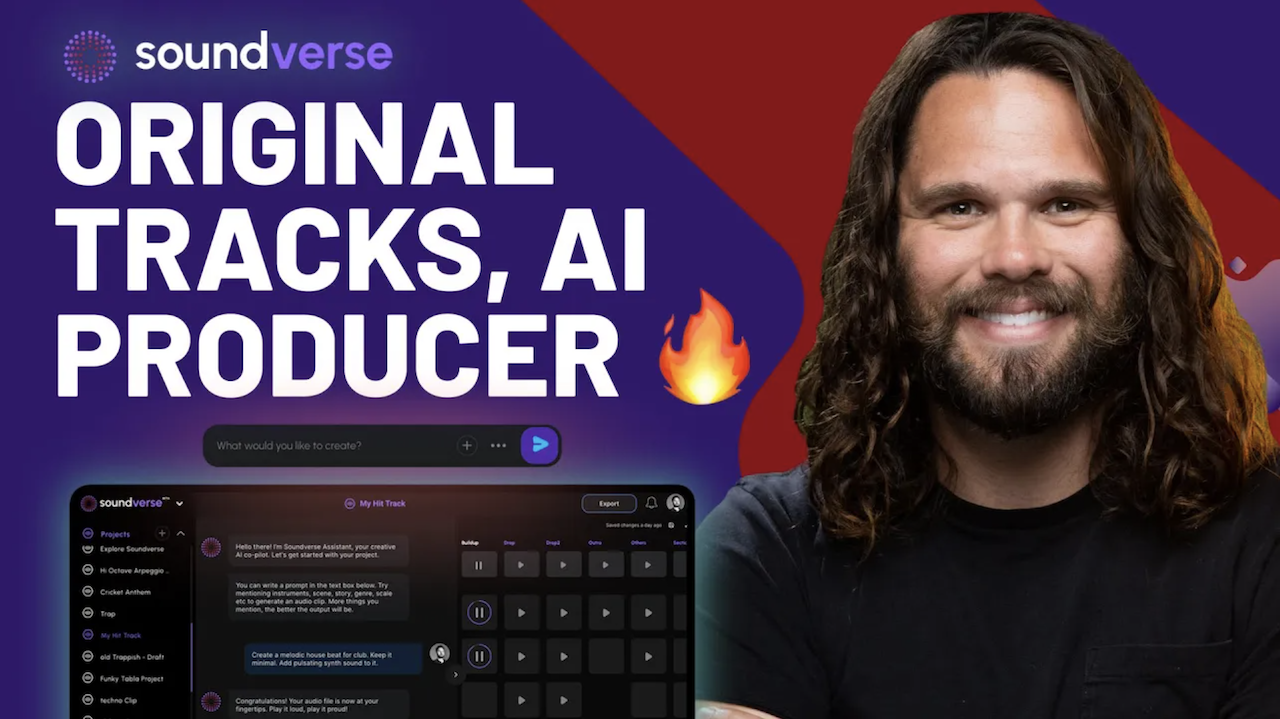
Here’s another long walkthrough of how to use Soundverse AI.
Text Guide
- To know more about AI Magic Tools, check here.
- To know more about Soundverse Assistant, check here.
- To know more about Arrangement Studio, check here.
Soundverse is an AI Assistant that allows content creators and music makers to create original content in a flash using Generative AI. With the help of Soundverse Assistant and AI Magic Tools, our users get an unfair advantage over other creators to create audio and music content quickly, easily and cheaply. Soundverse Assistant is your ultimate music companion. You simply speak to the assistant to get your stuff done. The more you speak to it, the more it starts understanding you and your goals. AI Magic Tools help convert your creative dreams into tangible music and audio. Use AI Magic Tools such as text to music, stem separation, or lyrics generation to realise your content dreams faster. Soundverse is here to take music production to the next level. We're not just a digital audio workstation (DAW) competing with Ableton or Logic, we're building a completely new paradigm of easy and conversational content creation.
TikTok: https://www.tiktok.com/@soundverse.ai
Twitter: https://twitter.com/soundverse_ai
Instagram: https://www.instagram.com/soundverse.ai
LinkedIn: https://www.linkedin.com/company/soundverseai
Youtube: https://www.youtube.com/@SoundverseAI
Facebook: https://www.facebook.com/profile.php?id=100095674445607
Join Soundverse for Free and make Viral AI Music
We are constantly building more product experiences. Keep checking our Blog to stay updated about them!