How AI Music Generators Support Ethical Music Creation
Learn how AI music generators promote ethical AI practices in 2026
How AI Music Generators Support Ethical Music Creation
Artificial intelligence continues to reshape the music industry in 2026, redefining how artists, producers, and labels approach creativity and collaboration. As musicians explore the growing potential of AI music generators, one of the most pressing concerns is ethics — how these tools can protect creators, honor consent, and preserve the integrity of musical expression. Ethical AI music has emerged as more than a trend; it’s now a central pillar of responsible innovation.
Why is ethics critical in AI music creation today?
In previous years, AI development often outpaced moral and legal frameworks. Unlicensed datasets and opaque algorithms raised questions about ownership, originality, and fair compensation. By 2026, the industry has learned from such shortcomings. Ethical AI music demands transparency in how data is collected, trained, and deployed. Without accountability, AI-generated compositions can unintentionally exploit artists’ work or infringe upon intellectual property rights.
AI music ethics now guide creators toward a sustainable model where technology assists artistry instead of replacing it. Ethical guidelines ensure that rights-holders benefit from innovation, and users can confidently generate tracks without worrying about copyright violations. As seen in recent research shared through Soundverse’s industry insights, ethical oversight is not just regulatory—it’s economically essential.
How do AI music generators encourage responsible music creation?
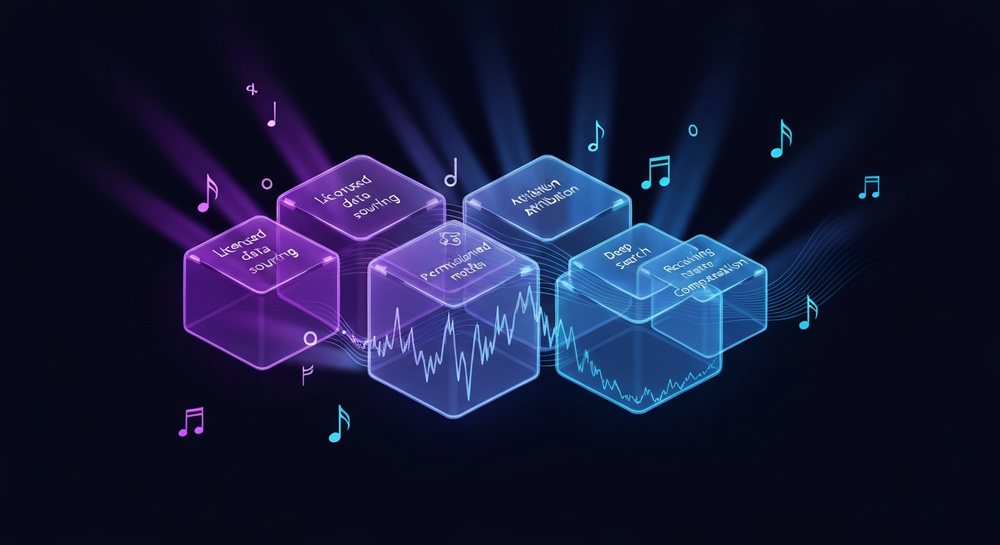
Modern AI music generators enable artists to expand their creative reach while maintaining responsible collaboration. Instead of scraping random audio across the internet, cutting-edge platforms in 2026 rely on licensed, consent-based catalogs. These generators make it possible to craft new soundscapes while confirming that every element used in training is ethically sourced. This process aligns with broader creative values: respecting originality, rewarding contributors, and reducing unauthorized sampling found in low-quality AI systems.
Responsible music creation also involves transparency in data lineage. Musicians want to know where their AI-generated sounds come from and how outputs may resemble existing works. Ethical frameworks make attribution traceable, ensuring creators can identify influence rather than imitation. For those curious about how such technology compares across platforms, exploring alternatives to Mubert or Soundraw illustrates how ethical standards vary in the market.

What are the challenges in achieving ethical AI music?
Despite rapid progress, some obstacles remain. The key challenges are:
- Transparent data sourcing: Gathering licensed content involves negotiation with creators and labels, which can be complex.
- Attribution systems: Building algorithms capable of tracking musical lineage requires advanced AI explainability methods.
- Recurring compensation: Fair payment models must ensure continuous royalties whenever generated content is distributed or monetized.
- Education: Many producers still misunderstand how ethical AI differs from traditional sampling, highlighting the need for better training.
In 2026, successful ethical AI platforms resolve these issues through structured frameworks that prioritize openness and artist participation.
How to make ethical music with Soundverse The Ethical AI Music Framework
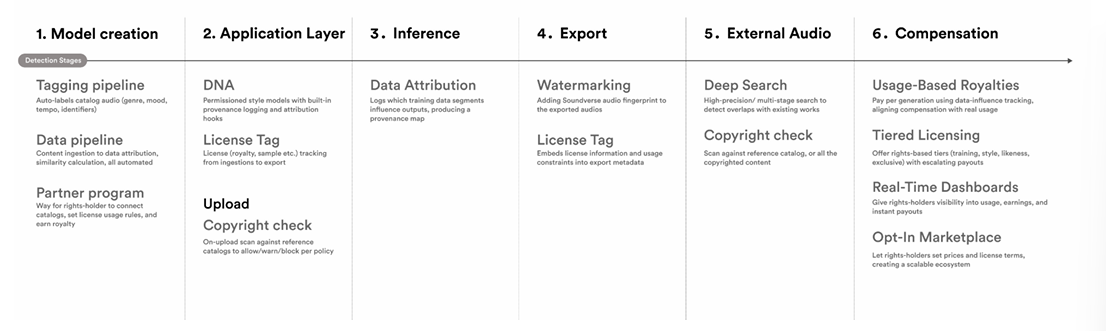
Soundverse leads this transformation with its proprietary Ethical AI Music Framework—a complete infrastructure that unites technological advancement with artist integrity. This framework replaces the old black-box approach in AI music generation with an auditable, six-stage pipeline designed around consent, attribution, and compensation.
1. Licensed Data Sourcing
Every dataset used in Soundverse’s AI training is fully licensed. No scraping occurs, and each contributor explicitly approves inclusion. This ensures models grow ethically while preserving creators’ trust.
2. Permissioned Models (DNA)
Through the Soundverse DNA feature, artists can contribute their catalog and sonic identity to create AI models that represent their personal style. Permissioned access guarantees copyright compliance, allowing musicians to benefit financially whenever others generate music inspired by them.
3. Explainable Inference and Attribution
With transparent inference, users can trace influences behind each AI-generated composition. This addresses one of the largest grey areas in AI ethics—understanding how outputs relate to existing works.
4. Traceable Export and Watermarking
Soundverse integrates watermarking at export, ensuring every generated track carries a unique identifier. Labels and creators can verify authenticity across platforms, preventing unauthorized redistribution.
5. Deep Search and External Scanning
The deep search system scans the wider web to detect any possible reuse or infringement of AI-generated audio. It enhances rights protection, encouraging safe collaboration.
6. Recurring Compensation (Partner Program)
Through the Soundverse Content Partner Program, rights-holders receive usage-based royalties whenever their licensed sounds influence generated outputs. This recurring model creates long-term value rather than one-time payments.
Together, these six stages make Soundverse a blueprint for ethical AI in music production. The infrastructure guarantees compliance, transparency, and monetization—three pillars of modern responsible AI.
How does ethical AI music benefit creators and tech developers?
Ethical AI tools bridge the gap between creativity and commerce. For musicians, they open new possibilities for composition: hybrid genres, adaptive mixes, and interactive experiences that stay copyright-safe. Developers benefit by working in a transparent system that reduces liability risk while building trust with labels and creators.
For example, collaboration between AI and human composers now fuels the indie music scene. Creators can quickly test multiple variations of a concept, as covered in Soundverse’s music generation guide, yet still maintain control over the rights. Transparency makes experimentation safe and profitable. For a deeper dive, watch our guide on creating Deep House music or our tutorial on how to make music with Soundverse.
What trends define AI music ethics in 2026?
Several defining trends mark 2026:
- Artist-centered AI models: Musicians design and license their own machine learning systems.
- Legal standardization: More countries are establishing AI copyright laws.
- Ethical auditing: Enterprises increasingly demand explainable AI before internal adoption.
- Sustainable monetization models: Royalties extend beyond streaming toward AI influence-based dividends.
- Cultural preservation: AI assists in archiving regional musical identities responsibly.
These trends affirm a future where AI enhances creativity while safeguarding individuality—a harmony that technology struggled to achieve until now.
Why Soundverse leads in ethical AI music generation
Soundverse’s transparent workflow and sustainable revenue architecture distinguish it from competitors. Features like Soundverse Trace establish a trust layer throughout the music lifecycle, protecting rights from data sourcing through delivery. The platform’s recurring compensation mechanism aligns with evolving music industry economics, converting ethical responsibility into tangible rewards.
For visual storytellers and producers searching for copyright-safe soundtracks, integrating Soundverse’s AI music generators with projects ensures full traceability and moral compliance. Whether creating ambient soundscapes or complex jazz arrangements, the ethical assurance baked into the process redefines what responsible AI creativity means.
Start Creating Ethical AI Music Today
Harness the power of AI music generators to compose original, royalty-free tracks ethically and effortlessly. Join Soundverse to create professional-quality music while maintaining creative integrity.
Related Articles
- The Benefits of Composing with AI Music Generator: Explore how AI tools empower creators to make music faster while preserving authenticity and originality.
- How AI-Generated Music Is Transforming the Music Industry: Discover how AI-driven tools revolutionize production methods and open new opportunities for artists and producers.
- AI Music Generator and Human Composers: A Future Together: Learn how human creativity and artificial intelligence can collaborate harmoniously to shape the future of sound creation.
- Navigating the World of Royalty-Free and Copyright-Free Music Using Soundverse AI: Understand the difference between royalty-free and copyright-free music to produce content legally and ethically with AI.
Here's how to make AI Music with Soundverse
Video Guide
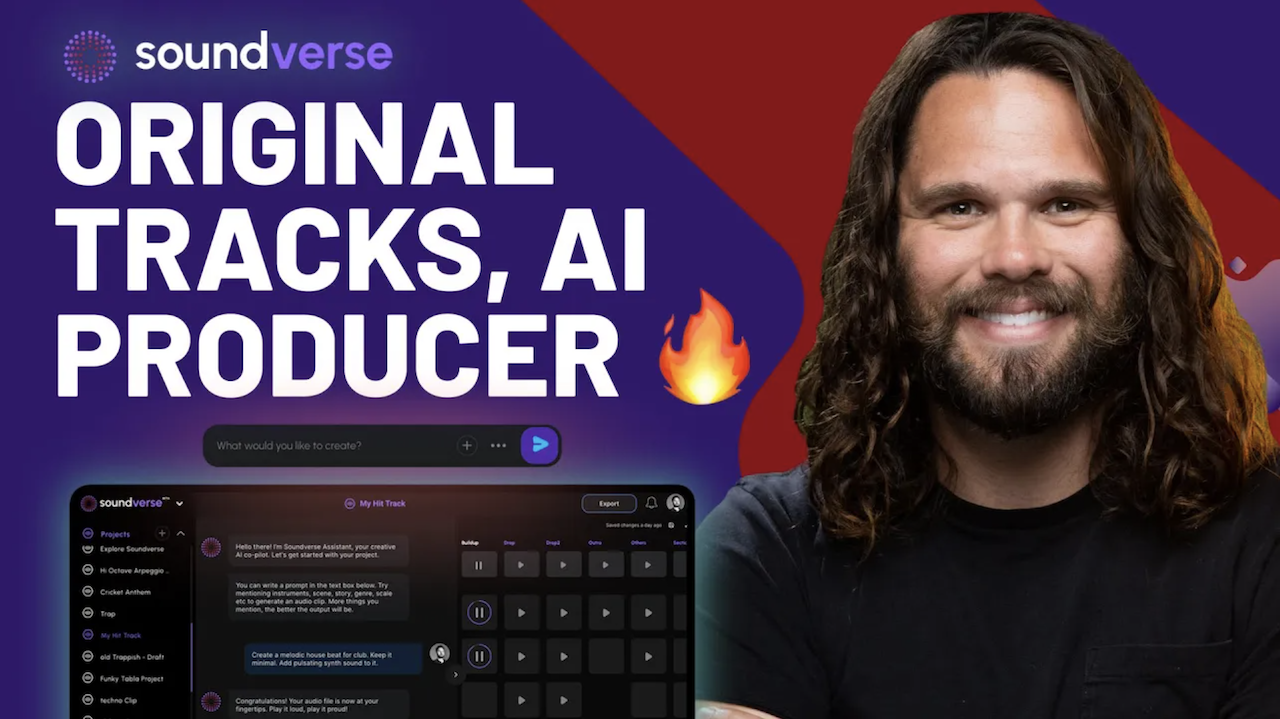
Here’s another long walkthrough of how to use Soundverse AI.
Text Guide
- To know more about AI Magic Tools, check here.
- To know more about Soundverse Assistant, check here.
- To know more about Arrangement Studio, check here.
Soundverse is an AI Assistant that allows content creators and music makers to create original content in a flash using Generative AI. With the help of Soundverse Assistant and AI Magic Tools, our users get an unfair advantage over other creators to create audio and music content quickly, easily and cheaply. Soundverse Assistant is your ultimate music companion. You simply speak to the assistant to get your stuff done. The more you speak to it, the more it starts understanding you and your goals. AI Magic Tools help convert your creative dreams into tangible music and audio. Use AI Magic Tools such as text to music, stem separation, or lyrics generation to realise your content dreams faster. Soundverse is here to take music production to the next level. We're not just a digital audio workstation (DAW) competing with Ableton or Logic, we're building a completely new paradigm of easy and conversational content creation.
TikTok: https://www.tiktok.com/@soundverse.ai
Twitter: https://twitter.com/soundverse_ai
Instagram: https://www.instagram.com/soundverse.ai
LinkedIn: https://www.linkedin.com/company/soundverseai
Youtube: https://www.youtube.com/@SoundverseAI
Facebook: https://www.facebook.com/profile.php?id=100095674445607
Join Soundverse for Free and make Viral AI Music

We are constantly building more product experiences. Keep checking our Blog to stay updated about them!