Why Do Advertisers Use Music in Commercials?
Discover why music in advertising drives emotional branding and recall.
Why Do Advertisers Use Music in Commercials
In 2026, music in advertising continues to be one of the most powerful tools for building emotional connections between brands and audiences. Whether through commercial jingles, cinematic soundscapes, or minimalist tones, the blend of marketing psychology and sound design plays a crucial role in shaping how people perceive and remember products. For marketers, understanding the impact of musical choices is not just creative—it’s strategic.
Why is music so important in advertising?
Music has the unique ability to evoke emotions, influence mood, and reinforce brand identity. Advertisers use music to make campaigns more memorable, set the pace for storytelling, and encourage positive consumer associations. When a carefully selected track aligns with a brand’s tone and message, it enhances recall and increases engagement. This is the essence of emotional branding—a discipline that has grown significantly between 2024 and 2026 as marketers leaned deeper into audio-based storytelling.
Research in advertising psychology shows that music activates both cognitive and emotional processing areas of the brain. It subtly nudges consumer behavior, making them more receptive to messages and more likely to form attachments. In 2026, brands are incorporating sophisticated sound design for ads to match their target demographics, often using data to select music that appeals to specific moods and lifestyles.
What role do commercial jingles play in consumer memory?
Commercial jingles are short, catchy musical phrases designed to make a brand unforgettable. They have been central to advertising for decades, and despite trends leaning toward cinematic scores or ambient soundscapes, jingles remain effective for instant recall. In a saturated content landscape, where consumers scroll past video ads on social media in seconds, a memorable jingle can cut through the noise.
Recent campaigns in 2026 highlight a shift back toward nostalgic and familiar melodies, leveraging psychological comfort. Advertisers are modernizing jingles with electronic textures or genre fusions—combining pop elements with lo-fi synths or acoustic patterns for a contemporary feel. Beyond memorability, a strong jingle establishes rhythm and recognition, acting as auditory branding that stays with the listener.
For a deeper dive into how jingles are produced using AI tools, watch our tutorial on making music with Soundverse.
How does emotional branding rely on music?
Emotional branding connects a company’s identity to a feeling, and music is the shortcut to emotion. Think of how a soft piano melody can evoke trust, or how a bold drumbeat can suggest confidence and innovation. In 2026, emotional branding through music has become a refined discipline supported by neuroscience and AI-driven analytics.
Marketers are now using AI tools to survey emotional responses to various sound elements, allowing them to build experiences that feel intuitive and personal. The interplay of music and emotion is vital because it ensures advertising goes beyond visual appeal—it becomes experiential. Every note is designed to mirror the customer journey, whether it represents excitement, nostalgia, or empathy.
How do advertisers build an audio marketing strategy?
An audio marketing strategy is the blueprint for how sound integrates across all brand touchpoints. While visual identity has been the primary focus for decades, brand sound—known as sonic branding—has risen in prominence since 2024. By 2026, advertising agencies recognize that consistent sound design for ads strengthens brand association. The strategy covers elements such as intro tones, brand-specific melodies, and even the ambient background used in video ads or podcast placements.
Creating a coherent audio marketing strategy involves several factors:
- Brand Personality Alignment: The music should reflect the company’s attributes—playful, elegant, adventurous, or minimalist.
- Audience Preference: Use consumer data to identify musical styles that resonate with the target demographic.
- Platform Adaptation: Different platforms may require variations—short loops for TikTok, immersive soundscapes for YouTube.
- Consistency Across Media: Keeping sonic cues consistent across all campaigns reinforces memorability.
For inspiration, marketers looking to follow industry developments can explore articles like Soundverse AI Magic Tools Create Content Quickly with AI and AI Music Generator and Human Composers: A Future Together, which discuss how AI is influencing creative workflows.
What is the connection between advertising psychology and music?
Advertising psychology explains how sensory stimuli—like sound—stimulate emotions that drive decisions. Music in advertising amplifies storytelling and acts as a subconscious cue for actions. If a celebratory anthem plays during a product reveal, the consumer’s mood aligns with the brand’s message. Sound can make people trust a brand more or perceive it as high-quality. In 2026, neuroscience-backed creative planning integrates auditory cues as part of conversion-focused design.
Companies study listener responses through biometric tracking or AI-driven focus analysis, allowing ad creators to choose sound frequencies and tempos correlated with positive reactions. Articles like How AI Is Transforming the Music Industry explore the science behind this shift in greater depth. Industry data trends also support this shift, such as those found in Insights on 2025 and Looking Ahead to 2026 - Reprtoir and Music Industry Statistics 2026: What Independent Artists Need to Know.
How does sound design shape advertising experiences?
Sound design for ads involves mixing and arranging audio elements so they align with visuals, brand tone, and pacing. Every sound—from a subtle whoosh to a deep bass rhythm—directs viewer perception. Sophisticated sound design reinforces brand immersion. In 2026, the combination of AI and creative direction allows advertisers to craft custom sound logos that trigger brand recognition even without visuals.
Brands invest in professional audio mixing tools to fine-tune frequencies for mobile and broadcast environments. Yet, with AI technologies now accessible to smaller teams, creating broadcast-quality audio is achievable without large studio infrastructures. This democratization of creative sound design has opened new doors for independent creators and agencies alike. To learn more about creating and mixing electronic music layers, check our Soundverse Tutorial Series - Make Deep House Music.
How to make music for advertising with Soundverse AI Music Generator
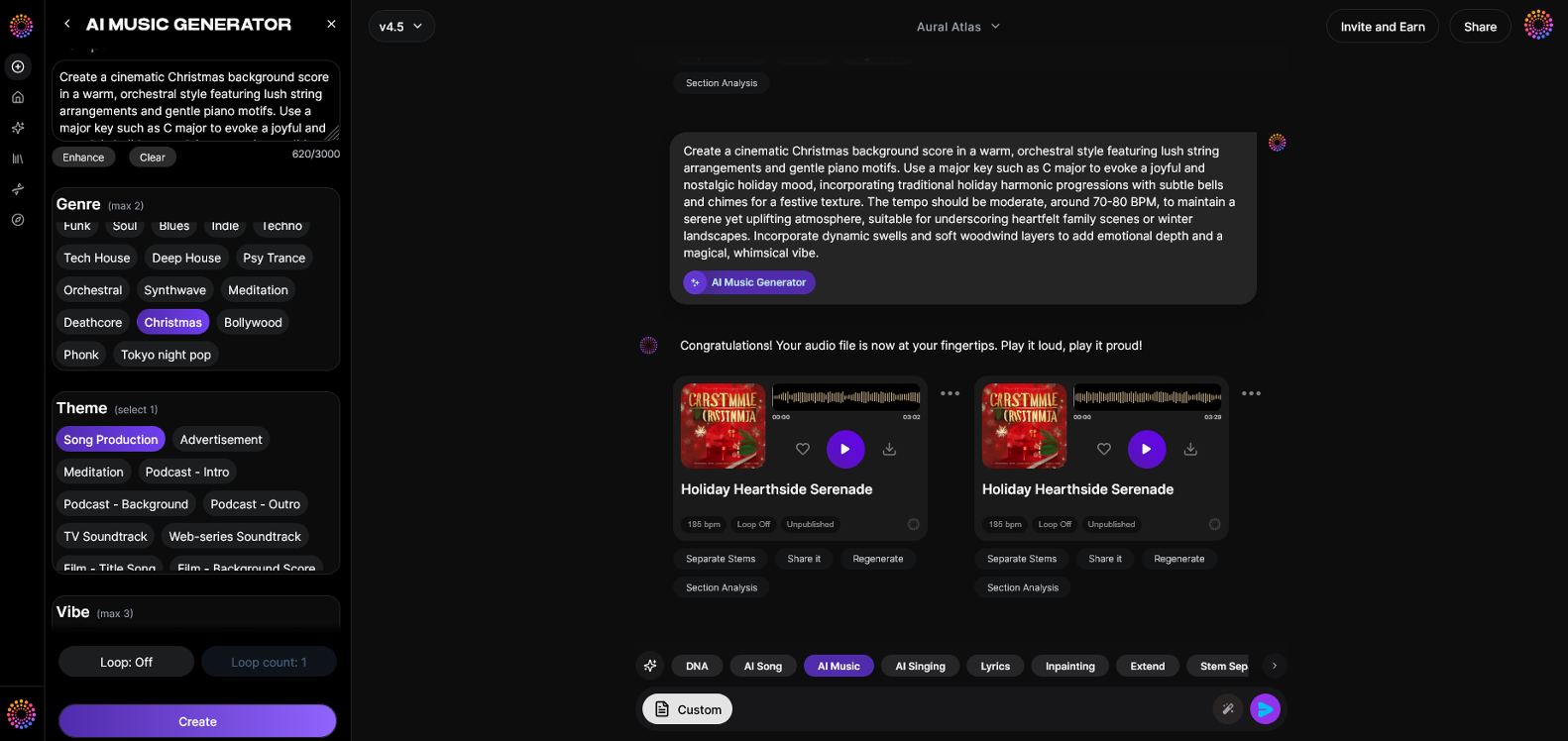
For brands looking to create compelling background music or distinctive sonic branding, Soundverse AI Music Generator provides a fast, high-quality solution. It enables creators to generate fully produced instrumental tracks from text prompts—describing the desired mood, genre, and intensity—with results tailored for looping and ad synchronization.
With Soundverse, advertisers can:
- Generate bespoke instrumental music designed for commercials.
- Choose between V4 and V5 models to control detail and style precision.
- Utilize Loop Mode for seamless repetition ideal for commercial airing.
- Define genre and mood to align perfectly with advertising goals.
Soundverse’s advanced text-to-music capability makes it easy to describe a setting like “uplifting acoustic theme for a summer product launch” or “ambient electronic background for tech branding.” The AI then processes this description asynchronously and delivers a custom, fully produced instrumental piece ready for commercial use.
Marketing professionals can also enhance their creative workflows by exploring related tools such as the Similar Music Generator, which produces instrumental variations inspired by a reference track, and the Similar Song Generator, which analyzes genre, tempo, and energy to craft unique pieces reminiscent of an existing mood but entirely original.
To learn more about advertising applications, discover Generate AI Music with Soundverse Text-to-Music or Navigating the World of Royalty-Free and Copyright-Free Music Using Soundverse AI for licensing insights.
Bring Your Advertising to Life with AI-Generated Music
Create captivating soundtracks that enhance your brand’s message and emotional connection. Soundverse helps marketers and creators effortlessly produce original, royalty-free music tailored to any campaign.
Related Articles
- The Role of AI Music in Film and Television: Learn how AI-driven soundtracks are reshaping storytelling across visual media and branding.
- Enhancing YouTube Content with Royalty-Free and Copyright-Free Music Using Soundverse AI: Discover how creators are using AI music to make their content stand out without copyright concerns.
- Navigating the World of Royalty-Free and Copyright-Free Music Using Soundverse AI: Find out how to choose the right type of music for your ads and videos while avoiding licensing issues.
- How AI-Generated Music Is Transforming the Music Industry: Explore the broader impact of AI music on creativity, production, and advertising strategies worldwide.
Here's how to make AI Music with Soundverse
Video Guide
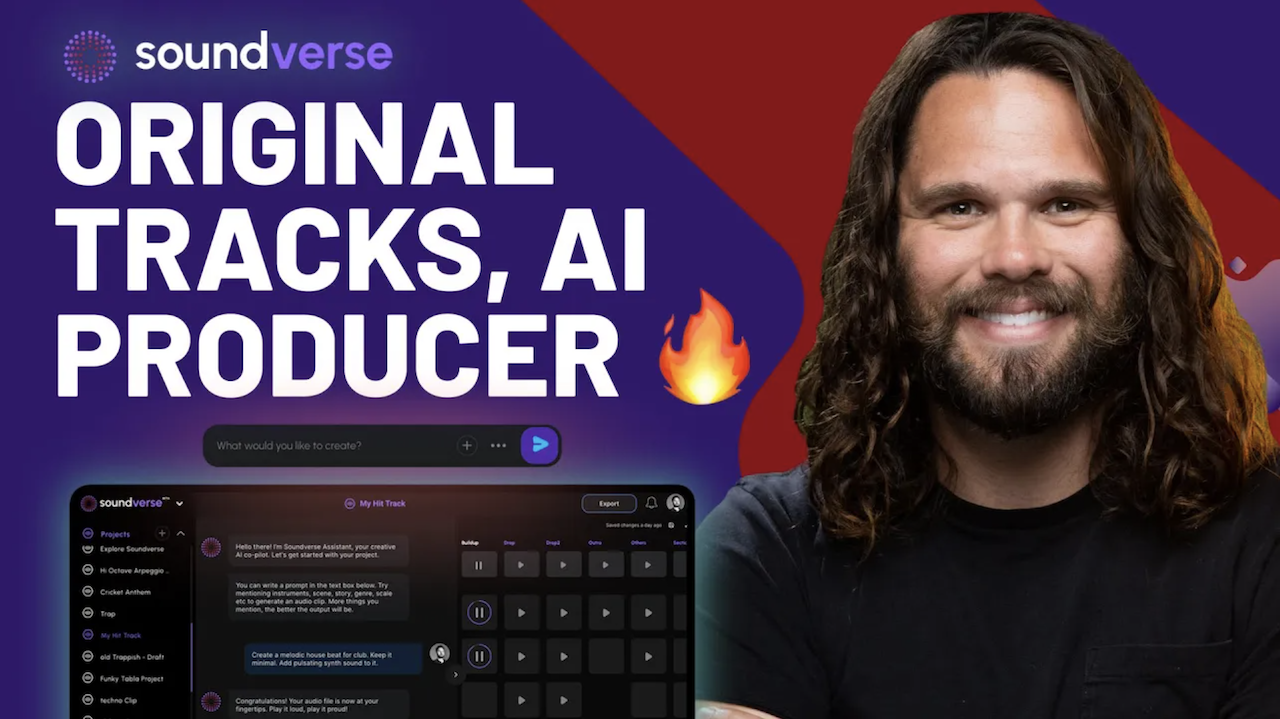
Here’s another long walkthrough of how to use Soundverse AI.
Text Guide
- To know more about AI Magic Tools, check here.
- To know more about Soundverse Assistant, check here.
- To know more about Arrangement Studio, check here.
Soundverse is an AI Assistant that allows content creators and music makers to create original content in a flash using Generative AI.
With the help of Soundverse Assistant and AI Magic Tools, our users get an unfair advantage over other creators to create audio and music content quickly, easily and cheaply.
Soundverse Assistant is your ultimate music companion. You simply speak to the assistant to get your stuff done. The more you speak to it, the more it starts understanding you and your goals.
AI Magic Tools help convert your creative dreams into tangible music and audio. Use AI Magic Tools such as text to music, stem separation, or lyrics generation to realise your content dreams faster.
Soundverse is here to take music production to the next level. We're not just a digital audio workstation (DAW) competing with Ableton or Logic, we're building a completely new paradigm of easy and conversational content creation.
TikTok: https://www.tiktok.com/@soundverse.ai Twitter: https://twitter.com/soundverse_ai Instagram: https://www.instagram.com/soundverse.ai LinkedIn: https://www.linkedin.com/company/soundverseai Youtube: https://www.youtube.com/@SoundverseAI Facebook: https://www.facebook.com/profile.php?id=100095674445607
Join Soundverse for Free and make Viral AI Music

We are constantly building more product experiences. Keep checking our Blog to stay updated about them!