When Was R&B Music Created? Exploring the History of Rhythm and Blues
Discover the history of R&B music, its origins, evolution, and how Soundverse helps analyze its structure.
When Was R&B Music Created?
Rhythm and Blues—known today simply as R&B—has remained one of the most influential music genres in history. Its emotional depth, soulful melodies, and rhythmic complexity have evolved across decades, shaping popular music from the 1940s to 2026. But when exactly was R&B music created? And how did it evolve from its origins into the modern expression we hear today? This article explores the history of R&B music, tracing its origins, the 1950s R&B artists who defined it, and how technology such as Soundverse’s Section Analysis supports today’s producers in studying this timeless genre.
What Are the Origins of Rhythm and Blues?
The origins of rhythm and blues can be traced to the African American communities of the early 20th century in the United States. Its foundation lies in blues and gospel traditions combined with swing and jazz influences. The term “Rhythm and Blues” began appearing officially in the 1940s to categorize Black popular music that differed from jazz but carried similar emotional and rhythmic intensity.
In the 1930s and 1940s, as urban centers like Chicago, Detroit, and New York became cultural hubs, migration from Southern states introduced blues styles to northern audiences. Early record labels sought commercial categories to describe this new hybrid music—upbeat, soulful, expressive. By 1947, Billboard had started using the term “Rhythm & Blues” instead of “Race Music,” marking its recognition as a distinct genre.

When Was R&B Music Created?
While the roots go back to earlier decades, R&B as a genre solidified around the late 1940s and early 1950s. Artists such as Louis Jordan, Ruth Brown, and Ray Charles revolutionized this sound by blending jazz rhythms with lyrical themes of love, community, and perseverance. Jordan’s jump blues style introduced the bright, rhythmic swing that evolved into early R&B hits. Ruth Brown’s powerful voice redefined the emotional depth of the genre, establishing a blueprint for many artists who followed.
By the 1950s, R&B had a clear identity. Its popularity expanded from clubs and radio stations serving African American audiences to mainstream recognition. The style influenced rock ‘n’ roll pioneers such as Elvis Presley and Little Richard, proving R&B’s transformative impact on global music.

How Did R&B Music Evolve Across the Decades?
The evolution of R&B demonstrates how music adapts to the social and technological context of each era.
1950s: The Foundation
The postwar era saw the rise of R&B bands rooted in swing, jump blues, and gospel. Artists like Fats Domino and The Drifters pushed boundaries, incorporating vocal harmonies and electric instrumentation. The 1950s R&B artists established the genre’s emotional tone—songs about romance, struggle, and celebration delivered with catchy rhythms that resonated across communities.
1960s: The Soulful Revolution
By the 1960s, R&B had transformed into soul music. Motown Records in Detroit and Stax Records in Memphis produced timeless hits that integrated pop polish with gospel passion. Icons such as Aretha Franklin and Otis Redding made R&B a symbol of empowerment and expression. The genre began influencing both political and cultural movements, supporting civil rights activism across America.
1970s–1980s: Funk and Modern R&B
The 1970s brought funk’s heavy grooves and syncopated basslines, pioneered by artists like James Brown. The late ’70s and ’80s expanded R&B into smoother, more polished productions, thanks to disco and early synthesizer use. Stevie Wonder’s creative explorations defined the sound of modern R&B, combining social commentary and technological innovation.
1990s–2000s: Contemporary R&B Dominance
In the 1990s, R&B became a global phenomenon. Artists such as Whitney Houston, Boyz II Men, and Mariah Carey transformed it into a pop-oriented powerhouse. By the early 2000s, producers like Timbaland and Missy Elliott fused hip-hop beats with R&B melodies, giving rise to the neo-soul and contemporary R&B movement.
2010s–2026: The Digital Transformation
From 2010 onward, streaming platforms and AI-assisted production reshaped R&B creation and consumption. Artists today blend traditional soulful vocals with electronic textures. The roots of the R&B genre remain intact, yet modern R&B now exists across numerous sub-genres—from alternative soul to trap-influenced rhythm patterns.
In 2026, R&B continues to evolve through fusion. Independent creators experiment using AI tools such as Soundverse to analyze song structures and remix classics—bringing historical rhythm and blues into the age of intelligent music creation. For a deeper dive into AI-assisted production, watch our Soundverse Tutorial on creating music.
Why Is Understanding R&B’s History Important?
To truly appreciate the genre, studying the history of R&B music goes beyond just nostalgia. It offers insight into cultural evolution and artistic resilience. The development of R&B reflects transitions in social identity, race relations, and technological progress in recording and production.
For music students and cultural historians, understanding how blues evolved into rhythm and blues provides a roadmap to analyzing contemporary genres. Many music generations—from hip-hop to pop—adopt rhythmic storytelling first pioneered by R&B legends.
How Has Technology Influenced the Study of R&B Music?
In 2026, the intersection between music history and AI analysis has changed how scholars and artists engage with traditional genres. AI tools now allow precise breakdowns of R&B compositions, identifying how sections like verses, choruses, and bridges interact. Platforms like Soundverse have become essential for both learning and creation.
How to Explore R&B Music with Soundverse Section Analysis
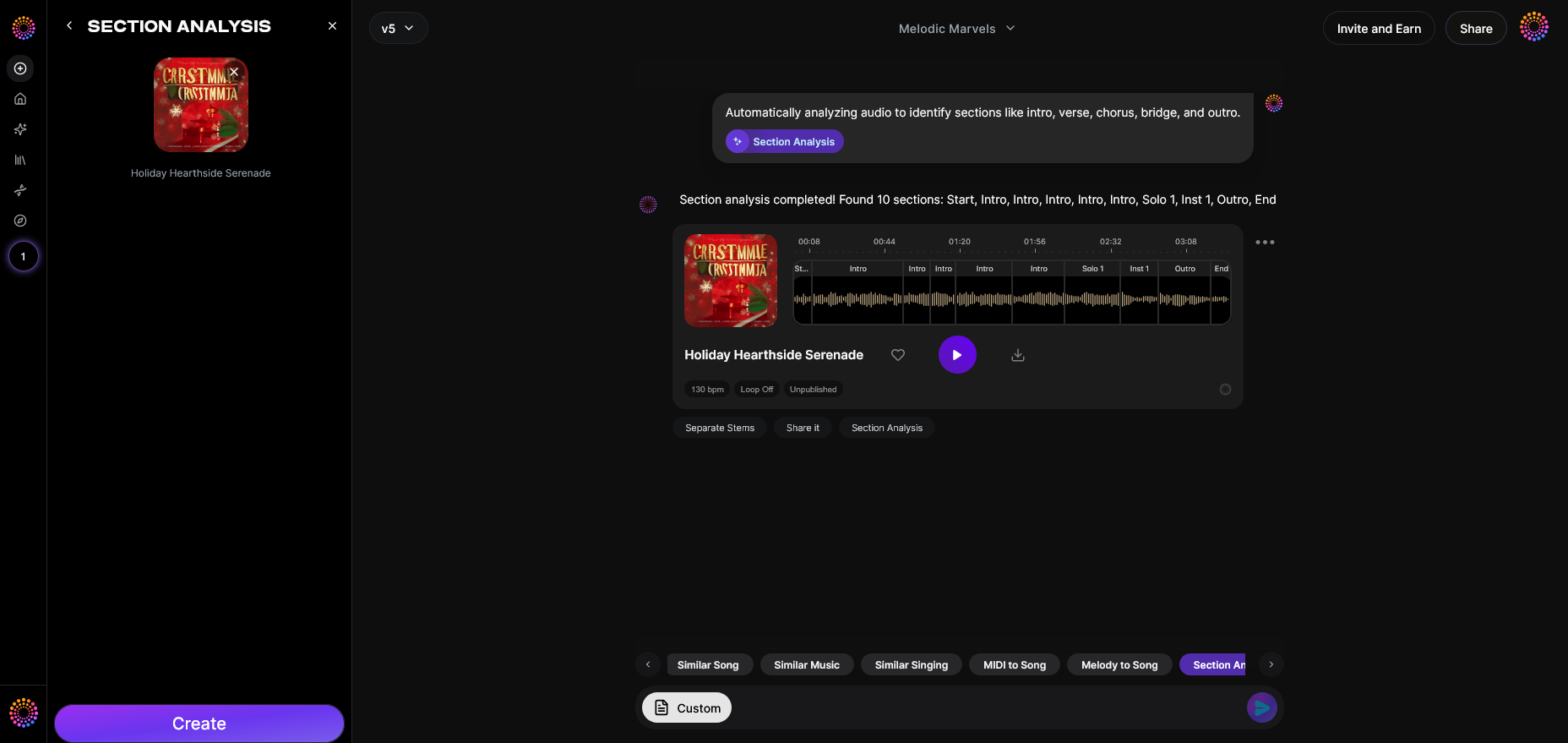
Soundverse offers an advanced AI-powered feature known as Section Analysis, designed for creators studying song structures. It automatically detects and labels each section of a track—Intro, Verse, Chorus, Bridge, and Outro—with precise timestamps.
What Soundverse Section Analysis Does:
- Automated structure detection: The AI identifies the main segments of any uploaded R&B track, making it ideal for studying arrangement techniques used by early and modern R&B artists.
- Visual roadmap generation: This feature visually maps each section, allowing creators to understand flow and variation within a song.
- Timestamp export: Users can export timestamps for remixing, editing, or sync licensing evaluations.
Use Cases for R&B Music Research and Production
Whether you’re remixing classic soul or preparing a cover, Section Analysis makes it easier to map authentic rhythm and blues compositions. This helps when learning arrangement patterns or setting DJ cue points for vintage remixes.
By pairing AI-based section mapping with knowledge of the origins of rhythm and blues, creators can build modern tracks that maintain the essence of 1950s emotional grooves while adapting to digital arrangements.
For example, those exploring creative reinterpretations of classic R&B can learn from Soundverse’s analysis insights—understanding where dynamic shifts occur or how bridges transition into layered vocal harmonies. You can also access related AI-production tools showcased in Soundverse’s blog resources, such as AI Magic Tools, Stem Separation, and the latest music industry trends.
These technologies allow artists to blend R&B’s historical character with tomorrow’s sound innovation—an ongoing evolution that mirrors rhythm and blues’ original spirit of adaptability and emotional resonance.
Create the Next R&B Hit with Soundverse AI
Experience the future of music creation. Generate soulful R&B tracks inspired by history and powered by cutting-edge AI—all in minutes, no advanced skills required.
Related Articles
- How to Create Jazz Music with Soundverse AI: Explore the roots of jazz and learn how to generate authentic jazz-inspired arrangements using Soundverse’s AI tools.
- Most Popular Music Genres: Discover the evolution and influence of the world’s most-loved music genres, from R&B and hip-hop to EDM and country.
- AI Music Generator and Human Composers: A Future Together: Learn how AI and human creativity are merging to shape the next era of musical innovation.
- How AI-Generated Music Is Transforming the Music Industry: Get insights into how AI is redefining music production and empowering creators around the world.
Here's how to make AI Music with Soundverse
Video Guide
 Here’s another long walkthrough of how to use Soundverse AI.
Text Guide
- To know more about AI Magic Tools, check here.
- To know more about Soundverse Assistant, check here.
- To know more about Arrangement Studio, check here.
Soundverse is an AI Assistant that allows content creators and music makers to create original content in a flash using Generative AI. With the help of Soundverse Assistant and AI Magic Tools, our users get an unfair advantage over other creators to create audio and music content quickly, easily and cheaply. Soundverse Assistant is your ultimate music companion. You simply speak to the assistant to get your stuff done. The more you speak to it, the more it starts understanding you and your goals. AI Magic Tools help convert your creative dreams into tangible music and audio. Use AI Magic Tools such as text to music, stem separation, or lyrics generation to realise your content dreams faster. Soundverse is here to take music production to the next level. We're not just a digital audio workstation (DAW) competing with Ableton or Logic, we're building a completely new paradigm of easy and conversational content creation.
TikTok: https://www.tiktok.com/@soundverse.ai
Twitter: https://twitter.com/soundverse_ai
Instagram: https://www.instagram.com/soundverse.ai
LinkedIn: https://www.linkedin.com/company/soundverseai
Youtube: https://www.youtube.com/@SoundverseAI
Facebook: https://www.facebook.com/profile.php?id=100095674445607
Join Soundverse for Free and make Viral AI Music
 We are constantly building more product experiences. Keep checking our Blog to stay updated about them!