What Is the Sad Music Genre?
Explore the sad music genre — its origins, emotional appeal, and how to create melancholic soundscapes using Soundverse AI.
What Is the Sad Music Genre?
What Is the Sad Music Genre?
The sad music genre is one of the most emotionally charged styles in modern music. It evokes feelings of melancholy, nostalgia, and introspection. In 2026, as music continues to diversify across streaming platforms and AI-composed arrangements, sad music remains a deeply human form of expression used by artists and creators alike to connect over shared emotional experiences.
Sad music is not defined solely by lyrics describing sorrow. It’s influenced by compositional elements such as slow tempo, minor scales, and subdued instrumentation that build emotional depth. Whether it’s cinematic melancholia in film scores or ambient tearjerkers on a playlist, the sad music genre has a universal language that resonates with listeners regardless of culture or generation.

Why Do We Love Emotional Songs?
Human beings turn to emotional songs for comfort and catharsis. Neuroscience suggests that listening to melancholic music stimulates empathy and helps process grief or stress. The sad music genre acts as an emotional mirror—reflecting personal experiences back to the listener.
Studies in 2025 highlighted that listeners who regularly engage with depressing songs often feel more creatively inspired. By 2026, this trend grew stronger as creators began embedding sad or bittersweet tones into their compositions for authenticity. Emotional depth became a currency for connection in an otherwise fast-paced digital music landscape.

What Defines the Sad Music Genre Sonically?
Musically, sad tracks tend to employ several shared structural features:
- Slow Tempo Music: Typically ranging between 60–80 BPM. This relaxed rhythm gives listeners space to reflect.
- Minor Scales and Modal Harmonics: These scale choices produce somber tonal moods.
- Sparse Instrumentation: Piano, cello, and sometimes lo-fi synth layers dominate melancholic compositions.
- Reverberation and Atmospheric Mixing: These effects create depth and loneliness within the soundscape.
The sad music genre extends beyond popular ballads. It includes modern ambient soundscapes, singer-songwriter acoustic pieces, and cinematic scores that evoke sorrow or longing. This sonic palette aligns closely with the sadcore subgenre known for its minimal instrumentation and slow tempo.
Is Sad Music Always Depressing?
Not necessarily. Sad music is diverse—it can be healing. Instead of simply being "depressing songs," many pieces help listeners embrace complex emotions. Some creators use sad melodies as meditative tools or background ambience while writing or reflecting.
By 2026, platforms curating the perfect tearjerker playlist have become increasingly popular. They often blend emotional songs from various genres, including classical adagios, minimalist piano work, and even moody electronic tracks, proving that sad music isn’t always about despair—it’s often about emotional depth and release. As music psychologists note, sad songs tend to be low-intensity and gently melodic, inviting empathy rather than melancholy.
How Has the Sad Music Genre Evolved Over Time?
The foundations of sad music stretch back centuries—from classical requiems to blues laments. In the 20th century, artists like Billie Holiday and Nick Drake shaped the modern understanding of melancholic music. In the digital era, playlists on Spotify and Apple Music brought together global interpretations—from Japanese ambient composers to Scandinavian indie pop.
By 2026, AI-assisted composition tools have amplified this evolution. Creators can now instantly produce emotional instrumentals that capture sadness with precision using text-to-music technologies. Sadness, once a purely human-crafted sentiment, is now algorithmically interpretable. To learn how music evolves across emotional spectra, check out our Soundverse Tutorial Series - 9. How to Make Music.
What Emotions Are Commonly Expressed in Melancholic Music?
The sad music genre often explores:
- Loss and longing: Musically expressed through descending melodies and sparse harmony.
- Nostalgia: Often accentuated by analog textures and retro sampling.
- Acceptance and healing: Found in uplifting yet bittersweet chord progressions.
In film and gaming, melancholic music often underscores scenes of resolution—where characters confront pain or transformation. Slow tempo tracks emphasize the emotional weight of these moments. Psychology Today’s analysis notes that melodies and imagery stimulated by sad songs evoke vivid personal memories.
Why Is Sad Music Trending in 2026?
After the emotional intensity of 2024–2025, marked by social and creative shifts, creators and listeners turned toward introspective genres. Streaming data shows rising engagement with mellow instrumentals and relaxing sad playlists. This year, 2026, marks a mature stage for sad music in both production and consumption. Music lovers crave authenticity, and emotional resonance stands above technical perfection.
AI-assisted generators now empower independent artists to explore this emotional spectrum without large production teams. Tools like Soundverse enable instant creation of custom melancholic music that fits soundtrack, video, or personal playlist needs.
To explore broader 2026 trends, read the detailed analyses published on Soundverse, such as Music Industry Trends and How AI-Generated Music Is Transforming the Music Industry.
How to Make Sad Music with Soundverse AI Music Generator
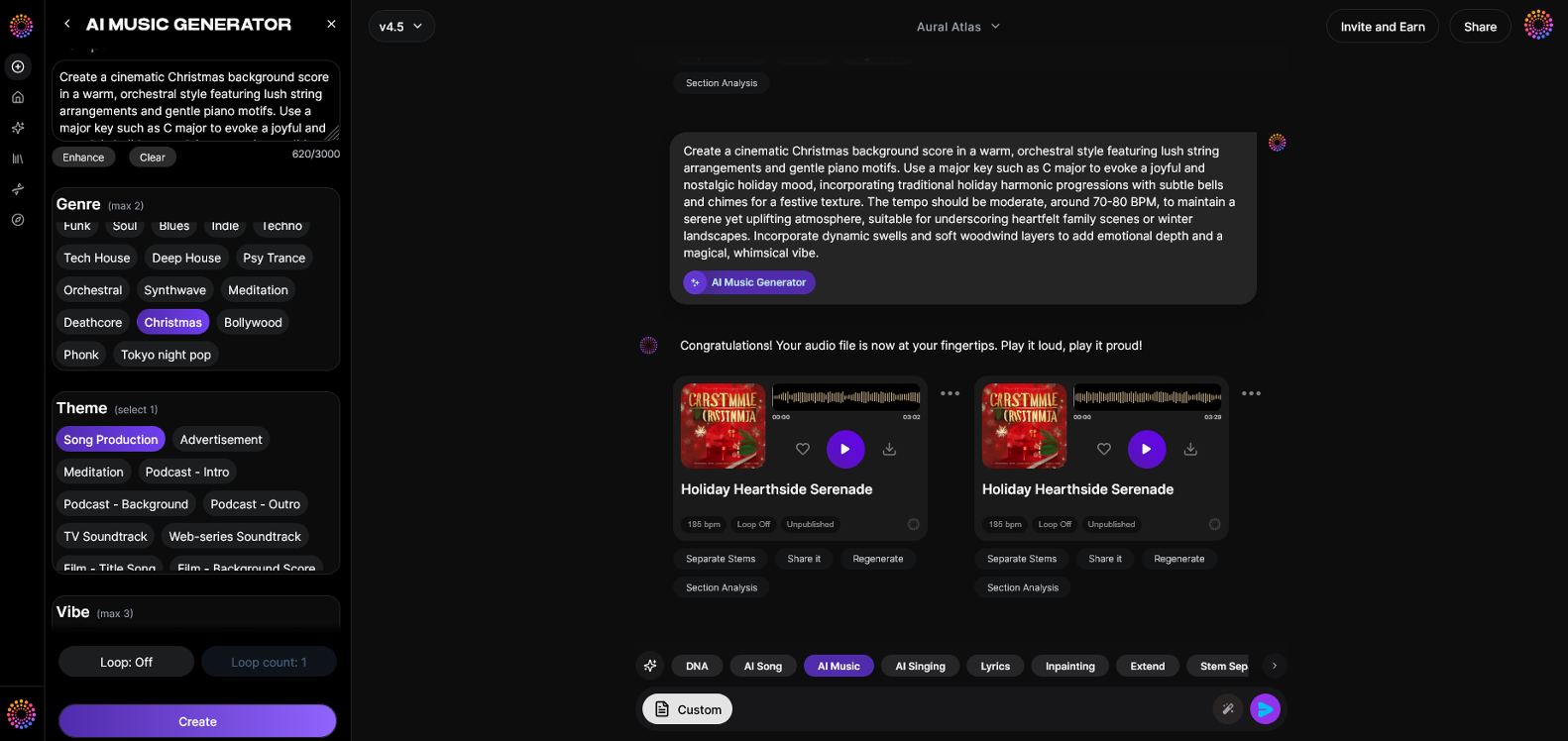
Now that you understand the emotional essence of the sad music genre, here is how Soundverse helps creators compose melancholic soundscapes effortlessly.
Soundverse’s AI Music Generator allows users to create fully produced instrumental tracks directly from text descriptions. The system interprets emotional language—such as "slow piano melody with distant strings" or "minimalistic ambient sorrow"—and transforms it into an immersive instrumental piece.
Core Capabilities
- Text-to-Music Technology: Describe your desired emotional setting, and the AI transforms text into instrumental sound within minutes.
- Loop Mode: Enables seamless repetition—perfect for continuous ambient or background usage in films or meditative playlists.
- Detailed Genre/Mood Control: Specify tone, style, genre, and even main instruments (e.g., cello, piano, synth pad) to refine your sad music creation.
- Model Selection (V4 and V5 Options): These latest engine updates ensure stylistic accuracy across diverse emotional genres.
Primary Use Cases
- Video Backgrounds: Enhance emotional scenes in vlogs or storytelling videos.
- Game Soundtracks: Perfect for slow tempo emotional sequences or cinematic story arcs.
- Meditation and Wellness Tracks: Generate calming, reflective audio that promotes introspection.
- Advertising or Brand Narratives: Add emotional touchpoints in campaigns that aim to connect deeply with audiences.
With Soundverse, creators no longer need traditional composition setups to achieve emotionally authentic soundtracks. The AI Music Generator integrates seamlessly across creative workflows.
You can explore its full functionality in context through articles such as Generate AI Music with Soundverse Text-to-Music, Soundverse AI Magic Tools Create Content Quickly with AI, and Soundverse Introduces Stem Separation AI Magic Tool.
Create Emotionally Moving Music with AI
Discover how Soundverse helps you craft beautiful, heartfelt tracks in any genre — including the sad music genre — using advanced AI composition tools designed for creators of all levels.
Related Articles
- Most Popular Music Genres: Explore the world’s most loved music genres and discover what makes each unique in emotion and sound.
- How AI-Generated Music Is Transforming the Music Industry: Learn how AI has revolutionized music creation, making soulful and emotion-packed compositions more accessible than ever.
- Generate AI Music with Soundverse Text-to-Music: Turn your emotional prompts into expressive sad melodies or uplifting tracks instantly with Soundverse’s text-to-music feature.
- The Role of AI Music in Film and Television: Uncover how AI is helping create emotional soundtracks that elevate storytelling in movies and TV shows.
Here's how to make AI Music with Soundverse
Video Guide

Here’s another long walkthrough of how to use Soundverse AI.
Text Guide
- To know more about AI Magic Tools, check here.
- To know more about Soundverse Assistant, check here.
- To know more about Arrangement Studio, check here.
Soundverse is an AI Assistant that allows content creators and music makers to create original content in a flash using Generative AI. With the help of Soundverse Assistant and AI Magic Tools, our users get an unfair advantage over other creators to create audio and music content quickly, easily and cheaply. Soundverse Assistant is your ultimate music companion. You simply speak to the assistant to get your stuff done. The more you speak to it, the more it starts understanding you and your goals. AI Magic Tools help convert your creative dreams into tangible music and audio. Use AI Magic Tools such as text to music, stem separation, or lyrics generation to realise your content dreams faster. Soundverse is here to take music production to the next level. We're not just a digital audio workstation (DAW) competing with Ableton or Logic, we're building a completely new paradigm of easy and conversational content creation.
TikTok: https://www.tiktok.com/@soundverse.ai
Twitter: https://twitter.com/soundverse_ai
Instagram: https://www.instagram.com/soundverse.ai
LinkedIn: https://www.linkedin.com/company/soundverseai
Youtube: https://www.youtube.com/@SoundverseAI
Facebook: https://www.facebook.com/profile.php?id=100095674445607
Join Soundverse for Free and make Viral AI Music

We are constantly building more product experiences. Keep checking our Blog to stay updated about them!