What Is the Genre of Sad Songs?
Explore the sad song genre, melancholic music styles, and emotional songs popular in 2026.
What Is the Genre of Sad Songs?
What is the genre of sad songs?
The sad song genre is an umbrella term for music that evokes emotional depth, introspection, and melancholy. Unlike upbeat or energetic genres, these songs focus on expressing sorrow, nostalgia, and the complexities of the human heart. In 2026, the genre continues to evolve thanks to advancements in AI-assisted composition and the global appetite for emotionally resonant content.
Sad songs often span multiple genres — from slow ballads and heartbreak music to depressive pop and melancholic music soundscapes. While each subgenre differs in rhythm and arrangement, they share a common goal: to connect listeners to emotion through sound.
What defines melancholic music?
Melancholic music is defined by soft instrumentation, slower tempos, and minor tonalities. The chord progressions tend to lean toward dissonance or gentle resolutions, reinforcing feelings of longing or emotional distance. In 2026, the popularity of melancholic tracks has surged across digital platforms, with listeners seeking solace and authenticity in an increasingly AI-augmented music landscape.
Musicians often use piano, acoustic guitar, strings, and ambient synths to craft these moods. Whether it’s a cinematic instrumental or a minimalist pop track, melancholic music thrives on subtlety — conveying sadness without overt drama.
What are the most common types of sad song genres?
Sad songs are not defined by a single genre. Instead, they exist across a spectrum of musical types, each with its own emotional language.
- Slow Ballads – Traditionally centered on vocals and piano or guitar accompaniment, ballads capture heartbreak and emotional storytelling. Modern ballads in 2026 often blend acoustic authenticity with digital sound design.
- Heartbreak Music – Focused on romantic loss, this genre leans into lyrical vulnerability. It often appears in pop, R&B, and indie formats, marked by layered harmonies and emotive delivery.
- Depressive Pop – A modern reinvention of mainstream pop infused with emotional realism. Artists use haunting synth pads and lo-fi beats to turn vulnerability into art. The rise of AI-assisted production tools such as Soundverse AI Music Generator has made producing depressive pop instrumentals more accessible.
- Classical Sad Music – Orchestral compositions and solo piano pieces are age-old representations of melancholy. Composers have long used dynamics and tonal shifts to evoke grief and reflection.
- Ambient and Post-Rock Sadness – These genres use texture over melody. Long, evolving soundscapes simulate a meditative or introspective journey — a trend seen increasingly in background scores for games and films in 2026.
Why do people listen to emotional songs?
Emotional songs serve a psychological purpose. Research and music trends reveal that listeners use sad songs to regulate mood and process emotions constructively. These songs create a safe emotional space — a mirror for inner feelings.
In 2026, platforms and creators have adopted new methods to craft immersive emotional experiences. AI music generators and lyric tools allow musicians to explore sadness as an emotional aesthetic, rather than just a feeling.
For creators, emotional songs also build relatability. Listeners crave authenticity, and sad music provides the most direct route to that connection. For example, watch our guide on how to make music from the Soundverse Tutorial Series for creative insights.
How has technology reshaped the sad song genre in 2026?
Music technology has profoundly changed how musicians craft and distribute melancholic music. AI tools now interpret text descriptions such as “slow piano music for heartbreak” or “melancholic guitar instrumental” and convert them into full soundscapes.
Platforms like Soundverse and similar AI-driven systems provide composers and non-musicians with capabilities once limited to professional studio setups. The integration of emotion-driven prompts enables precise control over tone, tempo, and instruments.
With such tools, emotional music creation isn’t just accessible — it’s scalable. This modern approach means you can generate dozens of variations of the same emotional theme and choose what resonates best. For additional tutorials, see our Explore Tab walkthrough for detailed platform guidance.
What instruments are used in sad song compositions?
The instrumentation behind the sad song genre relies on timbre and texture. Here’s how different instruments contribute:
- Piano: A universal vehicle for expressing sadness. The dynamic range allows soft introspections or powerful emotional crescendos.
- Strings: Violins and cellos add warmth and human-like sensitivity.
- Acoustic Guitar: Often used for simplicity and intimacy, creating emotional closeness.
- Synth Pads & Ambient Textures: Digital layers add cinematic depth, especially for depressive pop and post-rock variations.
- Percussion (Minimal): Sparse drums or soft beats create pacing without disturbing emotional silence.
AI-equipped platforms such as Soundverse allow users to specify these instrumental characteristics in their prompts, ensuring every output reflects the desired level of melancholy.
How to make sad song genre instrumentals with Soundverse AI Music Generator
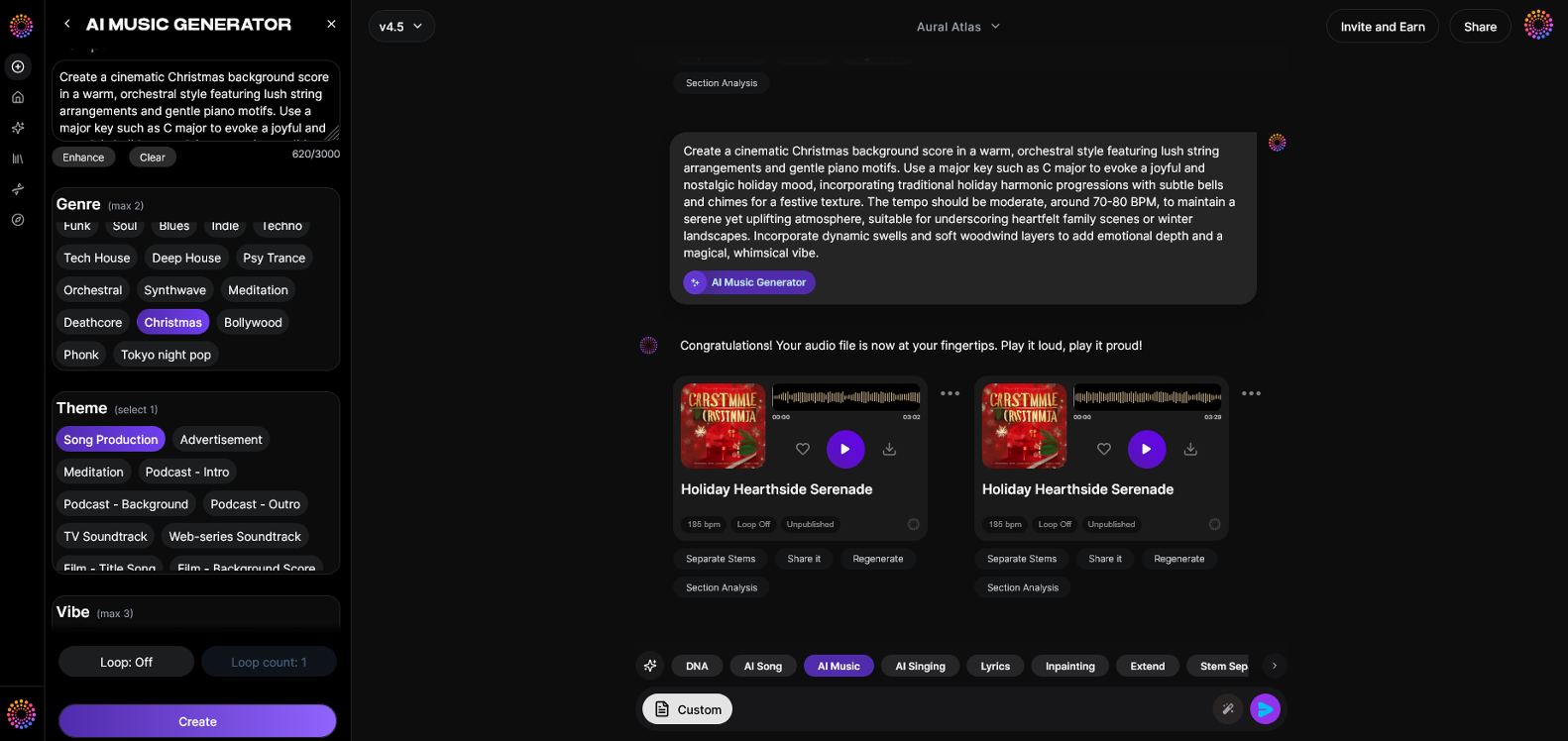
Now that you understand the emotional mechanics behind the sad song genre, you can instantly create instrumental versions using Soundverse’s AI Music Generator.
Soundverse AI Music Generator lets users create fully produced instrumental music from text descriptions — specializing in loops, beats, and cinematic soundscapes ideal for melancholy themes.
Main Capabilities
- Text-to-Music: Simply describe the mood — e.g., “melancholic piano with ambient synth background for heartbreak montage.”
- Loop Mode: Generate seamless background tracks suitable for films, games, or relaxation playlists.
- Genre & Mood Control: Fine-tune the emotional energy, instrumentation, and tempo.
- V4 and V5 Models: Offering improved sound precision and tonal depth for realism in emotional tracks.
Use cases include meditation music, cinematic soundscapes, emotional video scoring, and game environments. Whether you’re working on heartbreak content or uplifting recovery themes, Soundverse empowers you to shape each sound element digitally. For deeper insights into production workflows, watch our Deep House music creation guide.
By combining lyric tools like the AI Lyrics Writer and song creation systems such as the AI Song Generator, creators can produce full emotional songs — from melancholic lyrics to instrumental mixes — entirely within the Soundverse ecosystem.
For a deeper exploration of how AI is influencing creativity, visit Music Industry Trends and read about how AI Magic Tools streamline audio innovation.
Create Your Own Emotion-Driven Music with Soundverse
Transform feelings into melodies using AI tools built to express emotion and depth. Generate your next sad song or heart-touching track in minutes and elevate your creative storytelling.
Related Articles
- Most Popular Music Genres — Discover the most influential music genres shaping the global landscape and how artists blend styles with emotional depth.
- Generate AI Music with Soundverse Text-to-Music — Learn how to convert text prompts into emotionally resonant music using Soundverse’s advanced AI text-to-music technology.
- How to Create Healing Meditation Music with Soundverse AI — Explore how Soundverse AI can craft calming, emotionally restorative tracks that evoke peace and introspection.
- The Role of AI Music in Film and Television — Uncover how AI-generated emotions enhance the soundtracks of modern film and TV production.
Here's how to make AI Music with Soundverse
Video Guide

Here’s another long walkthrough of how to use Soundverse AI.
Text Guide
- To know more about AI Magic Tools, check here.
- To know more about Soundverse Assistant, check here.
- To know more about Arrangement Studio, check here.
Soundverse is an AI Assistant that allows content creators and music makers to create original content in a flash using Generative AI.
With the help of Soundverse Assistant and AI Magic Tools, our users get an unfair advantage over other creators to create audio and music content quickly, easily and cheaply.
Soundverse Assistant is your ultimate music companion. You simply speak to the assistant to get your stuff done. The more you speak to it, the more it starts understanding you and your goals.
AI Magic Tools help convert your creative dreams into tangible music and audio. Use AI Magic Tools such as text to music, stem separation, or lyrics generation to realise your content dreams faster.
Soundverse is here to take music production to the next level. We're not just a digital audio workstation (DAW) competing with Ableton or Logic, we're building a completely new paradigm of easy and conversational content creation.
TikTok: https://www.tiktok.com/@soundverse.ai
Twitter: https://twitter.com/soundverse_ai
Instagram: https://www.instagram.com/soundverse.ai
LinkedIn: https://www.linkedin.com/company/soundverseai
Youtube: https://www.youtube.com/@SoundverseAI
Facebook: https://www.facebook.com/profile.php?id=100095674445607
Join Soundverse for Free and make Viral AI Music

We are constantly building more product experiences. Keep checking our Blog to stay updated about them!