What Is STEM Music? Exploring the Fusion of Science and Sound in 2026
Learn how STEM music merges science, technology, engineering, and math with music education for modern classrooms.
What Is STEM Music?
Introduction
STEM music in 2026 represents one of the most innovative intersections of education and creativity. Combining science, technology, engineering, and mathematics (STEM) with music allows educators to inspire analytical and creative thinking simultaneously. As schools continue to embrace project-based learning, integrating music into STEM is becoming a powerful method to engage students across age groups.
For teachers and education program developers, STEM music offers a framework to use composition, audio engineering, and sound analysis to teach core scientific principles, technological literacy, and collaborative problem-solving. This approach strengthens students’ understanding of both numerical logic and artistic expression — something traditional education often separates.
What Is STEM Music and Why It Matters in 2026?
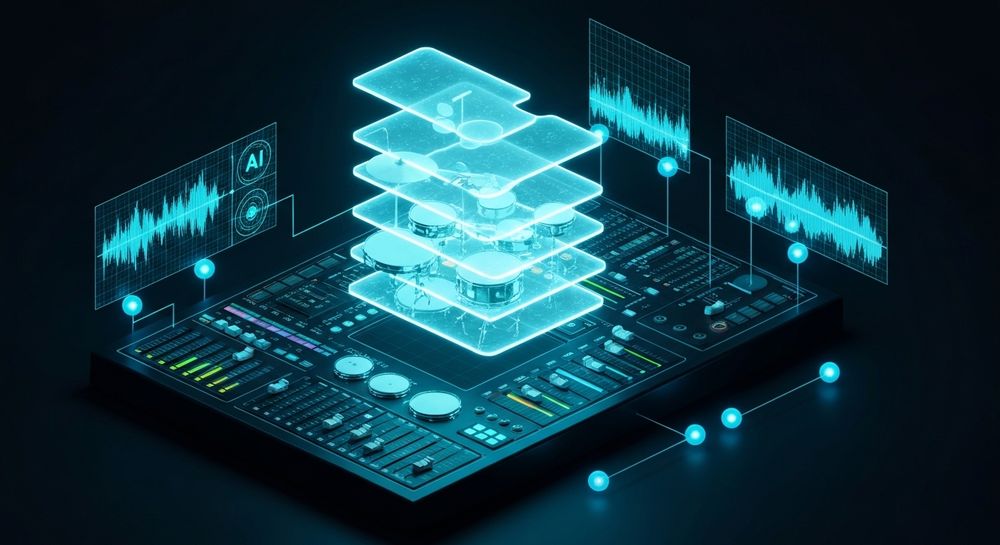
STEM music is a multidisciplinary educational concept that fuses STEM learning through music activities. It encourages students to think critically about how sound is produced, analyzed, and manipulated through technology. As STEM is an acronym for Science, Technology, Engineering and Math, it creates an interdisciplinary approach to education. In 2026, music classrooms equipped with digital tools can demonstrate how frequency relates to physics, or how algorithmic composition connects to mathematics and computer science.
Music educators today are focusing on giving students experiences where they can both create and code. Through programs that emphasize music production as part of STEM curriculum ideas, learners don’t just play instruments — they explore acoustic engineering, artificial intelligence, and data-driven audio design. One educator with the Urban Arts Collective is combining hip-hop music and culture with architecture concepts in a series of summer camps, showing how creative and analytical learning intersect.
How Does STEM Learning Through Music Work?
STEM learning through music can happen across multiple levels. In elementary education, it might mean experimenting with sound waves and pitch changes, while at the high school or college level, students could explore digital signal processing or studio acoustics. Teachers use hands-on activities and interactive technology to make abstract STEM ideas tangible.
Some effective examples include:
- Physics of Sound: Understanding vibration and resonance by experimenting with real instruments.
- Music and Coding: Writing algorithms that generate melodies or beats using programming languages.
- Engineering of Instruments: Designing new instruments or sound devices using 3D modeling tools.
- Mathematics in Music Theory: Analyzing rhythm patterns or scales using mathematical ratios.
Through STEM music, educators bridge the gap between scientific inquiry and creative output. Students gain both the ability to measure acoustics and the opportunity to express themselves artistically. As noted by Sound Curiosity, practicing music helps students explore numerous science, technology, engineering, and math activities.
What Are the Benefits of Integrating Music into STEM Education?
The integration of music into STEM provides multidimensional learning benefits:
- Enhanced Engagement: Music activates emotions and curiosity. When combined with STEM projects, it engages students who might otherwise find science challenging.
- Cross-Disciplinary Skills: Learners practice mathematical precision, technological competency, and artistic innovation.
- Critical Thinking and Collaboration: STEM music activities often require teamwork, where creative and analytical thinkers collaborate to achieve shared goals.
- Innovation Readiness: As future industries rely increasingly on creative engineering and AI-driven production, students familiar with STEM music concepts are more prepared for modern careers.
In 2026, educational institutions prioritize dynamic programs that align with digital skill-building. Music education and STEM synergy exemplifies this shift toward creativity, automation, and technological literacy.
Examples of STEM Music Activities for Teachers
Teachers can design engaging lessons that integrate science and sound. Some activity ideas include:
- Sound Wave Experiments: Using software to visualize waveforms and frequencies.
- Build a Simple Synth: Applying electrical engineering principles to construct a basic synthesizer.
- AI Music Generation: Exploring how algorithms can produce unique audio patterns.
- Audio Editing Challenges: Separating different layers of a song to study composition structures.
- STEM Performance Projects: Allowing students to create a musical showcase based on scientific data (e.g., turning mathematical sequences into melodies).
These approaches encourage exploration of both experimentation and expression, the heart of STEM music education. For a deeper dive into creative methods, watch our tutorial on how to make music and explore the “Explore” tab overview on Soundverse’s channel.
What Tools Support STEM Music Learning in 2026?
The rapid evolution of AI-based music tools has expanded the opportunities for STEM integration. Platforms like Soundverse lead the charge by offering educators and creators ways to analyze, remix, and understand music structure through artificial intelligence. Other tools complement STEM programs by providing insights into sound design or enabling interactive analysis.
For context, the broader landscape of music technology includes platforms designed for generation and editing. Educators can visit Soundverse’s AI Revolution to understand how AI-powered solutions shape modern music learning. Similarly, those exploring audio generation technologies might compare innovations through resources like Mubert Alternatives, or review emerging Music Industry Trends influencing classroom applications.
How to Make STEM Music with Soundverse Stem Separator
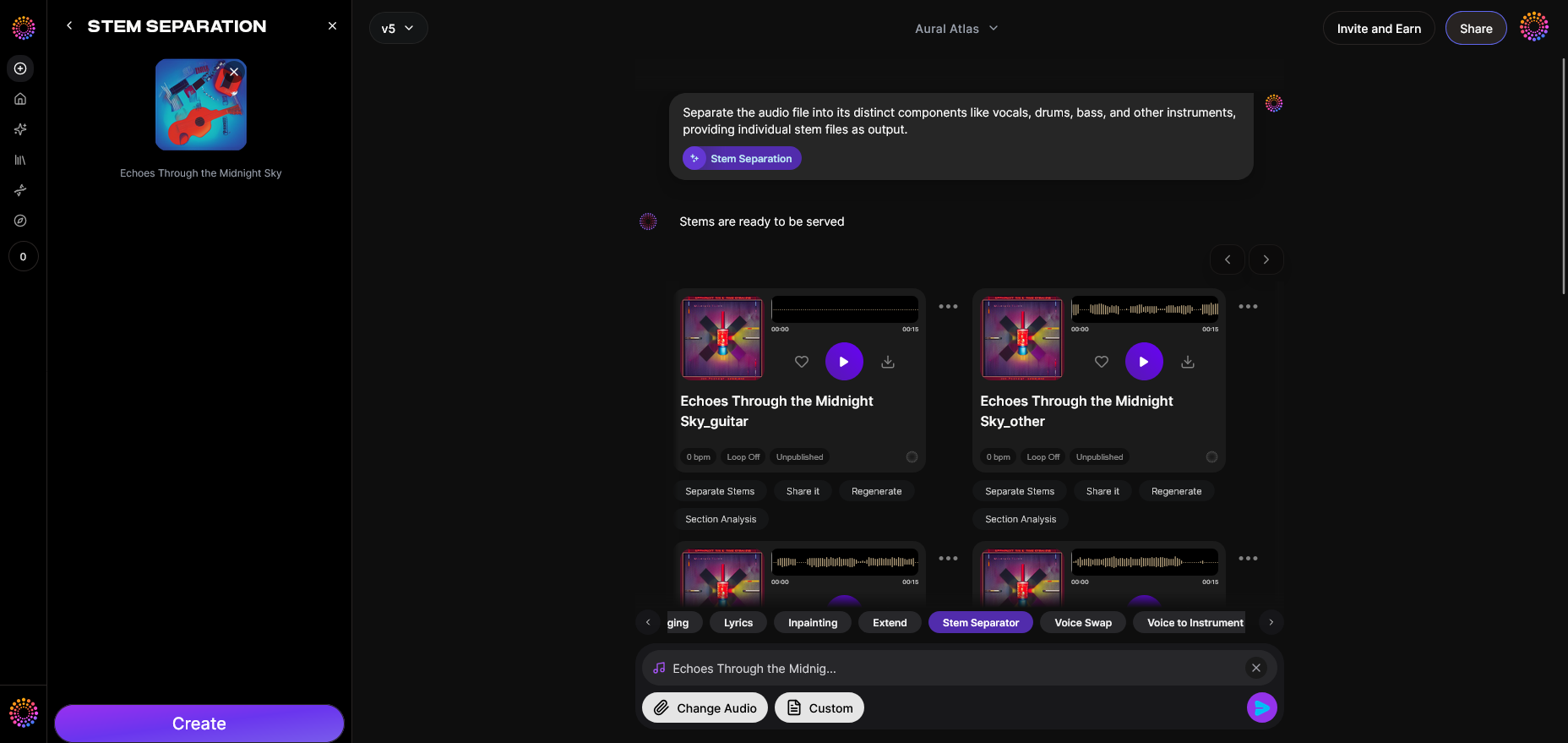
Soundverse’s Stem Separator tool is one of the most effective resources for STEM music exploration. It allows educators, students, and creators to dissect mixed audio into up to six editable stems — vocals, drums, bass, guitar, accompaniment, and more.
Core Capabilities
- 6-Stem Separation: Perfect for examining how different sound layers interact within a composition.
- Multi-Input Support: Users can upload from a URL, file, or even direct recording to perform detailed analysis.
- High-Quality Isolation: Preserves audio integrity, enabling clear study of each component.
Educational Value
With the Stem Separator, educators can show how various musical elements contribute to the overall mix. It becomes a tool not only for remixing and sampling but also for auditory STEM research. Students can understand how sound waves combine, overlap, and transform, effectively visualizing the physics of audio.
For example, when students separate stems of a recorded performance, they can analyze how amplitude changes across instruments, or how EQ balance affects perception. This level of hands-on analysis transforms theoretical STEM discussions into practical experiments. As detailed in Soundverse’s own What Is Stem Separation? article, stem separation breaks down mixed audio into its core components.
Additionally, Soundverse offers complementary tools such as Voice Swap, which allows exploration of vocal modeling and machine learning, and Section Analysis, useful for mapping song structures and understanding temporal patterns in compositions. Teachers developing a STEM curriculum focused on music arrangement can integrate these tools to teach system-based design thinking. To learn more about the Stem Separator and its applications, visit Soundverse Stem Separation AI Magic Tool. Watch also our tutorial on making Deep House music for practical examples of stem interaction.
Practical Applications: Bringing STEM Music to the Classroom
Introducing STEM music in classrooms doesn’t require full-scale studio setups. A laptop, some free sound analysis software, and a platform like Soundverse can transform the learning experience. Students can upload locally recorded performances, separate stems, and measure volume shifts, tempo, or echo behaviors.
Teachers can turn these activities into lessons aligned with the broader STEM curriculum:
- Math correlation: Use rhythm divisions to explain fractions.
- Engineering principle: Demonstrate signal amplification and decibel scaling.
- Technology lesson: Discuss data encoding and storage related to digital audio formats.
By combining traditional music instruction with science-based experimentation, educators enable holistic learning experiences that highlight the real-world relevance of abstract STEM ideas.
How STEM Music Shapes Future Learning Environments
In 2026, STEM-based music education is driving innovation in multiple educational systems worldwide. Schools and academies emphasize not only playing instruments but also understanding how algorithms, circuitry, and acoustics build modern soundscapes. Whether in elementary workshops or advanced digital production courses, students gain foundational insights into both technology and art.
The result is a generation of learners who can translate creativity into technology — capable of producing, analyzing, and improving sound using data-driven approaches.
Start Creating Your Own STEM Music with Soundverse AI Unlock limitless musical creativity by generating, separating, and remixing stems powered by advanced AI tools. Bring your STEM music ideas to life effortlessly with Soundverse.
Related Articles
- Soundverse Introduces STEM Separation AI Magic Tool — Discover how Soundverse’s AI tool lets you separate and remix music stems to unleash complete creative control.
- What Are Song Stems and Why Do You Need Them — Learn the essentials of song stems and why they’re crucial for producers and creators using AI-powered music platforms.
- Soundverse AI Revolutionizing Music Creation for New-Age Content Creators — Explore how Soundverse AI is transforming the way modern creators produce music—from composition to final mix.
- The Benefits of Composing with AI Music Generator — Find out how AI tools like Soundverse can elevate your composition process, saving time while enhancing creativity.
Here's how to make AI Music with Soundverse
Video Guide
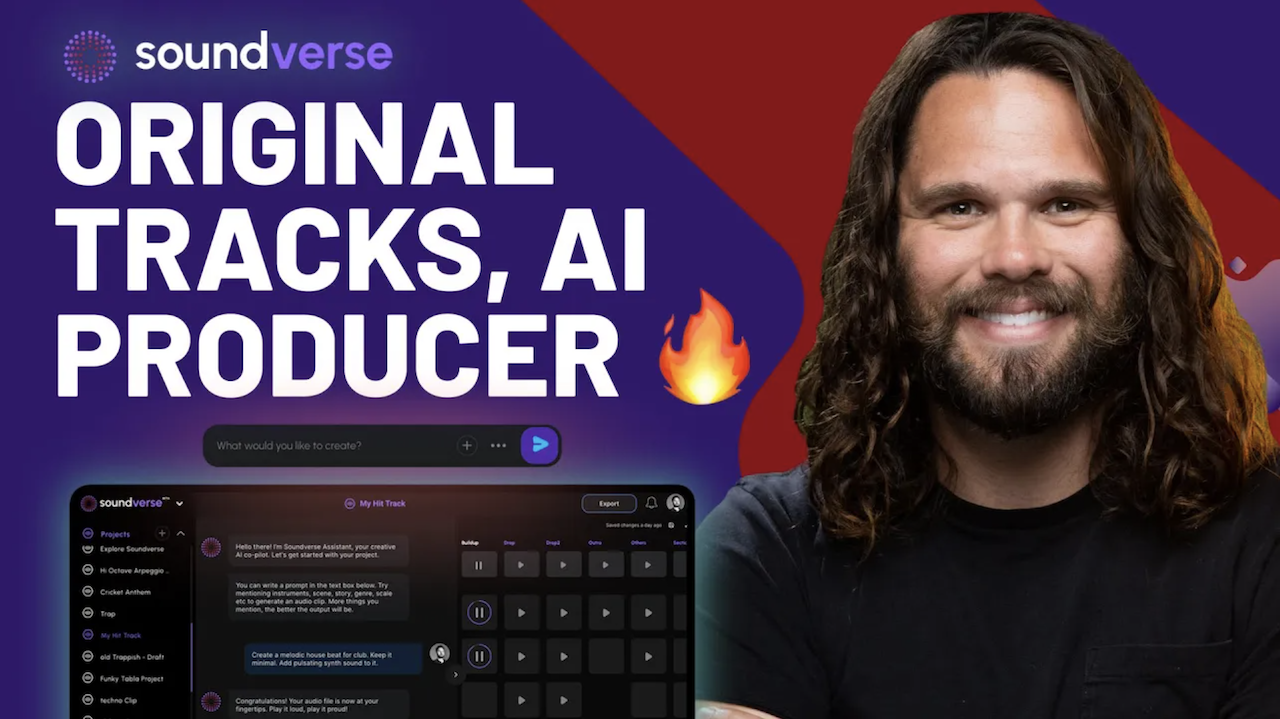
Here’s another long walkthrough of how to use Soundverse AI.
Text Guide
- To know more about AI Magic Tools, check here.
- To know more about Soundverse Assistant, check here.
- To know more about Arrangement Studio, check here.
Soundverse is an AI Assistant that allows content creators and music makers to create original content in a flash using Generative AI.
With the help of Soundverse Assistant and AI Magic Tools, our users get an unfair advantage over other creators to create audio and music content quickly, easily and cheaply.
Soundverse Assistant is your ultimate music companion. You simply speak to the assistant to get your stuff done. The more you speak to it, the more it starts understanding you and your goals.
AI Magic Tools help convert your creative dreams into tangible music and audio. Use AI Magic Tools such as text to music, stem separation, or lyrics generation to realise your content dreams faster.
Soundverse is here to take music production to the next level. We're not just a digital audio workstation (DAW) competing with Ableton or Logic, we're building a completely new paradigm of easy and conversational content creation.
TikTok: https://www.tiktok.com/@soundverse.ai
Twitter: https://twitter.com/soundverse_ai
Instagram: https://www.instagram.com/soundverse.ai
LinkedIn: https://www.linkedin.com/company/soundverseai
Youtube: https://www.youtube.com/@SoundverseAI
Facebook: https://www.facebook.com/profile.php?id=100095674445607
Join Soundverse for Free and make Viral AI Music
 We are constantly building more product experiences. Keep checking our Blog to stay updated about them!