What Is Looping in Music? A Beginner’s Guide to Creative Repetition and Production Techniques
Discover what looping in music means, how it’s used in production, and how Soundverse’s AI Music Generator simplifies loop creation.
What Is Looping in Music?
Looping in music has become one of the most essential music production techniques for producers, composers, and even live performers in 2026. Whether you’re crafting digital beats, designing ambient soundscapes, or performing with loop pedals, the art of repeating audio segments creatively lies at the heart of modern music creation. This guide explores what looping in music truly means, its applications, and how innovative AI tools like Soundverse can empower you to master it effortlessly.
What does looping in music mean?
Looping in music refers to the process of repeating a specific segment of sound—often called an audio loop—continuously to create rhythm, texture, or atmosphere. These loops can be melodic, percussive, harmonic, or ambient. Musicians often record short samples and replay them seamlessly so that the ending connects with the beginning without interruption.
In modern digital music creation, this technique simplifies composition and experimentation. Producers can layer various loops—such as drum patterns, synth pads, or bass lines—to form complex arrangements. From pop and hip-hop to electronic and ambient genres, looping plays a major role in shaping contemporary sound. According to Seattle Rep, looping has found its place across multiple styles—from electronic dance music to acoustic, solo to group performances.

Why is looping important in music production?
Looping is a cornerstone of efficient production. It allows beginners to build entire songs from simple rhythmic motifs. Instead of recording every part manually for the full length of a track, a producer can record a four-bar groove and repeat it seamlessly, focusing on variations and layering.
This efficiency encourages creativity. Artists can audition ideas rapidly, test arrangements, and add effects without waiting for complex takes. In 2026, looping is not just about repetition—it’s about creating dynamic structures using short, repeatable fragments that evolve over time. As LANDR’s blog notes, looping enables musicians to record seamlessly on the fly, continuously playing back without interruptions.

What are the common types of audio loops?
- Drum loops: Repeated percussion patterns used to drive rhythm.
- Melodic loops: Short sequences played by instruments or synthesizers.
- Bass loops: Foundational grooves that connect rhythm and harmony.
- Ambient loops: Atmospheric textures used in meditation or cinematic compositions.
- Vocal loops: Repetitions of vocal phrases processed for harmony or texture.
Each loop type serves a unique role, helping artists blend layers efficiently during music composition. As mentioned by Unison Audio, adding creative touches like reversing sounds or applying effects such as reverb or delay can enrich loop textures.
How has looping evolved by 2026?
Looping began decades ago with physical tape loops used by experimental artists. In the 1990s and early 2000s, loop pedals enabled live performers to record short pieces and stack them in real time. By 2024 and 2025, digital audio workstations (DAWs) and sampling software refined this method through time-stretching and beat detection.
Today, in 2026, looping has reached new heights with AI-integrated music composition tools. Intelligent generators analyze your prompt or recorded segment and produce seamless loops with perfect transitions and matching tempo. The results are professional-grade compositions without manual editing.
To understand how technology complements musical creativity, check out related discussions about the role of AI music in the industry and how AI assists human composers. For a useful demonstration, watch our guide on creating Deep House music or tutorial on how to make music.
What tools help in digital looping today?
Several tools make looping accessible:
- DAWs (Digital Audio Workstations) such as Ableton Live or FL Studio support advanced looping features.
- Loop pedals allow performers to capture and repeat live sounds instantly.
- AI-based platforms like Soundverse automate music generation, offering built-in Loop Modes.
Each method suits different creators—from stage artists to content creators producing background scores.
What are best practices for using loops creatively?
- Layer wisely: Combine multiple loops of different lengths for evolving grooves.
- Add variation: Slight changes in tone, effects, or rhythm prevent monotony.
- Complement other instruments: Loops should enhance—not dominate—the composition.
- Match tempo and key: Use software to align loop parameters seamlessly.
- Avoid over-repetition: Build tension and release by introducing surprises at intervals.
Learning these nuances can transform a simple loop into a full-fledged composition. For inspiration, explore advanced guides on creating healing meditation music and genre-based AI music generation.
How to make looping in music with Soundverse AI Music Generator
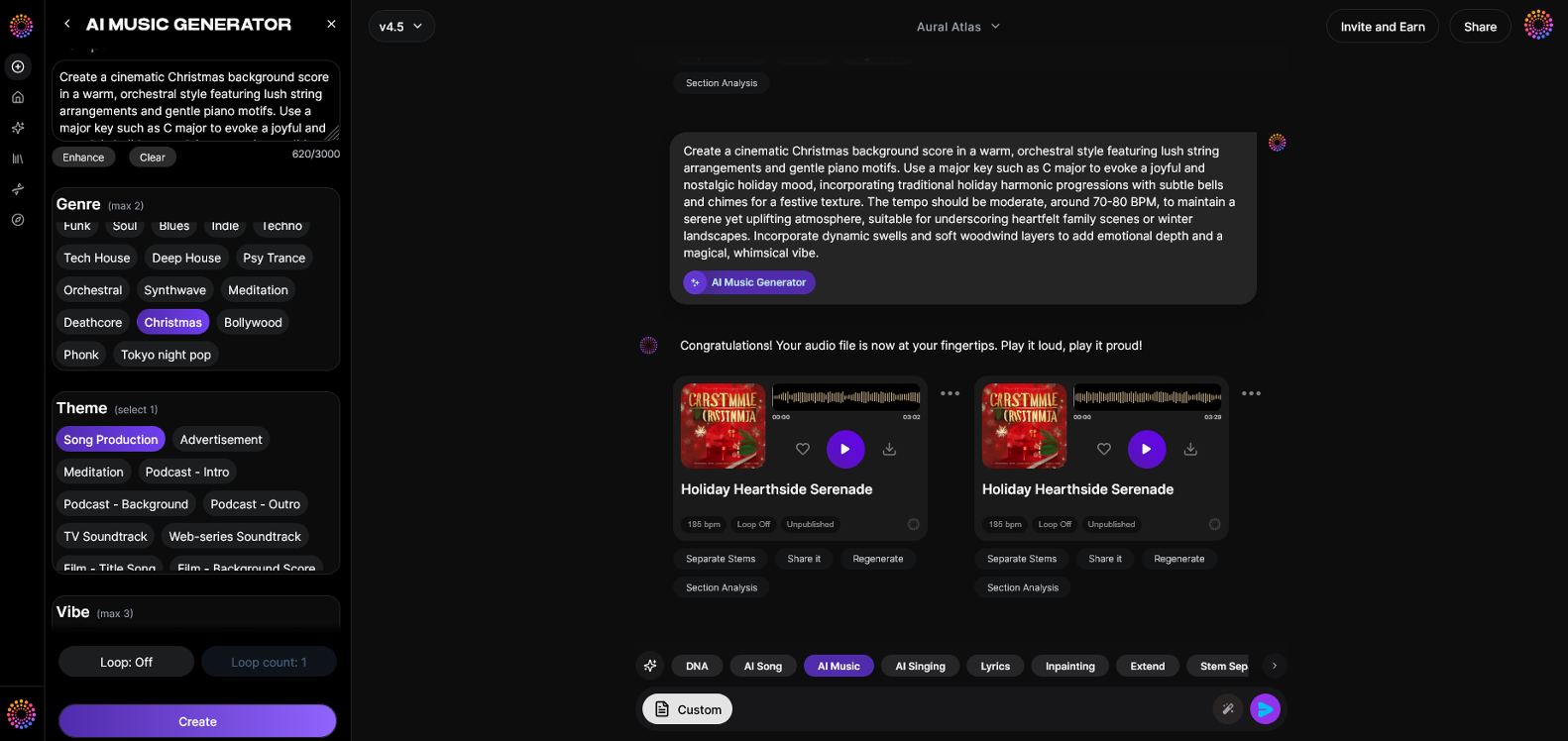
Soundverse offers a seamless way to create professional-grade loops through its AI Music Generator. This advanced tool allows users to generate instrumental loops from text prompts—ideal for video creators, game developers, meditation artists, and commercial sound designers.
The AI Music Generator’s Loop Mode ensures each output can repeat seamlessly without gaps, making it perfect for continuous background tracks or game environments.
Key Features of Soundverse AI Music Generator
- Text-to-Music: Type a description like “uplifting ambient bass loop” or “slow jazz rhythm” and receive instant instrumental compositions.
- Loop Mode: Generates endlessly repeatable sequences suitable for production or live playback.
- Genre and Mood Controls: Define your preferred atmosphere—electronic, cinematic, chillhop, or classical.
- Model Upgrades (V4 and V5): Choose between versions for enhanced realism and dynamic range.
- Use Cases: Ideal for background music in videos, game soundtrack loops, meditation sessions, and advertisement scoring.
If your aim is to build extended compositions, you can pair this with Extend Music, another Soundverse tool that lengthens your audio while preserving its tempo, mood, and key—a perfect complement for professional producers.
Read more about how Soundverse supports creators evolving with AI in Soundverse AI revolutionizing music creation for new-age creators. You can also explore our “Explore” tab walkthrough on YouTube for step-by-step guidance.
What makes AI looping different from manual looping?
Manual looping relies on recording or importing an excerpt and trimming it precisely. AI looping, however, synthesizes loops that sound natural, fluid, and responsive to prompts—eliminating the need for intricate edits. With Soundverse, there’s no real-time monitoring feature; users upload a text description, the system processes it asynchronously, and the result is ready for download.
This workflow enhances flexibility while maintaining professional production standards.
How can beginners start practicing looping today?
Beginners should explore freely available loops and experiment with time-based effects like delay and reverb. Focus on feeling the rhythm rather than technical precision. Once comfortable, transitioning to AI tools helps expand creativity. The future of composition in 2026 lies in blending human intuition with intelligent digital assistance.
Discover related guides such as 100 text-to-music prompts for viral creations and faceless video music strategies to deepen your understanding of creative digital production.
Create Your Own Music Loops Instantly with Soundverse AI
Turn your ideas into seamless loops and full tracks using AI-powered generation. Experience intuitive music creation with customizable genres, instruments, and moods.
Related Articles
- Generate AI Music with Soundverse Text-to-Music: Discover how Soundverse lets you create full tracks from simple text prompts in seconds.
- How to Create EDM with Soundverse AI: Learn how to produce high-energy EDM loops and drops effortlessly with AI-assisted tools.
- Soundverse AI Revolutionizing Music Creation for New Age Content Creators: Explore how Soundverse transforms how artists and creators produce music using cutting-edge AI.
- The Benefits of Composing with AI Music Generator: See how AI tools streamline looping, composition, and arrangement for faster music creation.
Here's how to make AI Music with Soundverse
Video Guide
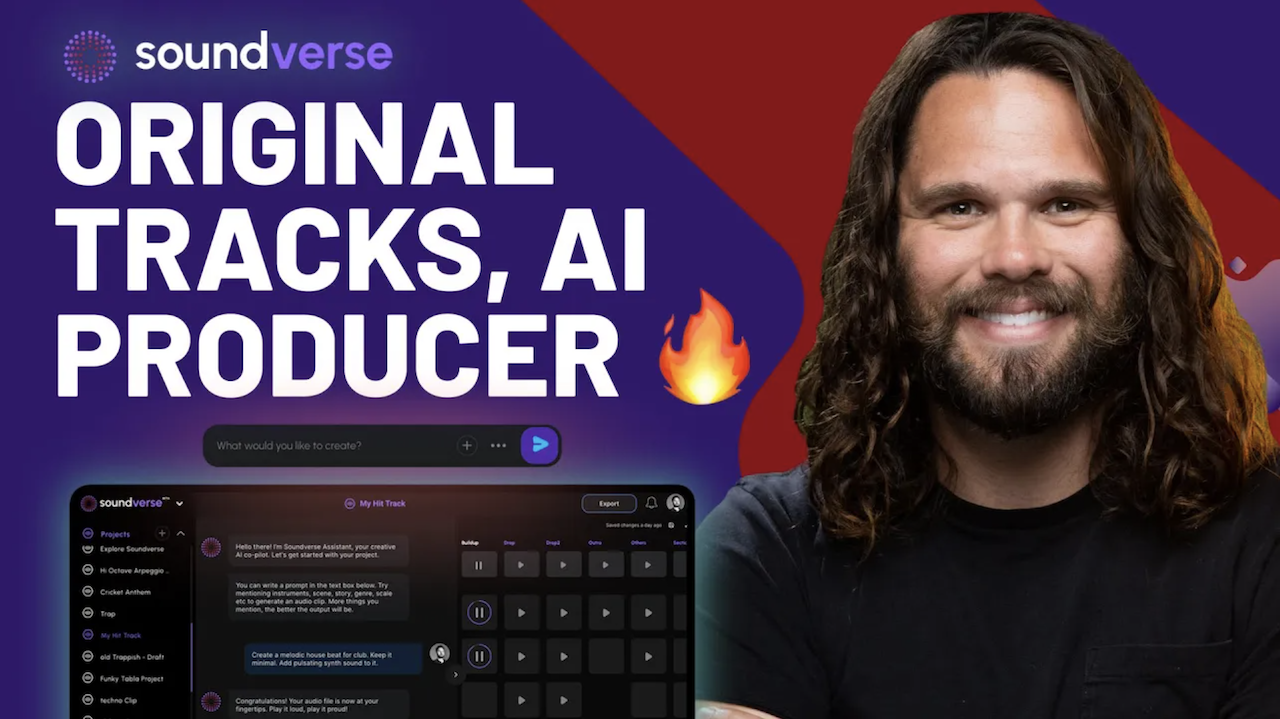
Here’s another long walkthrough of how to use Soundverse AI.
Text Guide
- To know more about AI Magic Tools, check here.
- To know more about Soundverse Assistant, check here.
- To know more about Arrangement Studio, check here.
Soundverse is an AI Assistant that allows content creators and music makers to create original content in a flash using Generative AI. With the help of Soundverse Assistant and AI Magic Tools, our users get an unfair advantage over other creators to create audio and music content quickly, easily and cheaply. Soundverse Assistant is your ultimate music companion. You simply speak to the assistant to get your stuff done. The more you speak to it, the more it starts understanding you and your goals. AI Magic Tools help convert your creative dreams into tangible music and audio. Use AI Magic Tools such as text to music, stem separation, or lyrics generation to realise your content dreams faster. Soundverse is here to take music production to the next level. We're not just a digital audio workstation (DAW) competing with Ableton or Logic, we're building a completely new paradigm of easy and conversational content creation.
TikTok: https://www.tiktok.com/@soundverse.ai
Twitter: https://twitter.com/soundverse_ai
Instagram: https://www.instagram.com/soundverse.ai
LinkedIn: https://www.linkedin.com/company/soundverseai
Youtube: https://www.youtube.com/@SoundverseAI
Facebook: https://www.facebook.com/profile.php?id=100095674445607
Join Soundverse for Free and make Viral AI Music

We are constantly building more product experiences. Keep checking our Blog to stay updated about them!