What Is an Underscore in Music? Understanding Its Role in Film Scoring and Composition
Learn what an underscore in music means, its role in film scoring, and how to create professional underscores easily with Soundverse.
What Is an Underscore in Music?
What Is an Underscore in Music?
An underscore in music refers to the background score or musical layer that supports the emotional and narrative flow of a scene in film, television, or other visual media. Unlike foreground music, an underscore is not always meant to direct audience attention—it works subtly beneath dialogue, sound effects, and visual storytelling. Its purpose is to enhance atmosphere, emotion, and pacing without overpowering other sonic elements.
In professional film scoring, underscore is a core technique used by composers to align musical themes with character development and story arcs. Whether it’s a thrilling chase sequence, a quiet emotional moment, or tense silence, underscores define how viewers perceive and feel about what’s happening on screen.
What Is the Underscore Definition in Music Theory?
The underscore definition is simply music that plays underneath dialogue or action, rather than directly featuring as a focal musical performance. This term gained mainstream use in Hollywood and television production, where cues are labeled as “underscore” to signal their supportive role.
In music composition, underscores are typically instrumental—rarely involving vocals. They can range from a single sustained pad to complex orchestral arrangements. Some underscores are ambient and textural, while others subtly mimic thematic motifs established in a film’s main soundtrack.
Why Is Underscore Important in Film Scoring?
Film scoring in 2026 continues to evolve due to AI-assisted technology, creative hybrid workflows, and increasing expectations for emotional realism. The underscore remains one of the most essential tools for composers and sound designers because:
- Emotional Depth: It conveys underlying emotion and reinforces mood transitions.
- Narrative Support: It strengthens storyline coherence and timing.
- Dialogue Framing: It ensures spoken lines stay intelligible while maintaining tonal continuity.
- Audience Immersion: A well-crafted underscore controls tempo and tension subconsciously.
Think of underscores as the invisible bridge between visual imagery and emotional experience. Without them, even the most dramatic scenes might feel flat.
How Do Composers Create Effective Underscores?
Creating an effective underscore in music involves deliberate choices in music composition, instrumentation, and timing. Composers often follow a few actionable principles:
- Analyze Scene Mood and Context: Understand the dynamics—what emotions or transitions need to be underscored?
- Select Instrumental Palette: Strings, synth pads, ambient textures, drones, or piano motifs are popular for underscore work.
- Work with Silence: The absence of underscore can amplify impact when placed thoughtfully after long musical sections.
- Match Tempo and Rhythm: Avoid rhythmic distractions; stay aligned with the dialogue’s pacing.
- Avoid Overstatement: Keep music secondary. The underscore should enhance—not compete with—the visual narrative.
Many modern composers rely on high-quality background music generators to sketch out initial mood templates or enhance their draft scenes before refining orchestration manually.
What Are Common Techniques Used in Underscore Composition?
In modern soundtrack terminology, underscores utilize various composition techniques:
- Leitmotif Variations: Reusing thematic motifs subtly within underscoring sections.
- Harmonic Minimalism: Sparse harmonic shifts to maintain emotional continuity.
- Dynamic Automation: Gradually increasing or decreasing volume to match action intensity.
- Textural Layering: Combining natural and synthetic textures to create a blended emotional response.
These approaches continue to dominate film scoring trends in 2026, as films, OTT shows, and indie productions demand more nuanced and emotive sound design. AI music tools are also accelerating these workflows by analyzing reference tracks and generating stylistically coherent underscore cues.
For deeper insight on how technology is reshaping music creation workflows, you can explore articles like How AI-Generated Music Is Transforming the Music Industry and The Role of AI Music in Film and Television. For a deeper dive, watch our guide on creating Deep House music or explore our tutorial on how to make music for more context on AI-assisted workflows.
How Has the Use of Underscores Evolved by 2026?
Between 2024 and 2025, the industry began shifting toward hybrid scoring—combining real instruments with AI-generated ambient layers. By 2026, composers and producers are leveraging AI platforms to produce underscore drafts faster, reducing turnaround times without compromising creativity.
This evolution aligns with new soundtrack terminology emerging around adaptive and generative scoring systems. Interactive game soundtracks now use real-time adaptation based on player actions, borrowing principles from film underscores to ensure emotional responsiveness.
Studios and sound designers increasingly use automated analysis tools to map tempo, key, and mood data from reference tracks. That data informs underscore generation that aligns closely with directors’ vision—whether for cinema, VR experiences, or podcast production.
To learn more about similar innovations, read Soundverse AI Magic Tools: Create Content Quickly with AI or Now Generate Music with Filters Such as Genre, Theme, Instruments or Even Vibe. You can also explore our tutorial about the "Explore" Tab for discovering underscore-ready music styles.
How to Make Underscore Music with Soundverse Similar Music Generator
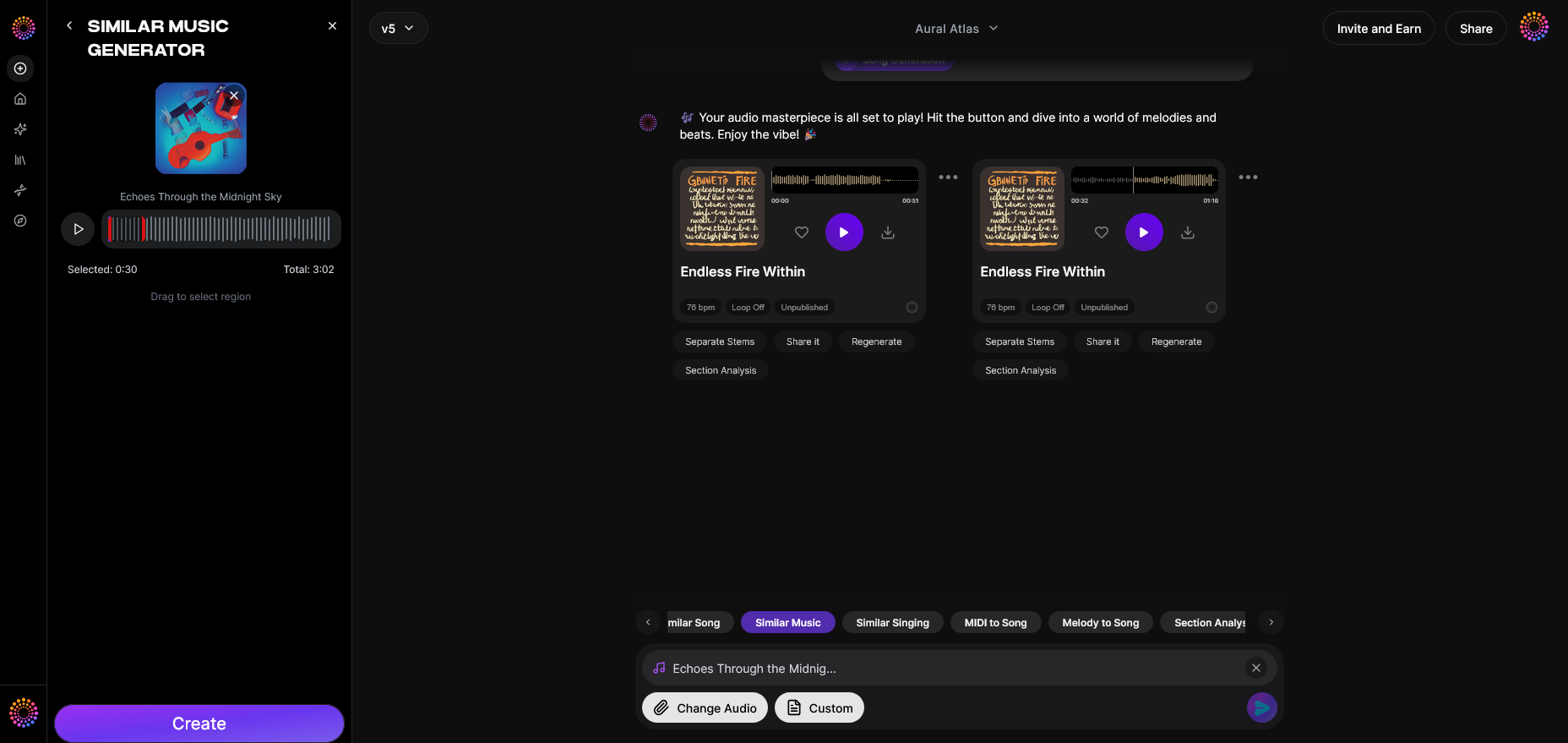
Now that you understand what underscores are and their significance in film scoring, here’s how you can create them easily using Soundverse Similar Music Generator.
Soundverse’s Similar Music Generator is designed specifically for creating original instrumental compositions inspired by a reference track. It’s perfect for crafting immersive background scores that match a director-approved “temp score” vibe. Whether you are scoring a short film, designing podcast themes, or producing ambient game music, this AI feature provides a professional-grade starting point.
Key Capabilities:
- Instrumental Style Transfer: Generates new original instrumental music by analyzing the style and feel of your reference track.
- Detailed Musical Analysis: Examines tempo, key, and mood for precise emotional alignment.
- Reference-Based Loop Creation: Produces repeatable loops ideal for film, TV, and game scoring environments.
Use Cases:
- Replace temporary music used during editing with fully original compositions.
- Generate underscore texture loops that seamlessly blend with existing sound design.
- Create thematic variations for different scenes or narrative transitions.
By analyzing your reference material, Soundverse reproduces the overall emotional geometry—not the notes—ensuring you get unique, copyright-safe results. This workflow fits naturally into both studio and independent projects.
In the broader ecosystem, Soundverse’s complementary tools—like Similar Song Generator and AI Music Generator—help expand beyond underscore work. These can generate full songs or text-to-music compositions from prompts, broadening your creative possibilities.
For instance, you might use the AI Music Generator to design ambient backdrops similar to those found in 50 Hand-Picked Background Music AI Music Generation Prompts for All Occasions, or explore application styles from How to Create Country Music with Soundverse AI.
In 2026, musicians and film composers increasingly rely on Soundverse tools to simplify underscore creation processes—saving time while maintaining creative authenticity.
Create Your Own Underscore Music with AI
Bring cinematic depth to your videos, games, and podcasts by generating custom underscore tracks instantly. Soundverse lets you capture any mood or emotion with precision and ease.
Start Creating with Soundverse
Related Articles
- The Role of AI Music in Film and Television: Discover how AI-generated underscore tracks are transforming sound design for filmmakers and TV creators.
- Navigating the World of Royalty-Free and Copyright-Free Music Using Soundverse AI: Learn how to seamlessly create copyright-free underscore music for any project using Soundverse AI.
- Enhancing YouTube Content with Royalty-Free and Copyright-Free Music Using Soundverse AI: Explore how YouTube creators use Soundverse to add cinematic and mood-driven underscore tracks that enhance viewer experience.
- Generate AI Music with Soundverse Text-to-Music: Turn words into cinematic soundscapes — generate underscore music directly from your text or scene description.
Here's how to make AI Music with Soundverse
Video Guide
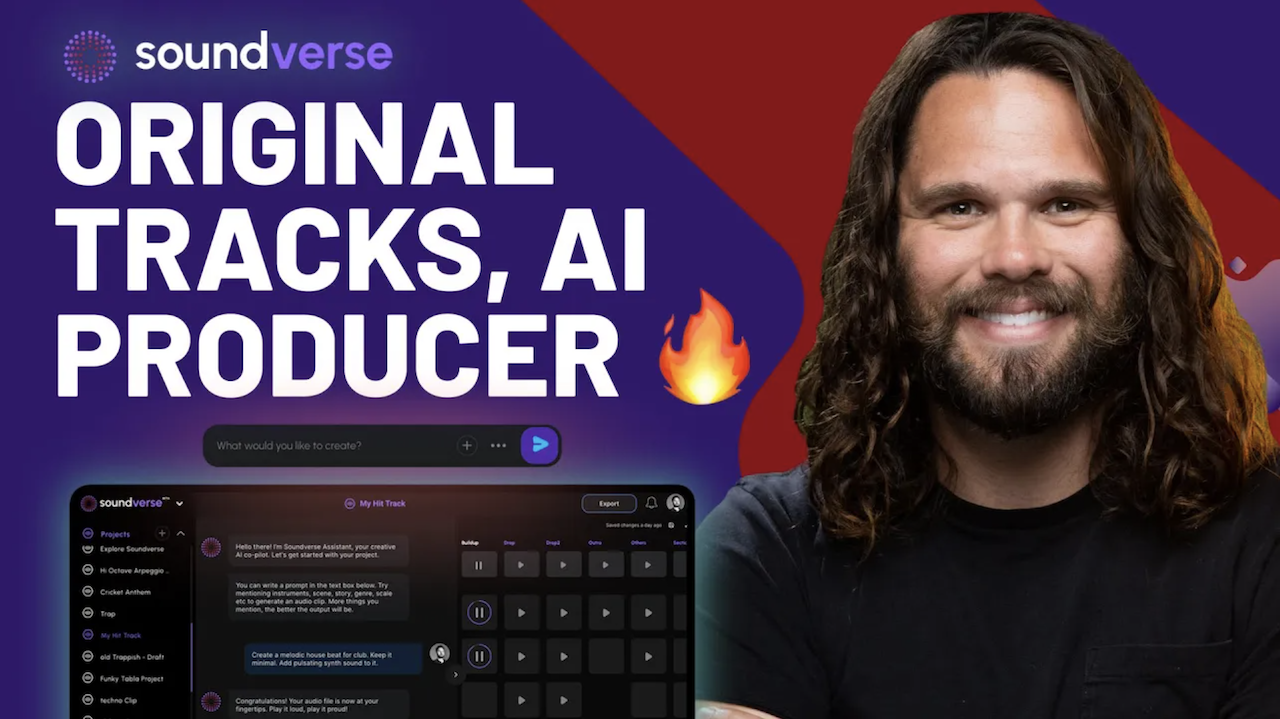
Here’s another long walkthrough of how to use Soundverse AI.
Text Guide
- To know more about AI Magic Tools, check here.
- To know more about Soundverse Assistant, check here.
- To know more about Arrangement Studio, check here.
Soundverse is an AI Assistant that allows content creators and music makers to create original content in a flash using Generative AI.
With the help of Soundverse Assistant and AI Magic Tools, our users get an unfair advantage over other creators to create audio and music content quickly, easily and cheaply.
Soundverse Assistant is your ultimate music companion. You simply speak to the assistant to get your stuff done. The more you speak to it, the more it starts understanding you and your goals.
AI Magic Tools help convert your creative dreams into tangible music and audio. Use AI Magic Tools such as text to music, stem separation, or lyrics generation to realise your content dreams faster.
Soundverse is here to take music production to the next level. We're not just a digital audio workstation (DAW) competing with Ableton or Logic, we're building a completely new paradigm of easy and conversational content creation.
TikTok: https://www.tiktok.com/@soundverse.ai
Twitter: https://twitter.com/soundverse_ai
Instagram: https://www.instagram.com/soundverse.ai
LinkedIn: https://www.linkedin.com/company/soundverseai
Youtube: https://www.youtube.com/@SoundverseAI
Facebook: https://www.facebook.com/profile.php?id=100095674445607
Join Soundverse for Free and make Viral AI Music

We are constantly building more product experiences. Keep checking our Blog to stay updated about them!