What Is a Splitter? Understanding Audio, Video, and Network Splitters in 2026
Learn what a splitter is in audio, video, and networking, and how Soundverse Stem Separator transforms sound editing in 2026.
What Is a Splitter?
In 2026, the term “splitter” means far more than just a cable accessory you find behind your television. Splitters exist across industries—audio engineering, video production, and networking—serving a simple but powerful purpose: dividing a signal so it can be used or processed in multiple ways. Whether you are separating sound frequencies, directing network bandwidth, or duplicating video outputs, understanding how splitters work can drastically improve efficiency and quality in your digital workflows.
What does a splitter do?
A splitter distributes one signal into multiple outputs. Depending on its type—audio splitter, video splitter, cable splitter, or network splitter—it takes an incoming signal and delivers it to several destinations. This might involve duplicating the audio to multiple headphones, showing the same video feed on several screens, or routing data across multiple network devices.
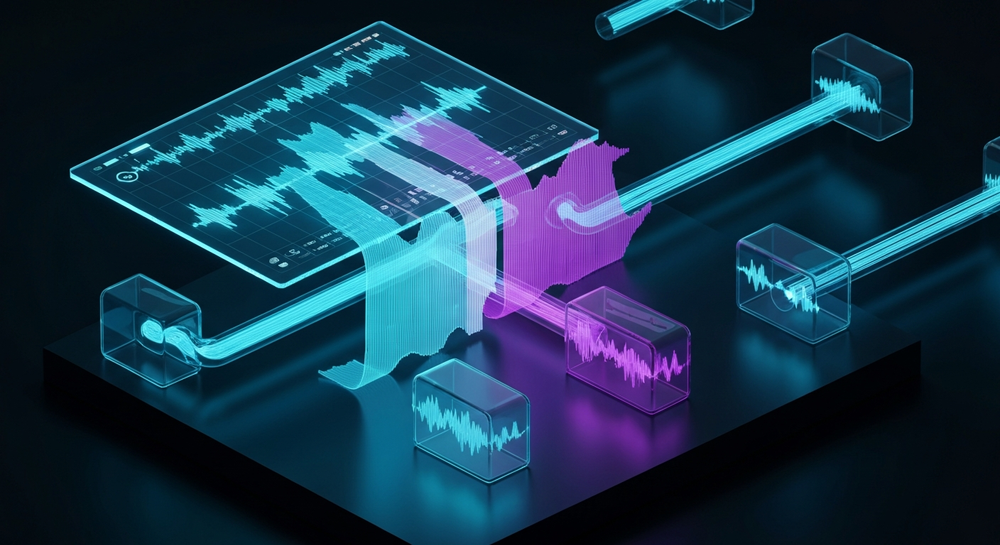
Splitters come in many forms, both hardware and software-based. While traditional splitter devices use cables and connectors, newer AI-driven platforms such as Soundverse build entirely digital versions that manipulate signals with precision.
What is an audio splitter?
An audio splitter allows multiple listening devices to share a single output. A common use case involves two people connecting headphones to one smartphone. More advanced versions tackle professional mixing environments. Here, the audio splitter duplicates or separates channels—like left and right signals or multitrack recordings—so producers can manage different stems in production.

In 2026, digital audio splitters have moved beyond mere duplication. Tools such as AI-based stem separation now perform intelligent breakdowns of entire mixed tracks into individual elements. Instead of simply sending one song to two outputs, a digital splitter can dissect the same song into layers: vocals, drums, bass, and more.
For a deeper dive into practical applications, watch our guide on creating Deep House music or learn how to make music with Soundverse.
What is a video splitter?
A video splitter performs a similar function but with visual content. It allows one source—such as a computer or camera—to display images or video on several screens simultaneously. Streamers, content creators, and video producers use these to mirror displays, run monitors, or connect projectors for presentations.
Modern video splitters also manage resolution, frame rate, and color fidelity. As visuals in 2026 reach higher definitions with 8K and even experimental 12K standards, video splitters must ensure consistency across displays. Professional setups use active splitters that amplify signals to maintain image quality, as highlighted in What is a Splitter? How does it work? Where do we use it?.
What is a cable splitter?
The cable splitter remains common in homes and offices. Often found in television setups, a cable splitter divides signals coming from the main coaxial cable into multiple outlets. This enables connection of multiple TVs or internet routers without sacrificing signal balance. Engineering improvements over the last few years have minimized signal loss, which was once the biggest concern. Learn more in How Does a Cable Splitter Work - Intelliconnect.
Hybrid cable splitters now integrate smart switching. They can prioritize bandwidth for devices dynamically, adjusting for streaming quality and online gaming responsiveness—an innovation that emerged around 2025 and continues in 2026.
What is a network splitter?
A network splitter, often recognized as a network adapter or hub, enables devices to share the same data connection. Businesses and smart homes rely on them to divide broadband inputs into multiple ports. Unlike routers, which actively manage data routing and security, splitters simply duplicate the signal. In simple setups, they can be useful for shallow data distribution, while larger infrastructures depend on managed switches.
In 2026, as fiber-optic internet becomes widespread, neural-network-driven signal management has reduced latency issues that splitters used to create. Many advanced routers now come embedded with software splitters capable of intelligent load balancing. Discover technical insights in Fiber Optic Splitter: How It Works & Types Guide - Weunion and PLC Splitter - The Heart of Optical Distribution Network.
How do digital splitters differ from hardware splitters?
Hardware splitters handle electrical signals physically. Digital splitters exist as software systems that “virtually” divide data streams—common in media editing and production. Audio engineers benefit most from this evolution because software-based splitters allow deeper manipulation of the sonic landscape.
Instead of sending the same waveform to two speakers, digital splitters can separate music stems, isolate vocals, or even transform instrument tones using AI. This level of precision opens entire new possibilities for musicians, remixers, and educators.
Why are audio splitters crucial in modern production?
Audio splitters power collaboration and creativity. Imagine being able to split a recorded jam session across multiple editing stations or isolate vocals from a mixed track without returning to the original recording session. By 2026, this practice has become standard in both amateur and professional production environments.
Producers use digital audio splitters for:
- Remixing and sampling: Extracting vocals or beats for new tracks.
- Karaoke or performance setups: Removing the lead vocal to create backing tracks.
- Educational applications: Teaching how layers in music interact.
- Post-production cleanup: Enhancing clarity or removing noise.
One of the most advanced implementations of audio splitting is found in Soundverse’s AI Stem Separator, which goes far beyond traditional hardware concepts.
How to make audio separation easy with Soundverse Stem Separator
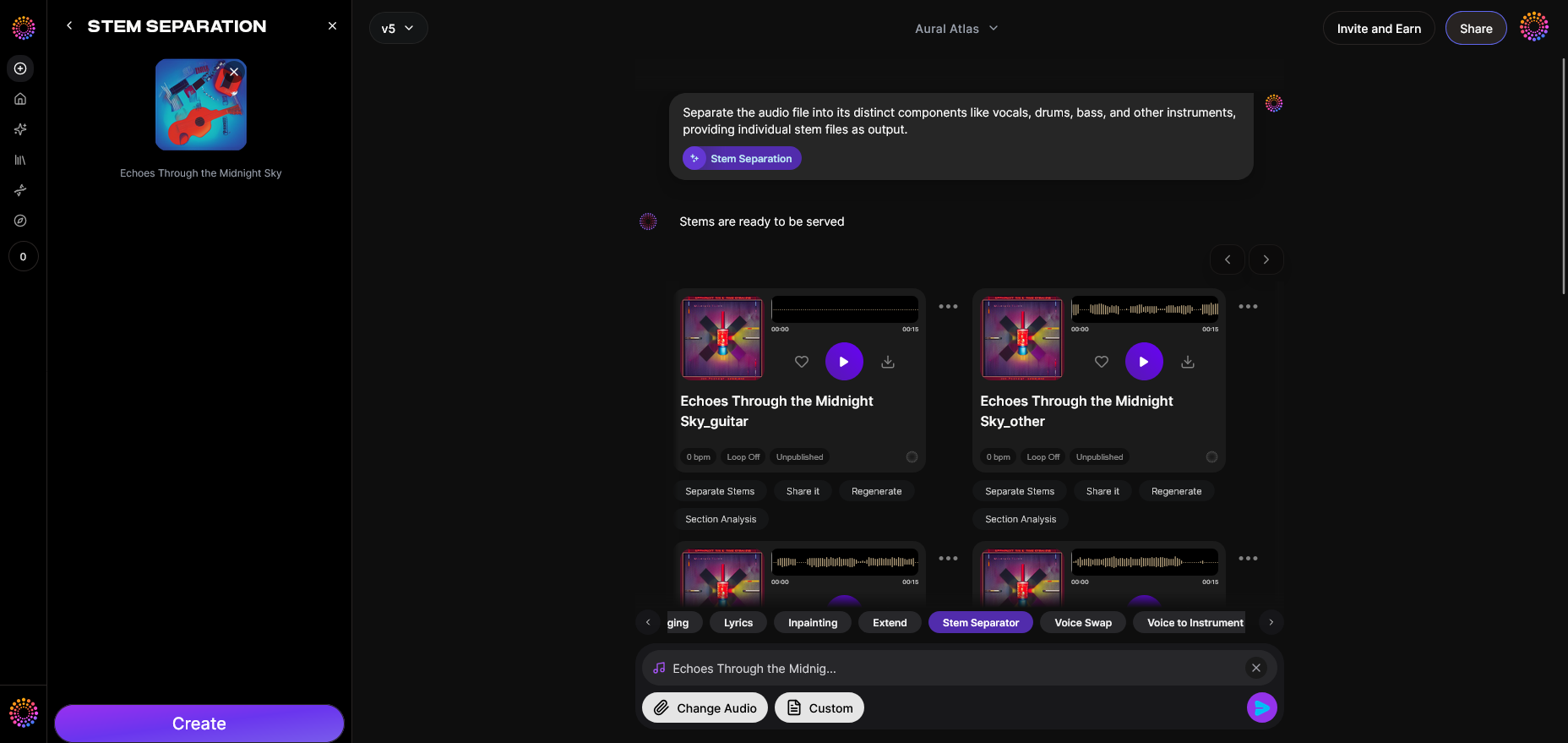
Soundverse has turned the concept of audio splitting into an artistic advantage. The Stem Separator feature dissects mixed audio into up to six editable stems such as vocals, drums, bass, guitar, and accompaniment. Instead of needing costly studio plug-ins or complicated routing, users can simply upload, record, or enter a URL of the track they want to separate.
Core capabilities include:
- 6-Stem separation: Produces clean, isolated elements ideal for remixing or analysis.
- Support for URL, File, and Recording inputs: Handles practically any audio source.
- High-quality isolation: Preserves clarity and integrity even from complex mixes.
The process is straightforward and asynchronous—users upload their material, the AI processes it, and results appear ready for download. There is no real-time monitoring, ensuring compute accuracy and sound purity in every separation session.
Use cases for Soundverse Stem Separator:
- Remixing and sampling tracks in new creative directions.
- Creating karaoke backings for live or studio performances.
- Learning sound structure for educational purposes.
- Cleaning or editing sound layers for film, game, or podcast production.
Combined with complementary tools like Voice Swap, which allows vocal identity changes while maintaining original performance emotion, and Section Analysis, which maps song structure automatically, Soundverse builds a dynamic ecosystem for creators.
Readers interested in deeper production capabilities can explore guides like How to Create Jazz Music with Soundverse AI, Generate AI Music with Soundverse Text to Music, or What Are Song Stems and Why Do You Need Them. These articles expand sound manipulation approaches for advanced creators in 2026.
How Soundverse helps redefine the concept of a splitter
Traditional splitters divide signals—for headphones, monitors, cables, or networks. Soundverse redefines the concept entirely, turning splitting into a creative operation. Instead of merely duplicating or dividing signals, the platform makes each isolated piece editable and intelligently usable.
Musicians now treat splitting as the first stage of AI-driven creativity, not just signal management. It bridges broadcasting, mixing, and composition workflows, reshaping how producers think about the foundations of sound. As AI audio studios continue to evolve, the split between analog and digital methods grows smaller, and Soundverse’s intelligent stem separation stands at the forefront of this convergence.
For those eager to explore next-generation music tools, check out Soundverse AI Magic Tools, which elaborates on how new intelligent features accelerate creation speed across genres.
Start Creating with AI-Powered Sound Tools Today
Discover how Soundverse can help you separate stems, remix tracks, and craft unique sounds using intelligent AI technology. Transform your music workflow and create effortlessly.
- Soundverse Introduces Stem Separation AI Magic Tool — Explore how Soundverse’s cutting-edge AI separates song components like vocals, drums, and instruments with stunning precision.
- What Are Song Stems and Why Do You Need Them — Learn everything about song stems and why they’re essential for remixing, mastering, and professional music creation.
- Soundverse AI Revolutionizing Music Creation for New Age Content Creators — Discover how Soundverse AI empowers creators to produce professional-quality music with cutting-edge automation and customization.
- Let Soundverse Assistant Auto-Select the Right AI Magic Tool for You — Find out how Soundverse Assistant simplifies your music creation by automatically choosing the perfect AI tool for each task.
Here's how to make AI Music with Soundverse
Video Guide
Here’s another long walkthrough of how to use Soundverse AI.
Text Guide
- To know more about AI Magic Tools, check here.
- To know more about Soundverse Assistant, check here.
- To know more about Arrangement Studio, check here.
Soundverse is an AI Assistant that allows content creators and music makers to create original content in a flash using Generative AI. With the help of Soundverse Assistant and AI Magic Tools, our users get an unfair advantage over other creators to create audio and music content quickly, easily and cheaply. Soundverse Assistant is your ultimate music companion. You simply speak to the assistant to get your stuff done. The more you speak to it, the more it starts understanding you and your goals. AI Magic Tools help convert your creative dreams into tangible music and audio. Use AI Magic Tools such as text to music, stem separation, or lyrics generation to realise your content dreams faster. Soundverse is here to take music production to the next level. We're not just a digital audio workstation (DAW) competing with Ableton or Logic, we're building a completely new paradigm of easy and conversational content creation.
TikTok: https://www.tiktok.com/@soundverse.ai
Twitter: https://twitter.com/soundverse_ai
Instagram: https://www.instagram.com/soundverse.ai
LinkedIn: https://www.linkedin.com/company/soundverseai
Youtube: https://www.youtube.com/@SoundverseAI
Facebook: https://www.facebook.com/profile.php?id=100095674445607
Join Soundverse for Free and make Viral AI Music

We are constantly building more product experiences. Keep checking our Blog to stay updated about them!