What Is a Song Stem? Understanding the Building Blocks of Modern Music Production
Learn what song stems are, how they're used in music production, mixing, and how Soundverse helps separate songs into editable stems.
What Is a Song Stem?
What Is a Song Stem?
Song stems are the individual layers or elements that make up a complete piece of music. In modern music production, a stem refers to an isolated recording of a specific instrument, vocal, or sound group that contributes to the full mix. For example, you might have separate stems for vocals, drums, bass, guitar, and background accompaniments. Each stem can be mixed, edited, or processed independently, giving musicians and producers extraordinary flexibility when working on remixes, mastering, or live performances.
By 2026, song stems have become a critical part of digital music workflows, especially with AI-driven tools and collaborative DAWs reshaping how music is created and shared. Whether you're a solo artist, audio engineer, or YouTube creator using royalty-free tracks, understanding song stems is fundamental to achieving a polished sound.

Why Are Song Stems Important in Music Production?
In the world of music production, stems help bridge creativity and technical precision. Traditionally, mixing engineers worked with multitrack audio sessions consisting of raw recordings for every instrument. But stems simplify this process: instead of juggling dozens of tracks, a producer can manipulate 5–10 grouped stems that represent major sections of the music.
This simplification makes remixing and mastering much more manageable. For instance, one can quickly rebalance instrument groups, replace vocals, or create new arrangements without altering the original tone of the song. Additionally, when collaborating with other artists, sending stem files ensures everyone has clean audio components ready for mixing or synchronization.

How Do Stems Differ from Multitrack Audio?
A frequent question among producers is the difference between stems and multitrack recordings. Multitrack audio refers to the complete set of isolated tracks recorded separately during production—every microphone, instrument, and MIDI channel. On the other hand, stems are grouped and mixed versions of those tracks, typically containing submixes like “Drums Stem,” “Bass Stem,” “Vocals Stem,” etc.
In other words:
- Multitrack audio: Every individual sound source recorded separately.
- Song stems: Grouped outputs of those recordings, ready for remixing or editing.
Stems give professionals a balance between creative flexibility and file management efficiency, making them ideal for sharing across platforms and projects.
What Are Common Types of Song Stems?
In most commercial or independent productions, you’ll encounter several standard stem categories:
- Vocals Stem – Contains lead and background vocals.
- Drums Stem – Includes kick, snare, cymbals, and percussion.
- Bass Stem – Isolated bass guitar or synthesized bassline.
- Guitar Stem – Rhythm and lead guitar parts.
- Keyboard or Piano Stem – Harmonies, chords, and melodic layers.
- Accompaniment or FX Stem – Ambient sounds, pads, effects, or atmospheric tones. These stem groups vary depending on genre and recording technique. For example, in electronic dance music, producers may also isolate “Synth Stem” or “Vocal Chop Stem.” In jazz or live recordings, stems might correspond to specific instrument sections.
How Are Stems Used in Audio Mixing and Remixing?
Stems are essential for audio mixing, remix production, and sound design. By isolating each musical component, producers can control EQ, compression, and effects for each layer separately. DJs and remix artists often use stems to create new versions of popular tracks, emphasizing grooves, vocals, or instrumentals.
Mix engineers benefit from stems when finalizing a master track. If a client requests louder vocals or a softer snare, adjusting a stem is far easier than working with a single mixed file. In fact, many creative professionals rely on stem-based music assets to rework songs across different genres and moods. You can explore how AI music creators are reshaping these workflows in Soundverse AI Magic Tools and Music Industry Trends. For a deeper dive into mixing techniques, watch our guide on creating Deep House music.
What Role Do Stem Files Play in Collaborative Production?
In the age of remote teamwork and digital collaboration, stem files are the preferred format for sharing music across producers and engineers. Because a stem contains processed and balanced audio layers, partners can easily import them into any DAW without losing synchronization or quality.
When collaborating for projects such as movie scoring, advertising jingles, or live-stream concert mixes, exchanging stem files ensures every participant works with consistent sound references. This eliminates confusion that might occur when transferring raw multitrack sessions between different software platforms.
Furthermore, stem files are commonly used in educational contexts—students studying recording techniques analyze stems to understand how mixes evolve from layered sound design. This insight forms the backbone of modern production studies in 2026, where learning from deconstructed audio is fundamental.
How Have Song Stems Evolved by 2026?
Between 2024 and 2026, song stem technology underwent rapid transformation due to advances in AI separation and machine learning. AI systems can now isolate vocals and instruments from mixed audio nearly flawlessly, enabling musicians to revisit old recordings and convert them into editable projects.
The rise of online performance culture and remix communities accelerated this trend. Platforms like Soundverse introduced AI-driven stem separation tools that let users extract precise stems from any recording or URL in minutes. This automation democratized advanced editing—something that once required professional studio setups.
Creators now use stems not only for remixing but also for karaoke tracks, detailed mix analyses, and audio cleanup for podcasts or social media. This progress parallels other AI-powered music generation frameworks discussed in Mubert Alternatives and Soundraw Alternative, demonstrating the expanding synergy between artificial intelligence and studio creativity. To explore workflows visually, see our How to Make Music tutorial.
What Are the Best Recording Techniques for Stem Creation?
Producing clean and usable stems begins at the recording stage. Here are best practices followed by audio engineers today:
- Record tracks separately: Avoid bleed between microphones to make future separation easier.
- Group instruments logically: Create stem categories during mixing—drums, bass, vocals, effects.
- Use consistent levels: Maintain balanced gain so stems sound cohesive when combined.
- Name and organize files properly: Label each stem clearly for collaboration.
- Export stems in high-resolution formats: WAV or AIFF at 24-bit ensures fidelity during processing. By applying these techniques, artists guarantee that future remixes or edits remain high quality. It’s especially important now that many projects move across hybrid human-AI workflows.
How to Make Song Stems with Soundverse Stem Separator
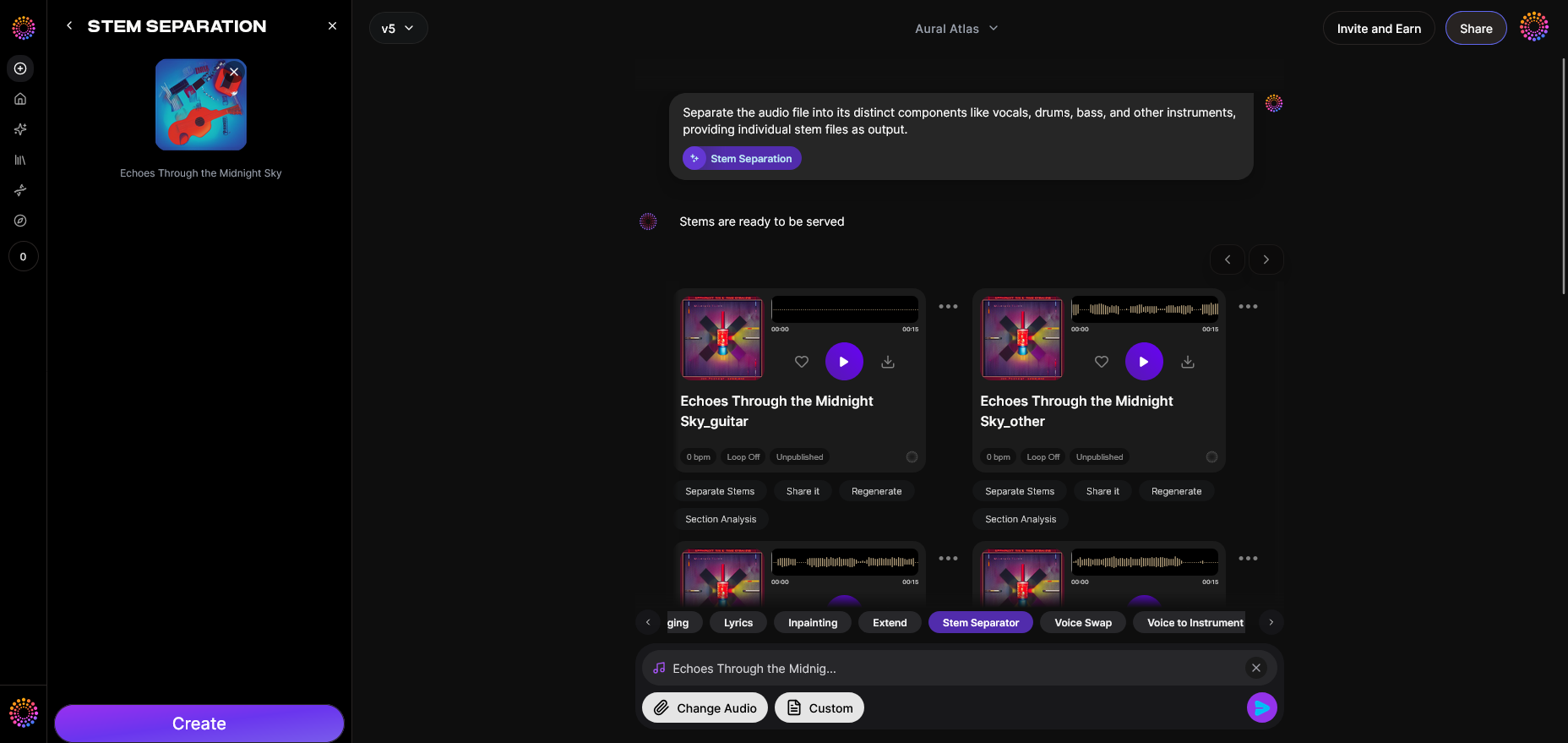
Now that you understand what song stems are, here is how to create them instantly using Soundverse.
The Soundverse Stem Separator is designed to dissect mixed audio into up to six fully editable stems—Vocals, Drums, Bass, Guitar, and Accompaniment. It supports file uploads, URL inputs, and direct recordings, all processed through high-quality AI isolation.
Key Capabilities
- 6-stem separation for detailed remixing and editing.
- Support for URL, File, and Recording inputs, accommodating diverse workflows.
- High-quality isolation that retains tonal accuracy and minimizes artifacts.
Core Use Cases
- Remixing and sampling tracks.
- Creating backing tracks for live performance or karaoke.
- Conducting educational analysis of mix structures.
- Cleaning up and restoring old audio.
For expanded workflow management, the Soundverse ecosystem also includes:
- Section Analysis, which labels song structure parts like intro, verse, and chorus for precise editing; and
- Arrangement Studio, a collaborative studio where separated tracks can be rearranged and refined compositionally.
To explore how Soundverse’s AI stem separation revolutionizes editing, check out Soundverse Introduces Stem Separation AI Magic Tool or learn more about the Arrangement Studio in What Is Soundverse Arrangement Studio and What Does It Do. Watch the Explore Tab tutorial here to see how Soundverse connects tools visually for better creativity.
Start Creating Music with AI-Powered Song Stem Tools
Unlock every layer of your music with Soundverse’s AI Magic Tool. Separate, remix, and produce professional-quality stems with just a few clicks—perfect for producers, creators, and musicians seeking total control over their sound.
Related Articles
- Soundverse Introduces Stem Separation AI Magic Tool — Discover how Soundverse’s innovative AI Magic Tool lets you isolate vocals, beats, and instruments with precision.
- What Are Song Stems and Why Do You Need Them — Learn why song stems are essential for modern music production, remixing, and mastering workflows.
- The Benefits of Composing with AI Music Generator — Explore how AI tools like Soundverse streamline songwriting, arrangement, and creative inspiration.
- Soundverse AI Revolutionizing Music Creation for New Age Content Creators — Find out how Soundverse is transforming the creative process for musicians and digital creators worldwide.
Here's how to make AI Music with Soundverse
Video Guide
Here’s another long walkthrough of how to use Soundverse AI.
Text Guide
- To know more about AI Magic Tools, check here.
- To know more about Soundverse Assistant, check here.
- To know more about Arrangement Studio, check here.
Soundverse is an AI Assistant that allows content creators and music makers to create original content in a flash using Generative AI.
With the help of Soundverse Assistant and AI Magic Tools, our users get an unfair advantage over other creators to create audio and music content quickly, easily and cheaply.
Soundverse Assistant is your ultimate music companion. You simply speak to the assistant to get your stuff done. The more you speak to it, the more it starts understanding you and your goals.
AI Magic Tools help convert your creative dreams into tangible music and audio. Use AI Magic Tools such as text to music, stem separation, or lyrics generation to realise your content dreams faster.
Soundverse is here to take music production to the next level. We're not just a digital audio workstation (DAW) competing with Ableton or Logic, we're building a completely new paradigm of easy and conversational content creation. TikTok: https://www.tiktok.com/@soundverse.ai Twitter: https://twitter.com/soundverse_ai Instagram: https://www.instagram.com/soundverse.ai LinkedIn: https://www.linkedin.com/company/soundverseai Youtube: https://www.youtube.com/@SoundverseAI Facebook: https://www.facebook.com/profile.php?id=100095674445607
Join Soundverse for Free and make Viral AI Music

We are constantly building more product experiences. Keep checking our Blog to stay updated about them!