What Is a Loop in Music? Understanding Sound Loops and Modern Production Techniques in 2026
Learn what a loop in music is and how modern producers use looping techniques in 2026.
What Is a Loop in Music?
In the world of modern music creation, loops have become one of the most fundamental building blocks. Whether you’re starting your journey in music production basics or an experienced musician refining your craft, understanding what a loop in music is can completely reshape how you think about structure, rhythm, and inspiration. In 2026, loops are more than repetitive segments—they are creative canvases that define the tone of hundreds of genres, from electronic music to ambient soundscapes.
What is a Loop in Music?
A loop in music refers to a short section of sound—often just a few bars—that can be repeated seamlessly to create rhythmic or melodic continuity. This concept originated from tape looping in the analog era, where artists physically joined the ends of magnetic tape to repeat a section continuously. Today, with digital audio workstations (DAWs) and advanced AI tools, looping techniques have evolved dramatically. Producers can now design perfectly timed sound loops that repeat indefinitely without gaps or phase issues.

Loops may include drum beats, basslines, melody fragments, vocal chops, or sound ambiance. What defines a true loop is its ability to play on repeat without noticeable transitions, making it ideal for background music, instrumental tracks, and beat production. According to Wikipedia’s definition of a loop, it’s simply a repeating section of sound material—often forming the basis of rhythm and melody patterns. The BBC Maestro guide adds that loops can act as backing tracks or vocals, helping solo artists build up full arrangements.
How Are Loops Used in Music Production?
In contemporary music production, loops are foundational. Beginners often start learning digital composition through loops because they simplify rhythmic structure, allowing focus on creativity rather than theory. Advanced producers use loops for texture building and storytelling through sound. Here are a few primary ways loops fit into the production workflow:
- Rhythmic Foundations: Drum loops provide consistent beats used across genres like hip-hop, EDM, and pop. Producers manipulate their tempo to layer creative sequences. As Unison Audio explains, loops form the backbone of many tracks, creating the groove listeners connect with.
- Sampling in Music: Loops are often created by sampling fragments from recorded audio. When used legally, sampling in music allows for transformative reinterpretation of existing materials.
- Sound Design: Ambient loops can establish mood and atmosphere. They are popular in film scoring, game sound interactions, and wellness music.
- Arrangement Structure: Loops work as modular building blocks. Producers use copied loops to build verse, chorus, and bridge sections inside their DAW.
For those starting to explore music production basics, these applications make loops both accessible and powerful. They let you experiment with structure before diving into full-scale recording. You can watch Soundverse’s tutorial on making music for hands-on examples.
What Are Common Looping Techniques in 2026?
By 2026, looping techniques have become more advanced thanks to AI-assisted software and integrated DAW features. Some notable strategies include:
- Layered Looping: Combining multiple loops of different tonal frequencies to create a full mix texture.
- Time-Stretching: Adjusting loop tempo without altering pitch, perfect for aligning loops across genres.
- Automation Loops: Using automation curves that repeat rhythmically for effects like filter sweeps or dynamic panning.
- Slicing and Rearranging: Modern producers chop loops into micro-fragments to rearrange rhythmically unique sequences.
- Loop Mode in AI Generators: AI tools such as Soundverse’s AI Music Generator offer a Loop Mode for creating seamless repetitions directly during generation.
For further insights, check out the Soundverse tutorial on Deep House production. In 2026, these techniques have become standard practice among digital producers, content creators, and even filmmakers who seek efficient ways to create cohesive audio backgrounds.
Why Are Sound Loops Important for Beginners?
Sound loops simplify the process of getting started with composition. They provide pre-arranged musical sections that build confidence and understanding of timing, tempo, and harmony. Instead of starting from silence, beginners use loops as creative anchors to test ideas quickly.
Moreover, loops accelerate workflows in commercial environments. Social media content creators, podcasters, and video producers rely on background loops to maintain viewer engagement without overpowering dialogue or visuals.
If you’re exploring new methods to improve production speed, reading about AI music generation trends or music industry innovations offers insights into how technology supports modern looping processes.
What Types of Loops Exist?
There are many categories of loops, each serving a specific role depending on genre and intent:
- Melodic Loops: Short instrumental phrases using synths, guitars, or pianos.
- Percussion Loops: Drum beats and rhythmic patterns repeated to maintain groove.
- Bass Loops: Foundational low-end sequences providing depth and drive.
- Vocal Loops: Repetitive chants or processed vocal textures used across EDM and pop music.
- Ambient Loops: Slow-moving textures ideal for meditation and cinematic compositions.
As looping expands across genres, producers increasingly turn to AI generation tools that can create cohesive and royalty-free music loops.
How to Make Loops Seamless in a Digital Audio Workstation
Producing effective loops requires attention to timing. A digital audio workstation allows you to snap audio regions exactly to bar lines so looping remains natural. Here are a few practical steps:
- Trim your sound sample precisely at a clean start and end point.
- Use crossfades to smooth transitions.
- Match tempo and key across tracks.
- Render loops using uncompressed audio for best fidelity.
Learning these techniques early ensures you never encounter awkward overlaps or sudden silences between loops. For deeper creative expansion, explore tools such as Soundverse Arrangement Studio that help detect song structures and label sections, making loop placement even more intuitive.
How to Make Music Loops with Soundverse AI Music Generator
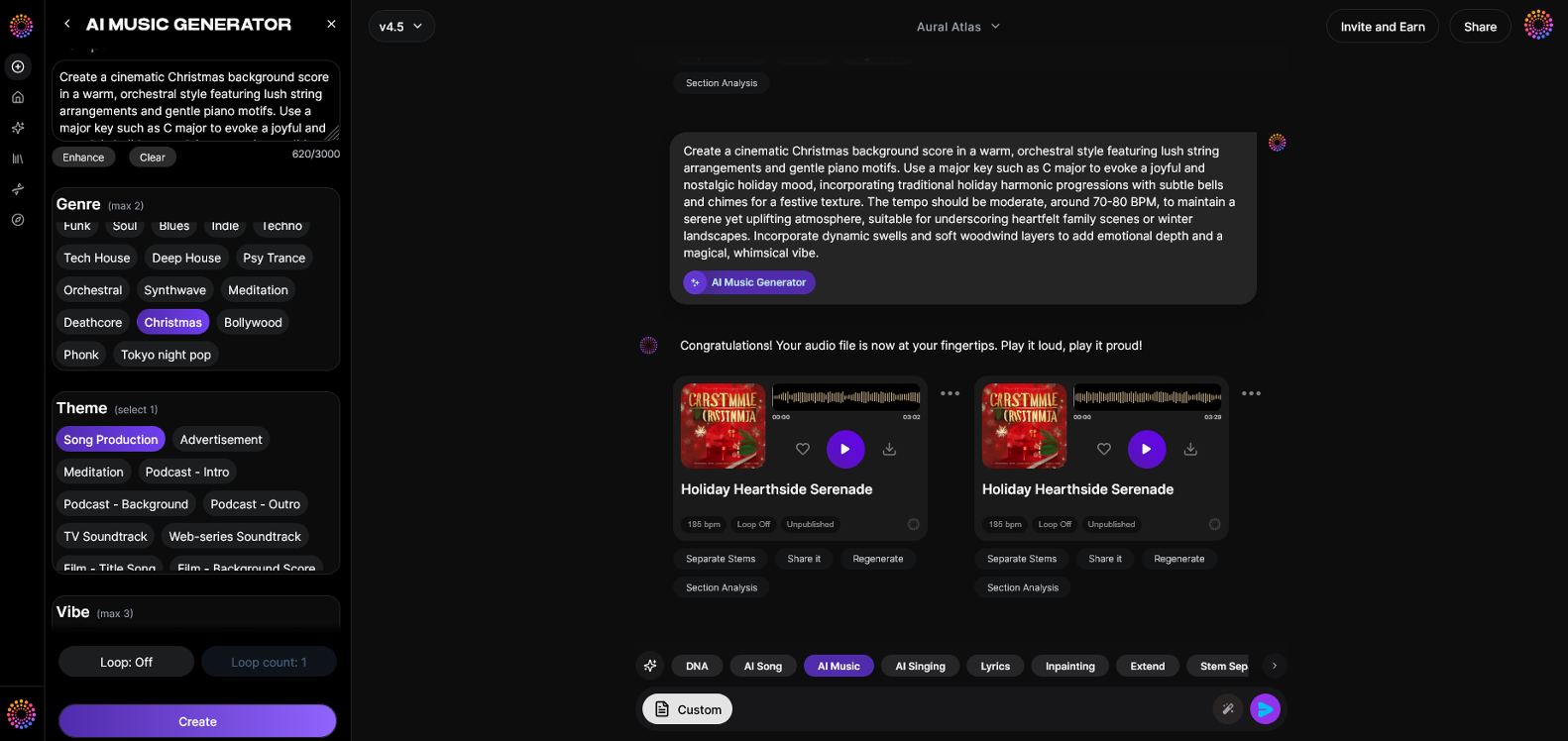
Soundverse has revolutionized how looping is approached in digital music creation. The AI Music Generator enables users to create fully produced instrumental music from simple text prompts. Specifically, its Loop Mode generates seamless audio segments designed for continuous repetition—ideal for video clips, gaming soundtracks, and ambient compositions.
Core Capabilities Include:
- Text-to-music generation for instrumental compositions without vocals.
- Dedicated Loop Mode to ensure smooth, gap-free repetition.
- Detailed control for genre, mood, and instrument selection.
- Options between V4 and V5 Models to fine-tune creative precision.
No manual editing or splicing is required—Soundverse automatically ensures each loop connects perfectly. Users can generate music for diverse applications like meditation videos, advertisements, or background scoring. Paired with supporting features like Extend Music (to lengthen existing audio) and Section Analysis (to detect song parts), creators gain complete editing flexibility.
For enhanced learning, check out how AI-generated music influences human creativity or explore Soundverse AI Magic Tools for faster content production across projects.
How Soundverse Helps You Master Looping
For beginner producers learning looping techniques, Soundverse acts as a hands-on mentor. Because its generation system allows text-based description, users can specify rhythmic intensity, ambiance, or tempo without complex manual arrangements.
If you want consistent rhythmic loops for your project, simply enter a description like “upbeat lo-fi drum loop with jazzy piano chords.” Soundverse then produces a cohesive output ready for looping in your DAW. Its Loop Mode guarantees fluid transitions and exact bar alignment—perfect for commercial, cinematic, or social use.
Whether you’re building your first beat, designing immersive game sound layers, or composing relaxation music, Soundverse’s AI-generated loops simplify creativity while maintaining professional sound quality.
Start Creating Your Own Loops Instantly with Soundverse AI
Bring your musical ideas to life in seconds. Generate, edit, and arrange loops with AI precision—perfect for producers, content creators, and musicians seeking limitless creativity.
Create Music with AI
Related Articles
- Generate AI Music with Soundverse Text-to-Music: Discover how Soundverse transforms your ideas into complete musical compositions using just text prompts.
- What Are Song Stems and Why Do You Need Them: Learn how song stems give you creative freedom to remix and loop like a pro.
- Soundverse AI Magic Tools: Create Content Quickly with AI: Speed up your production process with Soundverse’s AI-powered tools designed for effortless creativity.
- How to Create EDM with Soundverse AI: Step-by-step guide to crafting energetic EDM tracks using Soundverse’s intelligent music creation features.
Here's how to make AI Music with Soundverse
Video Guide
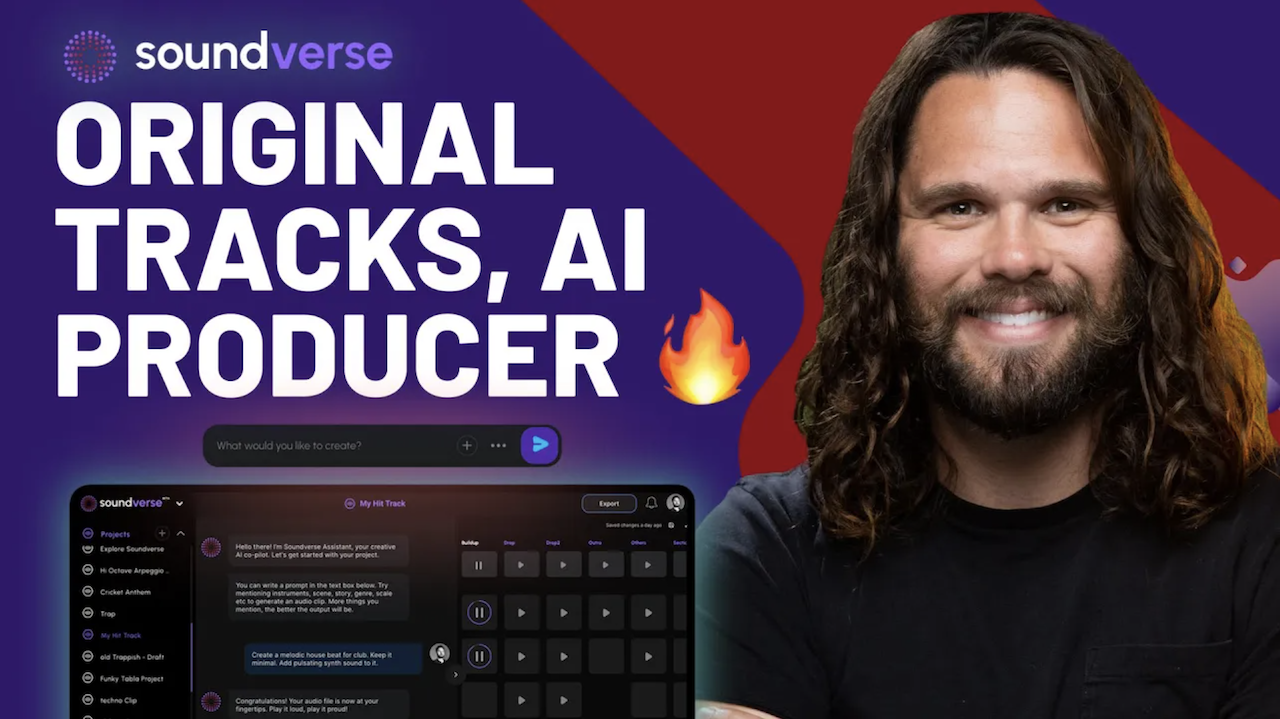
Here’s another long walkthrough of how to use Soundverse AI.
Text Guide
- To know more about AI Magic Tools, check here.
- To know more about Soundverse Assistant, check here.
- To know more about Arrangement Studio, check here.
Soundverse is an AI Assistant that allows content creators and music makers to create original content in a flash using Generative AI. With the help of Soundverse Assistant and AI Magic Tools, our users get an unfair advantage over other creators to create audio and music content quickly, easily and cheaply. Soundverse Assistant is your ultimate music companion. You simply speak to the assistant to get your stuff done. The more you speak to it, the more it starts understanding you and your goals. AI Magic Tools help convert your creative dreams into tangible music and audio. Use AI Magic Tools such as text to music, stem separation, or lyrics generation to realise your content dreams faster. Soundverse is here to take music production to the next level. We're not just a digital audio workstation (DAW) competing with Ableton or Logic, we're building a completely new paradigm of easy and conversational content creation.
TikTok: https://www.tiktok.com/@soundverse.ai
Twitter: https://twitter.com/soundverse_ai
Instagram: https://www.instagram.com/soundverse.ai
LinkedIn: https://www.linkedin.com/company/soundverseai
Youtube: https://www.youtube.com/@SoundverseAI
Facebook: https://www.facebook.com/profile.php?id=100095674445607
Join Soundverse for Free and make Viral AI Music
We are constantly building more product experiences. Keep checking our Blog to stay updated about them!