What Genre Is Depressing Music? Understanding the Sound of Sadness in 2026
Explore the genres that define depressing music and learn how mood, tone, and emotion shape melancholic sounds in 2026.
What Genre Is Depressing Music?
In 2026, music continues to evolve as a deeply emotional art form, capable of expressing every human feeling—from elation and love to heartbreak and despair. Among the most intriguing of musical themes is depressing music, a category that resonates with listeners seeking connection, catharsis, or even comfort in sadness. The question many ask is simple: What genre is depressing music? The answer, however, is layered in tone, mood, and artistic intention.
What Defines a Depressing Music Genre?
When we speak of depressing music, we aren’t referring to a single genre but rather a spectrum of musical styles that evoke emotions such as melancholy, loneliness, or grief. A depressing music genre is characterized by slower tempos, minor keys, minimal instrumentation, and introspective lyrics or melodies. These elements aim to mirror the emotional depth of human sadness and reflection.

In 2026, emotional music remains incredibly diverse. While some artists use orchestral strings to portray sorrow, others utilize ambient soundscapes or minimalist piano compositions. Across platforms and styles, the depressing music genre acts as a mirror to the listener’s inner emotional world.
What Are the Most Popular Sad Music Genres?
Sadness has many musical interpretations. Here are several genres most commonly associated with depressing or melancholic tones:

- Indie Folk – Characterized by acoustic instruments, gentle vocals, and introspective lyrics. Indie folk often explores memory, loss, and nostalgia, making it a cornerstone of emotional expression.
- Ambient Music – Known for its slow, immersive textures, ambient compositions capture feelings of isolation or quiet emptiness. It’s often used in film and meditation to evoke emotional stillness.
- Slowcore – A minimalist subgenre of alternative rock that emphasizes lethargic tempos and sparse arrangements. Bands within this style often explore themes of apathy and emotional detachment.
- Post-Rock – Built on instrumental crescendos and atmospheric layers, post-rock expresses mood shifts without words. It’s a favorite among listeners seeking the abstract beauty of emotional music types. You can watch a Soundverse tutorial on creating music atmospheres to explore similar concepts.
- Blues – Rooted in historical struggle and longing, blues has always been a genre for sadness. It turns pain into art through soulful vocals and expressive guitar patterns, related to traditional forms listed in Wikipedia’s List of music genres and styles.
- Lo-Fi – In 2026, lo-fi music remains a global trend. Its nostalgic sound and imperfection embody comfort in melancholy, often used for studying or relaxing.
- Classical Adagio – Slow movements in classical compositions—known as adagios—are deeply tied to grief and contemplation. From mournful violin solos to somber piano études, classical adagios remain evergreen representations of emotional sadness.
- Darkwave – Emerging from gothic and electronic roots, darkwave features haunting synths and brooding vocals, often exploring existential despair or romantic tragedy.
- Emo and Acoustic Pop – Although more mainstream, emo and acoustic pop songs often focus on heartbreak and emotional vulnerability, connecting personally with younger audiences. This resurgence is similar to trends in "The music subgenre sadcore finds a new life with a new generation".
- Cinematic Scores – Modern film and TV composers increasingly use melancholic orchestration to evoke emotional depth in storytelling, making this one of the most influential genres for sadness in 2026.
Why Do We Listen to Depressing Music?
Listening to melancholic songs doesn’t necessarily worsen one’s mood. In fact, psychology studies conducted between 2024 and 2025 demonstrated that many people find relief through sad music. The act of hearing emotional compositions helps process feelings and fosters empathy. By 2026, streaming platforms report that playlists labeled sad, melancholy, or heartbroken remain among the most searched emotional topics under the category of music and mood—as seen in curated Spotify lists like sad songs 2026 crying and depressing music.
Music functions as emotional regulation. When people feel sad, they tend to pick genres that validate their emotions—thus, depressing music becomes a comforting tool rather than a trigger.
How Do Artists Create Emotional Music Types in 2026?
The art of crafting genres for sadness has evolved with technology. Traditionally, composers relied on harmonic minor scales or slow tempos to express melancholy. In 2026, artificial intelligence tools like Soundverse now assist artists in building emotionally precise compositions.
Through analysis of tempo and tone, musicians can simulate sadness across multiple styles. Producers use AI not just to copy emotions but to reinterpret them through digital sound textures—bridging acoustic warmth with modern electronic minimalism.
For instance, film producers can instantly match a reference track’s emotional tone using tools inspired by Soundraw alternative workflows. Additionally, creators seeking royalty-free melancholic tracks can explore resources such as Navigating Copyright-Free Music. These links highlight the 2026 landscape where technology, art, and emotion converge seamlessly. For hands-on learning, check our Explore Tab tutorial.
The Role of Sound and Mood in Sad Music Genres
Sound relates directly to human physiology. Minor chords typically evoke tension or sorrow, while reverb and sustained notes create spacious emotional depth. When combined, these features define the overall mood of depressing music genres.
Melancholic songs often follow these sonic principles:
- Tempo: Ranges between 55–80 BPM, slow enough to mimic heartbeat rhythms during rest or sadness.
- Key Signature: Preference for minor keys, especially D minor, often dubbed “the saddest of all keys.”
- Instrumentation: Piano, cello, acoustic guitar, or synthesized ambient pads are common choices.
- Dynamics: Low-volume intensity to reinforce intimacy and introspection. Loudness intensity directly correlates with emotional tone according to Music Mood Classification.
How Has Emotional Music Evolved Since 2025?
The past two years have seen major progress in AI-assisted composition. Between 2024 and 2025, tools mainly helped replicate upbeat or energetic music styles. But by 2026, emotional composition has matured. Artists now integrate algorithmic mood recognition to create targeted emotional atmospheres.
Platforms like Music Industry Trends showcase the continued rise of sentiment-based music generation, where creators compose by emotional intention. This has been revolutionary for soundtrack production, therapeutic music creation, and personalized playlist services.
How to Make Depressing Music with Soundverse Similar Music Generator
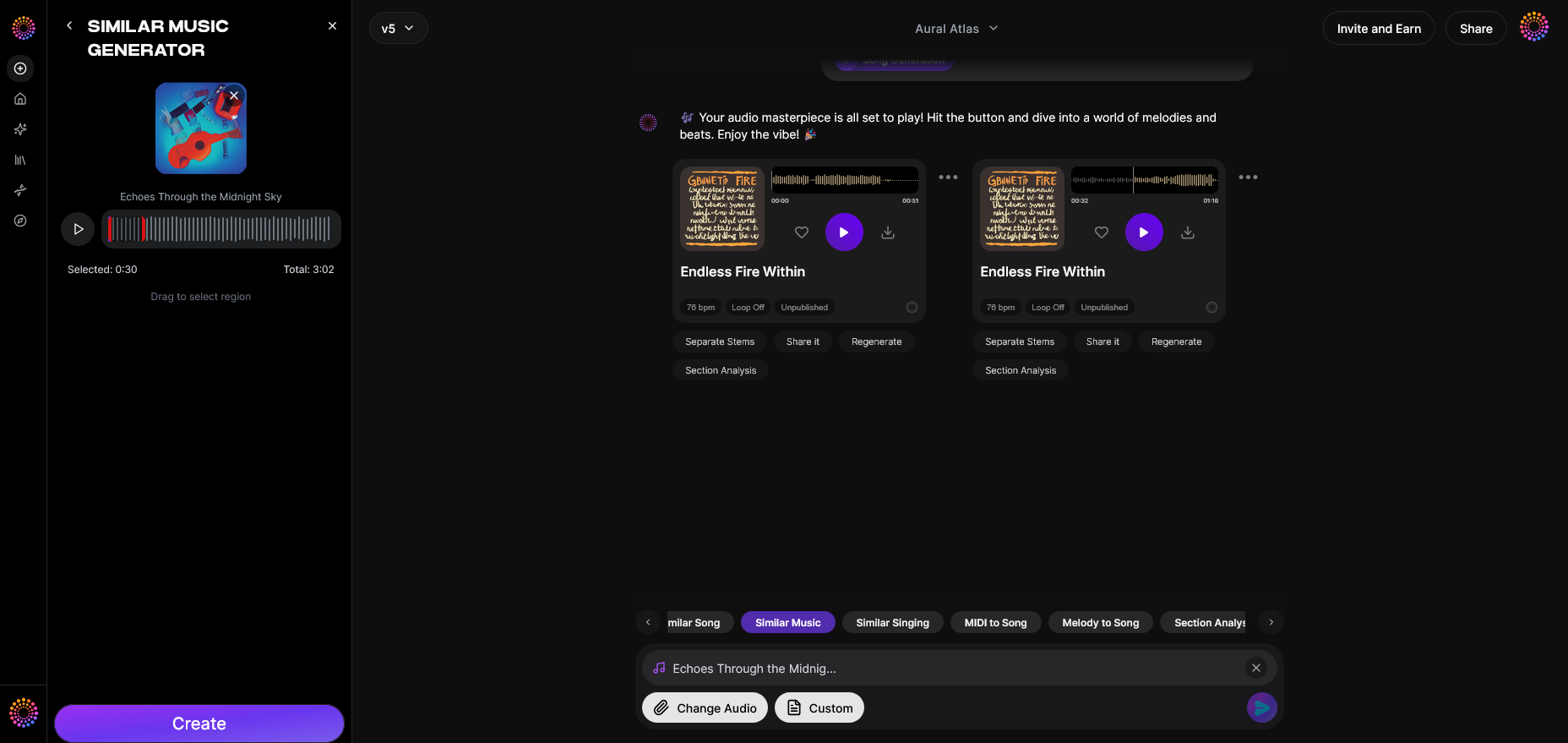
Now that you understand what defines the depressing music genre, here’s how creators in 2026 can craft or replicate these emotional atmospheres using Soundverse Similar Music Generator.
Soundverse’s Similar Music Generator produces original instrumental compositions inspired by a reference track. Its instrumental style transfer and in-depth musical analysis make it ideal for building melancholic pieces that match a specific film or story mood.
Core Capabilities
- Instrumental Style Transfer: Accurately captures the tonal character and tempo of your chosen reference, enabling the creation of sad instrumentals without copying the source.
- Detailed Musical Analysis (Tempo, Key, Mood): Breaks down musical elements to preserve emotional authenticity in the generated sound.
- Reference-based Loop Creation: Helps creators design looping backgrounds suitable for cinematic, game, or podcast environments.
Typical Use Cases
- Film/TV Scoring: Replace temporary sad scores with original AI-generated compositions.
- Game Themes: Build dark, atmospheric soundscapes for emotionally complex scenes.
- Podcast Music: Produce gentle background music that supports introspective content.
By uploading a reference piece that contains the desired mood—say, an ambient piano track—the Similar Music Generator analyzes tempo, key, and feeling, producing an original instrumental aligned with that emotional tone. The process ensures copyright-safe music creation that emotionally matches director-approved styles.
If you want to experiment further, Soundverse also offers related tools:
- Similar Song Generator for full vocal compositions.
- AI Music Generator for text-based prompt creation.
- AI Lyrics Writer to help develop lyrical structure around emotional themes.
These integrations are described in resources like Soundverse AI Magic Tools and Generate Music by Vibe, offering advanced creative flexibility.
Create Emotionally Stirring Music with AI
Transform your creative vision into powerful soundscapes. Use Soundverse AI to compose tracks that express real emotion, from melancholy melodies to cinematic depth.
Start Creating with Soundverse
- How to Create Healing Meditation Music with Soundverse AI — Discover how to design calming, therapeutic compositions using AI tools that capture peaceful and introspective moods.
- Most Popular Music Genres — Explore the evolution of top music genres and how emotional expression plays a role in their global appeal.
- Generate AI Music with Soundverse Text-to-Music — Learn how to convert your written ideas into full compositions using Soundverse’s text-to-music generator.
- The Role of AI Music in Film and Television — Understand how AI-driven compositions are shaping emotional storytelling in cinema and TV soundtracks.
Here's how to make AI Music with Soundverse
Video Guide

Here’s another long walkthrough of how to use Soundverse AI.
Text Guide
- To know more about AI Magic Tools, check here.
- To know more about Soundverse Assistant, check here.
- To know more about Arrangement Studio, check here.
Soundverse is an AI Assistant that allows content creators and music makers to create original content in a flash using Generative AI.
With the help of Soundverse Assistant and AI Magic Tools, our users get an unfair advantage over other creators to create audio and music content quickly, easily and cheaply.
Soundverse Assistant is your ultimate music companion. You simply speak to the assistant to get your stuff done. The more you speak to it, the more it starts understanding you and your goals.
AI Magic Tools help convert your creative dreams into tangible music and audio. Use AI Magic Tools such as text to music, stem separation, or lyrics generation to realise your content dreams faster.
Soundverse is here to take music production to the next level. We're not just a digital audio workstation (DAW) competing with Ableton or Logic, we're building a completely new paradigm of easy and conversational content creation.
TikTok: https://www.tiktok.com/@soundverse.ai
Twitter: https://twitter.com/soundverse_ai
Instagram: https://www.instagram.com/soundverse.ai
LinkedIn: https://www.linkedin.com/company/soundverseai
Youtube: https://www.youtube.com/@SoundverseAI
Facebook: https://www.facebook.com/profile.php?id=100095674445607
Join Soundverse for Free and make Viral AI Music

We are constantly building more product experiences. Keep checking our Blog to stay updated about them!