What Does Unadulterated Loathing Mean?
Explore the meaning, emotion, and examples of unadulterated loathing in 2026.
What Does Unadulterated Loathing Mean?
What Does Unadulterated Loathing Mean?
In the world of emotional expression and literary nuance, few phrases strike as powerfully as unadulterated loathing. In 2026, the term continues to be used in literature, film, and psychology to describe the purest form of hatred — a profound, unfiltered dislike that consumes one’s thoughts and actions. When people search for unadulterated loathing meaning, they are typically exploring how the concept of hatred evolves beyond ordinary resentment into something raw and all-encompassing.
What Is the Definition of Unadulterated Loathing?
To understand the definition of unadulterated loathing, it helps to break it down:
- Unadulterated means pure, undiluted, or free from any kind of modification.
- Loathing means intense hatred or disgust toward something or someone.
Together, unadulterated loathing refers to pure hatred that hasn’t been softened by rationalization, indifference, or moral restraint. It’s not the casual dislike one might feel toward a disagreeable habit; it’s the deepest emotional rejection possible — the kind that defines conflict at emotional and psychological levels.
Writers, psychologists, and artists have explored this emotion for centuries. From classic novels to modern cinema, this emotion symbolizes the absolute extreme of human aversion.
How Does Unadulterated Loathing Differ From Ordinary Hatred?
Hatred can stem from anger, jealousy, or ideological opposition. However, unadulterated loathing transcends those triggers. It is self-sustaining — often detached from logic or specific events. People don’t just dislike someone; they utterly reject their existence, values, or essence. In literature, this intensity often manifests through a character’s relentless obsession or refusal to coexist.
Unlike temporary anger, unadulterated loathing leaves no room for reconciliation. It can be irrational but remains powerful because it’s pure. The emotional intensity of loathing becomes a psychological force capable of driving entire narratives or defining a person’s worldview.
What Is the Emotional Intensity of Loathing?
The emotional intensity of loathing lies in its purity. When hate is unfiltered, it can consume a person mentally and physically. Psychological studies prior to 2026 have shown that intense disgust activates the same brain regions involved in fear and pain response, suggesting that loathing is more primal than most emotions. As the meaning grammar guide for “unadulterated hate” explains, “loathing” intensifies emotional rejection by replacing more casual forms of aversion.
By 2026, emotional awareness has become a key theme in self-development and storytelling. Understanding such expressions helps creators depict genuine emotional depth. For instance, musicians and poets often explore loathing in their creations to symbolize internal struggles or political frustration.
For a deeper dive, watch our tutorial on how to make music or explore the “Explore” tab walkthrough for emotion-based creative setup in Soundverse.
Examples of Unadulterated Loathing in Literature and Art
Many timeless works illustrate this emotion with haunting clarity.
- Characters driven by revenge: Figures whose actions are fueled by deep disdain, often existing solely to destroy what they hate. Their loathing defines their purpose.
- Symbolic art pieces: Paintings emphasizing stark contrasts, harsh lines, and distorted imagery often depict unadulterated emotional responses.
- Modern storytelling: In post-2025 literature, especially dystopian novels, loathing symbolizes conflict between humanity and systems that suppress freedom.
- Music and performance: Artists frequently channel themes of loathing into intense lyrical delivery or sonic distortion, emphasizing raw emotion.
This pure hatred connects audiences emotionally because it feels authentic, absent of pretense. In psychological discussions, understanding loathing allows therapists and writers to identify the boundary between anger and emotional self-destruction.
If you want examples from the artistic world, exploring pieces related to emotion-driven AI composition has become a trend in 2026. Platforms like Soundverse now allow creators to translate complex emotions such as loathing into musical texture and tone.
Why Do Writers and Creators Explore Pure Hatred?
Writers, filmmakers, and songwriters explore loathing because it’s one of the most powerful catalysts for character development. It reveals extremes of human vulnerability. The meaning of pure hatred isn’t limited to hostility — it also uncovers obsession, self-reflection, and transformation. Books like Hatred: Understanding Our Most Dangerous Emotion explore how hatred evolves beyond mere hostility into complex psychological processes.
For example, a protagonist consumed by loathing might eventually confront their own emotional wounds. In this sense, loathing becomes both destructive and enlightening. It encourages audiences to question morality, forgiveness, and resilience.
Creators in 2026 increasingly use emotional AI models to represent such feelings through tone, sound, and words. The advancement of creative tools, as discussed in AI music industry trends, enables artists to capture complex psychological states with digital precision.
How Does Unadulterated Loathing Shape Creative Expression in 2026?
In today’s creative industries, emotional authenticity is valued more than ever. The unadulterated loathing meaning has evolved from being merely a descriptive phrase to becoming a source of inspiration for deliberate emotional composition. Musicians experimenting with electronic and ambient genres use AI tools to translate intense emotions into sonic forms.
When emotion influences art, it bridges psychology and creativity. This year’s creators use emotions like loathing, grief, and passion to define thematic structures. The exploration of hatred often emerges in genres exploring antihero narratives, rebellion, or systemic critique.
For emerging talents and students learning emotional theory, studying loathing helps build depth in character portrayal. It is also useful in understanding the boundary between emotional authenticity and exaggeration — a balance essential for both writers and digital artists.
Unadulterated Loathing in Psychology and Self-Awareness
Psychologically, loathing can stem from projection or fear. The purity of the emotion implies a lack of rational control, revealing our vulnerability in perceiving threats. By recognizing such emotions, individuals can channel them constructively rather than destructively. The After Psychotherapy guide on self-loathing shows how inner criticism and self-hatred emerge from protective mechanisms within our psyche.
Mental wellness discussions in 2026, influenced by emotional intelligence training, emphasize identifying pure emotions early. Emotion labeling exercises teach people to replace loathing with understanding, preventing harmful patterns from emerging.
For artists, recognizing the line between portraying loathing and being consumed by it is key. The emotion should fuel creativity, not stagnation. Many digital creators using AI-powered composition tools like Soundverse AI Magic Tools integrate sentiment analysis to craft emotional landscapes safely.
How to Make Emotionally-Charged Creations Like Unadulterated Loathing with Soundverse Agent
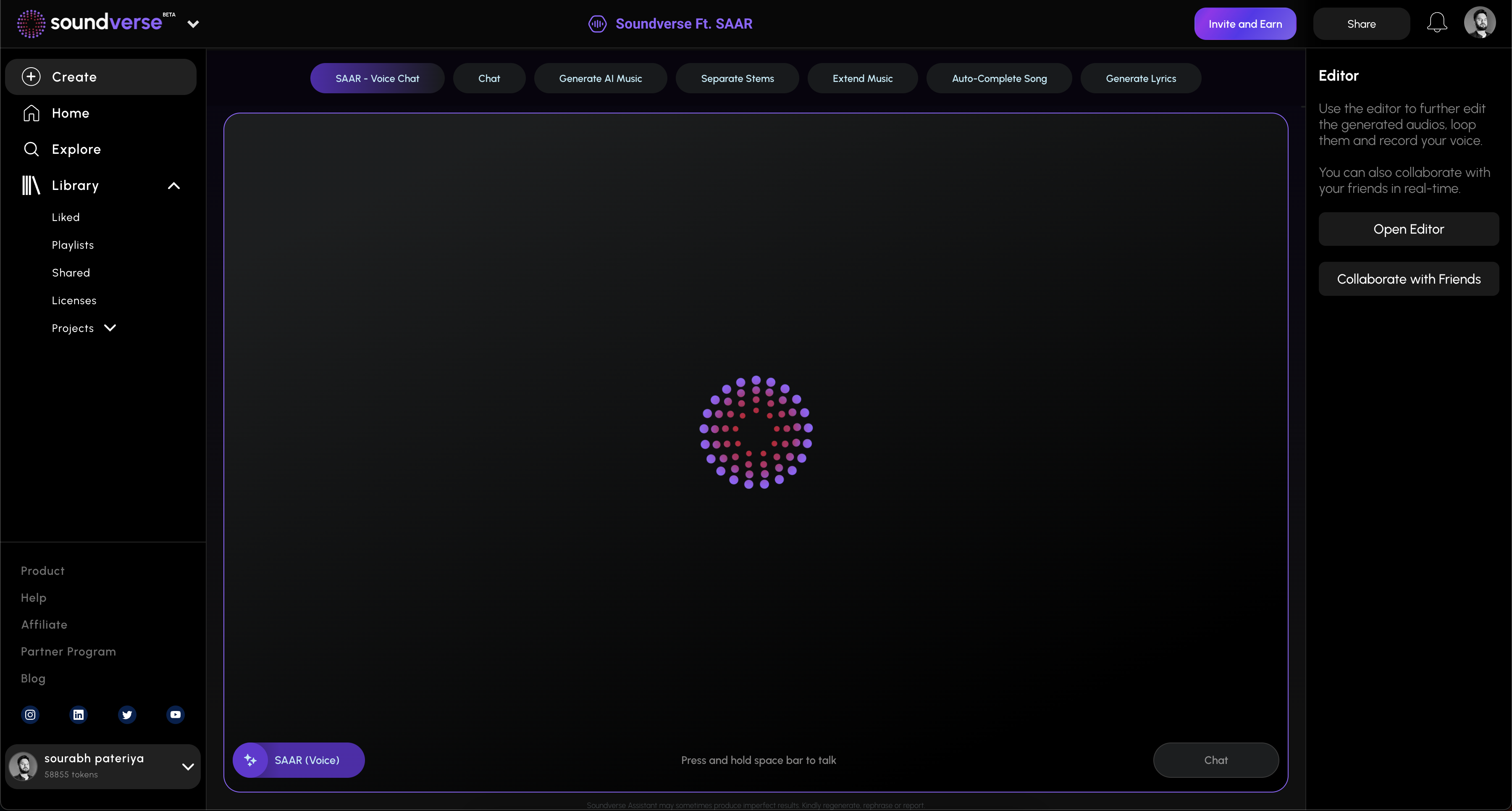
Now that you understand the concept of unadulterated loathing, here is how to channel this emotion into art using Soundverse.
Soundverse’s Agent is a conversational AI music assistant designed to simplify creative production. Acting as a centralized controller, it interprets complex user prompts such as “create a dark ambient sound that reflects pure hatred” and then orchestrates multi-step workflows automatically.
Core Capabilities of the Soundverse Agent:
- Multi-step tool orchestration: It connects various creative tools to generate coherent musical compositions.
- Contextual memory: The AI remembers previous prompts to maintain emotional continuity across multiple compositions.
- Voice input support: Users can verbally describe a mood, such as “intense loathing,” allowing deeper emotional mapping.
- Cross-tool workflow automation: It merges generation, separation, and extension processes seamlessly.
Primary Use Cases:
- Beginners: Instantly create emotion-driven music without needing technical production knowledge.
- Producers: Automate multi-step workflows (generate → separate → extend) to build thematic variation.
- Education: Learn emotional music theory interactively.
- Rapid prototyping: Experiment with emotional variations, from rage to melancholy.
For those fascinated by emotional soundscapes, Soundverse enables the creation of music pieces reflecting pure feelings like loathing, bliss, or serenity. Similar guides — like How to Create Jazz Music with Soundverse AI — illustrate how emotional intensity is transcribed into rhythm and harmony using AI-driven workflows.
By leveraging this technology, you can transform abstract emotions like unadulterated loathing into expressive compositions suitable for storytelling, film, or character design.
Experience Emotion Through AI Music Creation
Turn raw emotions like unadulterated loathing into powerful musical experiences with Soundverse’s AI tools. Create songs that capture intense feelings with professional-grade precision and creativity.
Start Creating With Soundverse
- How AI-Generated Music Is Transforming the Music Industry — Explore how AI reshapes music creation, enabling artists to express emotions with unprecedented depth and innovation.
- How an AI Music Generator Inspires Creative Fusion — Discover how AI tools empower creators to merge emotion and technology for truly unique musical expressions.
- The Benefits of Composing With AI Music Generator — Learn the creative and practical advantages of using AI when composing expressive, emotion-driven tracks.
- AI Music Generator and Human Composers: A Future Together — See how human creativity and AI collaboration can deepen emotional storytelling in modern music.
Here's how to make AI Music with Soundverse
Video Guide

Here’s another long walkthrough of how to use Soundverse AI.
Text Guide
- To know more about AI Magic Tools, check here.
- To know more about Soundverse Assistant, check here.
- To know more about Arrangement Studio, check here.
Soundverse is an AI Assistant that allows content creators and music makers to create original content in a flash using Generative AI. With the help of Soundverse Assistant and AI Magic Tools, our users get an unfair advantage over other creators to create audio and music content quickly, easily and cheaply. Soundverse Assistant is your ultimate music companion. You simply speak to the assistant to get your stuff done. The more you speak to it, the more it starts understanding you and your goals. AI Magic Tools help convert your creative dreams into tangible music and audio. Use AI Magic Tools such as text to music, stem separation, or lyrics generation to realise your content dreams faster. Soundverse is here to take music production to the next level. We're not just a digital audio workstation (DAW) competing with Ableton or Logic, we're building a completely new paradigm of easy and conversational content creation.
TikTok: https://www.tiktok.com/@soundverse.ai
Twitter: https://twitter.com/soundverse_ai
Instagram: https://www.instagram.com/soundverse.ai
LinkedIn: https://www.linkedin.com/company/soundverseai
Youtube: https://www.youtube.com/@SoundverseAI
Facebook: https://www.facebook.com/profile.php?id=100095674445607
Join Soundverse for Free and make Viral AI Music

We are constantly building more product experiences. Keep checking our Blog to stay updated about them!