Voice Biometric Data Rights in Music: Understanding Ownership and AI Ethics in 2026
Explore voice biometric data rights, vocal data privacy, and AI-driven ownership laws shaping music in 2026.
Voice Biometric Data Rights in Music
In 2026, the conversation around voice biometric data rights has become one of the most pressing topics in the modern music industry. As AI music technology evolves from experimental novelty to mainstream infrastructure, the voice—once seen merely as an instrument of human emotion—is now a form of biometric data, ripe with implications for privacy, ownership, and creative control.
For music professionals, artists, and technologists, understanding how voice biometric data rights interact with creative technologies is essential for future-proofing both artistry and legality. This article explores the evolution of vocal data privacy, the challenges surrounding voice ownership, and how emerging systems like Soundverse Trace are helping the industry secure justice and transparency in the age of biometric music law.
What are voice biometric data rights, and why do they matter in music?
Voice biometric data rights refer to the legal and ethical protections surrounding the capture, storage, and use of voice as a unique personal identifier. Much like fingerprints or facial recognition data, a person’s voice carries distinct biometric markers—attributes that can tie specific audio samples directly to an individual.
In the context of music creation and AI sound design, this data is exceptionally valuable. Artists’ vocals, training data for AI models, and sampling archives can all reveal proprietary elements of their vocal identity. When these voiceprints are used without consent, it raises serious questions about ownership and violation.
By 2026, several jurisdictions have begun incorporating voice identity into broader biometric data protection frameworks, reflecting rising concerns after high-profile disputes involving AI vocal cloning. These events have forced professionals across the music industry to confront the delicate balance between innovation and protection.

How has AI transformed the conversation around vocal data privacy?
Between 2024 and 2025, AI music technology shifted from simple generative models to deeply personal content creation tools that could mimic real human performances. With platforms such as Soundverse leading innovation in ethical music generation, the focus moved from style replication to identity protection.
Today, in 2026, vocal data privacy sits at the intersection of technology and ethics. Artists increasingly ask how their recorded voice data might be stored, used, or even distributed within machine learning systems. AI technologists must therefore consider new standards for consent-based data ingestion and training transparency.
Privacy breaches have proven that vocal data, if left unprotected, can be misused for identity spoofing or unauthorized commercial purposes. An artist’s signature sound could be reproduced by AI systems and sold, undermining both intellectual property laws and moral consent.

What challenges exist in defining voice ownership rights?
Voice ownership isn’t as simple as copyrighting a song. The human voice, while reproducible, is biologically distinct—meaning it carries elements tied to personal identity rather than creative work alone. For example, if an AI system clips samples from an archived performance and uses them in new content, the question becomes: Does the artist own the biometric signature or just the composition?
This complexity has led to the emergence of the term biometric music law, encompassing legal frameworks that treat voice data as both creative output and personal biometric property. These laws challenge traditional copyright norms by assigning rights not only to compositions but also to the person whose biometric data informed them.
For musicians, recognizing voice as a form of personal property creates more secure avenues for compensation, attribution, and usage control—laying the groundwork for a new era of rights management.
How are 2026 regulations transforming biometric music law?
Governments and music unions are revisiting how voice data is regulated in creative industries. Several countries have begun treating vocal data under similar protection clauses as digital fingerprints, meaning unauthorized replication could be considered a form of identity theft.
For AI audio professionals and lawyers, this shift complicates licensing frameworks. A dataset that includes hundreds of vocal training samples may now require explicit consent documentation—not just copyright assignments—to remain compliant. Musicians can enforce takedowns or compensation claims if an AI system uses their biometric data without proper licensing.
By 2026, biometric music law has become a critical area of research and litigation within creative technology spaces. Institutions are investing in transparent pipelines, watermarking systems, and accountability layers to manage the new rights economy.
How to protect your voice biometric data as an artist or producer in 2026
There are several strategies artists and music producers can use to safeguard their voice biometric data:
- Register biometric identifiers: Submit your voice prints to verified rights management services to establish identity documentation.
- Use licensed AI frameworks: Work only with transparent AI tools such as Soundverse AI Magic Tools that implement consent-based data training.
- Embed metadata and watermarking: Protect vocal recordings with inaudible identifiers that preserve your rights even if samples are distributed.
- Audit dataset provenance: Request clear attribution records when contributing vocals to AI training data pipelines.
By adopting these precautions, professionals can navigate the evolving biometric landscape with greater control and compliance.
How to ensure transparency in AI-generated music
Transparency has become the foundation of ethical AI in music. Platforms such as Soundverse champion a system where attribution and consent are visible throughout the creative process. Instead of relying on opaque machine learning models, Soundverse integrates traceable identifiers that reveal which datasets influenced the output.
This helps lawyers verify provenance, artists track royalties, and producers confirm that vocal data was used ethically. For those exploring AI-assisted content creation, reviewing guides like How to Create EDM with Soundverse AI or How to Create Country Music with Soundverse AI demonstrates how ethical generation and rights attribution work hand in hand. For a deeper dive, watch our Soundverse Tutorial Series - 10. Make Deep House Music and Soundverse Tutorial Series - 9. How to Make Music to see transparency tools in action.
How to secure voice biometric data rights with Soundverse Trace
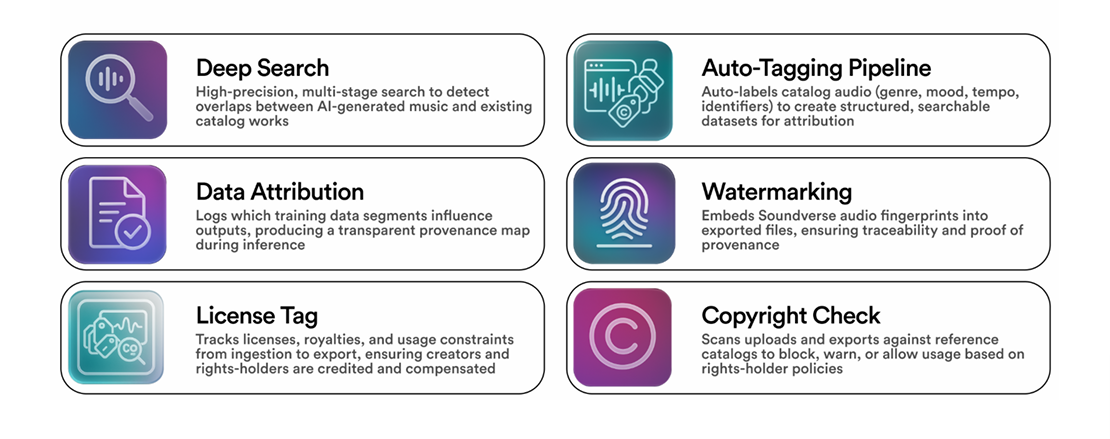
Soundverse Trace provides the most advanced trust layer for managing voice biometric data rights in modern AI music systems. This feature embeds attribution, deep search, and rights protection across the entire lifecycle—from dataset creation to final export.
Core Capabilities:
- Deep Search: Enables high-precision scanning (1:1 and 1:N) to detect overlaps between generated audio and existing voices or datasets.
- Data Attribution: Logs which training data influenced AI outputs, helping verify ethical sourcing.
- Audio Watermarking: Embeds inaudible fingerprints in vocal recordings to ensure identity persistence.
- License Tagging: Preserves rights metadata from ingestion to export, reinforcing compliance and traceability.
These tools collectively prevent copyright infringement in AI outputs, track catalog usage for royalties, verify provenance, and automate takedowns or payouts. For professionals navigating vocal data privacy in 2026, Soundverse Trace sets a benchmark for accountability and ethical protection.
Those already exploring AI content creation through Soundverse Arrangement Studio or Soundverse DNA integrations can seamlessly link voice attribution workflows with Soundverse Trace for consistent, rights-aware generation.
What does the future hold for vocal data ethics and AI music?
The next frontier of AI music lies not in generative capacity, but in integrity. Voice biometric data rights are reshaping how artists collaborate with AI—emphasizing mutual respect between human creativity and machine intelligence.
By 2026, we are seeing industry-wide adoption of ethical AI frameworks such as The Ethical AI Music Framework, designed to replace opaque black-box training systems with transparent pipelines for consent, attribution, and compensation. These developments ensure that as sound evolves, the rights of those who define it remain protected.
For lawyers, producers, and technologists, the challenge and opportunity lie in collaborating across disciplines to create systems that honor voice as both art and identity.
Protect Your Voice, Empower Your Music
Discover how Soundverse AI tools help safeguard your creative identity while giving you full control of your digital music production. Create, manage, and protect your voice biometric data seamlessly.
- Soundverse Introduces Stem Separation AI Magic Tool: Learn how Soundverse’s Stem Separation Magic Tool lets you isolate vocals and instruments while maintaining voice data privacy and creative integrity.
- How AI-Generated Music Is Transforming the Music Industry: Explore how advancements in AI music generation are reshaping artist rights, creative ownership, and the way biometric voice data is handled.
- Soundverse SAAR: AI Voice Assistant: Discover Soundverse SAAR, the AI voice assistant helping creators bring their musical ideas to life while respecting individual voice biometric data.
- AI Music Generator and Human Composers: A Future Together: Uncover how AI and human collaboration are evolving and what this means for music creators focused on protecting personal voice data.
Here's how to make AI Music with Soundverse
Video Guide
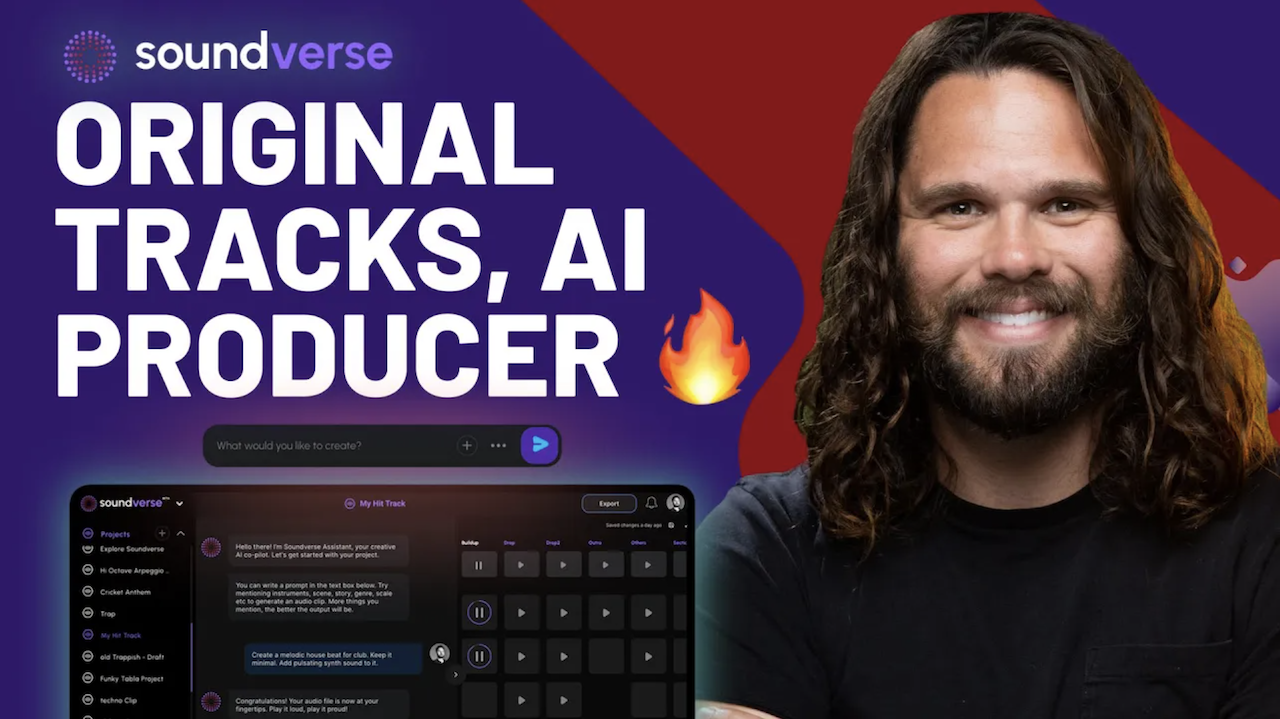
Here’s another long walkthrough of how to use Soundverse AI.
Text Guide
- To know more about AI Magic Tools, check here.
- To know more about Soundverse Assistant, check here.
- To know more about Arrangement Studio, check here.
Soundverse is an AI Assistant that allows content creators and music makers to create original content in a flash using Generative AI. With the help of Soundverse Assistant and AI Magic Tools, our users get an unfair advantage over other creators to create audio and music content quickly, easily and cheaply. Soundverse Assistant is your ultimate music companion. You simply speak to the assistant to get your stuff done. The more you speak to it, the more it starts understanding you and your goals. AI Magic Tools help convert your creative dreams into tangible music and audio. Use AI Magic Tools such as text to music, stem separation, or lyrics generation to realise your content dreams faster. Soundverse is here to take music production to the next level. We're not just a digital audio workstation (DAW) competing with Ableton or Logic, we're building a completely new paradigm of easy and conversational content creation. TikTok: https://www.tiktok.com/@soundverse.ai Twitter: https://twitter.com/soundverse_ai Instagram: https://www.instagram.com/soundverse.ai LinkedIn: https://www.linkedin.com/company/soundverseai Youtube: https://www.youtube.com/@SoundverseAI Facebook: https://www.facebook.com/profile.php?id=100095674445607
Join Soundverse for Free and make Viral AI Music

We are constantly building more product experiences. Keep checking our Blog to stay updated about them!
Image Steps: []