Suno AI Dolby Atmos Support: Does It Exist in 2026?
Discover if Suno AI offers Dolby Atmos or spatial audio support in 2026 and explore alternatives like Soundverse API.
Suno AI Dolby Atmos Support: Does It Exist?
In 2026, the world of AI-generated music has matured into a highly specialized space where creators expect immersive sound formats and next-level audio experiences. One of the most frequent questions among audio engineers and music creators today is: Does Suno AI support Dolby Atmos? As spatial audio becomes the new benchmark for listening experiences, it’s crucial to understand what “AI Atmos support” actually means and where Suno AI stands in this evolution.
What Is Dolby Atmos and Why Do AI Music Creators Care?
Dolby Atmos is a cutting-edge surround sound technology that expands audio beyond traditional left-right stereo. It creates a three-dimensional space, allowing sound elements to move around the listener. Instead of being confined to channels, sounds are placed and moved dynamically, adding depth, height, and realism to music and film mixes.
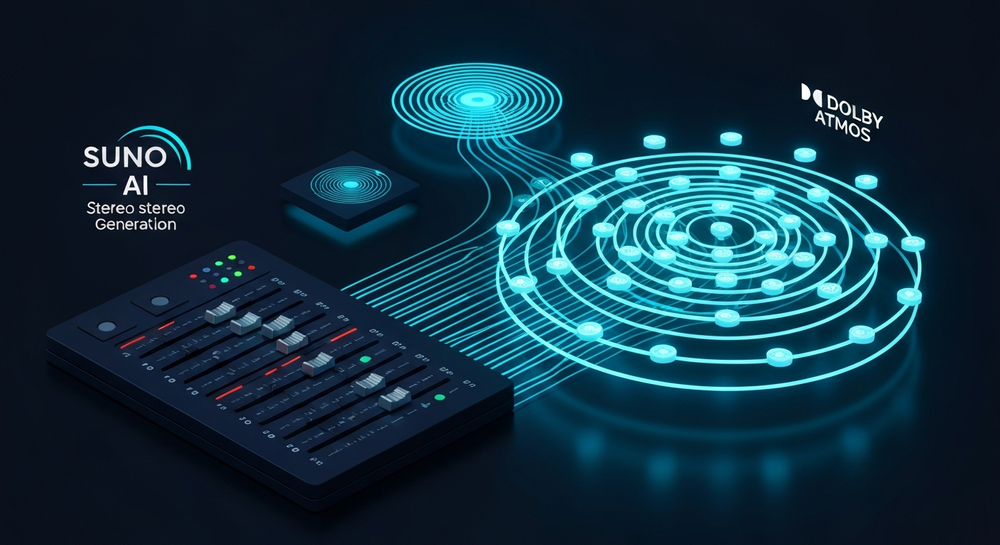
For creators working with AI music platforms, Dolby Atmos means more than simple sound enhancement—it’s the foundation for truly immersive AI music. Spatial mixing enables placement of instruments and voices with precise motion and geometry, reshaping how audiences experience music. Whether in headphones, gaming environments, or virtual concerts, the demand for suno spatial audio and AI Atmos support has surged dramatically by 2026.
Does Suno AI Have Dolby Atmos Support in 2026?
Despite its rapid growth in the AI songwriting field, Suno AI Dolby Atmos support does not currently exist as an official feature. Suno AI focuses primarily on text-to-song generation with vocal synthesis, lyric production, and automatic music arrangement. As of 2026, there is no native integration of Dolby Atmos mixing or object-based spatial audio output in the Suno AI platform.

Instead, Suno AI’s output remains in standard stereo format suitable for post-processing, where engineers can later remix tracks into extended surround formats using third-party DAWs or plug-ins. This makes Suno AI a great creative engine, but not a full-fledged immersive audio system.
Why Doesn’t Suno AI Support Spatial Audio Yet?
Spatial sound technologies like Dolby Atmos require multi-channel output and precise metadata encoding for height and position. AI-driven systems trained primarily on stereo recordings struggle to simulate this physics-based sound mapping accurately. It doesn’t simply involve more speakers—it’s a question of acoustic geometry and data-rich environment modeling.
By 2026, several developers, including Soundverse, have been advancing spatial synthesis frameworks. However, Suno AI has not announced or rolled out Dolby Atmos or spatial mixing modules. For now, creators relying on Suno AI must use post-production workflows to achieve immersive results.
Can You Create Immersive Music with Suno AI Output?
Absolutely. Even though Suno lacks built-in Atmos capabilities, creators frequently use its stereo songs as the base material for expanded sound design workflows.
Here’s how:
- Generate music or vocal tracks in Suno AI to obtain stereo mixes.
- Import the generated content into a DAW such as Logic Pro, Pro Tools, or Reaper that supports Dolby Atmos plugins.
- Use third-party Atmos renderers to distribute elements across speakers or virtual dimensions.
For a deeper dive, watch our guide on creating Deep House music.
Essentially, Suno AI can form the compositional backbone, while tools like Dolby software or spatial rendering frameworks add depth afterward. This hybrid process is increasingly common in music tech industries throughout 2026.
How Suno AI Compares to Other AI Platforms Supporting Immersive Sound
Other platforms have moved faster toward spatial audio. Soundverse, for instance, continues to extend enterprise-level integration potential through its Soundverse API, giving developers programmatic access to AI-driven music generation suitable for complex audio development pipelines.
Some alternatives, such as Musicfy and Udio, also explore text-to-music ecosystems, but focus less on enterprise-grade integration and more on direct consumer generation interfaces.
If you are searching specifically for AI Atmos support, Soundverse’s underlying architecture is better positioned for integration and modification, offering data pathways that could handle object-based sound synthesis if combined with external Atmos renderers.
What Is Suno Spatial Audio and How Is It Different?
The term “suno spatial audio” is frequently used by creators referring to stereo tracks enhanced by reverb, delay, or panning effects that simulate spatial environments. However, this is fundamentally different from true spatial or Dolby Atmos audio.
While reverb-based depth is aesthetic, Atmos support is technical—it defines a positional map for sound objects. As of this year, Suno’s sound generation engine does not export multichannel or object-position metadata. Therefore, any “spatial” effects produced within Suno AI are perceptual, not positional.
This means professionals seeking genuine immersive AI music development—particularly for VR, AR, or game environments—should look toward platforms offering spatial-ready APIs rather than simple stereo enhancements.
Why Dolby Atmos Matters for AI Music in 2026
The 2026 music production landscape thrives on immersive experiences. Listener expectations have shifted dramatically since 2024’s stereo-dominated AI wave. Streaming platforms, entertainment apps, and audio hardware manufacturers now prioritize Atmos and spatial-compatible content. Artists best situated for success are those integrating adaptive soundscapes that respond to listener environments.
AI tools must align with this demand. That’s why emerging creators today look for solutions not only generating high-quality tracks but also embedding technical metadata for Atmos mixers. As immersive concerts and virtual reality showcases expand, music creators are demanding APIs that provide routing flexibility to height channels, object parameters, and adaptive encoding.
For Developers and Audio Engineers
If you’re designing an app that automates immersive audio generation, you’ll likely need API-level access for batch processing and content transformation. That is precisely where Soundverse Soundverse API provides an enterprise-class alternative.
How to Make Dolby-Ready AI Music with Soundverse Soundverse API
The Soundverse Soundverse API is the enterprise-grade solution from Soundverse that enables deep integration of music generation and modification tools. Rather than fixed UI creation, it supplies REST endpoints and batch processing support so developers can automate workflows and scale production.
Through DNA integration, Soundverse connects directly with artist-approved datasets, solving the biggest ethical challenge in AI music: fair monetization and consent. Using this API, developers can programmatically access song generation engines, modify compositions, and embed them into immersive pipelines that later route into Atmos mixers.
Although Soundverse API doesn’t itself mix in Dolby Atmos, it gives creators the structured outputs and metadata consistency necessary for seamless transition into spatial mastering environments.
Professionals building apps or plugins can easily combine Soundverse’s asynchronous generation workflow with third-party Dolby renderers. With batch processing, teams can render multiple stems, transform them into object-based items, and import them into mixing environments.
Related Resources for AI Music Creators
For further insights on music generation technologies and API-powered workflows, explore these in-depth resources:
- Best Suno Alternative: Soundverse AI Free Sign-Up
- Music Industry Trends
- Soundverse Introduces Stem Separation AI Magic Tool
- Generate AI Music with Soundverse Text-to-Music
Experience the Future of AI Music Creation with Soundverse
Create Dolby Atmos-ready, professional-quality tracks in minutes using our cutting-edge AI technology. Elevate your creative workflow and bring your soundscapes to life effortlessly.
- Best Suno Alternative: Soundverse AI Free Sign-Up — Discover why Soundverse AI is the ultimate alternative to Suno for high-quality, customizable sound generation.
- Soundverse Introduces Stem Separation AI Magic Tool — Learn how Soundverse's stem separation tool lets creators isolate and remix vocals, beats, and instruments effortlessly.
- Soundverse AI Revolutionizing Music Creation for New-Age Content Creators — Explore how Soundverse AI empowers modern artists, YouTubers, and producers to craft original music instantly.
- AI Music Generator and Human Composers: A Future Together — Dive into the evolving collaboration between AI music platforms and human composers shaping the next generation of sound.
Here's how to make AI Music with Soundverse
Video Guide
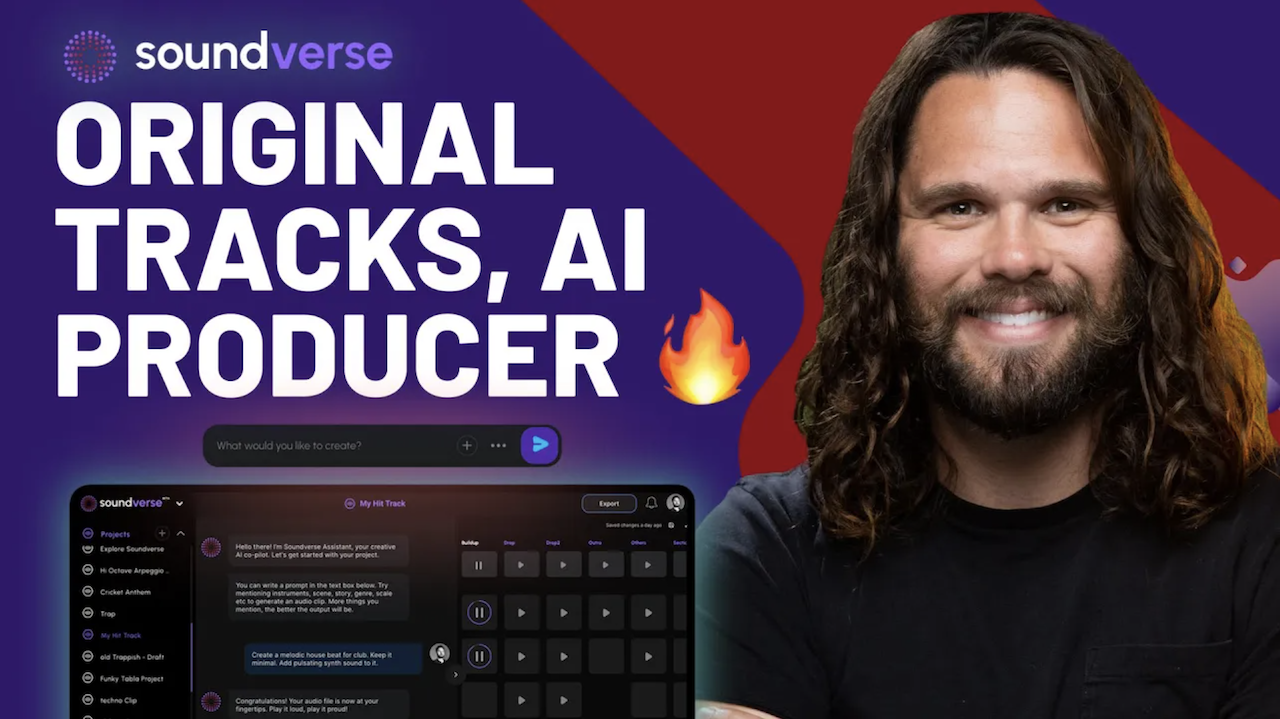
Here’s another long walkthrough of how to use Soundverse AI.
Text Guide
- To know more about AI Magic Tools, check here.
- To know more about Soundverse Assistant, check here.
- To know more about Arrangement Studio, check here.
Soundverse is an AI Assistant that allows content creators and music makers to create original content in a flash using Generative AI. With the help of Soundverse Assistant and AI Magic Tools, our users get an unfair advantage over other creators to create audio and music content quickly, easily and cheaply. Soundverse Assistant is your ultimate music companion. You simply speak to the assistant to get your stuff done. The more you speak to it, the more it starts understanding you and your goals. AI Magic Tools help convert your creative dreams into tangible music and audio. Use AI Magic Tools such as text to music, stem separation, or lyrics generation to realise your content dreams faster. Soundverse is here to take music production to the next level. We're not just a digital audio workstation (DAW) competing with Ableton or Logic, we're building a completely new paradigm of easy and conversational content creation.
TikTok: https://www.tiktok.com/@soundverse.ai
Twitter: https://twitter.com/soundverse_ai
Instagram: https://www.instagram.com/soundverse.ai
LinkedIn: https://www.linkedin.com/company/soundverseai
Youtube: https://www.youtube.com/@SoundverseAI
Facebook: https://www.facebook.com/profile.php?id=100095674445607
Join Soundverse for Free and make Viral AI Music

We are constantly building more product experiences. Keep checking our Blog to stay updated about them!
Image Steps: []