Residual Rights in AI Music Licensing Deals: What They Mean in 2026
Explore how AI music licensing reshapes residual rights and ongoing royalties in 2026.
Residual Rights in AI Music Licensing Deals
As AI-generated music becomes foundational to the modern entertainment ecosystem, residual rights in AI music licensing have become a core concern for artists, producers, and rights managers. In 2026, discussions around ethical data usage, attribution, and long-term royalties define how creators, labels, and legal teams approach AI-based creative output. This deep-dive explores what residual rights mean in an AI-driven market—and how transparent licensing structures can sustain long-term value.
What are residual rights in AI music licensing?
Residual rights refer to the continuing ownership benefits that rights-holders retain after their original works are licensed for use in AI model training or generation. In traditional music industry contexts, residuals often appear as recurring royalties from synchronization deals, streaming plays, or public performances. With AI music licensing, however, residuals extend into new territories: dataset contributions, derivative generation, and influence-based outputs.
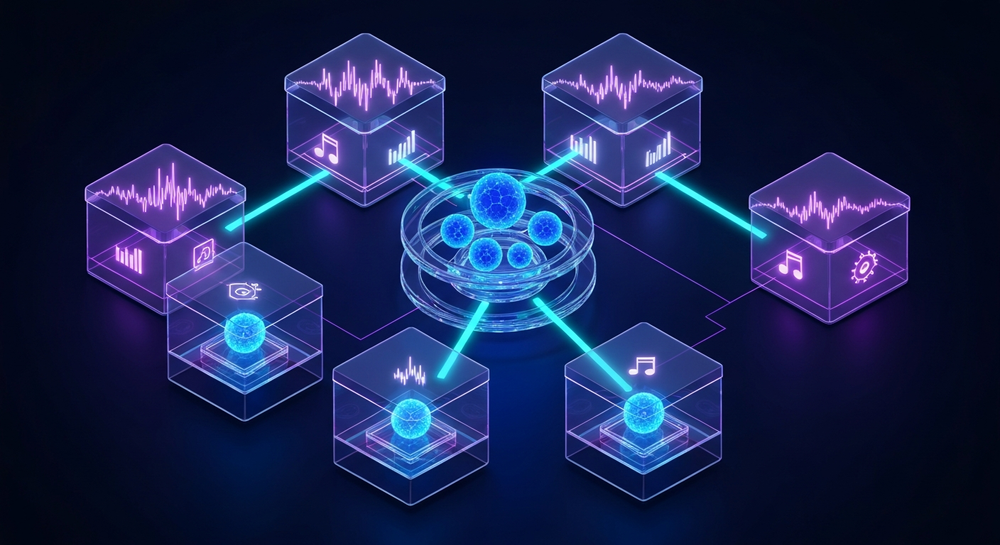
In this context, content owners need to understand how their material contributes to an AI’s output and how compensation persists when their sonic fingerprint resurfaces in generated tracks.
How does AI music licensing differ from traditional licensing agreements?
Conventional licensing agreements manage defined uses—a film cue, an advertisement jingle, or a streaming allowance. In AI music licensing, terms are more fluid because usage isn’t restricted to a single instance. AI models learn from vast datasets, meaning a producer’s influence can persist indefinitely within generated compositions.

That creates a dual challenge: establishing clear consent parameters and designing fair recurring compensation mechanisms. Music professionals now negotiate not just for one-time fees but for ongoing royalties tied to generation frequency, influence percentage, or attribution indexes.
Why are ongoing royalties vital in 2026’s AI economy?
By 2026, ongoing royalties have become a benchmark for ethical AI participation. Rights-holders no longer view AI dataset contributions as static transactions—they demand visibility into how often their assets contribute to new outputs.
Platforms that offer recurring, transparent payment structures remain attractive to labels and independent creators alike. They promote sustainability, rewarding those whose creative DNA supports large-scale innovation. Without these royalty structures, participation could quickly degrade into exploitation.
For context, many AI creators once faced confusion over derivative protections back in 2024 and 2025. The industry had limited infrastructure for tracking source influences. The evolution toward influence-based royalty schemes is what distinguishes 2026 as a year of maturity in licensing standards.
What are long-term rights, and how do they apply to AI music generation?
Long-term rights encompass future economic and moral claims attached to licensed content. In AI systems, long-term rights mean the ability to receive royalties for generations created months or even years after initial licensing.
Imagine a songwriter uploading stems for AI training in 2024. In 2026, if 200 new compositions are derived from that sonic material, the songwriter still earns compensation thanks to protected long-term rights clauses. These frameworks recognize the ongoing creative lineage between contributor and derivative data.
Legal teams and rights managers now prioritize explicit language in contracts, outlining time horizons for compensation, attribution specifications, and audit capabilities.
What licensing terms ensure transparency and fairness in AI music deals?
Modern licensing terms outline several essential elements:
- Attribution requirements: Ensuring that every generated audio instance acknowledges its influencing datasets.
- Data usage transparency: Rights-holders need clear reporting on how, where, and how often their data contributes.
- Tiered royalty structures: Compensation scales based on usage frequency, output reach, or generation complexity.
- Opt-in frameworks: Rights-holders maintain agency by selecting where and how their music may be used.
These elements empower creators to stay informed and fairly compensated. They also reduce the ethical concerns of opaque "black-box" AI models, a major issue seen in 2025 when models lacked clear provenance tracking.
How to make AI music licensing fair with Soundverse Content Partner Program
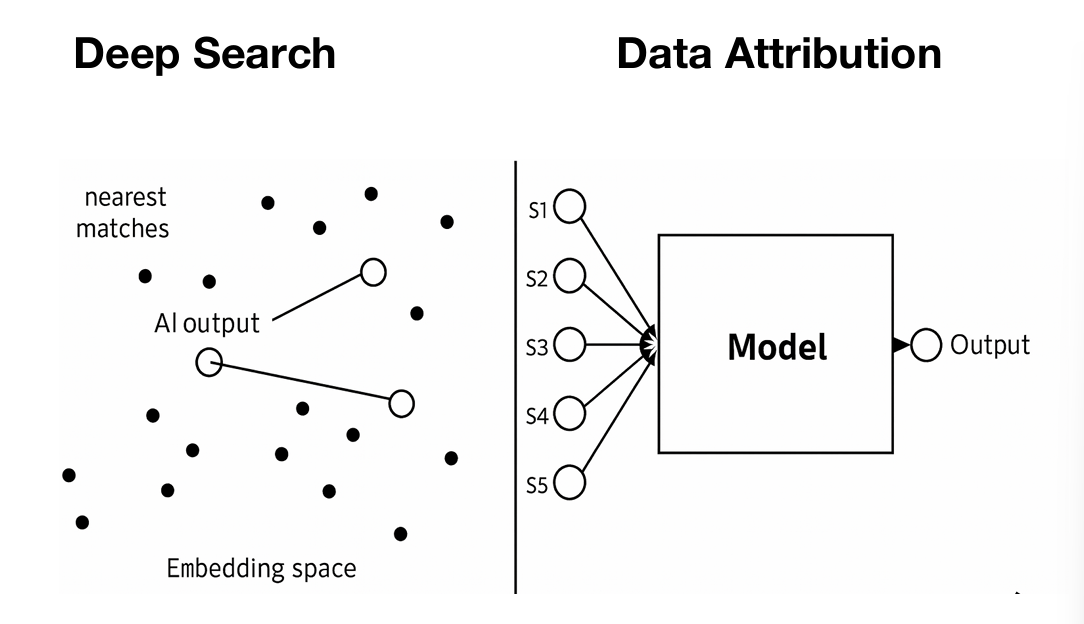
Soundverse’s Content Partner Program addresses these challenges with an opt-in licensing framework specifically designed for rights-holders who contribute audio for AI training. In exchange, they receive recurring, usage-based royalties linked to attribution metrics.
The program’s core capabilities include:
- Influence-Based Payouts: Compensation occurs per generation, tying royalty value directly to usage influence.
- Tiered Licensing (Tiers 1–6): Rights-holders can customize participation depth—from limited usage to full training integrations.
- Real-Time Dashboards: Participants view earnings asynchronously in a transparent interface designed for clarity, not live previewing.
- Transparency Reports: Detailed data usage logs show precisely how contributed audio informed generated outputs.
By making attribution measurable and payout mechanisms traceable, Soundverse’s framework operationalizes the principles of ongoing royalties and long-term rights. It aligns ethical AI training with real-world revenue generation.
Soundverse’s program also integrates with Soundverse Trace, an AI music trust layer enabling deep search and rights protection across the entire lifecycle—from dataset creation to track export. This complements the Ethical AI Music Framework, a six-stage system ensuring consent and recurring compensation. Together, these systems represent the industry’s most comprehensive royalty verification chain.
Professionals exploring new licensing avenues can look into related innovations from Soundverse—such as AI music generation tools, stem separation technologies, and insights on emerging music industry trends. These resources contextualize how sound data flows through modern contract ecosystems. For a deeper dive, watch our Soundverse Tutorial Series - 10. Make Deep House Music or Soundverse Tutorial Series - 9. How to Make Music.
How can rights-holders maximize their residual rights?
To optimize residual rights in AI licensing deals, stakeholders should:
- Negotiate transparent data usage clauses linked to attribution metadata.
- Monitor earnings through platforms offering systematic reporting.
- Incorporate audit trails for future verification of influence-based royalties.
- Participate only in frameworks that align with ethical AI principles.
Transparent systems like Soundverse’s opt-in program safeguard both economic and moral rights, ensuring participation enhances—not diminishes—creative ownership.
What lies ahead for AI music licensing in 2026 and beyond?
As advanced generative systems continue shaping film, television, and advertising soundtracks, residual rights evolve into industry-standard terminology. By late 2026, multi-party attribution models and blockchain-verified reporting are expected to become common in major licensing networks.
Industry professionals predict that by securing long-term rights today, creators will find themselves well-positioned for cross-platform royalty expansion—especially when AI models become interoperable across content providers. Ongoing royalties thus serve not just as ethical safeguards but as scalable business assets.
In an environment where music training data shapes billions of AI sound outputs annually, fair licensing terms and transparent tracking define the sustainability of creative trade.
Start Creating Licensed AI Music Now
Explore Soundverse’s AI music tools to generate, license, and share your music effortlessly while keeping your rights protected. Experience the next era of music creation with full control over your content.
Related Articles
- How AI-Generated Music Is Transforming the Music Industry — Discover how AI innovations are reshaping music creation, production, and rights ownership across the global music landscape.
- Navigating the World of Royalty-Free and Copyright-Free Music Using Soundverse AI — Understand the difference between royalty-free and copyright-free music and how creators can legally use AI-generated sound.
- Copyright-Free vs. Royalty-Free Music: What Creators Should Know — Learn the key distinctions between copyright-free and royalty-free licenses to make smart decisions in music distribution.
- The Role of AI Music in Film and Television — Explore how AI-powered music generation impacts licensing deals and soundtrack creation for film and TV productions.
Here's how to make AI Music with Soundverse
Video Guide
Here’s another long walkthrough of how to use Soundverse AI.
Text Guide
- To know more about AI Magic Tools, check here.
- To know more about Soundverse Assistant, check here.
- To know more about Arrangement Studio, check here.
Soundverse is an AI Assistant that allows content creators and music makers to create original content in a flash using Generative AI. With the help of Soundverse Assistant and AI Magic Tools, our users get an unfair advantage over other creators to create audio and music content quickly, easily and cheaply. Soundverse Assistant is your ultimate music companion. You simply speak to the assistant to get your stuff done. The more you speak to it, the more it starts understanding you and your goals. AI Magic Tools help convert your creative dreams into tangible music and audio. Use AI Magic Tools such as text to music, stem separation, or lyrics generation to realise your content dreams faster. Soundverse is here to take music production to the next level. We're not just a digital audio workstation (DAW) competing with Ableton or Logic, we're building a completely new paradigm of easy and conversational content creation.
TikTok: https://www.tiktok.com/@soundverse.ai
Twitter: https://twitter.com/soundverse_ai
Instagram: https://www.instagram.com/soundverse.ai
LinkedIn: https://www.linkedin.com/company/soundverseai
Youtube: https://www.youtube.com/@SoundverseAI
Facebook: https://www.facebook.com/profile.php?id=100095674445607
Join Soundverse for Free and make Viral AI Music
We are constantly building more product experiences. Keep checking our Blog to stay updated about them!
Image Steps: []