Open-Ear vs Bone Conduction Earbuds Explained: Which Is Right for You in 2026?
Discover the difference between open-ear and bone conduction earbuds and how they shape 2026's audio technology.
Open-Ear vs Bone Conduction Earbuds Explained
In recent years, earbud technology has evolved dramatically, creating new ways for listeners to experience music, podcasts, and calls. By 2026, two cutting-edge designs — open-ear and bone conduction earbuds — have become leading contenders for users seeking comfort and awareness in their listening experience. But when comparing open-ear vs bone conduction earbuds, which design truly fits your lifestyle and listening preferences?
What are open-ear earbuds and how do they work?
Open-ear earbuds use small speakers positioned near, but not inside, the ear canal. Instead of sealing off the ear like traditional in-ear buds, open-ear models allow ambient sound to mix with playback audio. This design creates a sense of openness that’s ideal for runners, cyclists, and commuters who need to stay aware of their surroundings.

Their core appeal lies in comfort and safety. With no physical seal pressing into the ear canal, open-ear earbuds often reduce fatigue during long listening sessions. Air circulation keeps the ears cool, and ambient awareness helps maintain communication in busy environments.
In terms of audio comparison, open-ear headphones deliver a balanced sound with clear mids and highs, though their bass response can be slightly softer due to the open design. Manufacturers frequently counteract this with specialized tuning, but users who crave heavy bass may notice the difference compared to closed designs.
How do bone conduction earbuds transmit sound?
Bone conduction earbuds take a unique approach to audio delivery. Instead of pushing soundwaves through the air into the ear canal, they send vibrations through the bones of the skull directly to the inner ear (specifically, the cochlea). This means the eardrum isn’t involved in the listening process, leaving the ear open to environmental sounds.

Bone conduction technology has historically been used in medical and military applications, making its way into consumer audio in the early 2020s and achieving mainstream popularity by 2025. In 2026, bone conduction earbuds are widely recognized for their utility among athletes and users with hearing impairments or sensitivities.
The key advantage is situational awareness. You can listen to your favorite tracks or podcasts while still hearing traffic, conversations, or nature sounds. It’s an entirely different listening method compared to both in-ear and open-ear technologies, as described in Bone Conduction vs. Open-Ear Earbuds: Which Is Right for You?
However, bone conduction earbuds have limitations. While mid-range clarity is strong, bass frequencies are often lighter. Vibrations can sometimes cause slight tickling sensations, and for audiophiles seeking rich sound detail, conventional earbuds might still provide a fuller range, as noted by Air Conduction vs. Bone Conduction - Bose.
Open-ear vs bone conduction earbuds: a detailed audio comparison
When choosing between open-ear and bone conduction earbuds in 2026, the decision comes down to how you engage with your environment and your preferred listening method.
Sound Quality:
Open-ear earbuds typically deliver wider stereo imaging with natural airiness. Bone conduction models prioritize clarity for speech and upper frequencies, making them excellent for podcasts and calls.
Comfort and Fit:
Open-ear designs rest gently near the ear and offer excellent comfort, especially for users prone to ear fatigue. Bone conduction models stay in place through gentle pressure on the cheekbones or temples, which can feel unusual at first but stable during workouts.
Situational Awareness:
Both designs excel in staying connected to your surroundings, but bone conduction is unmatched for total environmental openness since the ear remains entirely uncovered.
Battery Life and Connectivity:
Modern 2026 models from major brands integrate efficient Bluetooth chips and extended battery capacities. Open-ear earbuds often boast longer playback times because their mini speakers consume less power. Bone conduction devices require slightly higher energy to drive vibrations effectively.
Ideal Use Case:
- Open-ear: daily commuting, office usage, multitasking.
- Bone conduction: outdoor training, safety-critical work, or individuals with partial hearing loss.
For everyday tech consumers and audio enthusiasts comparing open-ear vs bone conduction earbuds, both approaches prove that earbud technology now prioritizes holistic listening — merging comfort, safety, and personal immersion.
What are the current trends in earbud technology in 2026?
In 2026, wearable audio continues its shift toward multifunctionality and accessibility. Open-ear and bone conduction earbuds now integrate AI-driven noise management, voice assistants, and adaptive sound routing to adjust based on environmental noise levels.
This innovation aligns closely with music technology advancement. Platforms like Soundverse have demonstrated how intelligent audio analysis tools enhance creation and enjoyment. As seen in related insights from music industry trends and modern creator workflows, listeners demand smarter and more interactive sound experiences.
Additionally, the rise of hybrid models — combining open-air drivers with bone conduction panels — signals the next phase of evolution. These hybrid earbuds aim to balance musical immersion and total situational awareness, marking 2026 as the year where boundaries between traditional and experimental audio designs blur.
How to make earbud comparisons with Soundverse Section Analysis
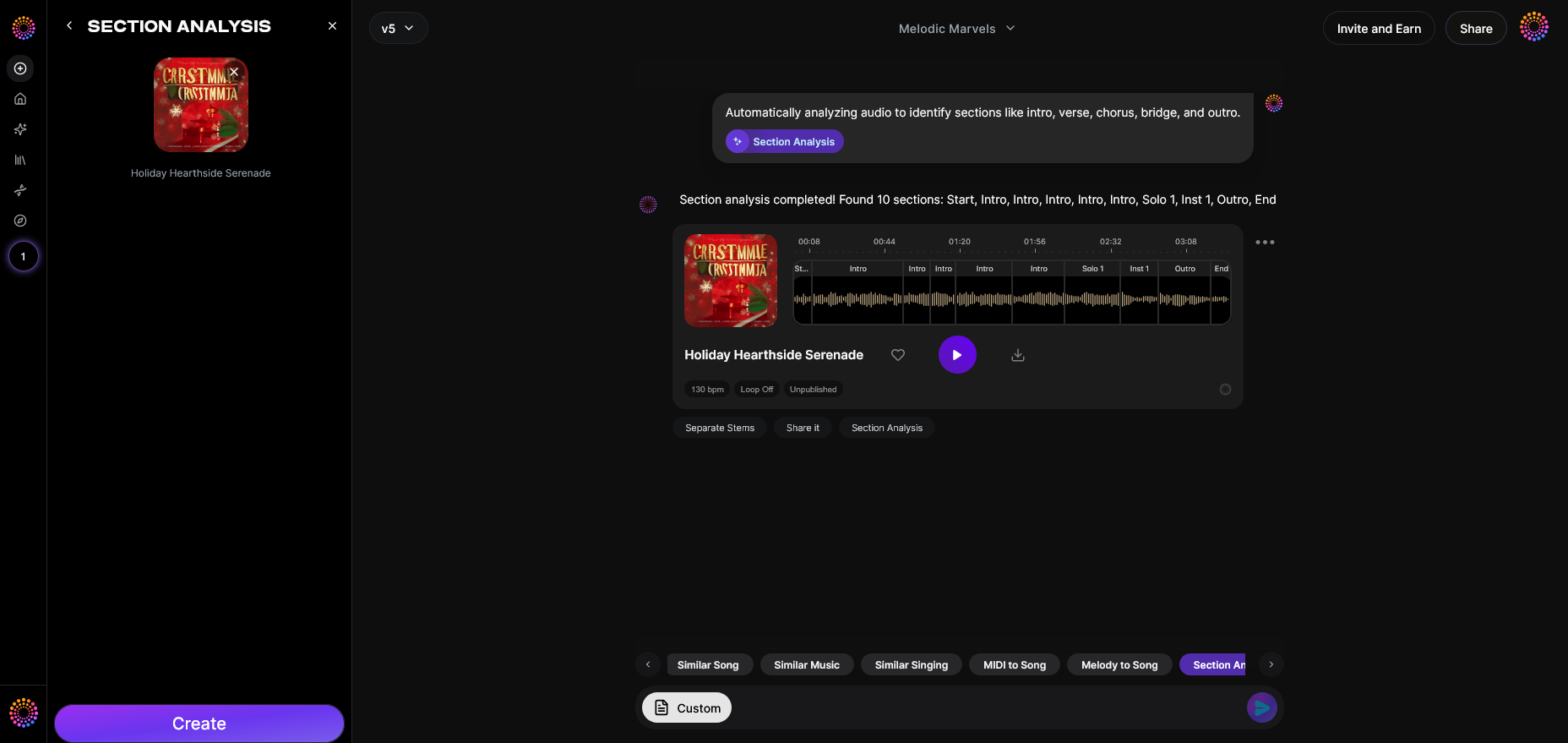
Soundverse’s Section Analysis feature supports creators who want precise insight into audio structure. While open-ear vs bone conduction earbuds discuss hardware differences, Soundverse’s innovation focuses on how listeners and creators can interact effectively with compositions.
What does Section Analysis do?
It automatically detects and labels song sections such as Intro, Verse, Chorus, Bridge, and Outro, complete with exact timestamps. The result is a visual roadmap for music editing and remixing. The system empowers users to understand where dynamic shifts occur in their tracks — perfect for assessing playback across different listening methods. For a deeper dive, watch our guide on creating Deep House music.
Key Capabilities:
- Automated structure detection through AI algorithms.
- Visual roadmap generation for intuitive editing.
- Timestamp export for efficient remixing or DJ cue-setting.
Section Analysis serves multiple use cases: learning song structure for covers, preparing tracks for syncing to visuals, or establishing cue points for live performances. Whether your audience enjoys music through open-ear or bone conduction earbuds, understanding the sectional rhythm and timing helps tailor the sonic experience.
For deeper creative applications, explore related Soundverse tools such as Soundverse AI Magic Tools or the Stem Separation AI Magic Tool, which combine seamlessly with Section Analysis to refine production workflows.
Why earbud listening methods matter for creators and listeners
Music producers today must test their mixes across different playback systems. The comparison of open-ear vs bone conduction earbuds is especially relevant for mix engineers adapting content to diverse acoustics.
Creators using AI platforms like Soundverse can export exact section timestamps, allowing targeted sound adjustments that complement earbud technology. For instance, soft bass transitions can be optimized to suit bone conduction’s vibration characteristics, while spacious vocal layers enhance the open-ear listening field.
This awareness leads to higher quality compositions that feel alive, irrespective of listening hardware. With Section Analysis, creators gain granular control over how their music interacts with every audience’s device.
Start Creating with Soundverse AI Today
Turn your musical ideas into reality using Soundverse’s AI-powered tools. Effortlessly generate, mix, and customize tracks that match your creative vision and stand out in any genre.
Get Started Free
Related Articles:
- The Role of AI Music in Film and Television: Explore how AI-generated music is reshaping soundtracks and elevating storytelling across visual media.
- How AI-Generated Music Is Transforming the Music Industry: Learn how AI tools are revolutionizing everything from composition to production in today’s music scene.
- Enhancing YouTube Content with Royalty-Free and Copyright-Free Music Using Soundverse AI: Discover how Soundverse enables creators to elevate their videos with legally safe and high-quality music.
- Navigating the World of Royalty-Free and Copyright-Free Music Using Soundverse AI: Get a clear understanding of licensing and how AI tools simplify music sourcing for creators.
Here's how to make AI Music with Soundverse
Video Guide

Here’s another long walkthrough of how to use Soundverse AI.
Text Guide
- To know more about AI Magic Tools, check here.
- To know more about Soundverse Assistant, check here.
- To know more about Arrangement Studio, check here.
Soundverse is an AI Assistant that allows content creators and music makers to create original content in a flash using Generative AI. With the help of Soundverse Assistant and AI Magic Tools, our users get an unfair advantage over other creators to create audio and music content quickly, easily and cheaply. Soundverse Assistant is your ultimate music companion. You simply speak to the assistant to get your stuff done. The more you speak to it, the more it starts understanding you and your goals. AI Magic Tools help convert your creative dreams into tangible music and audio. Use AI Magic Tools such as text to music, stem separation, or lyrics generation to realise your content dreams faster. Soundverse is here to take music production to the next level. We're not just a digital audio workstation (DAW) competing with Ableton or Logic, we're building a completely new paradigm of easy and conversational content creation.
TikTok: https://www.tiktok.com/@soundverse.ai
Twitter: https://twitter.com/soundverse_ai
Instagram: https://www.instagram.com/soundverse.ai
LinkedIn: https://www.linkedin.com/company/soundverseai
Youtube: https://www.youtube.com/@SoundverseAI
Facebook: https://www.facebook.com/profile.php?id=100095674445607
Join Soundverse for Free and make Viral AI Music

We are constantly building more product experiences. Keep checking our Blog to stay updated about them!