Is 'Sad' Considered a Music Genre?
Explore whether 'sad' qualifies as a music genre in 2026, its emotional impact, and how you can create melancholic tracks with AI.
Is 'Sad' Considered a Music Genre?
Sadness has long been one of music’s most powerful emotional anchors, shaping how we connect to songs that express vulnerability and depth. But as emotional expression increasingly defines modern soundscapes, one question continues to spark debate among music enthusiasts and playlist curators alike: Is 'sad' considered a music genre?
What defines a music genre?
Music genres traditionally categorize songs based on shared stylistic traits — rhythm, instrumentation, vocal style, and cultural context. Genres like pop, jazz, EDM, classical, and hip-hop are defined by technical and historical factors as much as emotional ones. In contrast, mood describes how a song feels — happy, calm, intense, reflective, or sad.
In 2026, with the rise of AI-driven streaming recommendations and mood-based playlists, the boundaries between genre and mood have blurred. This has led platforms such as Spotify and Apple Music to classify songs not just by structure but by atmosphere, resulting in tags like 'chill', 'romantic', or 'sad'.

Can sadness alone define a genre?
A genre implies consistent musical elements. Sad songs, however, appear across countless styles. You’ll find melancholy ballads in pop, haunting compositions in classical, introspective verses in hip-hop, and mournful melodies in folk.
What links them isn’t a shared technical foundation, but emotional tone. This emotional characteristic makes 'sad' closer to a descriptor than a genre. It’s comparable to calling something 'dark' or 'dreamy' — adjectives that describe mood but span multiple genres.
However, mood-based tagging has become so dominant in 2026 that many curators treat 'sad' as a functional genre within playlists and content classification. When users search for 'sad music', streaming algorithms surface emotionally heavy compositions regardless of genre.
How playlists have redefined the concept of 'sad music genre'
The idea of the 'sad music genre' gained traction during the streaming boom of the early 2020s. By 2026, mood-based playlists are central to personal listening habits. People often select tracks based on emotion first, genre second.
Sad playlists combine slow tempos, minor chords, and sparse instrumentation to evoke emotional realism — a characteristic that transcends pop, indie, R&B, and lo-fi styles.
Popular examples of sad music aesthetics
- Minimalist lo-fi beats: Soft textures and subdued melodies give a reflective, nostalgic vibe.
- Ambient sad soundscapes: Used in meditation or cinematic background music.
- Acoustic storytelling: Folk or singer-songwriter tracks that build emotional intimacy through lyrics.
- Cinematic composition: Orchestral pieces emphasizing suspense and loss.
Even though these examples belong to separate genres, they fall under the collective umbrella of the 'sad music experience'. This emotional cohesion is why many listeners refer to sad tracks as if they belong to their own genre. You can also watch our Soundverse tutorial on how to make music to explore emotional sound generation techniques.
What does 'sad songs meaning' actually represent?
Sad songs help listeners process emotions — grief, heartbreak, loneliness, or nostalgia. Their meaning lies in emotional authenticity rather than musical complexity. Studies and cultural discussions have shown that listening to sad songs can be cathartic, allowing reflection and comfort rather than despair. This aligns with findings in Sad Music Listening: What is it Good For?.
By 2026, AI curators and platforms have learned to recognize these emotional signatures through tonal analysis, lyrical sentiment, and tempo data. This allows services to label something as 'sad' even before human listeners decide it feels that way.
Why emotional music dominates 2026 playlists
Emotional music has become one of the leading categories of digital consumption. Gen Z and Generation Alpha listeners, in particular, favor personalized soundtracks that suit daily moods. Emotional filters, including 'sad', 'hopeful', and 'bittersweet', feature on nearly every streaming interface.
These trends extend into film, gaming, and advertising. Production teams increasingly use emotional music to match visual storytelling rather than focusing on traditional genre cues. This is where AI tools have proven transformative. Learn more in our Soundverse Tutorial Series - Explore Tab.
The blending of genres and moods in modern production
Musical crossovers now define the creative sphere. Artists blend indie instrumentation with electronic ambient tones or classical strings with R&B rhythms to evoke complex feelings. These hybrid approaches result in songs that are simultaneously pop and sad, or electronic yet melancholic. Articles such as The music subgenre sadcore finds a new life with a new generation highlight how artists have reinvented emotional genres.
Because 'sad' influences so many musical identities, some experts in 2026 argue it might be better described as a "meta-genre" — a classification that transcends stylistic boundaries.
How to make sad or melancholic music with Soundverse AI Music Generator
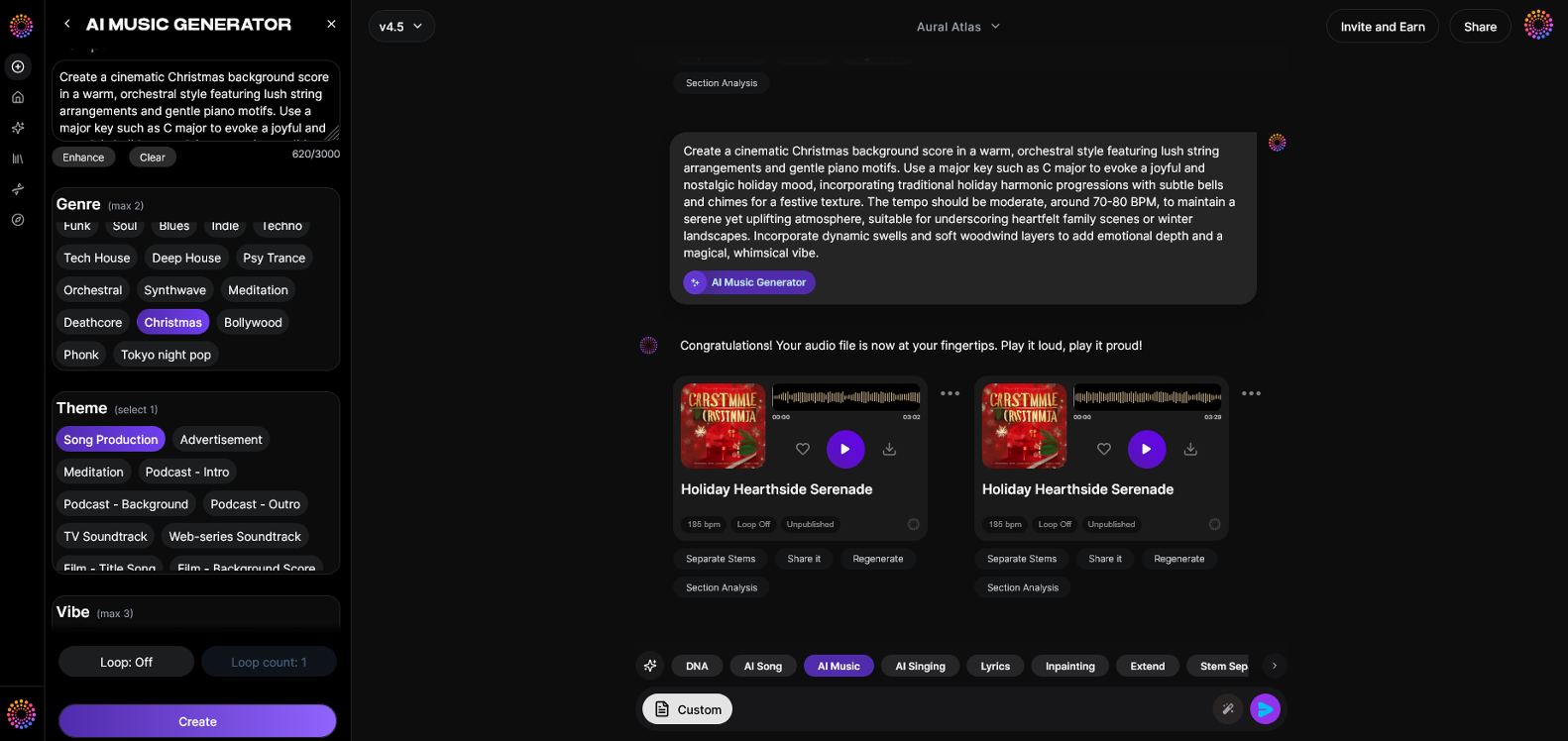
Now that you understand what the sad music genre represents, here’s how you can create emotionally resonant, melancholic instrumentals using Soundverse’s AI Music Generator.
Soundverse allows you to create fully produced instrumental music from a simple text description. It specializes in generating atmospheric, looping tracks suitable for emotional storytelling.
Key features you can use for creating sad music:
- Text-to-Music Function: Type a prompt like "slow, emotional piano melody with rain ambiance" to instantly get a full instrumental track.
- Loop Mode: Perfect for creating seamless background music for videos or meditative playlists.
- Detailed Genre/Mood Control: Specify tone—melancholic, reflective, or haunting—and adjust instruments accordingly.
- Model Versions (V4 and V5): Select the AI model that fits your desired production style or realism level.
Common uses include creating emotional video scores, peaceful game soundtracks, or introspective background loops for storytelling content.
For creators seeking inspiration, Soundverse also integrates with tools like the AI Lyrics Writer (for emotional lyric generation), the AI Song Generator (for full song creation with vocals), and the Similar Music Generator (for producing new tracks inspired by any reference song).
You can explore related creative methods in these guides: How to create healing meditation music with Soundverse AI, How AI-generated music is transforming the music industry, Generate AI Music with Soundverse Text-to-Music, and Soundverse AI Magic Tools.
Why Soundverse fits mood-based music creation in 2026
In 2026’s landscape of music industry trends, creators no longer define tracks by rigid genres. Instead, they design sound based on emotional response. Soundverse’s AI Music Generator enables this shift — empowering users to produce authentic, mood-driven compositions without needing a multi-instrument studio.
By focusing on emotion-first design, Soundverse is helping independent musicians and video creators capture audiences who respond to genuine feeling rather than category labels.
Create Emotionally Powerful Music with Soundverse AI
Capture the essence of 'sad' or any mood effortlessly with Soundverse’s AI-powered text-to-music features. Turn feelings into soundscapes that resonate deeply with your audience.
Related Articles
- Most Popular Music Genres: Discover how different music genres have evolved and what defines their emotional impact on listeners.
- Generate AI Music with Soundverse Text-to-Music: Explore how to transform text into stunning musical compositions using Soundverse’s AI generator.
- Now Generate Music with Filters Such as Genre, Theme, Instruments, or Even Vibe: Learn to fine-tune your AI-generated tracks using genre and emotion filters to shape the perfect sound.
- The Role of AI Music in Film and Television: See how AI-driven emotional music, including 'sad' tones, enhances storytelling in media productions.
Here's how to make AI Music with Soundverse
Video Guide

Here’s another long walkthrough of how to use Soundverse AI.
Text Guide
- To know more about AI Magic Tools, check here.
- To know more about Soundverse Assistant, check here.
- To know more about Arrangement Studio, check here.
Soundverse is an AI Assistant that allows content creators and music makers to create original content in a flash using Generative AI.
With the help of Soundverse Assistant and AI Magic Tools, our users get an unfair advantage over other creators to create audio and music content quickly, easily and cheaply.
Soundverse Assistant is your ultimate music companion. You simply speak to the assistant to get your stuff done. The more you speak to it, the more it starts understanding you and your goals.
AI Magic Tools help convert your creative dreams into tangible music and audio. Use AI Magic Tools such as text to music, stem separation, or lyrics generation to realise your content dreams faster.
Soundverse is here to take music production to the next level. We're not just a digital audio workstation (DAW) competing with Ableton or Logic, we're building a completely new paradigm of easy and conversational content creation.
TikTok: https://www.tiktok.com/@soundverse.ai Twitter: https://twitter.com/soundverse_ai Instagram: https://www.instagram.com/soundverse.ai LinkedIn: https://www.linkedin.com/company/soundverseai Youtube: https://www.youtube.com/@SoundverseAI Facebook: https://www.facebook.com/profile.php?id=100095674445607
Join Soundverse for Free and make Viral AI Music

We are constantly building more product experiences. Keep checking our Blog to stay updated about them!