Is Banned Vinyl AI Legit or a Scam?
Discover whether Banned Vinyl AI is legitimate or a scam in 2026. Understand how Soundverse ensures copyright-safe AI music generation.
Is Banned Vinyl AI Legit or a Scam?
AI-generated music has moved from curiosity to mainstream in 2026. Platforms allow users to create full-length tracks from text prompts, mix voices, and produce professional-quality audio without traditional instruments. But as tools grow in number and complexity, one name has drawn attention for controversial reasons—Banned Vinyl AI. Musicians and producers are asking, “Is Banned Vinyl AI legit or a scam?” This article breaks down what’s known, how it fits into the broader AI music landscape, and where ethical alternatives like Soundverse take a leadership role.
What is Banned Vinyl AI?
Banned Vinyl AI claims to be an artificial intelligence system that produces music tracks from simple input—genre, tempo, or short written prompts. It markets itself as a creative shortcut for producers and independent artists who want to skip traditional recording. On paper, it resembles other AI music tools such as Mubert, Soundraw, or Aiva, but in online forums from late 2025 into early 2026, users began questioning whether Banned Vinyl AI actually operates legitimately.

Reports suggest that Banned Vinyl AI may have trained its models using copyrighted audio without attribution. While the company presents itself as a generative service like others, musicians noticed uncanny resemblance between generated songs and real commercial releases. Producers identified melodic fragments and vocal lines that seemed traced from known artists, raising concerns about copyright infringement and rights authenticity.
Why Are Musicians Concerned About AI Legitimacy in 2026?
AI-generated music exploded in popularity between 2024 and 2025 thanks to accessible tools that anyone could use. However, by 2026, scrutiny has shifted toward training data transparency. Models built on unlicensed or scraped music datasets risk producing derivative works that violate copyright law.

Musicians are worried about three main issues:
- Copyright Risks: AI systems that generate based on protected works transfer potential liability to end-users if they publish or monetize the output.
- Unclear Attribution: Without ethics-compliant traceability, there’s no way to know which artist’s data influenced a result.
- Royalty Gaps: If the original creators are not compensated, the system disrupts music economics by building on unpaid creative labor.
Banned Vinyl AI’s marketing has not provided publicly verifiable data provenance statements or rights transparency documents. That’s why many music producers are viewing it with skepticism.
What Are AI Music Tools Supposed to Provide?
A legitimate AI music platform should meet certain standards that define trust, legality, and accountability. In 2026, the core expectations are:
- Transparent Dataset Attribution: Musical training data should be logged with traceable metadata.
- Rights Compliance: The system should avoid generating copyrighted material unless licensed for reproduction.
- Watermarked Output: Finished tracks should contain identification tags confirming AI generation.
- License Management: End-users should receive proper metadata allowing legal export and distribution.
These trust and trace functions ensure that AI assists creation ethically rather than copying existing material. Industry watchers have agreed this framework is essential to protect both human creators and generative producers.
What Do Users Say in Banned Vinyl Reviews?
A quick scan of online discussion boards, Reddit communities, and review threads shows divided opinions. Some users commend Banned Vinyl AI for creative speed and accessibility; others criticize its opacity and inconsistent output. Common themes found in banned vinyl reviews include:
- Tracks occasionally mirror recognizable melodies from commercial songs.
- The licensing documents allegedly lack clear contact or disclosure for rights attribution.
- Refund policies are disputed, leading to speculation about broader authenticity.
For creators wondering about ethical boundaries, the video AI Music BANNED By Music Distributor - YouTube raises similar questions about originality and legality. These patterns drive the ongoing debate: Is Banned Vinyl AI simply unpolished, or is it evading responsibility under the label of innovation?
How Copyright and AI Intersect in Music Creation
AI copyright issues became headline news in 2024–2025 when several major artists sued unauthorized generative platforms for replicating vocal styles. The conversation in 2026 centers around ethical innovation—AI should enhance creativity while preserving rights integrity.
When an AI model consumes music datasets, it learns patterns, timbres, and melodies. If that data includes copyrighted works without permission, outputs may inadvertently echo original compositions. Copyright law doesn’t yet explicitly cover AI training at global scale, leaving creators in ambiguity. However, professional studios and tech companies are aligning under responsible frameworks like transparent training disclosures and licensed data ingestion. The Yale Law Journal essay "AI and the Sound of Music" also highlights how language-driven creativity bridges human and machine collaboration.
For musicians exploring AI generation responsibly, tools within Soundverse and similar ethical ecosystems provide safer pathways. Articles such as How to create AI-generated music and Music industry trends discuss how compliance models are being established today. For a deeper dive, watch our guide on creating Deep House music or Soundverse Tutorial: How to Make Music.
What Signs Suggest an AI Music Tool Might Be a Scam?
In evaluating Banned Vinyl AI or any similar system, musicians should look for these legitimacy indicators:
- Public Dataset Registry: Does the company disclose what material trained its model?
- Transparent Licensing Pages: Is there a visible copyright policy?
- Commercial Usage Rights: Do generated tracks include metadata clarifying ownership and permissible sharing?
- Traceable Payment or Royalty System: Are contributors compensated?
- Corporate Verifiability: Can you find business credentials, official contact, and privacy documentation?
If an AI music generator lacks these criteria, it may not be ethical or sustainable for professional use. Developers that conceal attribution or provide vague claims often risk reputational collapse once rights holders challenge them. Academic discussions such as Protecting Human Creativity in AI-Generated Music argue that failing to respect creator rights could jeopardize legitimacy.
The Impact of Artificial Intelligence in Music, 2026 Edition
Artificial intelligence in music continues reshaping composition, sound design, and performance. By 2026, high-fidelity text-to-music generation and hybrid co-production systems define the era. Still, ethical differentiation is key. Trustworthy brands emphasize attribution and consent, ensuring artists remain central to the musical economy.
Platforms like Soundverse, which introduced transparent features such as stem separation AI, focus on protecting musicians while maximizing creative potential. Alternative technology posts such as Best Suno alternative – Soundverse AI free sign-up underscore how accountability has become a competitive advantage. The YouTube video "The END of AI MUSIC!" discusses how regulatory bodies are shaping the copyright discussion for generated sound.
How to make copyright-safe AI music with Soundverse Soundverse Trace
Now that you understand the legitimacy concerns around platforms like Banned Vinyl AI, you can see how ethical generation is possible through Soundverse.
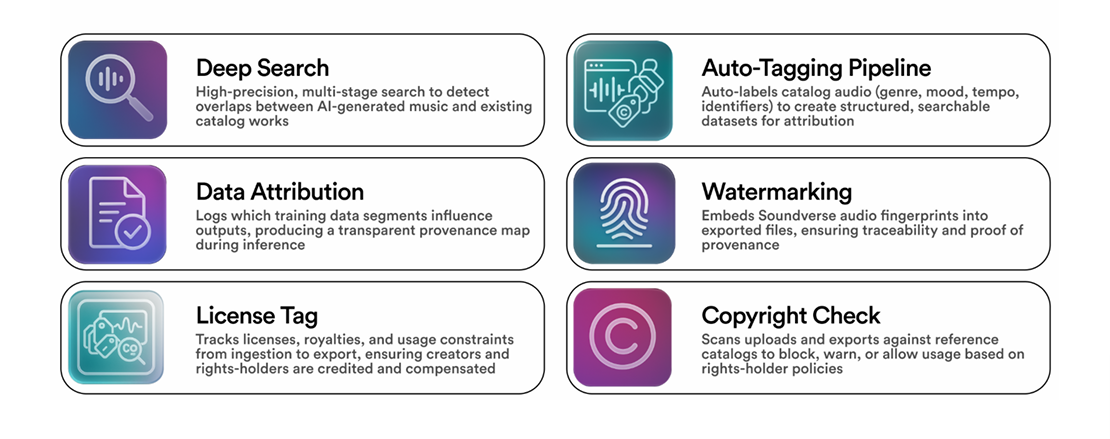
Soundverse Trace acts as a comprehensive trust layer across the entire AI music lifecycle—from dataset creation to export. This system embeds attribution, deep search, and rights protection, ensuring transparency unlike opaque models.
Core Capabilities of Soundverse Trace (2026 Edition):
- Deep Search: Performs high-precision scanning (1:1, 1:N) to detect overlaps and prevent derivative infringement.
- Data Attribution: Logs exactly which training samples influence each output, building a verifiable audit trail.
- Audio Watermarking: Adds robust, inaudible fingerprints identifying the track as AI-generated while preserving musical integrity.
- License Tagging: Maintains rights metadata through ingestion, creation, and export, safeguarding downstream distribution.
Primary Use Cases:
- Preventing copyright infringement in AI outputs.
- Tracking catalog usage for royalties.
- Verifying AI audio provenance.
- Automating takedowns or payouts for rights-holders.
Soundverse’s integration with its Ethical AI Music Framework and Content Partner Program further enhances fairness. Musicians can opt to license their audio for AI training and receive recurring royalties based on real usage—solving the transparency problem that has plagued less scrupulous competitors.
If you are researching platforms like Banned Vinyl AI and want to ensure authentic AI creativity, Soundverse Trace provides the legal and moral foundation. You can explore additional creative approaches in resources such as How to Create Country Music with Soundverse AI and AI Music Generator and Human Composers: A Future Together.
Start Creating with Soundverse AI Today
Experience next-level AI-powered music creation tailored to your style. Generate, remix, and publish tracks faster than ever—no studio required.
Try Soundverse Free
Related Articles
- Best Suno Alternative: Soundverse AI Free Sign-Up — Discover why Soundverse is the top free alternative to Suno for AI music generation and creative production.
- Best Udio Alternative: Soundverse AI Free Sign-Up — Explore how Soundverse AI compares to Udio and why creators are switching for faster, smarter music generation.
- Best Splash Pro Alternative: Soundverse AI Free Sign-Up — Find out how Soundverse AI revolutionizes creative workflows as the best free alternative to Splash Pro.
- Mubert Alternatives: Soundverse — Uncover how Soundverse competes with Mubert and offers creators more flexibility and quality in AI-generated music.
Here's how to make AI Music with Soundverse
Video Guide
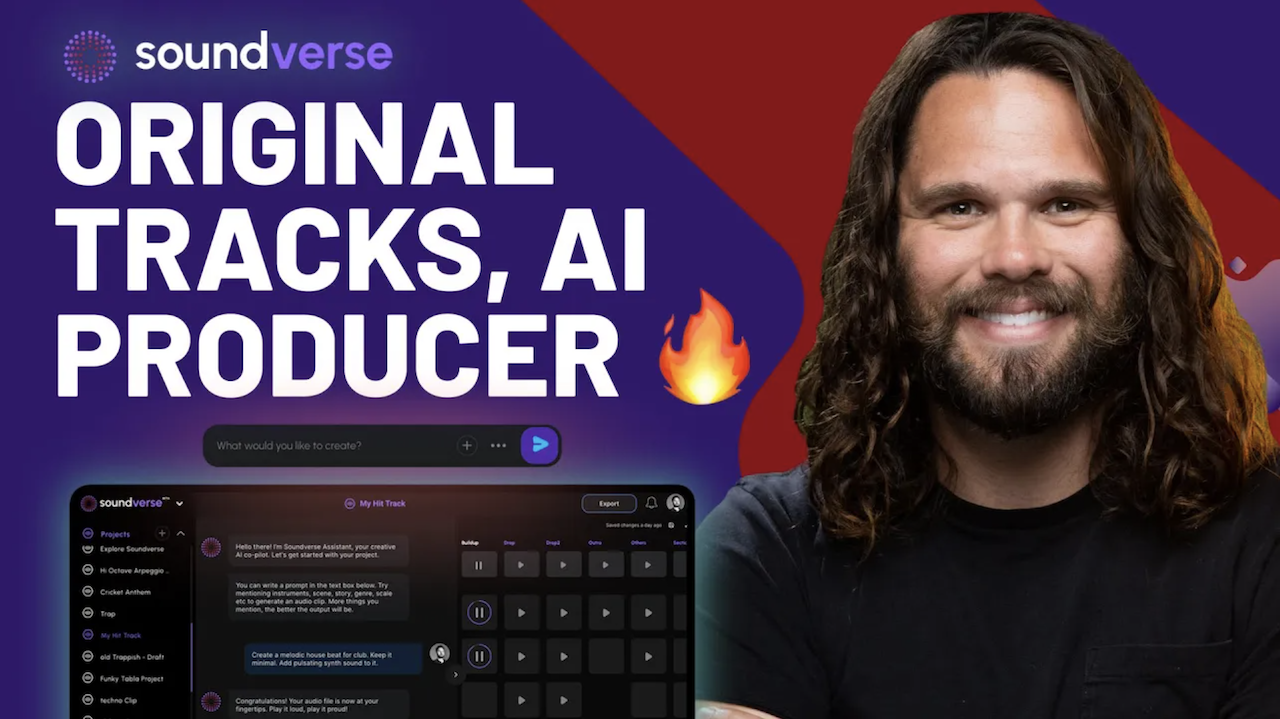
Here’s another long walkthrough of how to use Soundverse AI.
Text Guide
- To know more about AI Magic Tools, check here.
- To know more about Soundverse Assistant, check here.
- To know more about Arrangement Studio, check here.
Soundverse is an AI Assistant that allows content creators and music makers to create original content in a flash using Generative AI.
With the help of Soundverse Assistant and AI Magic Tools, our users get an unfair advantage over other creators to create audio and music content quickly, easily and cheaply.
Soundverse Assistant is your ultimate music companion. You simply speak to the assistant to get your stuff done. The more you speak to it, the more it starts understanding you and your goals.
AI Magic Tools help convert your creative dreams into tangible music and audio. Use AI Magic Tools such as text to music, stem separation, or lyrics generation to realise your content dreams faster.
Soundverse is here to take music production to the next level. We're not just a digital audio workstation (DAW) competing with Ableton or Logic, we're building a completely new paradigm of easy and conversational content creation.
TikTok: https://www.tiktok.com/@soundverse.ai
Twitter: https://twitter.com/soundverse_ai
Instagram: https://www.instagram.com/soundverse.ai
LinkedIn: https://www.linkedin.com/company/soundverseai
Youtube: https://www.youtube.com/@SoundverseAI
Facebook: https://www.facebook.com/profile.php?id=100095674445607
Join Soundverse for Free and make Viral AI Music

We are constantly building more product experiences. Keep checking our Blog to stay updated about them!