How to Write Effective Prompts for Suno Music: A Complete Guide for 2026
Learn advanced Suno music prompt creation tips and AI songwriting techniques in 2026.
How to Write Effective Prompts for Suno Music
Creating AI-generated music has evolved dramatically over the past few years, and in 2026, Suno AI stands at the forefront of this revolution. For musicians, producers, and content creators, mastering the art of Suno music prompt creation is the key to unlocking limitless creativity. Whether you’re crafting ambient tracks, cinematic soundscapes, or mood-driven instrumentals, effective prompts are your gateway to precision results.
Why Writing Good Prompts Matters in Suno Music Generation
The quality of a Suno AI output is directly tied to how well you communicate your intent through prompts. A vague description like “upbeat background music” might yield a generic result, while a detailed prompt such as “groovy funk beat with slap bass, electric piano, and bright percussion for a summer advertisement” gives the AI clear direction. In 2026, when AI models have become more nuanced, specificity is your secret weapon.
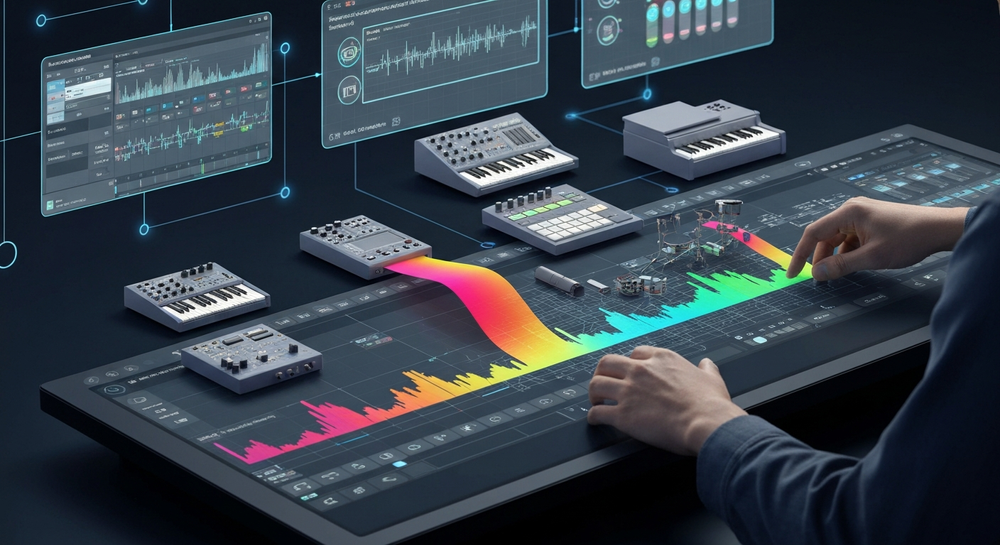
Good prompts help Suno AI interpret your musical vision, ensuring the generated track aligns with your project’s emotion, tempo, and genre. This attention to prompt detail saves time during post-processing and enhances the quality of AI-assisted creativity.
How to make Suno music prompts with Soundverse AI Music Generator
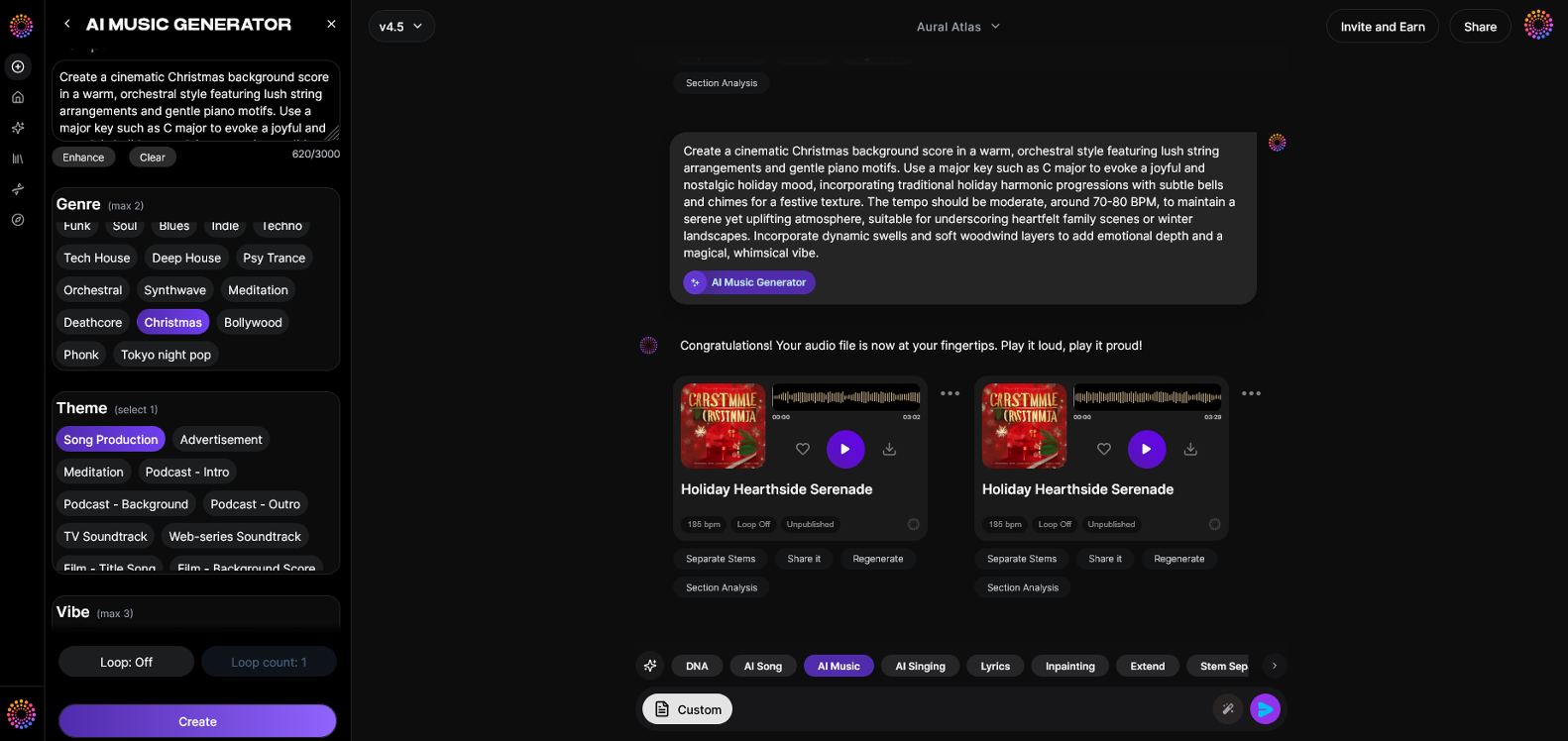
Before diving into writing prompts, let’s explore how Soundverse can help you streamline Suno music prompt creation.
Soundverse’s AI Music Generator is designed for text-to-music creation. It produces fully produced instrumental tracks from written descriptions, ideal for background music, game soundtracks, meditation pieces, and commercial scoring. With options for seamless Loop Mode and controls for genre, mood, and instrument selection, it provides unmatched flexibility for musicians who also use Suno AI.
Soundverse allows creators to input descriptive prompts specifying genre (like EDM, jazz, or lo-fi), instrumentation (synth pads, guitars, drums), and energy levels (calm, intense, uplifting). By fine-tuning these parameters, you can prototype your ideas before finalizing Suno-based compositions. Explore its full capabilities by referencing related guides such as generate AI music with Soundverse text to music, how to create healing meditation music with Soundverse AI, and AI music generator and human composers: a future together.
For a deeper dive, watch our guide on creating Deep House music, and another tutorial on making music with Soundverse.
Step 1: Feature Overview
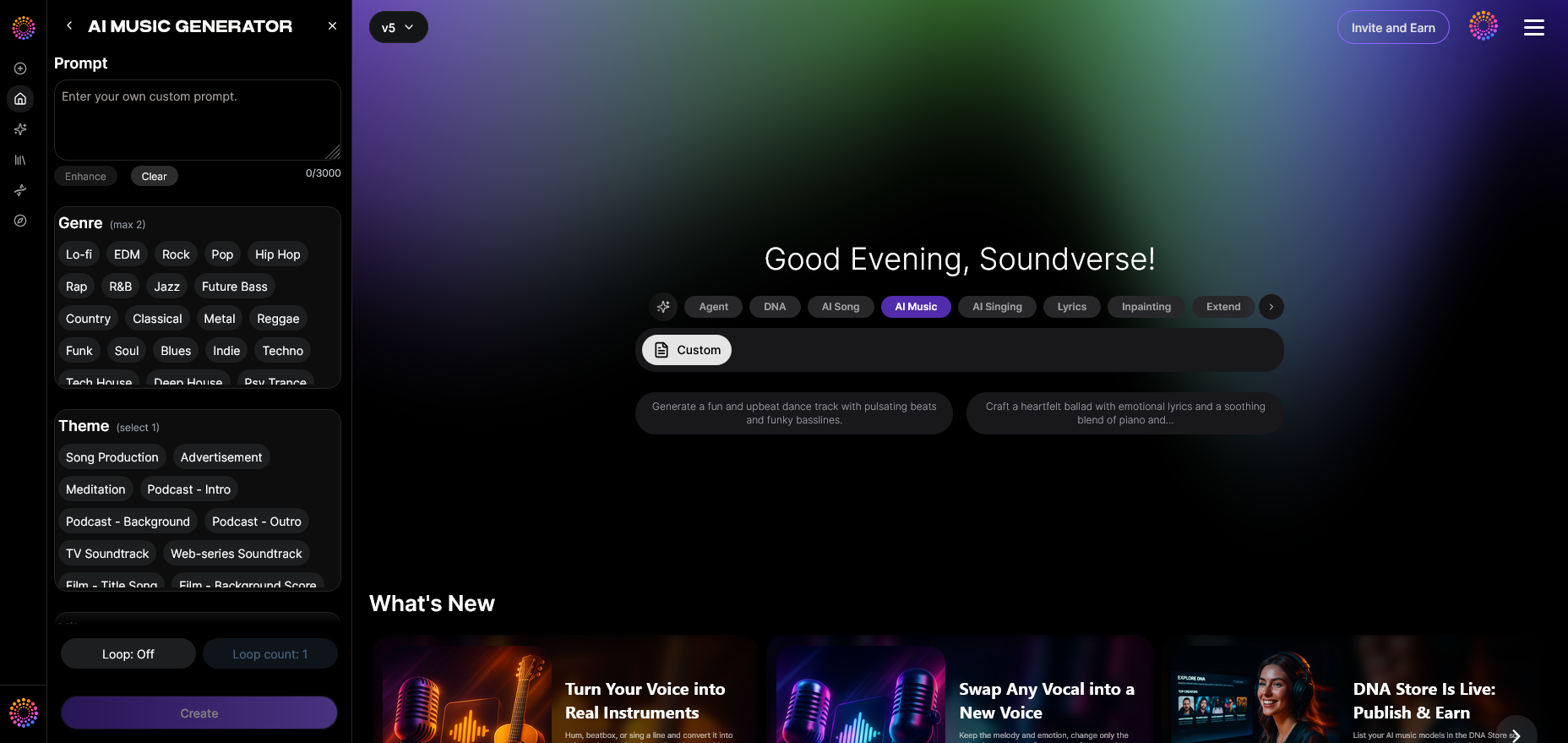
Access Soundverse’s AI Music Generator from the main menu. This is where you’ll begin integrating your Suno music prompt creation workflow. Familiarize yourself with the tool layout — look for input fields for text description, duration settings, and model options.
Step 2: Description Input
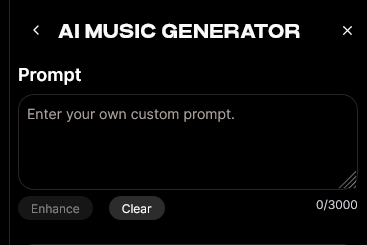
Enter a highly descriptive text prompt. Clarity here is crucial. For example, instead of typing “chill beat,” write “lofi chillhop with soft drums, vinyl crackle texture, and warm Rhodes chords perfect for morning coffee vlogs.” This level of detail aligns with Suno AI’s songwriting standards in 2026.
Step 3: Style & Duration
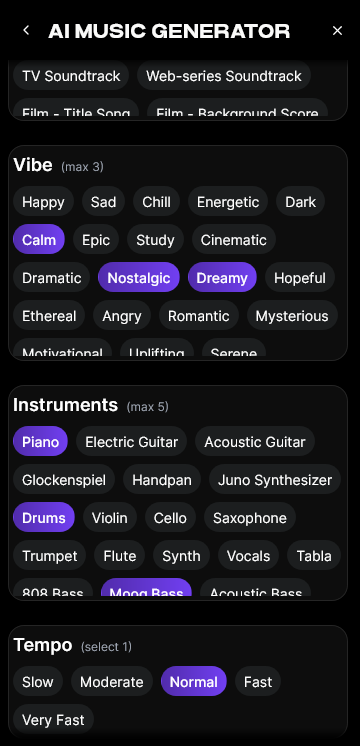
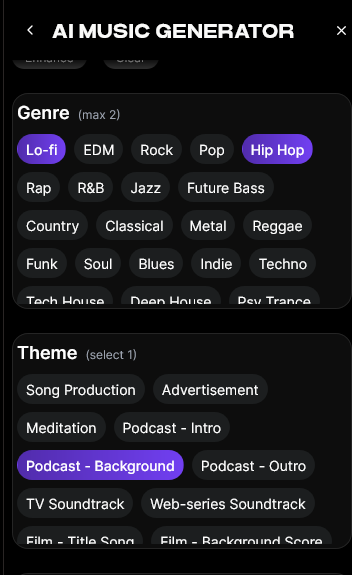
Select genre, style, and track length. This adds structure to your prompt. You may choose genres like ambient, cinematic, or jazz depending on your project needs. If your output is destined for Suno AI songwriting, selecting styles that fit your lyric themes ensures consistency between instrumental and vocal elements.
Step 4: Generation
Click “Generate Instrumental Music.” The AI will process your description asynchronously—there’s no live preview—but the resulting track mirrors your prompt’s intent, showing how parameter precision yields musical quality.
Step 5: Export Options
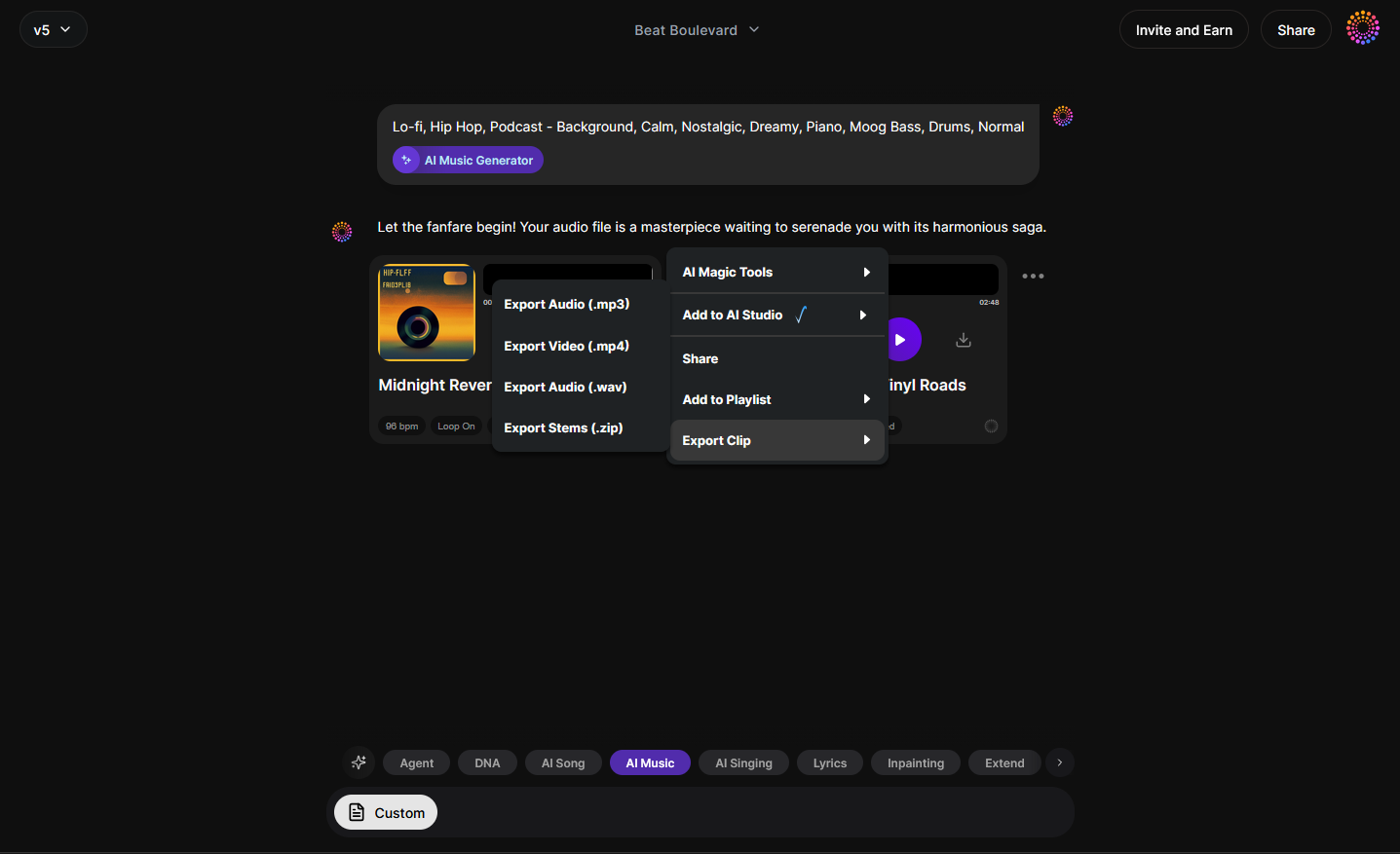
Once your AI track is ready, you can export it for use in Suno’s ecosystem or pair it with their AI Song Generator. This combination empowers complete production — from background instrumentals to full songs with vocals.
For creators at any level, you can also check Suno Ai Tutorial 2026 (For Complete Beginners) for step-by-step visual guidance.
What Makes a Great Suno Music Prompt in 2026?
Suno AI’s songwriting and production models respond best to prompts that combine emotional cues, genre directives, and sensory descriptions. Here are essential components that enhance prompt engineering for music:
- Mood and Emotion: Define emotional states like “nostalgic,” “energizing,” or “melancholic.” These words help AI compose harmonies and dynamics that fit cinematic storytelling.
- Instrumentation Guidance: Specify elements like “acoustic guitars,” “orchestral strings,” or “analog synths.” These details help align the sound palette with genre conventions.
- Tempo and Groove Setting: Include BPM or rhythmic descriptors (“slow ambient,” “fast techno”). In Suno AI songwriting, tempo consistency supports lyric pacing.
- Environment or Purpose: Mention where the song will be used—e.g., “podcast intro,” “advertising underscore,” or “game soundtrack.” Purpose-driven prompts guide energy levels and structural density.
For deeper creative strategies, check 100 text-to-music prompts that will help you create viral music and how an AI music generator inspires creative fusion.
Common Mistakes in Suno Music Prompt Creation
Despite advanced AI models, creators often fall into common traps:
- Overly General Descriptions: Words like “cool” or “nice” don’t convey sufficient direction.
- Neglecting Genre Tags: Omitting genre leaves AI guessing about stylistic cues.
- Ignoring Instrumental Balance: Overloading prompts with too many instruments results in cluttered compositions.
- Forgetting Emotional Context: A happy vibe written as “light and airy pop with bright chords” yields better results than generic terms.
An optimized prompt should feel like a short production brief—concise yet full of musical intent.
Expert Music Generation Tips for Suno AI Users
Here’s how you can refine your prompts and workflow:
- Use Comparative Adjectives: “Vintage synth like early 80s pop” helps contextualize sound texture.
- Include Descriptive Imagery: “Music that feels like drifting over city lights” invokes atmospheric moods Suno AI can translate.
- Test Loop Mode Compatibility: When using Soundverse’s Loop Mode, identify repeating sections that can later integrate into Suno’s arrangement pipeline.
- Experiment Across Models: With Soundverse offering V4 and V5 model options, test each to match Suno AI’s tonal sophistication.
Integrating Suno AI with Soundverse Workflow
Suno’s AI Song Generator specializes in complete songs with lyrics and vocals, while the AI Music Generator from Soundverse focuses on instrumental backgrounds. For producers, the synergy between both systems delivers a powerful end-to-end solution — one generates the vibe, the other adds storytelling.
Pair this with tools like AI Lyrics Writer to pre-generate lyrical ideas fitting the instrumental context. This integration ensures the final composition feels cohesive, whether it’s for marketing jingles, social posts, or film scoring.
If you’re a creator exploring alternatives, consider checking Suno alternatives to find tools comparable to Soundverse for comprehensive AI production.
Start Creating Music with AI-Powered Prompts Today
Unlock the power of AI music generation with Soundverse. Craft precise prompts, generate unique tracks, and elevate your creative workflow instantly.
Create Music Now
Related Articles
- 100 Text-to-Music Prompts That Will Help You Create Viral Music — Explore 100 expertly designed prompts to inspire your next viral music track using AI tools like Soundverse.
- Best Suno Alternative: Soundverse AI Free Sign-Up