How to Use Splitter.ai for Music and Vocal Separation
Learn how to use Splitter.ai to separate vocals and music stems in 2026 with this easy tutorial.
How to Use Splitter.ai for Music and Vocal Separation
What is Splitter.ai and why does it matter for musicians in 2026?
AI-driven audio tools have rapidly evolved from niche tech experiments into indispensable parts of modern music production. By 2026, musicians, producers, and content creators rely on them for remixing, karaoke creation, and sound design. One standout platform in this space is Splitter.ai — an AI-powered vocal isolation tool designed for music stem separation. If you’ve ever wanted to extract vocals or isolate individual instruments from a mixed track, learning how to use Splitter.ai effectively can save hours of manual editing.
Splitter.ai uses advanced machine learning models to perform music stem separation, which means breaking down a full song into distinct elements like vocals, drums, bass, guitar, and accompaniment. This process is ideal for remixing, audio cleaning, educational analysis, or performance backing tracks. It’s a vital technique for modern producers who want control over every part of the track.

How does Splitter.ai separate stems?
At its core, Splitter.ai operates as an AI music splitting software that takes a full mix and dissects it into up to six editable stems. These include vocals, drums, bass, guitar, and accompaniment. The precision achieved through its neural network ensures minimal artifacts and clean isolation between layers.
This separation process has become an important foundation for various forms of audio editing. Whether you want to create remixes similar to those discussed in AI music trends or educational breakdowns where each instrument is studied individually, Splitter.ai lets you access and manipulate those elements independently. For a deeper dive, watch our guide on creating Deep House music.

How to use Splitter.ai: A step-by-step tutorial
This detailed Splitter.ai tutorial walks you through the process from upload to download. Every stage aligns with the verified UI flow.
Step 1: Upload Interface
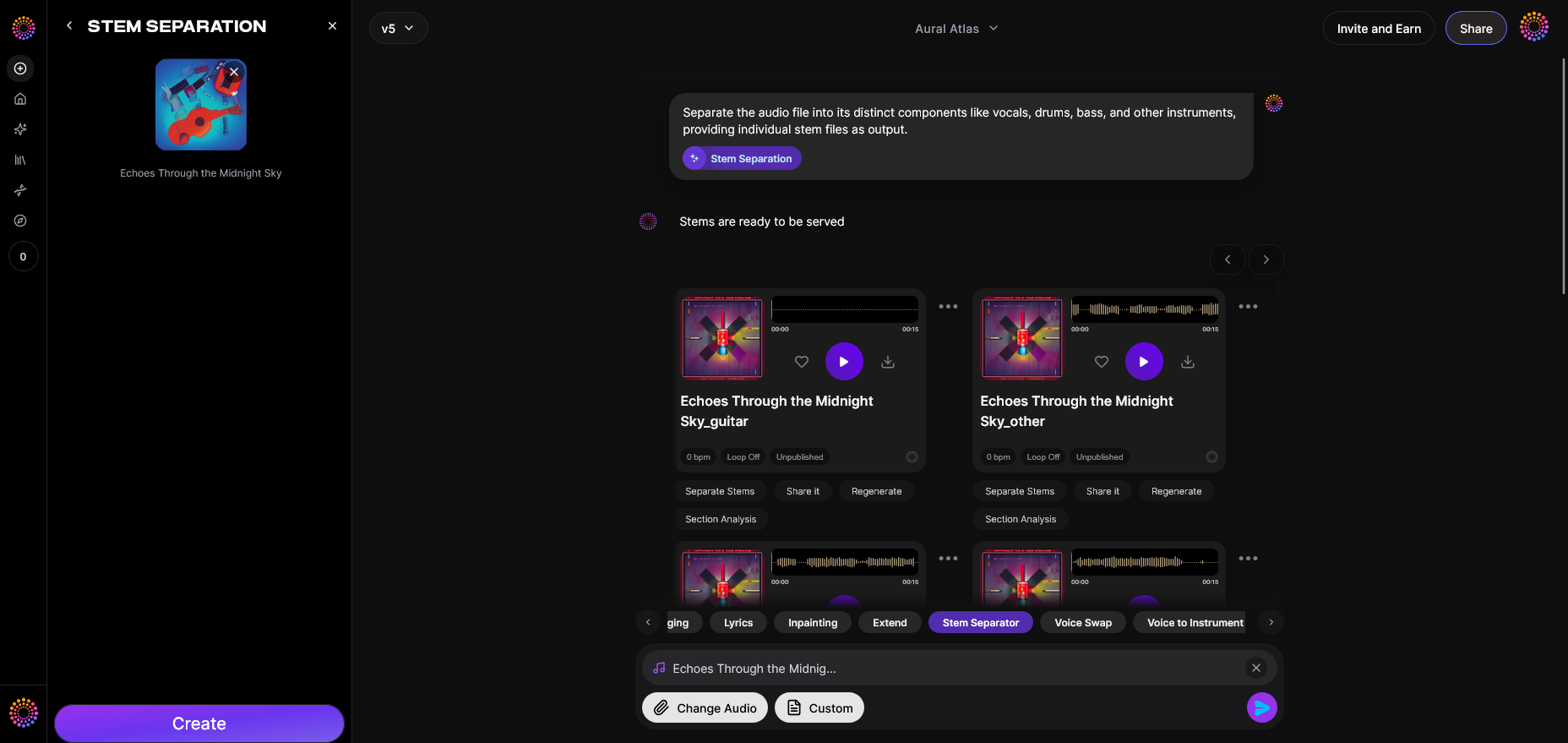
The journey begins by accessing Splitter.ai’s upload dialog. You can import audio via file upload, a song URL, or live recording. Most creators prefer using high-quality WAV or MP3 sources for better results. Once the file is uploaded, the AI begins analyzing your track and preparing it for stem extraction. You can even freely split YouTube videos if you unlock the YouTube Splitting feature from within your account.
Step 2: Additional References
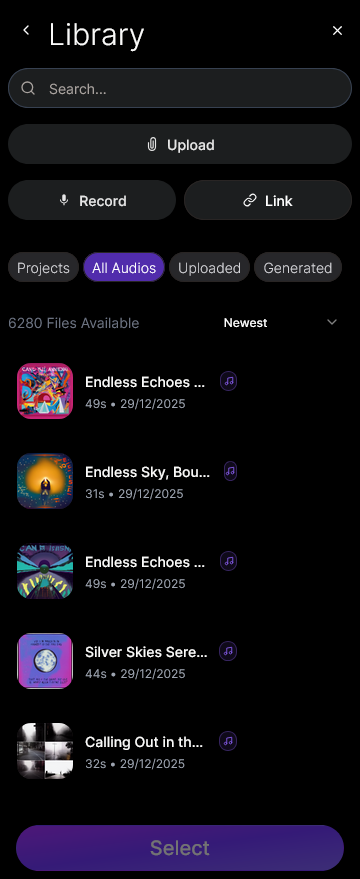
For improved accuracy, Splitter.ai allows you to provide reference audio. This feature is especially useful if you're trying to match mix characteristics or retain certain tonal profiles. Reference stems help the system differentiate the characteristics of vocals versus instruments. This optional upload step makes the AI model’s separation more attuned to your preferences.
Step 3: Results Display
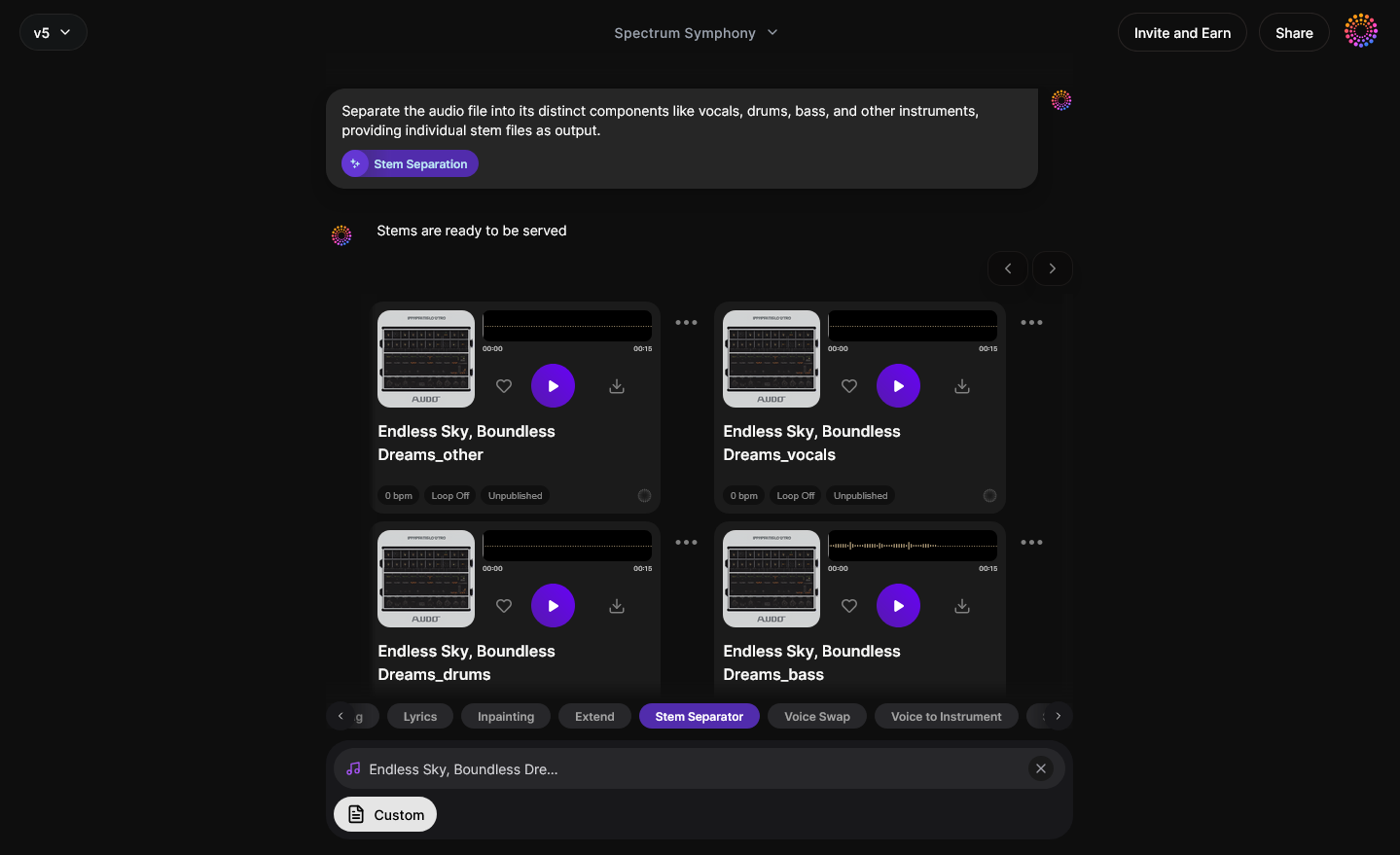
After processing, Splitter.ai displays the separated stems in a clear visualization panel. You’ll typically see labeled tracks for vocal, drum, bass, guitar, and accompaniment stems. Each stem represents a clean version of its respective element extracted from the original mix. From here, you can audition and inspect each component to confirm clarity.
Step 4: Download Stems
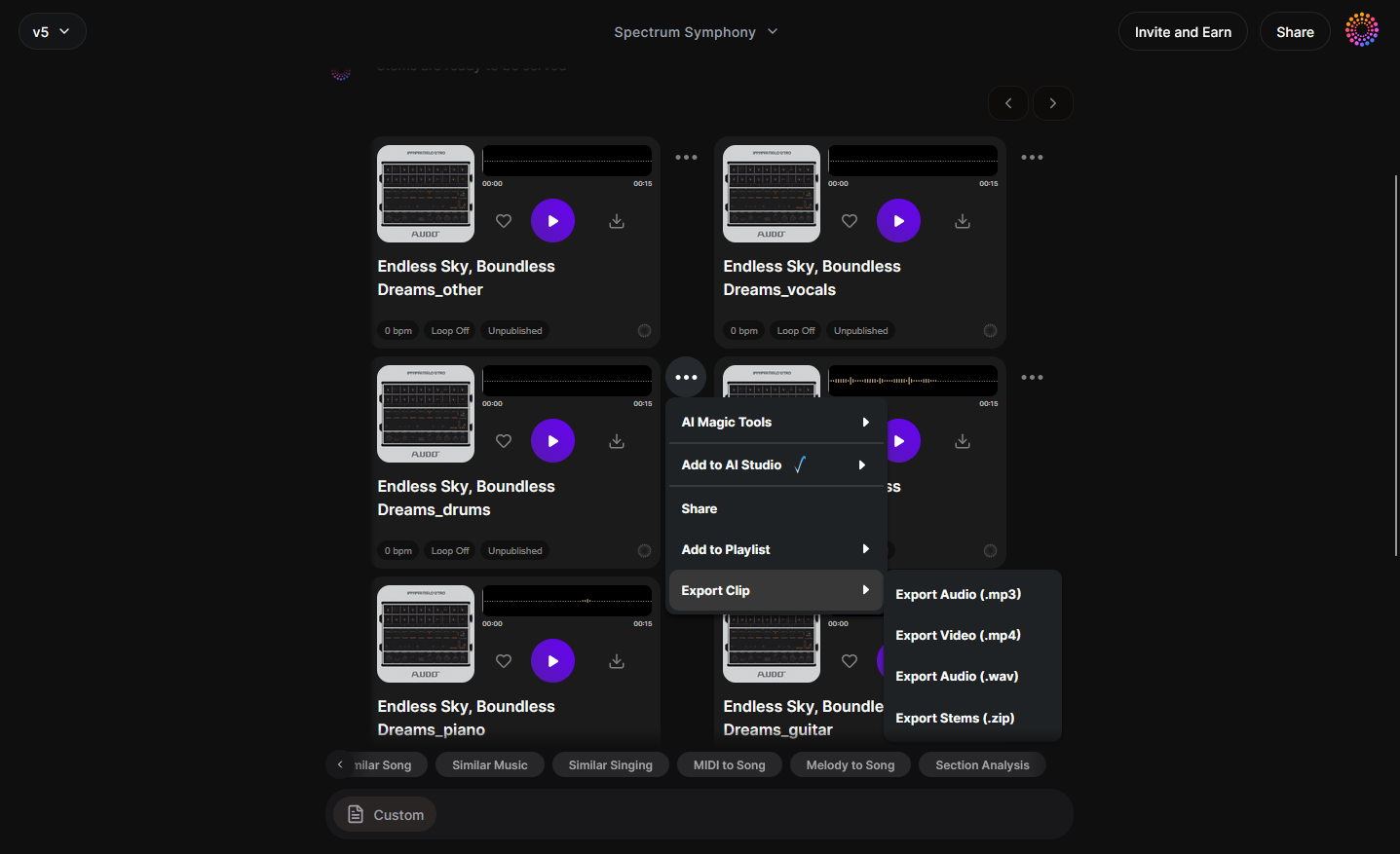
Once satisfied, you can download any or all stems individually. File export lets you integrate these isolated parts into your preferred DAW or performance setup. Producers often use these stem downloads to create remixes, mashups, or editing layers for film, YouTube, or podcasts.
What can you do with Splitter.ai’s separated stems?
Now that you’ve learned how to use Splitter.ai, you can apply the results in various creative contexts:
- Remixing and Sampling: DJs and producers can reconstruct songs with new beats or effects.
- Karaoke and Backing Tracks: Vocal isolation allows singers to perform over instrumentals.
- Music Education: Students dissect mixes to understand arrangement and frequency balance.
- Audio Editing and Restoration: Editors clean old recordings by removing unwanted noise or instruments.
Stem separation also plays a role in experimentation. For instance, creators engaged in AI sound design, as explored in this guide, can combine stems from different songs to create genre-specific hybrids.
Why is vocal isolation so important for producers today?
Vocal isolation in 2026 serves more advanced uses than simple “remove the vocals from a song” tasks popular years ago. With ever-evolving streaming and licensing demands, clean vocal and instrument tracks ensure flexible content reuse. Whether you are editing background music for podcasts or synchronizing soundtracks for Instagram reels, tools like Splitter.ai simplify that workflow dramatically.
And for musicians aiming for copyright-safe content creation, stem separation provides control over re-recording and remixing in legal boundaries — a concept further explored in Royalty-free vs. Copyright-free music.
What makes Splitter.ai different from other vocal isolation tools?
Several AI-based stem separation tools exist in 2026, including LALAL.AI and PhonicMind. However, Splitter.ai remains one of the most accessible free platforms focusing on balanced isolation quality. Its ability to generate up to six stems ensures more depth than most two-stem (vocals/instrumental) splitters.
For creators who don’t want noise-filled artifacts or messy separation, advanced model training in Splitter.ai’s algorithm provides cleaner transitions between layers. This leads to more usable mixes in digital audio workstations (DAWs) and sync integrations.
Integrating AI music splitting with editing workflows
Once you have the stems, you can refine your audio further using editing tools. In 2026, workflow integration with DAWs like Ableton Live, Logic Pro, or FL Studio allows seamless use of AI-separated materials.
You might:
- Adjust volume levels between stems for balance.
- Apply effects like reverb or chorus selectively on vocal tracks.
- Layer isolated drums from one song onto another to create new rhythms.
This modular approach encourages creative freedom. You could, for example, pair Splitter.ai-separated vocals with AI-generated instrumentals from Soundverse’s text-to-music engine (explained here). For broader creative possibilities, check out the Soundverse Tutorial Series on YouTube.
How to make music and vocal separation instantly with Soundverse Stem Separator
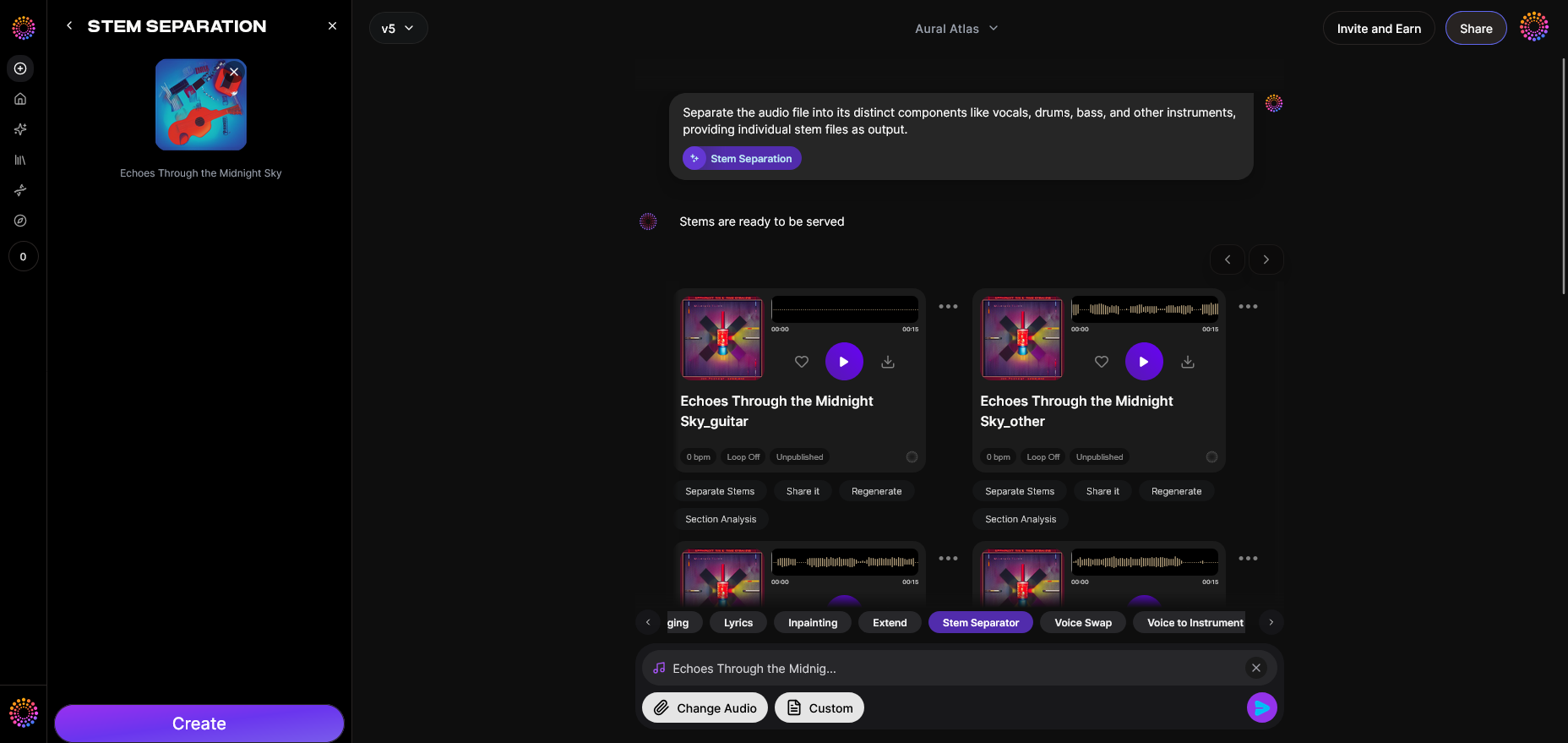
Now that you understand how Splitter.ai operates, let’s explore how Soundverse gives you even broader options for music stem separation.
The Soundverse Stem Separator is an advanced feature that dissects mixed audio into up to six editable stems — Vocals, Drums, Bass, Guitar, and Accompaniment. It supports input via URL, file, or live recording. Each extracted component maintains high-quality isolation suitable for remixing or educational uses.
Core Capabilities:
- 6-stem separation with professional-grade precision.
- Multiple input options: files, recordings, or online references.
- Integration with Soundverse’s Section Analysis and Inpainting tools for full-track restructuring.
Use Cases:
- Create karaoke tracks for performances.
- Teach audio engineering fundamentals.
- Clean messy recordings for podcasts.
- Generate new arrangements by selectively replacing stems.
By combining Soundverse’s Stem Separator with Section Analysis (which maps intro, verse, chorus, and bridge parts) and Inpainting (used for regenerating faulty sections or altering lyrics), creators gain a complete environment for intelligent audio design.
If Splitter.ai focuses mainly on raw separation, Soundverse steps ahead by connecting separation, regeneration, and arrangement under one unified space. To explore how these tools blend creatively, discover Soundverse’s AI Magic tools and learn how they simplify end-to-end audio production.
Final Thoughts: Music separation as a creative superpower
Learning how to use Splitter.ai helps you gain control over your compositions and edits in ways previously impossible. By 2026, stem separation is not just a technical feature — it’s a creative superpower that enables remixing, reimagination, and restoration.
For those seeking higher flexibility and integrated workflows beyond simple vocal extraction, the Soundverse ecosystem brings additional AI tools designed for intricate music building. Whether you’re generating new soundscapes or reconstructing old recordings, both platforms embody the modern transformation in how music is designed, dissected, and reinvented.
If you’re ready to elevate your production workflow, start by mastering Splitter.ai — and then expand into full-scale creative transformation with Soundverse’s AI stem separation technology.
Explore related guides to expand your learning:
- Soundverse introduces stem separation AI magic tool
- How AI-generated music is transforming the music industry
- Mubert alternatives for creative AI music making
- Soundraw alternative for AI composers
Create Professional-Quality Music with AI
Experience the magic of Soundverse—your AI co-producer for flawless music generation and stem separation. Elevate your sound instantly with intelligent tools built for creators.
Start Creating with Soundverse
Related Articles
- Soundverse Introduces Stem Separation AI Magic Tool — Discover how Soundverse’s stem separation technology helps you isolate vocals, instruments, and beats with ease.
- What Are Song Stems and Why Do You Need Them — Learn the importance of song stems and how they can elevate your mixing, mastering, and remixing process.
- Best AI Music Generator: Top Picks and Review — Explore the best AI music generators on the market and find the right one for your creative goals.
- Soundverse: Revolutionizing Music Creation for New-Age Content Creators — See how Soundverse empowers musicians and creators to produce original tracks with cutting-edge AI.
Here's how to make AI Music with Soundverse
Video Guide
Here’s another long walkthrough of how to use Soundverse AI.
Text Guide
- To know more about AI Magic Tools, check here.
- To know more about Soundverse Assistant, check here.
- To know more about Arrangement Studio, check here.
Soundverse is an AI Assistant that allows content creators and music makers to create original content in a flash using Generative AI.
With the help of Soundverse Assistant and AI Magic Tools, our users get an unfair advantage over other creators to create audio and music content quickly, easily and cheaply.
Soundverse Assistant is your ultimate music companion. You simply speak to the assistant to get your stuff done. The more you speak to it, the more it starts understanding you and your goals.
AI Magic Tools help convert your creative dreams into tangible music and audio. Use AI Magic Tools such as text to music, stem separation, or lyrics generation to realise your content dreams faster.
Soundverse is here to take music production to the next level. We're not just a digital audio workstation (DAW) competing with Ableton or Logic, we're building a completely new paradigm of easy and conversational content creation.
TikTok: https://www.tiktok.com/@soundverse.ai
Twitter: https://twitter.com/soundverse_ai
Instagram: https://www.instagram.com/soundverse.ai
LinkedIn: https://www.linkedin.com/company/soundverseai
Youtube: https://www.youtube.com/@SoundverseAI
Facebook: https://www.facebook.com/profile.php?id=100095674445607
Join Soundverse for Free and make Viral AI Music

We are constantly building more product experiences. Keep checking our Blog to stay updated about them!