How to Use Splitter AI: Complete Step-by-Step Tutorial for 2026
Learn how to use Splitter AI for stem separation, vocal isolation, and music editing in 2026.
How to Use Splitter AI
As music production continues to evolve rapidly in 2026, artificial intelligence tools like Splitter AI have become essential for musicians, producers, and sound designers. Whether you're remixing a track, creating karaoke versions, or simply learning mixing techniques, AI stem separation technology allows you to split audio into individual components like vocals, drums, bass, and guitar with remarkable precision. This comprehensive Splitter AI tutorial walks you through the exact process and helps you understand how modern tools simplify audio track splitting and vocal isolation.
What is Splitter AI and how does it work?
Splitter AI is a specialized platform designed for audio stem separation—a process that divides a mixed track into its core elements. Instead of manually isolating instruments using EQ adjustments or complex filtering, this AI tool analyzes the audio file and extracts up to six distinct stems: vocals, drums, bass, guitar, accompaniment, and other instrumental layers. This workflow helps you edit, remix, and learn from tracks efficiently.

In recent years (2024–2025), stem separation was still limited by hardware power and algorithmic precision. In 2026, AI-driven solutions like Splitter AI now leverage deep neural networks optimized for high-fidelity output, which means you can retain the original musical integrity while editing each component independently. Such tools have reshaped how creators approach mixing, sampling, and sound restoration.
Why do musicians use AI stem separation in 2026?
AI stem separation serves as the foundation for several modern production workflows. Here’s why professionals use tools like Splitter AI:
- Remixing and Sampling: DJs and producers can quickly isolate vocals from old songs to create mixes or mashups.
- Karaoke and Backing Tracks: Singers can strip away vocals to practice or perform with clean instrumentals.
- Audio Cleanup: Remove unwanted sounds or background elements from podcast recordings or demo tracks.
- Educational Uses: Students and engineers analyze mixing techniques by studying isolated stems.

These benefits reinforce the role of artificial intelligence in creative decision-making. As more artists explore AI-assisted production, tools such as Soundverse have become a hub for music creators worldwide. For a deeper dive, watch our guide on creating Deep House music.
How to use Splitter AI: Step-by-Step Guide
Now let’s go through this detailed Splitter AI tutorial so you can separate any track effectively. The process below explains how modern AI stem separation works from upload to final download.
Step 1: Upload Interface
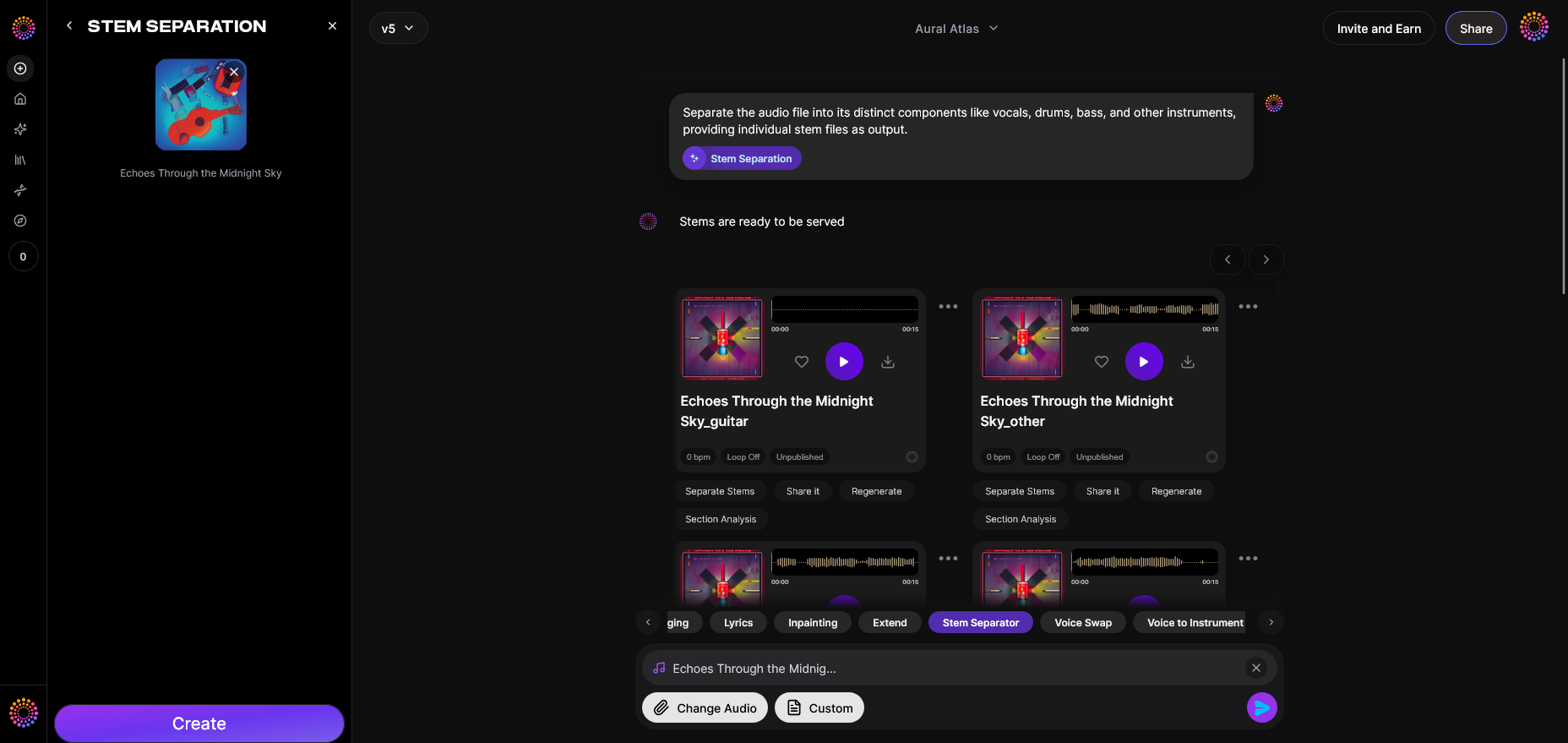
First, open Splitter AI and look for the audio upload dialog. You can choose between URL, file upload, or direct recording inputs. The upload interface simplifies file handling—whether you’re bringing in WAV masters or streaming links—and ensures quick ingestion. Once you select the track, Splitter AI prepares it for processing.
Step 2: Additional References
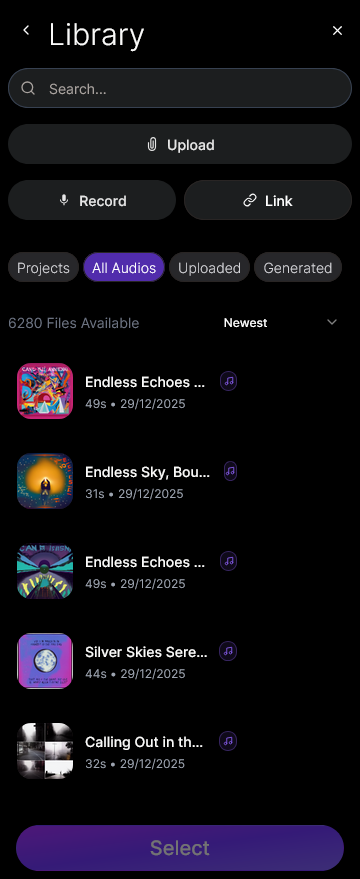
This step allows you to add reference materials. For remixing or matching sound profiles, users can input additional reference audio files. These references guide AI separation, helping improve balance or context within stems. While optional, supplying a reference often leads to more accurate extraction, especially for complex mixes.
Step 3: Results Display
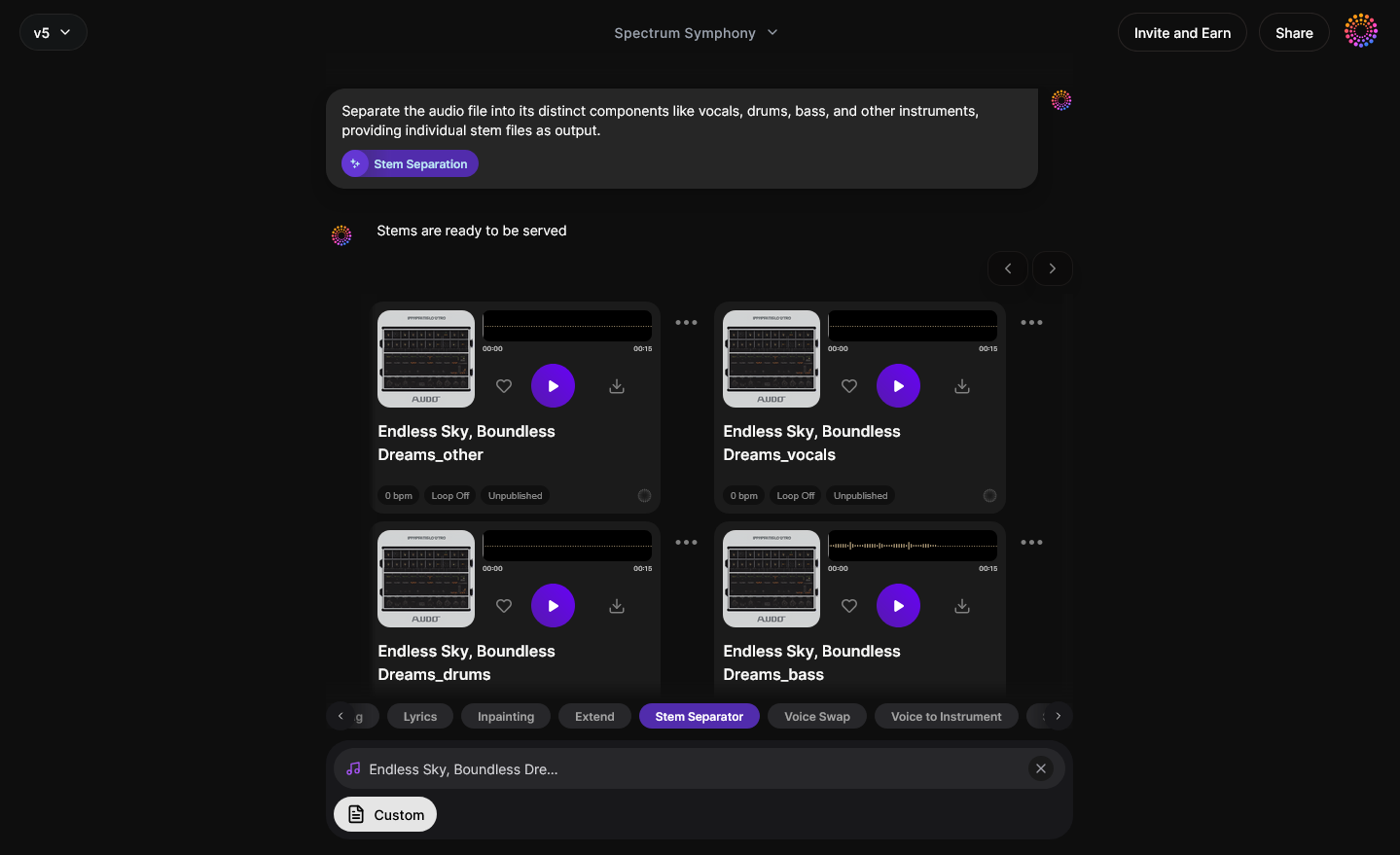
After processing, Splitter AI presents the separated stems visualization. Here you’ll see each isolated component—vocals, drums, bass, guitar, and accompaniment—organized clearly. You can play or preview each stem independently to confirm separation accuracy. Though Splitter AI does not provide real-time monitoring, the asynchronous output ensures high-quality processing unaffected by latency.
Step 4: Download Stems
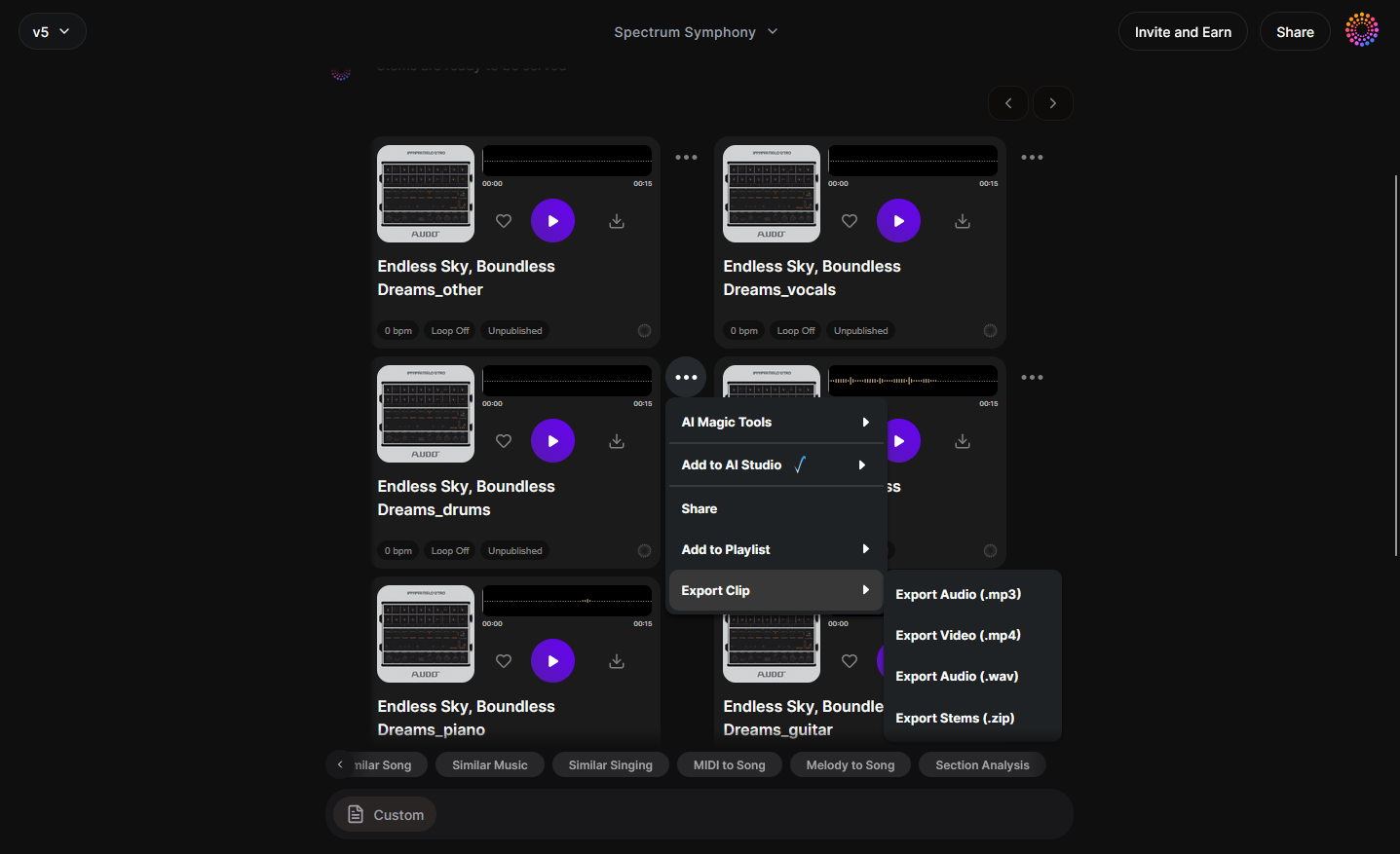
Finally, review your separated layers and select specific tracks to download. Splitter AI enables exporting each stem individually or as grouped files. Producers can import these into their DAWs (like Ableton Live, FL Studio, or Logic Pro) for remixing, sampling, or mixing tasks.
By following these steps, creators can transform complex mixes into editable parts for deeper creative manipulation. You can also check out how to make music using AI from our Soundverse Tutorial Series.
Tips for better audio track splitting results
Getting optimal outputs from your AI stem separation process depends on input quality and processing choices. Here are some best practices:
- Use high-quality input files: Low-bitrate sources produce artifacts during separation.
- Limit compression: Tracks heavily affected by compression lose dynamic clarity.
- Avoid overly layered production: Dense mixes make instrument isolation more challenging.
- Compare separated stems in your DAW: Align phases and dynamics for smoother results.
Modern remixing workflows often combine split stems with precise editing tools such as inpainting, which regenerates or repairs sections with AI precision. Learn more about the concept in Soundverse AI Magic Tools for advanced creative techniques.
What makes AI stem separation superior to traditional methods?
Before AI integration, stem separation relied on filtering frequencies—a manual process requiring deep technical skill and hours of adjustment. In 2026, the algorithms inside platforms like Splitter AI and Soundverse detect timbral patterns and harmonic relationships within the track automatically, delivering high-resolution accuracy.
Additionally, artificial intelligence minimizes phase distortion issues common in older isolation software. The outcome feels more natural and musical rather than artificially filtered.
How does vocal isolation software fit into modern music production?
Vocal isolation software has become one of the most sought-after categories of AI music tools. With it, artists can extract pure vocals from existing tracks to recreate remix versions or duet arrangements. In combination with AI stem separation, vocal isolation supports flexible approaches—merging textual generation, timbre analysis, and dynamic control.
Tools like Soundverse Assistant even extend this concept further by helping producers automatically select the right AI function for each project.
How to make AI stem separation easier with Soundverse Stem Separator
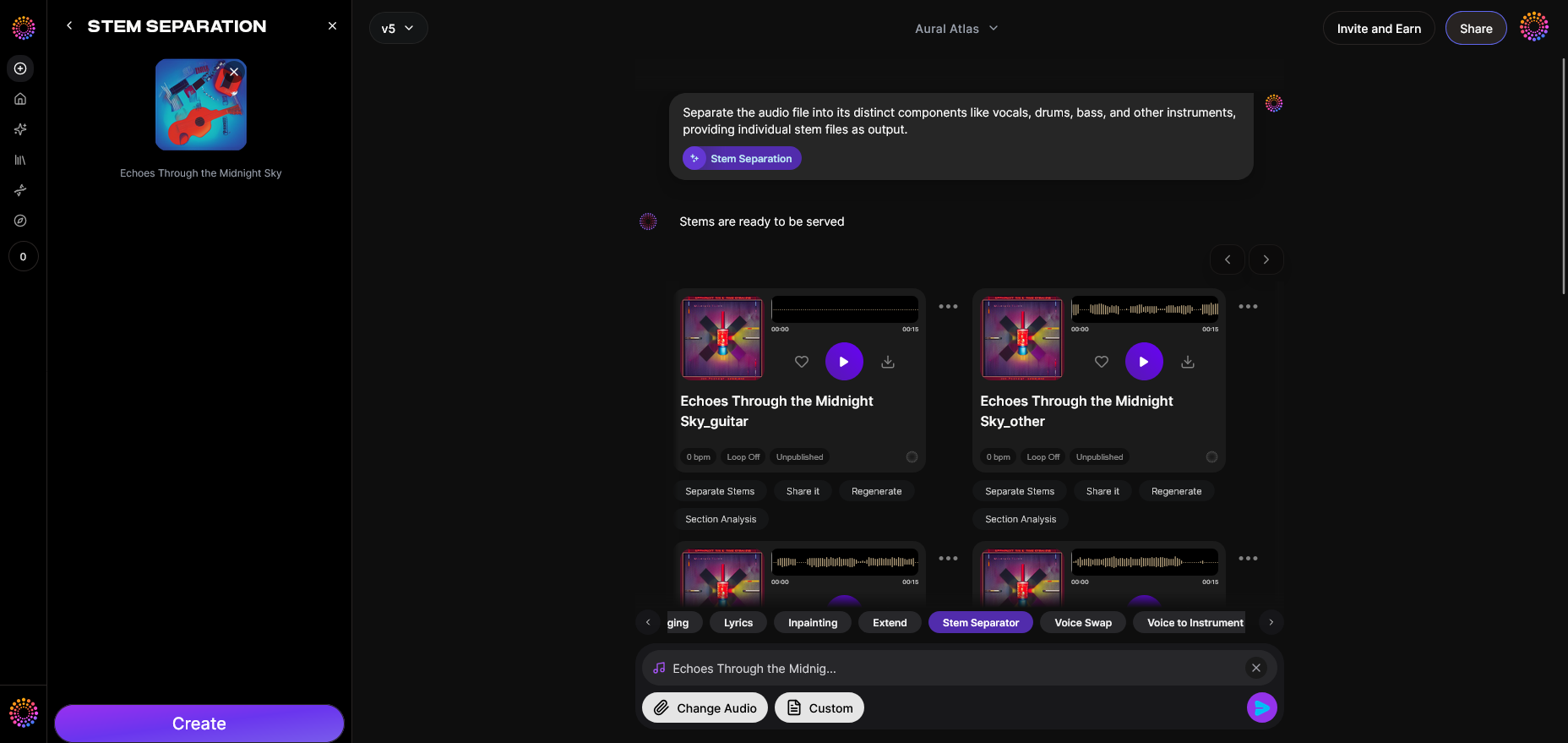
Now that you understand the principles of AI stem separation, here is how you can create and modify stems instantly using Soundverse.
Soundverse’s Stem Separator dissects mixed audio into up to six separate editable stems—Vocals, Drums, Bass, Guitar, Accompaniment, etc. With support for URL, file, and recording inputs, it delivers high-quality isolation suitable for remixing, karaoke creation, and educational analysis. The process is simple:
- Upload your track or paste a link.
- Let Soundverse process the audio to extract stems individually.
- Review the separated elements using labeled timestamps from Section Analysis.
- Optionally refine segments using the Inpainting tool to regenerate specific parts.
The Stem Separator complements other Soundverse features that support modern producers—from automated section labeling to precise audio regeneration. This ecosystem helps creators focus on artistic decision-making while AI manages technical separation.
If you want to explore more practical applications, review related resources like music industry trends, AI music generation tools, and Soundverse’s stem separation magic tool announcement.
Start Creating Music with AI Today!
Unlock the power of Splitter AI and Soundverse to separate stems, remix, and create polished tracks effortlessly. Take the next step in your music production journey and let AI amplify your creativity.
Try Soundverse Free
Related Articles
- Soundverse Introduces Stem Separation AI Magic Tool: Discover how Soundverse’s AI magic tool simplifies stem separation and enhances your music production workflow.
- What Are Song Stems and Why Do You Need Them: Learn the importance of song stems in remixing and mastering, and how AI tools like Splitter make this process easier.
- Soundverse Assistant: Your AI Music Co-Producer: Meet Soundverse Assistant — the AI co-producer that helps streamline your music creation process from concept to final mix.
- Soundverse AI Magic Tools: Create Content Quickly with AI: Explore how Soundverse’s suite of AI Magic Tools accelerates music creation, mixing, and mastering for creators of all levels.
Here's how to make AI Music with Soundverse
Video Guide

Here’s another long walkthrough of how to use Soundverse AI.
Text Guide
- To know more about AI Magic Tools, check here.
- To know more about Soundverse Assistant, check here.
- To know more about Arrangement Studio, check here.
Soundverse is an AI Assistant that allows content creators and music makers to create original content in a flash using Generative AI.
With the help of Soundverse Assistant and AI Magic Tools, our users get an unfair advantage over other creators to create audio and music content quickly, easily and cheaply.
Soundverse Assistant is your ultimate music companion. You simply speak to the assistant to get your stuff done. The more you speak to it, the more it starts understanding you and your goals.
AI Magic Tools help convert your creative dreams into tangible music and audio. Use AI Magic Tools such as text to music, stem separation, or lyrics generation to realise your content dreams faster.
Soundverse is here to take music production to the next level. We're not just a digital audio workstation (DAW) competing with Ableton or Logic, we're building a completely new paradigm of easy and conversational content creation.
TikTok: https://www.tiktok.com/@soundverse.ai
Twitter: https://twitter.com/soundverse_ai
Instagram: https://www.instagram.com/soundverse.ai
LinkedIn: https://www.linkedin.com/company/soundverseai
Youtube: https://www.youtube.com/@SoundverseAI
Facebook: https://www.facebook.com/profile.php?id=100095674445607
Join Soundverse for Free and make Viral AI Music

We are constantly building more product experiences. Keep checking our Blog to stay updated about them!