How to Use OpenAI Jukebox: A Step-by-Step Guide to AI Music Generation
Step-by-step OpenAI Jukebox tutorial for AI music generation and creative sound design.
How to Use OpenAI Jukebox: A Step-by-Step Guide to AI Music Generation
Artificial intelligence has reshaped how musicians create and producers experiment with sound. Among the most influential tools in generative audio is OpenAI Jukebox, an advanced neural network capable of producing music with vocals directly from textual input. By 2026, it stands as a foundational reference point for countless AI music creation platforms. In this complete guide, you’ll learn exactly how to use OpenAI Jukebox, its workflow, and how you can integrate similar capabilities instantly using Soundverse’s next-generation AI Song Generator.
What is OpenAI Jukebox and How Does It Work?

OpenAI Jukebox is an AI system developed by OpenAI that generates songs, including instrumental arrangements and sung lyrics, from text descriptions. It doesn’t merely loop pre-recorded samples; instead, it synthesizes raw audio based on training on a massive dataset of music across genres and languages. The system can create new musical compositions that mimic style, cadence, instrument choice, and even vocal tone.
Unlike more recent tools available in 2026, such as Soundverse or Musicfy, OpenAI Jukebox was primarily research-oriented. It demonstrated what deep generative models could achieve when combining lyrics, melodies, and styles. The core idea behind Jukebox remains relevant for musicians exploring how AI can blend creative freedom with data-driven sound production.
For a deeper dive, watch our guide on creating Deep House music or the Soundverse Tutorial Series - How to Make Music to see modern evolution of AI composition.
Why Should Musicians Learn How to Use OpenAI Jukebox in 2026?
Even in 2026, understanding how to use OpenAI Jukebox is valuable for musicians and producers. It helps:
- Understand AI Audio Architecture – Learn how text becomes sound through neural networks.
- Enhance Songwriting Skills – Experiment with lyric-to-music conversion workflows.
- Prototype Musical Ideas – Use AI to quickly generate inspiration for new projects.
- Bridge Human and Machine Creativity – Collaborate with models to extend artistic reach.
Many AI creators now run hybrid pipelines inspired by Jukebox’s multi-stage process. The knowledge you gain from operating Jukebox enriches your technical understanding, especially if you later use advanced platforms like Soundverse (which builds upon similar architecture).
How to Use OpenAI Jukebox: Step-by-Step Tutorial
Here’s a simple, structured explanation of the workflow based on the standard UI logic used in generative music tools.
Step 1: Feature Overview
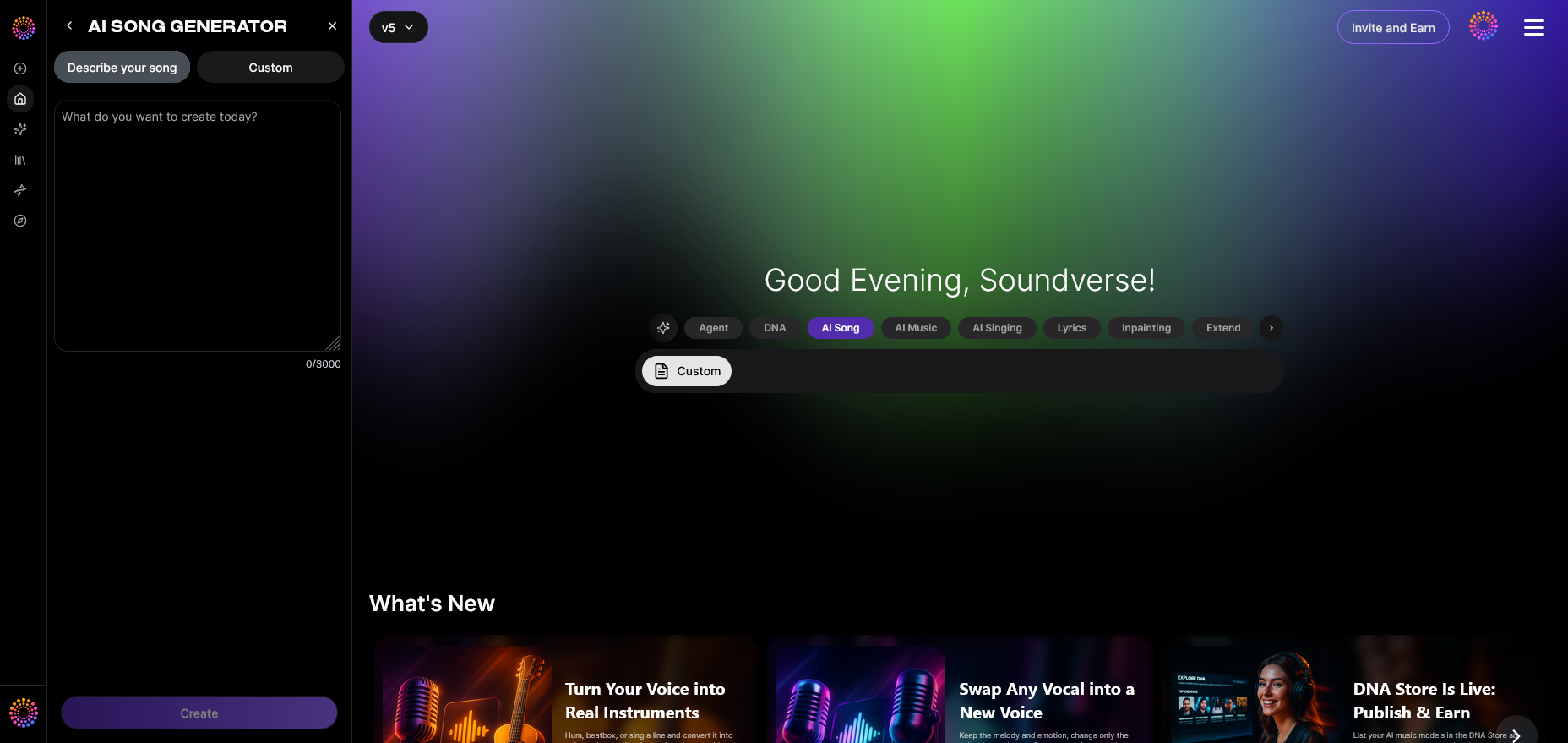
To get started, access OpenAI Jukebox from the main interface or repository. Since the official version is experimental, you’ll need command-line access or use community-integrated environments that host pre-trained Jukebox models. Review the documentation to understand the desired parameters such as genre, artist style, and prompt length.
Step 2: Lyrics Input
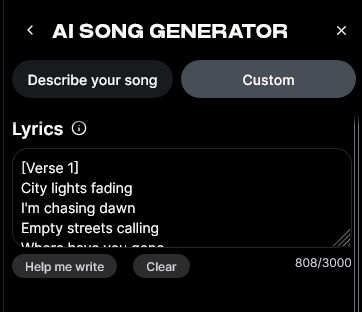
Once inside, enter or paste your lyrics. Jukebox handles text generation inputs that define what the AI will sing. You can guide thematic content—such as a pop ballad about hope or an electronic dance anthem. Focus on clear lyrical phrasing since the AI interprets rhythm and melody from text density and syllable pacing. Avoid copyrighted lines; always use original lyrics.
Step 3: Style Selection
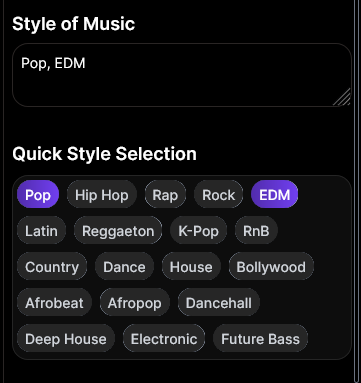
Next, choose the genre or artist style reference. Jukebox can emulate various sonic identities like jazz, pop, hip-hop, or country. This step acts as a stylistic anchor for the generation process. While later tools such as Soundverse Arrangement Studio allow direct drag-and-drop style setting, Jukebox relies on numerical encoding to represent stylistic vectors.
Step 4: Configuration
Here you configure generation parameters—sampling rate, temperature (which affects randomness), and duration. Jukebox’s configuration determines how experimental or traditional your output will sound. For beginner users, remain conservative on settings; high randomness may lead to chaotic vocal compositions.
Step 5: Generation
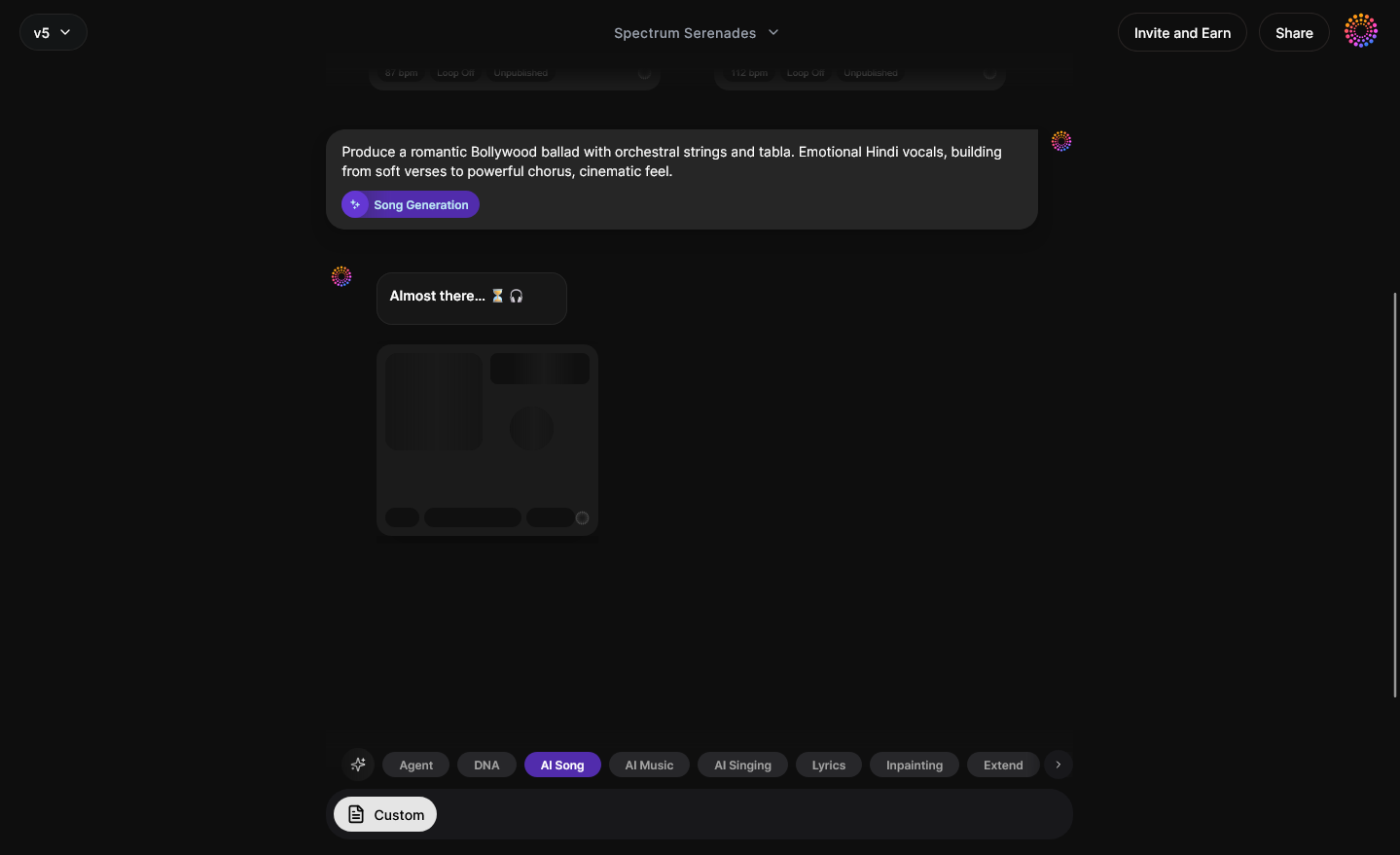
With everything set, initiate generation. The AI processes lyrical, melodic, and stylistic data to synthesize sound waves. Each run produces unique results. The process may take hours depending on computational power, emphasizing why newer tools such as Soundverse AI Magic Tools evolved to handle generation within seconds.
Step 6: Generation Complete
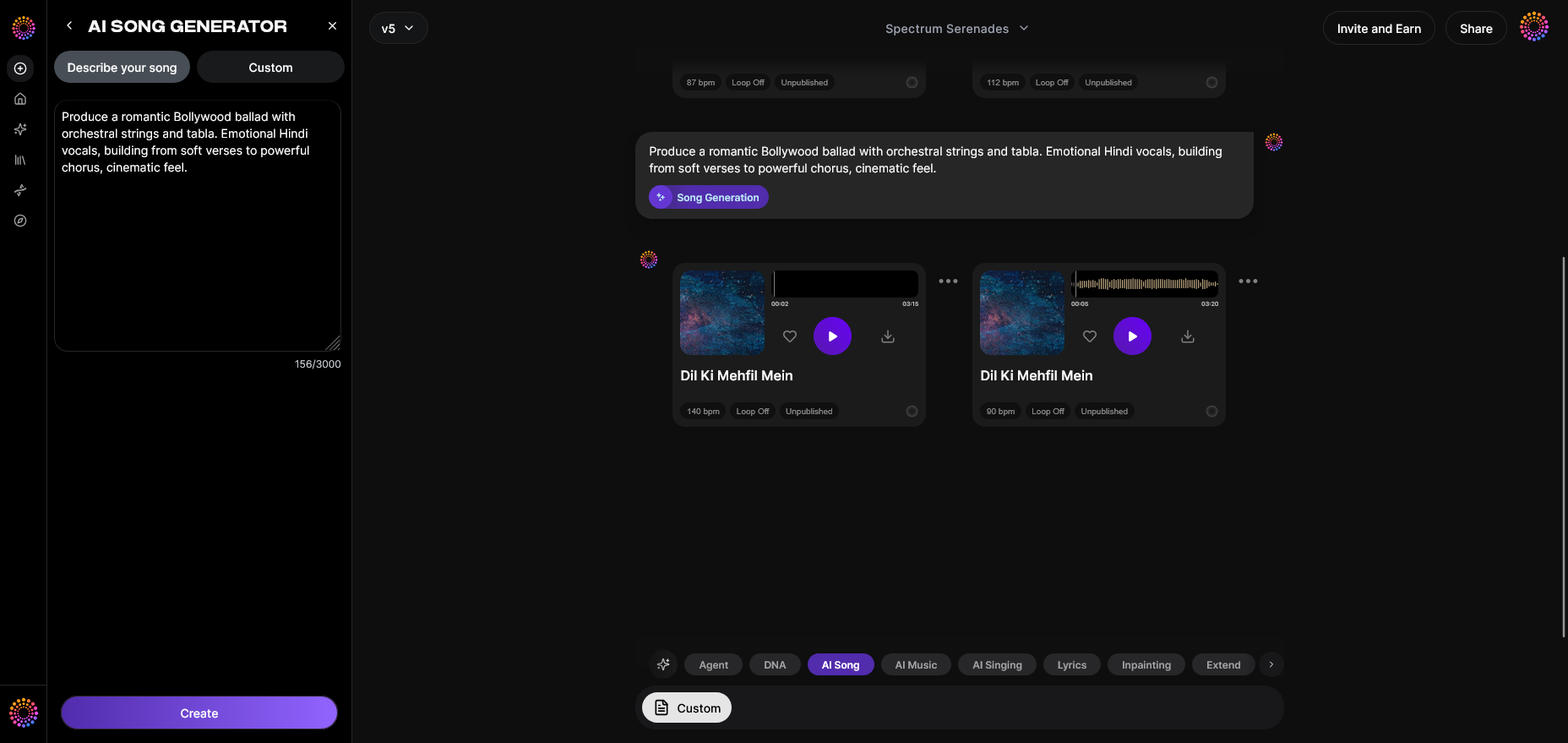
After processing, your result will appear as an AI-generated song with vocals and instrumentation. It is not editable in real time—users must download and then refine in a DAW or audio editor. Analyze tone consistency, melody flow, and instrument-to-vocal blending. In 2026, many creators combine Jukebox renderings with royalty-free layers generated via Soundverse AI Music Generator for more polished results.
Step 7: Export Results
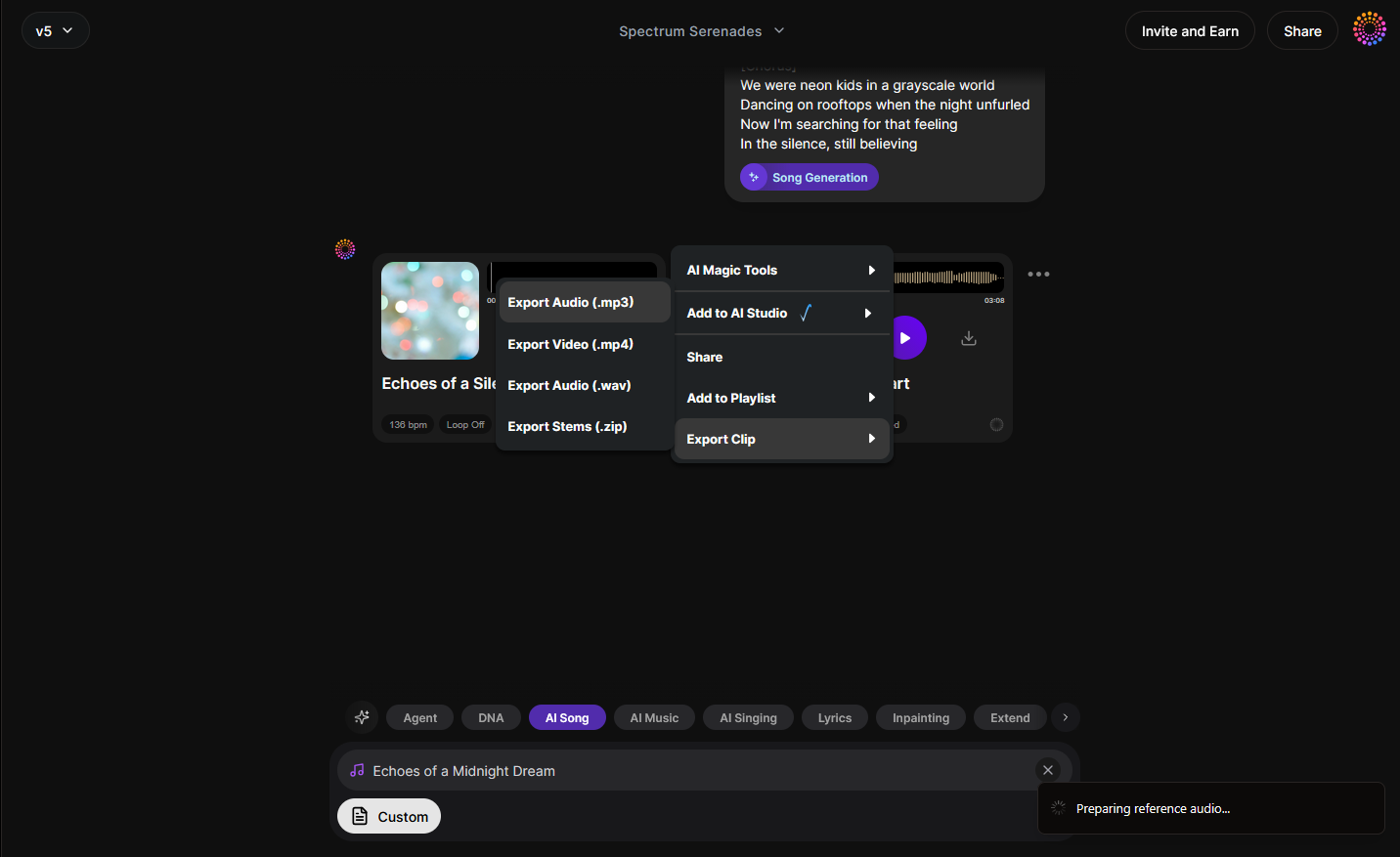
Finally, export the generated track. Jukebox allows downloads in certain open formats, typically .wav. Once exported, you can remix, master, or integrate into larger compositions. This step marks the transition from research output to creative asset.
Common Challenges When Using OpenAI Jukebox
- Computational limitations – It requires significant GPU resources.
- Lengthy generation times – Early implementations could take hours to produce minutes of audio.
- Limited editing capabilities – No direct fine-tuning or mixing control in-app.
- Stylistic variability – Results might differ vastly even under similar prompts.
Despite these challenges, the knowledge gained is substantial. The workflow teaches users how to conceptualize AI-driven audio pipelines, later making it easier to use optimized systems like Soundverse.
How to Make AI Songs Instantly in 2026
By 2026, musicians often prefer effortless yet advanced platforms rather than manual installations. AI technology has matured: cloud-based generation now delivers high-quality audio within minutes without coding skills. The concept of lyric-based AI song creation introduced in Jukebox is still here, now enhanced with intuitive interfaces.
Modern creators use solutions like:
- Soundverse’s AI Song Generator
- Suno and its lightweight browser app
- Udio for real-time mixing suggestions
- Mubert for background music streaming
When comparing these, Soundverse maintains a strong edge through its ethical training datasets and multilingual support. If you previously learned Jukebox’s framework, adapting to these platforms feels natural.
How to Make AI Songs with Soundverse AI Song Generator
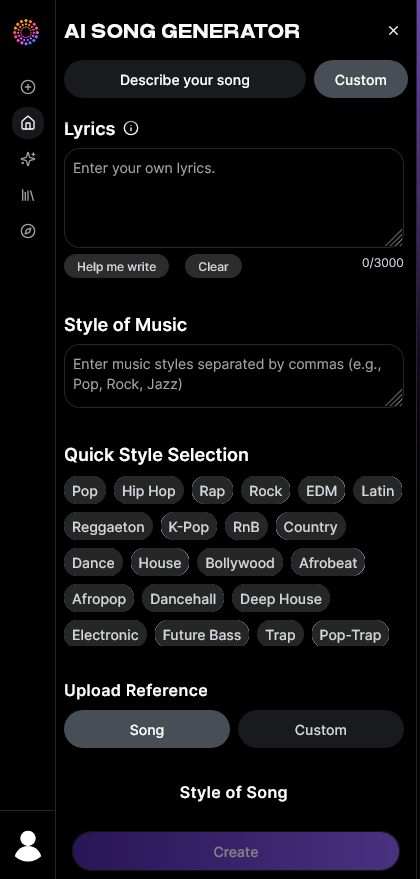
Now that you understand how to use OpenAI Jukebox, here is how you can create AI-generated songs instantly using Soundverse’s AI Song Generator.
Soundverse’s AI Song Generator turns lyrics or text descriptions into complete songs with AI-generated vocals and full instrumental backing. It runs through a multi-stage pipeline handling lyrics, melody composition, arrangement, and mixing. Key capabilities include:
- Describe Your Song Mode: Enter a short prompt like “Uplifting pop track about new beginnings.” The AI interprets mood, tempo, and instrumentation automatically.
- Custom Mode: Upload full lyrics and tweak parameters such as genre, vocal tone, or mixing density.
- Reference Audio Support: Use your own melody or vocal recording as an influence for the final sound.
- Quick Style Selection: Choose genres such as Pop, EDM, Rock, Jazz, or experimental hybrid styles.
It’s popular for:
- Rapid songwriting prototypes
- YouTube and social media content creation
- Multilingual songs across 10+ languages
- Personalized greetings or gifts
Soundverse’s asynchronous workflow ensures each generation is polished. You upload lyrics or text → configure style → the AI processes → result becomes downloadable. This mirrors Jukebox’s concept but is refined for creators rather than researchers. You can also explore other tools like the AI Singing Generator for acapella versions or Soundverse DNA, which enables copyright-safe, artist-based sound generation.
Final Thoughts
Understanding how to use OpenAI Jukebox offers unique insight into the science behind AI-driven music creation. It set the stage for today’s accessible platforms. In 2026, though Jukebox remains an academic and experimental milestone, its influence thrives through creative systems like Soundverse that turn complex generation into a seamless creative experience.
For additional inspiration, read guides such as How to Create EDM with Soundverse AI, explore AI music industry trends, or discover how AI-generated music is transforming the music industry. These resources expand your mastery of modern music creation workflows.
By blending foundational tools like OpenAI Jukebox with modern creators' platforms, you’re joining the new frontier of sound—where data meets emotion and machines collaborate with musicians to design the future of audio art.
Start Creating AI Music Instantly with Soundverse
Unlock powerful AI music tools to produce, remix, and customize tracks effortlessly. Join creators using Soundverse to generate professional-quality music in seconds.
Sign Up Free
Related Articles
- Generate AI Music with Soundverse Text-to-Music — Discover how to turn your ideas into full AI-generated tracks using Soundverse’s text-to-music technology.
- What AI Can Generate Songs? — Explore the leading AI platforms capable of generating songs and how they compare to each other.
- How AI-Generated Music is Transforming the Music Industry — Learn how AI innovations like Soundverse are reshaping music production and empowering creators worldwide.
- Best AI Music Generator: Top Picks and Review — Compare the best AI music generators, including Soundverse, to find the perfect tool for your creative needs.
Here's how to make AI Music with Soundverse
Video Guide
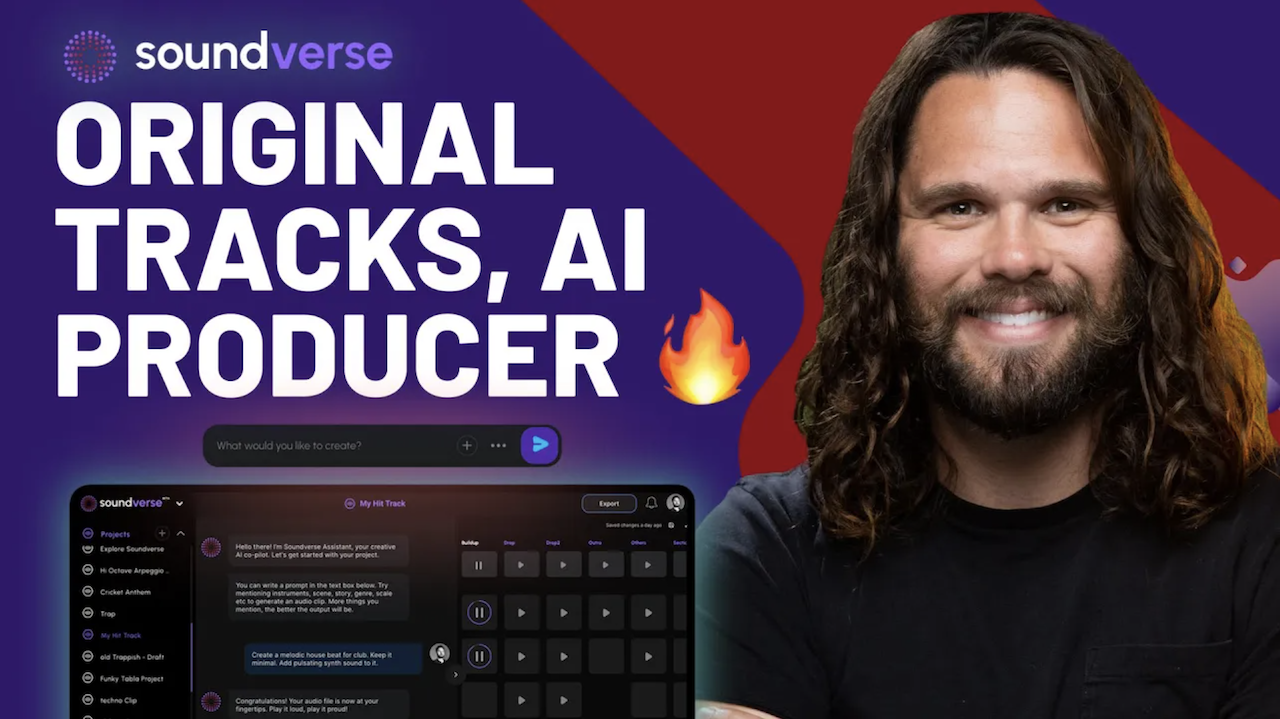
Here’s another long walkthrough of how to use Soundverse AI.
Text Guide
- To know more about AI Magic Tools, check here.
- To know more about Soundverse Assistant, check here.
- To know more about Arrangement Studio, check here.
Soundverse is an AI Assistant that allows content creators and music makers to create original content in a flash using Generative AI. With the help of Soundverse Assistant and AI Magic Tools, our users get an unfair advantage over other creators to create audio and music content quickly, easily and cheaply. Soundverse Assistant is your ultimate music companion. You simply speak to the assistant to get your stuff done. The more you speak to it, the more it starts understanding you and your goals. AI Magic Tools help convert your creative dreams into tangible music and audio. Use AI Magic Tools such as text to music, stem separation, or lyrics generation to realise your content dreams faster. Soundverse is here to take music production to the next level. We're not just a digital audio workstation (DAW) competing with Ableton or Logic, we're building a completely new paradigm of easy and conversational content creation.
TikTok: https://www.tiktok.com/@soundverse.ai
Twitter: https://twitter.com/soundverse_ai
Instagram: https://www.instagram.com/soundverse.ai
LinkedIn: https://www.linkedin.com/company/soundverseai
Youtube: https://www.youtube.com/@SoundverseAI
Facebook: https://www.facebook.com/profile.php?id=100095674445607
Join Soundverse for Free and make Viral AI Music
We are constantly building more product experiences. Keep checking our Blog to stay updated about them!