How to Register Your Voice for Legal Protection in 2026
Learn how to register your voice for legal protection and secure your vocal rights in 2026.
How to Register Your Voice for Legal Protection
When your voice becomes part of your brand—whether as a singer, voice actor, podcaster, or AI creator—protecting it legally is just as vital as trademarking a logo. In 2026, voice legal protection has evolved into a central topic for creatives, influencers, and content producers who rely on vocal identity to build reputation and revenue. This guide explains how to register your voice for legal protection, what voice copyright involves, and how to safeguard your unique sound using tools such as Soundverse Trace.
Why Voice Legal Protection Matters in 2026
In the past two years, the music and entertainment industries have witnessed accelerated adoption of AI voices and synthetic vocal generation. While that innovation has opened creative opportunities, it has also raised serious questions around ownership and misuse. Unlicensed AI models often replicate or clone voices without consent—an issue that led several artists and voice actors to file ownership claims in 2025.
Voice legal protection in 2026 now encompasses both traditional copyright and emerging AI rights. For musicians and voice talents, the protection of vocal recordings means ensuring not only that they own their completed tracks but also their digital fingerprints and metadata. Legal voice rights have become an essential part of intellectual property for voice creators worldwide.
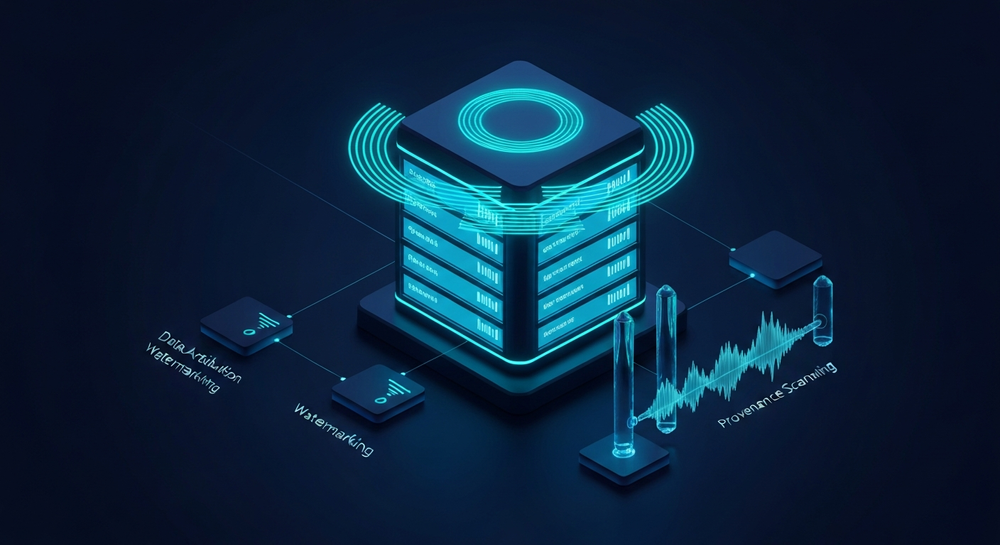
What is Voice Copyright and Vocal Registration?
Voice copyright is the application of intellectual property law to vocal performances. When you record or perform using your voice, that performance can be considered a fixed work eligible for copyright protection. However, vocal registration—the process of documenting and registering your voice files formally—is what gives you enforceable rights.
In 2026, creators pursue vocal registration for several reasons:
- Proof of Ownership: Registration creates an auditable record linking you to your original recordings. Learn about this process at the Copyright Alliance.
- Control Over AI Usage: With copyright registration, you can specify licensing terms for companies that wish to train models using your voice. Read more about voice cloning and copyright in 2026.
- Monetization through Licensing: Registered voices are increasingly becoming market assets—especially for AI sound modeling and immersive entertainment.
- Legal Protection Against Misuse: When your registered voice is copied or reused without permission, legal action is easier to initiate.

What are Your Legal Voice Rights?
Your legal voice rights fall under a combination of copyright and likeness protection. These rights include:
- Reproduction Control: Others may not reproduce your recorded or synthesized voice without consent.
- Distribution Rights: You can determine how your recordings are shared, sold, or streamed.
- Public Performance Rights: You maintain control over where your voice appears commercially.
- Moral Rights: You have the right to prevent derivative works that distort or damage your reputation.
As AI voice technologies continue to merge with mainstream applications—from advertising to gaming and film—protecting one’s voice identity has become essential to sustain creative livelihoods.
How to Get Started with Voice Legal Protection
Securing your voice legally involves several key steps:
- Documenting Your Voice Assets: Save high-quality versions of your vocal recordings. Include metadata such as date, equipment, and environment.
- Filing Copyright Applications: Depending on your jurisdiction, you can register sound files as original works. For U.S. creators, the Copyright Office allows single and group sound recording registrations. You can also use official forms and portals for the application process.
- Embedding Ownership Data: Metadata tagging and watermarking technologies ensure your digital voice fingerprint travels with your file.
- Automating Voice Tracking: Tools like Soundverse Trace now allow creators to embed rights protection during generation or export.
These steps form the foundation for voice ownership—ensuring you can legally prove authorship and control the use of your recordings.
For inspiration in your creative workflow, watch our guide on creating Deep House music, or explore more Soundverse tutorials like how to make music.
How to Register Your Voice for Legal Protection with Soundverse Trace
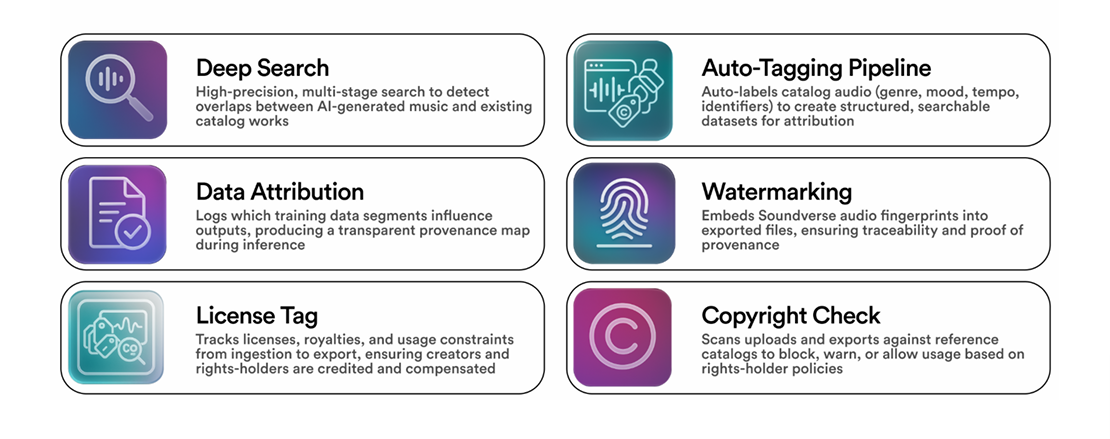
Soundverse Trace plays a pivotal role in modern voice legal protection workflows. It operates as a comprehensive trust layer for AI music and voice assets, embedding attribution, deep search, and rights protection from dataset creation through export.
Key Capabilities:
- Deep Search: Detects overlaps between your uploaded voice files and other audio datasets using high-precision scanning (1:1 and 1:N).
- Data Attribution: Maintains a transparent log of training data influences—crucial for verifying provenance.
- Audio Watermarking: Inserts inaudible yet durable fingerprints into audio, preserving your identity even across formats.
- License Tagging: Embeds rights metadata throughout the creative pipeline, ensuring that your legal voice rights remain intact.
Soundverse Trace enables creators to verify that no unauthorized datasets have used their voice, track catalog usage for royalty calculation, and simplify takedown procedures. It integrates seamlessly with the broader Ethical AI Music Framework, which ensures transparency and recurring compensation, and Soundverse DNA, which enables copyright-safe, artist-trained AI voice generation.
Step 1: Upload or Record Your Voice File
Begin your registration process by recording your vocal track or uploading existing audio files into the Soundverse platform. Since Soundverse processes uploads asynchronously, you'll submit your file first and receive your report later. This step is crucial because the system must analyze your voice waveform before embedding protection tags.
Step 2: Enable Data Attribution and Licensing Tags
Once uploaded, you select the licensing attributes that reflect your ownership preferences—commercial rights, training permissions, and attribution policies. Soundverse Trace automatically inserts this metadata, connecting the rights to the file throughout its lifecycle.
Step 3: Apply Audio Watermarking for Secure Tracking
Activate the watermarking feature to encode an inaudible fingerprint into your audio. This watermark ensures traceability if your voice appears in AI-generated media or gets replicated elsewhere. It’s a foundational layer for long-term legal protection.
Step 4: Verify Provenance and Overlap Reports
After embedding tags, Soundverse Trace performs deep search scans to detect overlaps across public datasets. You receive a provenance certificate showing where similarities exist or confirming originality. This record becomes key evidence for intellectual property claims or licensing negotiations.
Step 5: Export Your Protected Voice Assets
The final step is exporting your audio with embedded metadata. Soundverse Trace preserves licensing, attribution, and watermark data into the exported version, ensuring protection even when files circulate between collaborators or platforms.
Pro Tips for Maximizing Voice Ownership
- Maintain an organized folder of legal documents and proof of registration for each voice file.
- Regularly update metadata if licensing terms change after collaborations or publishing deals.
- Use watermarked exports for public or client delivery—keep a clean master for archival security.
- Consider registering your vocal identity as a trademark if it holds commercial appeal.
For additional resources on voice registration and industry shifts, explore insights from how AI-generated music is transforming the music industry and emerging music industry trends. You can also learn about complementary production features such as Soundverse AI Magic Tools or ways to Generate AI Music with Soundverse Text-to-Music.
Protect Your Voice with AI-Powered Legal Support
Secure your vocal identity and creative outputs using Soundverse’s advanced tools designed for artists, musicians, and voice creators. Take full control of how your voice is represented and protected online.
Related Articles
- Soundverse Saar: AI Voice Assistant — Discover how Soundverse Saar helps creators manage voice assets and content production efficiently.
- Copyright-Free vs Royalty-Free Music: What Creators Should Know — Learn the legal distinctions between copyright-free and royalty-free music and how they impact your creative freedom.
- Navigating the World of Royalty-Free and Copyright-Free Music Using Soundverse AI — Explore how Soundverse AI simplifies content creation while keeping your work legally protected and compliant.
- Enhancing YouTube Content with Royalty-Free and Copyright-Free Music Using Soundverse AI — Boost your video projects with safe-to-use, copyright-free music while keeping your creative rights intact.
Here's how to make AI Music with Soundverse
Video Guide
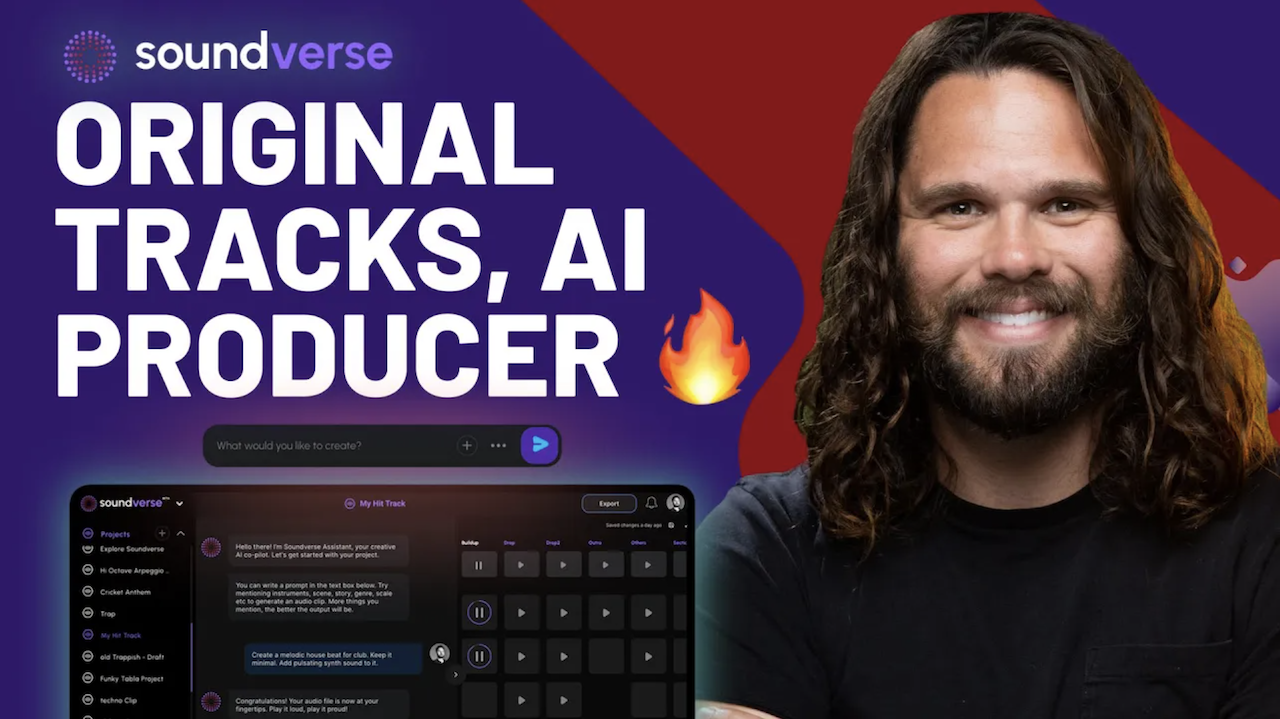
Here’s another long walkthrough of how to use Soundverse AI.
Text Guide
- To know more about AI Magic Tools, check here.
- To know more about Soundverse Assistant, check here.
- To know more about Arrangement Studio, check here.
Soundverse is an AI Assistant that allows content creators and music makers to create original content in a flash using Generative AI. With the help of Soundverse Assistant and AI Magic Tools, our users get an unfair advantage over other creators to create audio and music content quickly, easily and cheaply. Soundverse Assistant is your ultimate music companion. You simply speak to the assistant to get your stuff done. The more you speak to it, the more it starts understanding you and your goals. AI Magic Tools help convert your creative dreams into tangible music and audio. Use AI Magic Tools such as text to music, stem separation, or lyrics generation to realise your content dreams faster. Soundverse is here to take music production to the next level. We're not just a digital audio workstation (DAW) competing with Ableton or Logic, we're building a completely new paradigm of easy and conversational content creation.
TikTok: https://www.tiktok.com/@soundverse.ai Twitter: https://twitter.com/soundverse_ai Instagram: https://www.instagram.com/soundverse.ai LinkedIn: https://www.linkedin.com/company/soundverseai Youtube: https://www.youtube.com/@SoundverseAI Facebook: https://www.facebook.com/profile.php?id=100095674445607
Join Soundverse for Free and make Viral AI Music
 We are constantly building more product experiences. Keep checking our Blog to stay updated about them!