How to Negotiate an AI Training Licensing Deal: A 2026 Guide for Artists and Rights Holders
Learn how to negotiate an AI training licensing deal in 2026 for your creative works, with Soundverse’s Content Partner Program.
How to Negotiate an AI Training Licensing Deal
In 2026, artificial intelligence models depend on ethically gathered creative data, making licensing negotiations for AI training more complex and critical than ever. As AI-generated music and visuals become mainstream, rights holders—musicians, composers, producers, and publishers—are learning how to balance creativity, ownership, and participation in the AI economy. Understanding how to negotiate an effective AI training licensing deal can secure both your rights and a steady stream of royalties.
Why negotiating an AI training licensing deal matters in 2026

The music and entertainment industries moved beyond simple sync agreements and streaming payouts. Today, the core of monetization lies in how artists and rights holders allow their creative content to train AI systems. The emergence of transparent frameworks—like Soundverse’s Content Partner Program—now defines the ethics and economics of these collaborations.
A well-structured AI training licensing deal allows your creative works to contribute to the development of generative AI models while maintaining control over compensation, usage, and attribution. Without signed licensing negotiations, artists risk having their catalog used without consent or credit. In 2026, transparency and verification are no longer optional—they’re mandatory.
What makes an AI training licensing deal different from a traditional sync or streaming contract?

Unlike a sync license (one-time payment for using a song in media) or a streaming agreement (royalty per stream), an AI licensing deal usually involves training datasets. These datasets teach models to understand sound, tone, and emotional signatures derived from existing recordings. Key differentiators include:
- Scope of use: Instead of playing your track publicly, AI training uses your data internally to learn.
- Duration: Data may exist in models for extended periods, requiring recurring royalties.
- Attribution: You maintain visibility into how and where your work contributes to generative outputs.
- Revenue model: Compensation is often usage-based—triggered by AI generations influenced by your work.
These distinctions underline why negotiation strategy matters.
How to make an AI training licensing deal with Soundverse Content Partner Program
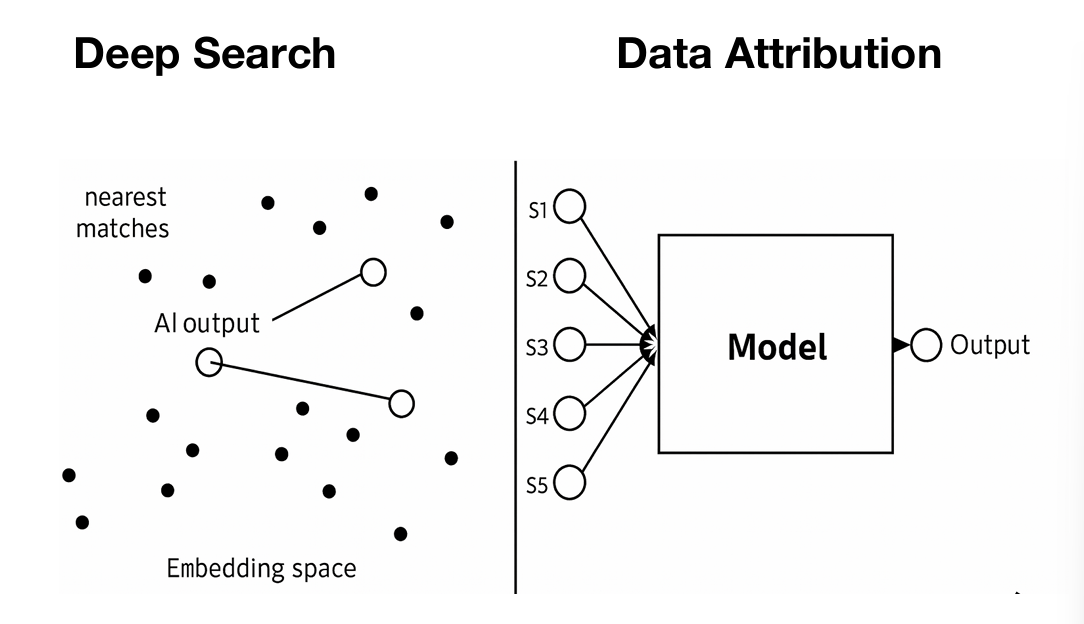
Soundverse’s Content Partner Program is designed specifically for ethical and transparent licensing. It’s an opt-in framework where rights holders contribute audio for AI model training and receive recurring, usage-based royalties driven by attribution.
Core capabilities include:
- Influence-Based Payouts (Pay per generation): Earnings scale with the AI’s usage of your data.
- Tiered Licensing (Tiers 1–6): You define how broad the training scope is—from limited academic use to full commercial integration.
- Real-Time Dashboards: Monitor your revenue and attribution reports easily.
- Transparency Reports: See where and how your works are being used in datasets.
This framework ensures artists don’t lose control or compensation in the evolving AI space.
To better grasp the ethical AI infrastructure behind this approach, Soundverse links the Content Partner Program to the Ethical AI Music Framework and Soundverse Trace, a trust layer that embeds attribution and rights protection throughout the creative lifecycle.
For comparison, explore other Soundverse-related articles such as Music Industry Trends, How AI-Generated Music is Transforming the Music Industry, and Soundverse AI Revolutionizing Music Creation.
Step 1: Define your data rights and creative boundaries
Before beginning negotiations, clarify exactly which parts of your catalog you want to license. This may include songs, stems, voice samples, or entire albums. Identify non-transferable elements like collaborations or remixes that require additional permissions. Document who owns which rights—publishing, composition, and master recordings—to avoid disputes later.
A strong rights inventory helps the AI company understand what it’s licensing and ensures your compensation covers every contributor.
Step 2: Research AI companies and their ethical standards
Every AI organization handles training data differently. Study their licensing structure, transparency policies, and revenue models. Platforms anchored in fairness—such as Soundverse—build trust through attribution and open reporting. Avoid deals where datasets remain anonymous or usage tracking is unavailable.
For example, the Content Partner Program’s transparency reports show exactly where your material has been deployed and how many outputs it has influenced. This accountability is crucial. For a deeper dive, watch our guide on creating Deep House Music or explore the Explore Tab walkthrough on the Soundverse YouTube channel.
Step 3: Negotiate royalty terms and tiers
An effective licensing negotiation involves understanding both one-time and recurring revenue opportunities. Common models include:
- Flat licensing fees for limited data usage (often academic research).
- Recurring, usage-based royalties where payments increase according to content generation.
- Tiered access allowing you to scale from private data use to open commercial datasets.
Soundverse simplifies this through its Tiered Licensing system, enabling rights holders to select from six engagement levels. Whether your goal is small experimental training or broad commercial deployment, you can define rate multipliers accordingly.
Step 4: Include attribution clauses and monitoring access
Attribution is no longer a moral suggestion—it’s a revenue engine. Negotiate explicit attribution requirements so that every AI output influenced by your data remains traceable. Modern AI infrastructures like Soundverse Trace ensure generated content carries embedded metadata linking back to original rights holders.
This enables ethical participation in the AI economy without sacrificing creative integrity.
Step 5: Review usage transparency and reporting cadence
Always request precise transparency reports. In the Soundverse dashboard, partners receive regular insights detailing usage count and royalty accrual. This structure eliminates blind spots common in older licensing models where artists rarely knew how often their music was played or sampled.
In 2026, data has become the new currency—and reports define earnings. According to Rareform Audio, AI licensing has taken a step forward as music technology companies finalize agreements with all major music groups. MusicRadar notes that “we’re seeing the future of music take shape in real time” as major labels partner with AI startups to ensure fair licensing practices.
Step 6: Consider legal representation familiar with AI and digital rights
AI licensing sits at the intersection of copyright law and data ethics. Having specialized counsel ensures agreements reflect current international frameworks and regional data protection laws. Your attorney should verify clauses like dataset retention, redistribution rights, and royalty recalibration when the AI model updates.
Modern licensing attorneys frequently reference cases and precedents established from 2024–2025 when early AI-data misuse emerged. Learning from those helps you draft future-proof contracts. As highlighted by Complete Music Update, AI will remain a major talking point in the music industry throughout 2026, defining copyright negotiations globally.
Expert tips for successful licensing negotiation
- Start with an audit of your catalog. Assess which works have long-term value for machine learning.
- Avoid open-ended terms. Every AI model upgrade may change dataset relevance—set periodic renegotiation windows.
- Demand visibility. Ensure that your licensing partner, like Soundverse, commits to transparent usage metrics.
- Combine multiple rights streams. Pair AI training royalties with sync or streaming where possible.
- Stay informed. Follow updates in ethical AI creation tools (Soundverse Magic Tool) to understand how your contributions drive innovation. For a visual example of creative workflows, watch Soundverse Tutorial Series - How to Make Music.
How Soundverse supports ethical licensing negotiation
The combination of the Content Partner Program, Ethical AI Music Framework, and Soundverse Trace forms a comprehensive solution for artists negotiating AI licensing deals. Together, they protect creative assets while generating recurring income.
Through these tools, rights holders gain:
- Negotiation clarity for dataset inclusion.
- Continuous reporting aligned with attribution impact.
- Recurring, transparent payouts that build trust between creators and AI systems.
Artists engaging with AI training can also expand creative experimentation—incorporating AI-generated music using guided prompts as seen in 100 Text-to-Music Prompts for Viral Music.
Start Your AI Music Licensing Journey Today
Unlock the potential of AI-generated music and learn how Soundverse can help you create, license, and protect your content seamlessly. Take control of your next AI training licensing deal now.
- How AI-Generated Music Is Transforming the Music Industry: Explore how AI composition tools are reshaping licensing, creativity, and revenue models across the music industry.
- Navigating the World of Royalty-Free and Copyright-Free Music Using Soundverse AI: Learn how to find and use royalty-free AI-generated music ethically and effectively for commercial projects.
- Copyright-Free vs. Royalty-Free Music: What Creators Should Know: Understand the key differences between copyright-free and royalty-free tracks to avoid licensing pitfalls.
- The Role of AI Music in Film and Television: Discover how AI music generation is redefining soundtrack licensing and production workflows in media.
Here's how to make AI Music with Soundverse
Video Guide
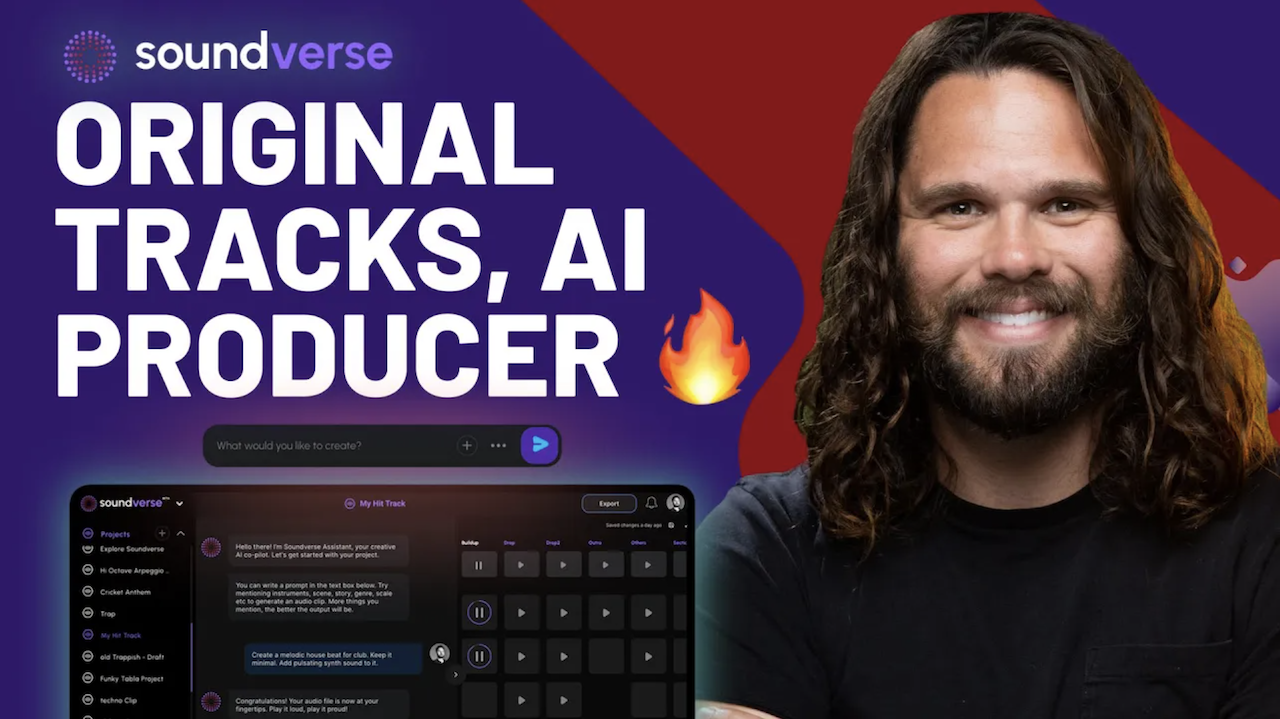
Here’s another long walkthrough of how to use Soundverse AI.
Text Guide
- To know more about AI Magic Tools, check here.
- To know more about Soundverse Assistant, check here.
- To know more about Arrangement Studio, check here.
Soundverse is an AI Assistant that allows content creators and music makers to create original content in a flash using Generative AI. With the help of Soundverse Assistant and AI Magic Tools, our users get an unfair advantage over other creators to create audio and music content quickly, easily and cheaply. Soundverse Assistant is your ultimate music companion. You simply speak to the assistant to get your stuff done. The more you speak to it, the more it starts understanding you and your goals. AI Magic Tools help convert your creative dreams into tangible music and audio. Use AI Magic Tools such as text to music, stem separation, or lyrics generation to realise your content dreams faster. Soundverse is here to take music production to the next level. We're not just a digital audio workstation (DAW) competing with Ableton or Logic, we're building a completely new paradigm of easy and conversational content creation.
TikTok: https://www.tiktok.com/@soundverse.ai
Twitter: https://twitter.com/soundverse_ai
Instagram: https://www.instagram.com/soundverse.ai
LinkedIn: https://www.linkedin.com/company/soundverseai
Youtube: https://www.youtube.com/@SoundverseAI
Facebook: https://www.facebook.com/profile.php?id=100095674445607
Join Soundverse for Free and make Viral AI Music
We are constantly building more product experiences. Keep checking our Blog to stay updated about them!
Image Steps: []