How to Mix Music for Open-Ear Playback in 2026
Learn open-ear music mixing and mastering techniques for spatial audio and headphones in 2026.
How to Mix Music for Open-Ear Playback
In 2026, open-ear music mixing has evolved from a niche engineering focus to a mainstream necessity in both consumer audio and professional production. With open-ear headphones and spatial playback systems dominating the market, mixing techniques must evolve to ensure transparency, separation, and accurate spatial representation. This guide dives into the concept of open-ear mixing, offers practical steps to mix for open-ear environments, and introduces how Soundverse's Stem Separator helps professionals refine and balance mixes intelligently.
Why does open-ear music mixing matter in 2026?
Open-ear playback radically changes how sound interacts with the listener. Instead of isolating audio inside closed cups, open-ear headphones maintain natural ambient immersion, blending the listener’s environment with the produced sound. For audio engineers and music producers, this means the traditional approach of compressing frequency ranges or boosting stereo depth needs reimagination.

Open-ear music mixing optimizes sound for natural listening. The focus shifts toward a balanced dynamic range, reduced masking across frequency bands, and a deliberate placement of instruments using refined spatial audio techniques. With spatial sound design for headphones becoming standard in 2026, engineers must mix tracks to maintain intelligibility without sacrificing impact.
What is the challenge of open ear mixing compared to closed-back mixing?
In conventional mixing with closed-back studio headphones, engineers rely on isolation to make precise EQ and reverb decisions. However, open-ear setups introduce external resonance, reflections, and partial leakage. This requires mixes to be more forgiving and adaptable across playback environments.

For instance, sub-bass should not dominate, because open-ear drivers often roll off below 60 Hz. Instead, creative bass management and harmonic layering ensure presence. Similarly, upper-mid frequencies around 2 kHz–6 kHz must be controlled to prevent harshness when external noise interacts with playback.
A strong understanding of psychoacoustic perception is vital. The brain interprets open-ear sound differently, often emphasizing directional cues. Producers working on spatial audio mixes for 3D or open-ear playback should utilize head-related transfer function (HRTF) references to simulate real-world perspective mixing.
How does spatial audio influence open-ear music mixing?
Spatial audio is deeply integrated into modern open-ear music mixing workflows. It allows engineers to sculpt three-dimensional space around the listener, placing instruments and vocals in perceived physical positions. As the 2026 music industry trends indicate, immersive audio formats like Dolby Atmos and Sony 360 Reality Audio have become standard listening preferences (read more about industry trends here).
To mix effectively for open-ear playback within spatial audio contexts:
- Use spatial panning to enhance natural depth instead of extreme stereo separation.
- Apply ambience reverbs mildly; open-ear systems naturally blend external reverberation.
- Maintain phase coherence across stems — phase inconsistencies become more audible in open environments.
- Regularly reference your mix on multiple playback formats to ensure adaptability.
Learn additional open-ear optimization insights from 2026 Smart Glasses Audio Guide, covering how beamforming improves perceived bass clarity.
How to make open-ear music mixing with Soundverse Stem Separator
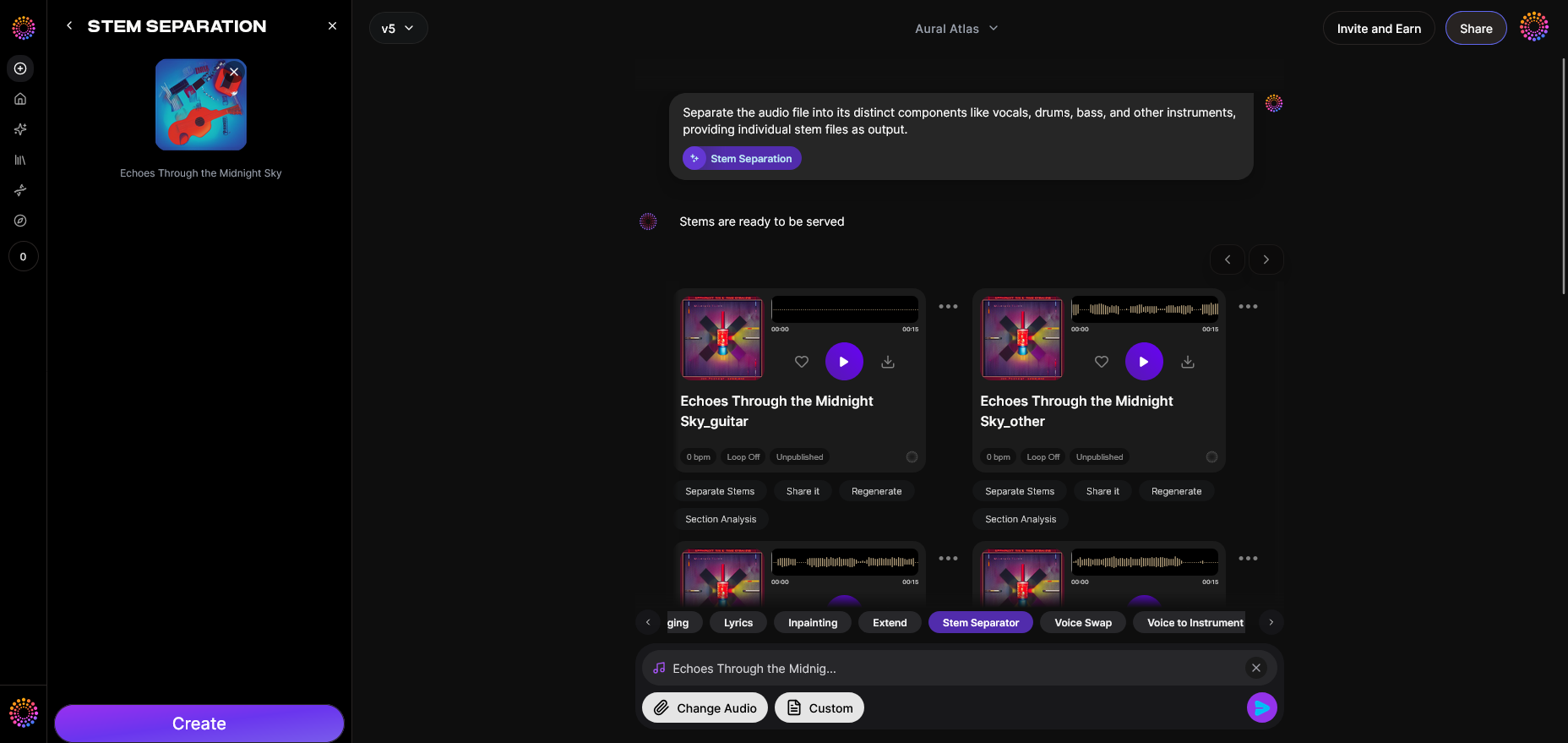
Before diving into practical techniques, let’s explore how Soundverse helps audio engineers handle the complexity of stem-level control.
The Soundverse Stem Separator is designed for precise mix dissection. It intelligently splits any mixed track into up to six editable stems — Vocals, Drums, Bass, Guitar, Accompaniment, and others — enabling meticulous control over each component. This capability helps engineers analyze and remix for open-ear performance by isolating frequency conflicts or excessive compression per stem.
Core Capabilities:
- 6-stem separation.
- Supports URL, file, and recording inputs.
- High-quality isolation for remixing and sampling.
Primary Use Cases:
- Detailed remixing of existing tracks.
- Creating performance-ready backing tracks.
- Conducting educational analysis of mix structure.
- Cleaning up audio for optimized mastering.
It enables producers to reconstruct frequency balances for open-ear playback conditions easily, allowing better adaptation across open designs.
Step 1: Upload Interface
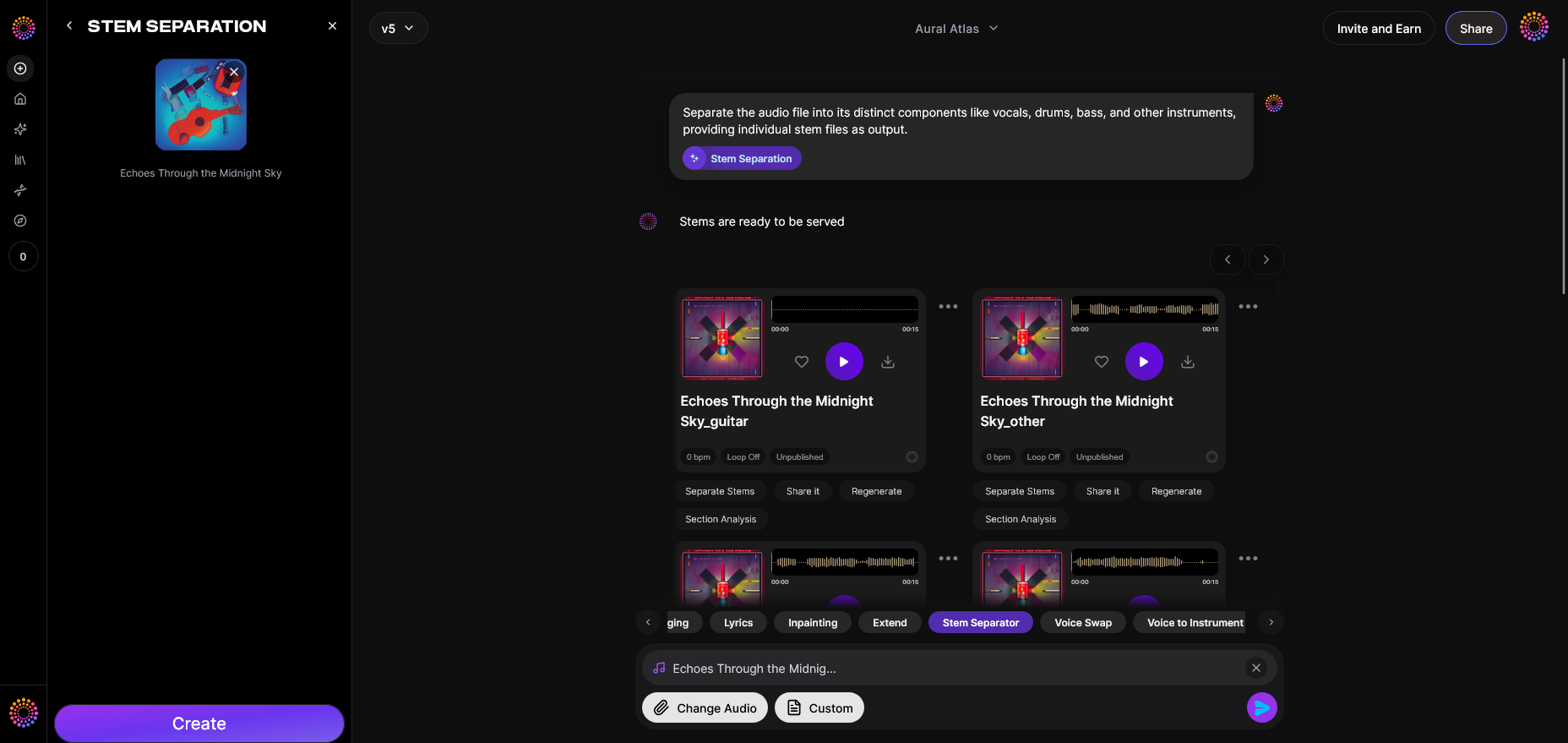
Begin by launching the Soundverse Stem Separator. You can upload a mixed track directly through the file upload window, paste an audio URL, or record new material. This interface initiates asynchronous separation — the AI processes the track after upload and generates isolated stems ready for analysis.
For a deeper dive into Soundverse workflows, watch our tutorial on creating Deep House music.
Step 2: Additional References
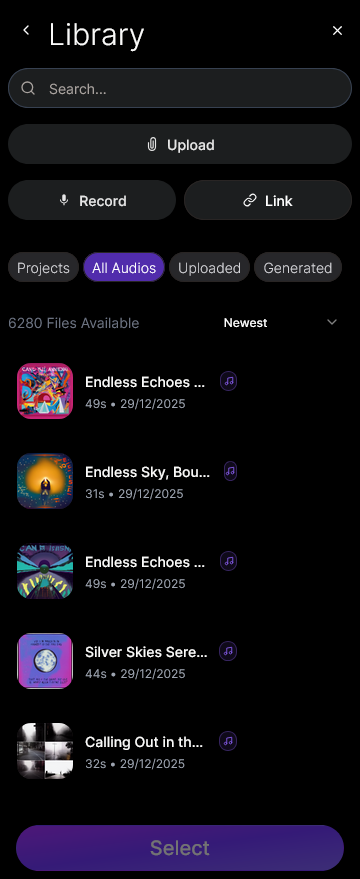
For open-ear music mixing, uploading reference tracks reflecting natural sound staging improves precision. These may include well-balanced spatial mixes or acoustic performances optimized for transparent listening. Soundverse supports referencing alongside uploads, allowing comparisons between mix structures.
Step 3: Results Display
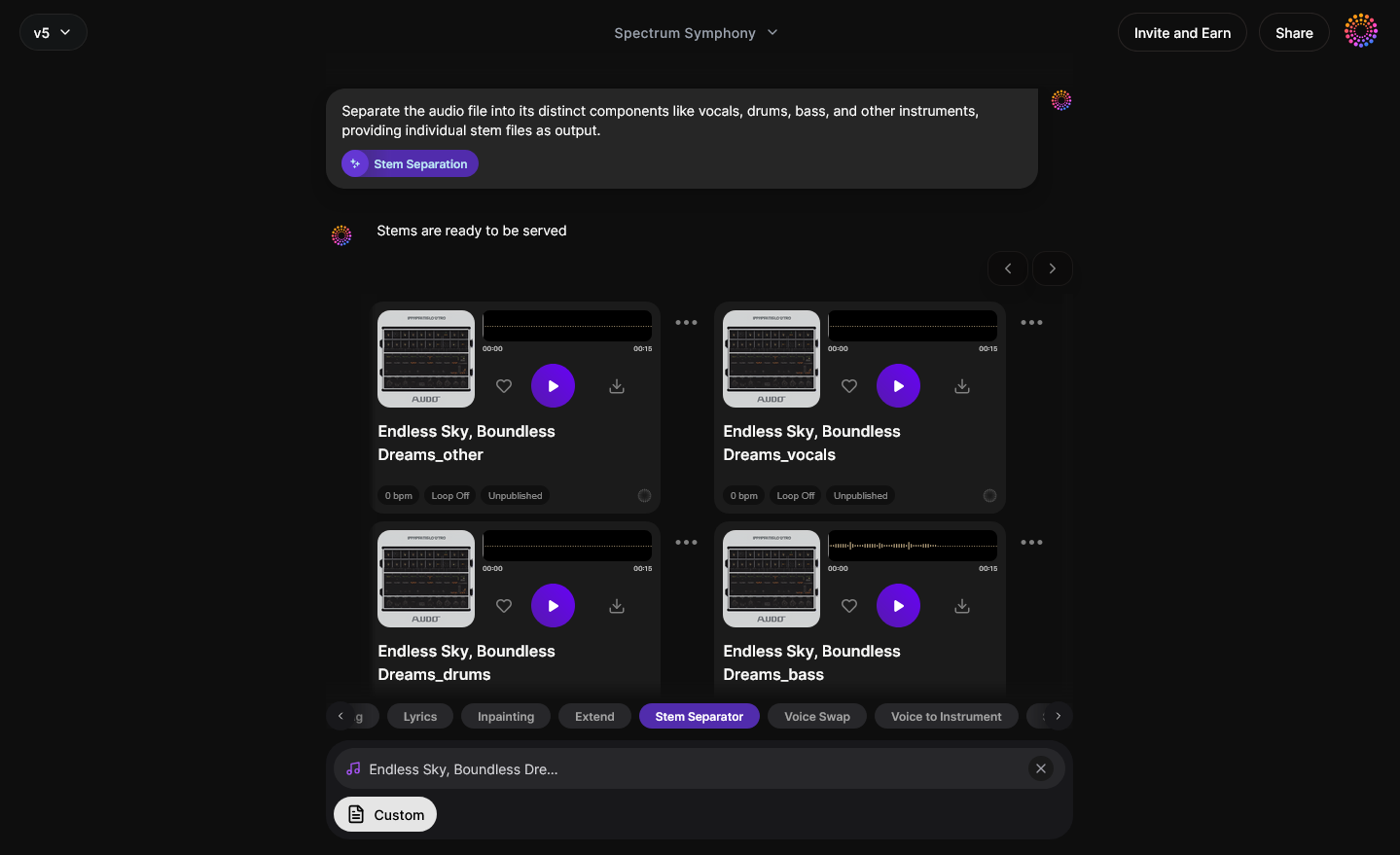
After processing, the separated stems are displayed individually. Engineers can clearly visualize vocals, drums, bass, and instrumental layers. This immediate clarity helps identify problematic frequency overlaps or transient inconsistencies affecting open-ear clarity.
Step 4: Download Stems
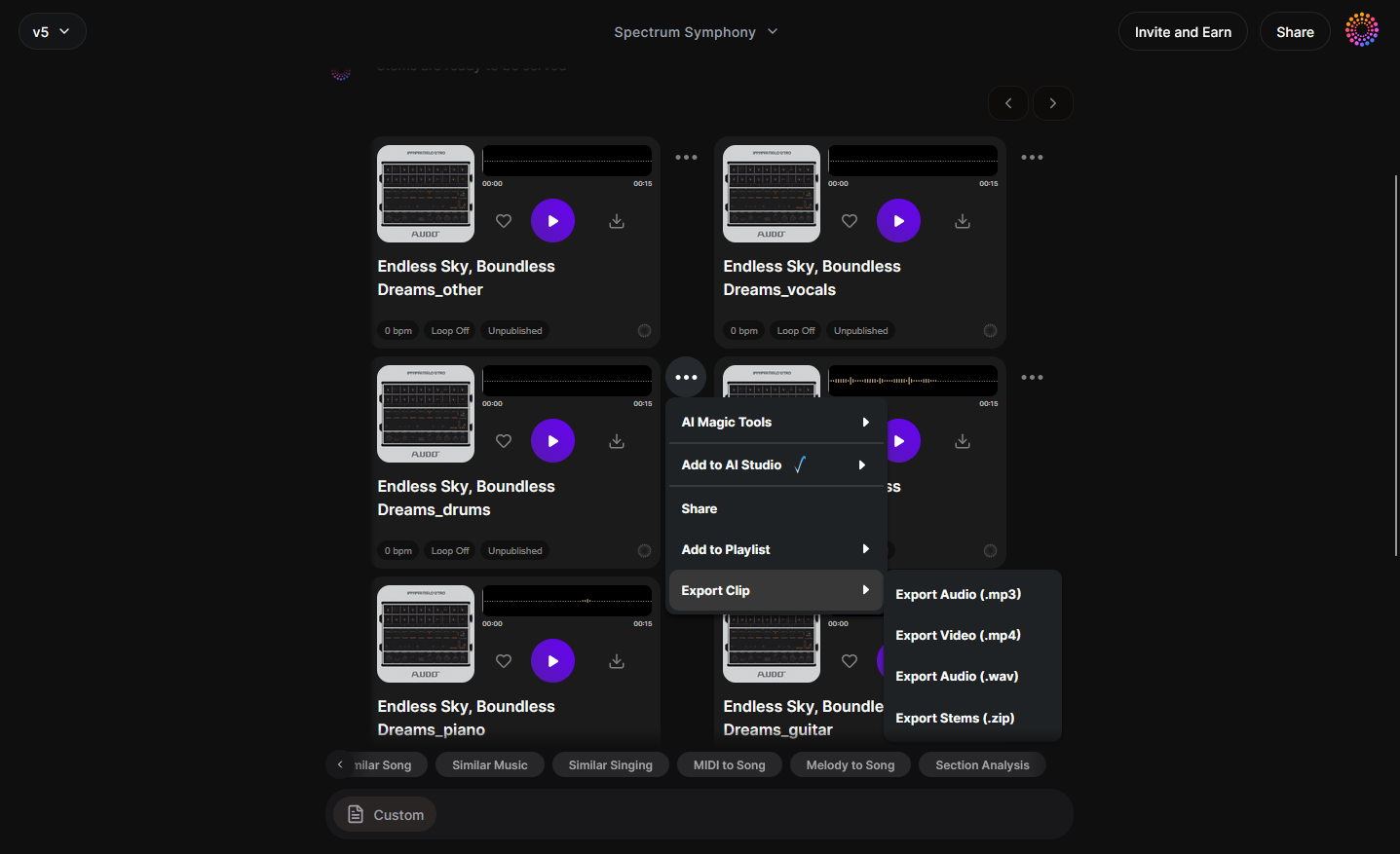
Once refinement targets are determined, you can download each stem to re-balance or remix in your DAW. Adjust EQ curves, apply subtle spatial widening, or manage amplitude envelopes per stem for enhanced transparency. These downloads form your foundation for open-ear compatible mastering sessions.
What are advanced mastering techniques for open-ear playback?
Open-ear mastering emphasizes detail preservation and cross-platform consistency. Here’s how professionals optimize masters for this type of listening:
- Dynamic Control: Avoid aggressive loudness normalization. Preserve microdynamics for a more natural listening feel in open environments.
- Mid-Side Processing: Employ mid-side EQ to broaden perceived stereo width subtly without overstating extremes.
- Spectral Balance: Target balanced tonal representation — high frequencies should sparkle yet remain soft; low frequencies should be clearly defined rather than overwhelming.
- Cross-Environment Testing: Evaluate the final master on open-ear headphones, studio monitors, and consumer earbuds to ensure translatability.
- Spatial Analysis Tools: Use analytic tools integrated with HRTF simulation to visualize the sound field around the listener.
Additional advanced automation and reverb techniques can be found in Advanced Mixing Techniques: Achieving Professional Sound.
For additional mastering insights, consider reading Soundverse AI Magic Tools overview or explore the Stem Separation AI Magic Tool.
Pro Tips for Engineers Mixing in 2026
- Use reference tracks engineered for ambient listening. Many 2026 releases are now optimized for spatial depth instead of loudness wars.
- Combine acoustic calibration with psychoacoustic testing. Simulate real-world environments to understand how mixes feel outside isolated studios.
- Utilize multi-reference environments. Tools like Soundverse’s Stem Separator, when paired with Section Analysis and Inpainting, ensure structural precision before mastering.
- Stay updated with AI production trends. AI-assisted music creation is redefining the workflow. Learn more about AI revolutionizing music creation.
Start Mixing Smarter with Soundverse AI
Experience the next generation of AI-assisted music production. Create, mix, and refine your tracks for open-ear playback with precision and ease using Soundverse’s intelligent tools.
Sign Up Free
Related Articles
- Soundverse Introduces Stem Separation AI Magic Tool — Discover how Soundverse’s stem separation technology transforms your mixing workflow and creative possibilities.
- What Are Song Stems and Why Do You Need Them — Learn the importance of stems in modern music production and how they enhance open-ear and layered mixing techniques.
- Soundverse Assistant: Your AI Music Co-Producer — Meet your new digital co-producer who helps refine mixes, generate ideas, and optimize sound clarity for any playback style.
- Best AI Music Generator: Top Picks and Review — Compare leading AI music tools and find the perfect creative partner to elevate your open-ear mixing sessions.
Here's how to make AI Music with Soundverse
Video Guide

Here’s another long walkthrough of how to use Soundverse AI.
Text Guide
- To know more about AI Magic Tools, check here.
- To know more about Soundverse Assistant, check here.
- To know more about Arrangement Studio, check here.
Soundverse is an AI Assistant that allows content creators and music makers to create original content in a flash using Generative AI.
With the help of Soundverse Assistant and AI Magic Tools, our users get an unfair advantage over other creators to create audio and music content quickly, easily and cheaply.
Soundverse Assistant is your ultimate music companion. You simply speak to the assistant to get your stuff done. The more you speak to it, the more it starts understanding you and your goals.
AI Magic Tools help convert your creative dreams into tangible music and audio. Use AI Magic Tools such as text to music, stem separation, or lyrics generation to realise your content dreams faster.
Soundverse is here to take music production to the next level. We're not just a digital audio workstation (DAW) competing with Ableton or Logic, we're building a completely new paradigm of easy and conversational content creation.
TikTok: https://www.tiktok.com/@soundverse.ai
Twitter: https://twitter.com/soundverse_ai
Instagram: https://www.instagram.com/soundverse.ai
LinkedIn: https://www.linkedin.com/company/soundverseai
Youtube: https://www.youtube.com/@SoundverseAI
Facebook: https://www.facebook.com/profile.php?id=100095674445607
Join Soundverse for Free and make Viral AI Music

We are constantly building more product experiences. Keep checking our Blog to stay updated about them!