How to Make Any Song Sound Lofi in 2026
Learn how to make a song lofi using techniques and Soundverse’s Stem Separator in 2026.
How to Make Any Song Sound Lofi
What does it mean to make a song sound lofi?
Before diving into the process of how to make a song lofi, it’s important to understand what “lofi” actually means. In 2026, lofi music remains one of the most popular chill genres among producers, streamers, and DIY musicians. Characterized by its warm tones, mild distortion, vinyl crackle, and nostalgic atmosphere, lofi music intentionally embraces imperfections to create a cozy, calming vibe. It’s less about pristine production and more about emotion, texture, and vibe. According to Britannica and Yamaha Music Blog, lo-fi stands for “low fidelity,” highlighting raw character over studio perfection.
When producers talk about making a song lofi, they’re talking about manipulating audio so that it sounds vintage and laid-back—similar to tracks you’d hear on “lofi hip-hop beats to relax/study to.” This can be done through a combination of frequency shaping, saturation, noise layers, and rhythmic simplification.

Why is lofi music production so popular in 2026?
Since 2024 and 2025, the popularity of lofi has continued to rise, driven by social platforms and creator culture. Thousands of content creators use lofi remixes for backgrounds in YouTube videos or Twitch sessions. In 2026, AI tools have made it easier than ever to turn any song into lofi without advanced DAW skills. Lofi music production fits perfectly into modern workflows because:
- It’s lightweight and emotionally expressive.
- It blends well in podcast or gaming content.
- It’s ideal for copyright-free remixing when using AI regeneration tools.
For more insights into AI in music, read How AI-Generated Music Is Transforming the Music Industry.

What elements create a lofi vibe?
Creating lofi vibe goes beyond simple EQ filters. You’ll need to combine several production techniques:
- Noise layers and textures – Add vinyl crackle, tape hiss, or subtle ambient noise. These imperfections instantly transport listeners to a retro setting as explored by Music Gateway.
- Warm saturation – Analog-style distortion and soft compression transform clean tracks into warm, cozy ones.
- Gentle detuning and pitch variations – Small inconsistencies mimic worn tape player behavior.
- Low-pass EQ filters – Reduce high frequencies to create muffled tones.
- Rhythmic simplicity – Slow tempos or downtempo beats give the relaxed signature of lofi, often seen in Uppbeat’s genre guide.
- Reverb and spatial depth – Reverb creates distance and nostalgia, essential for dreamy aesthetics.
How to make a song lofi: Step-by-step guide
Now, let’s dive into how to make a song lofi using a structured process followed by how to execute it instantly using Soundverse.
Step 1: Upload Interface
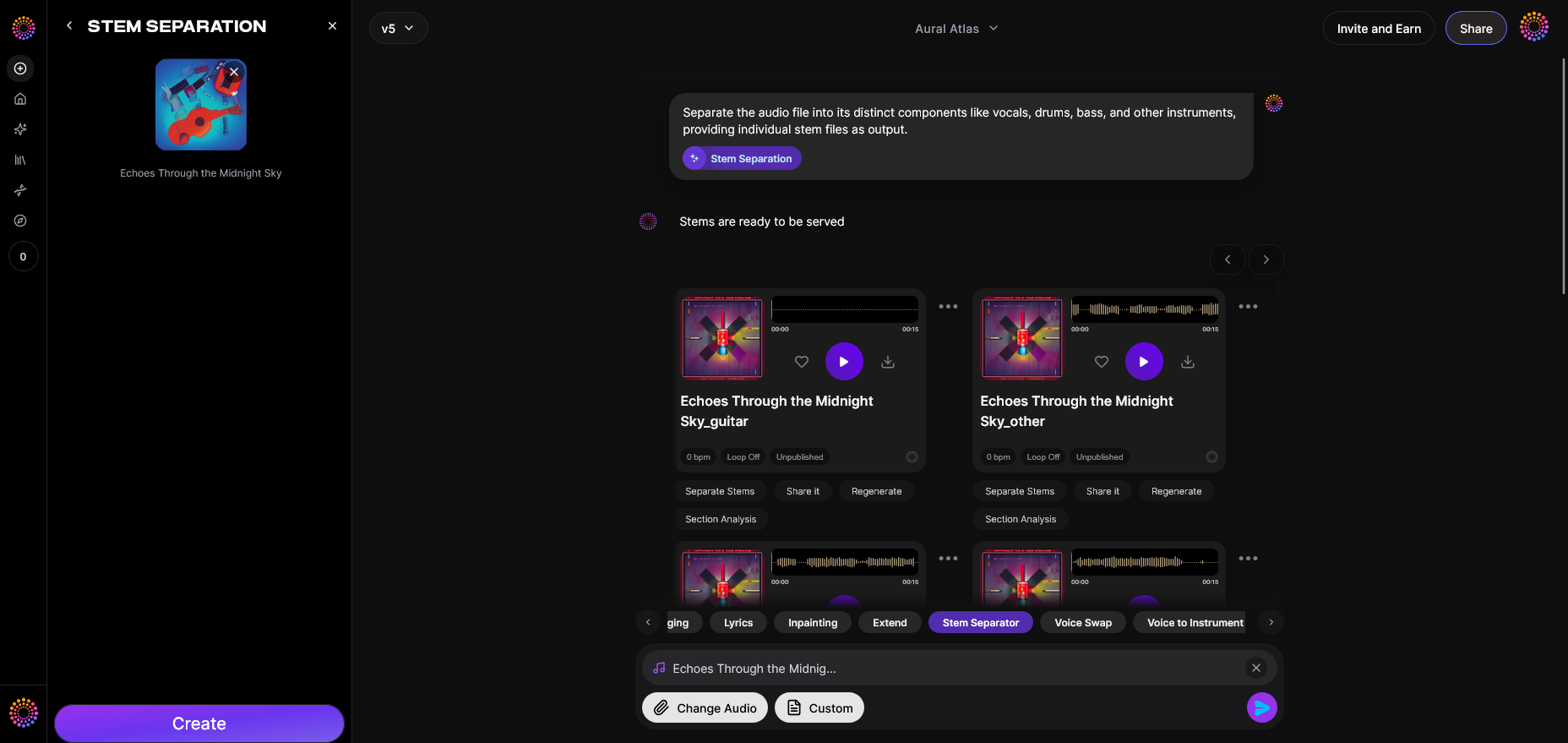
Start by uploading the original song you want to convert into lofi. This might be a vocal track, a full mix, or a recorded performance. In any modern music app, you’ll need to import your audio file to begin. In Soundverse’s workflow, you can upload directly using a file link, URL, or recording input. The goal is to have the clean audio ready for stem separation and processing.
Step 2: Additional References
To make the song sound authentically lofi, it helps to use reference tracks. Perhaps you have a favorite chill beat or previous remix you liked. These references help guide your EQ, rhythm, and texture design decisions. In production terms, referencing ensures your song’s tone matches popular lofi benchmarks while keeping your unique feel intact. You can check inspiration ideas in 40 Hand-Picked Lofi Text-to-Music Prompts For All Occasions.
Step 3: Results Display
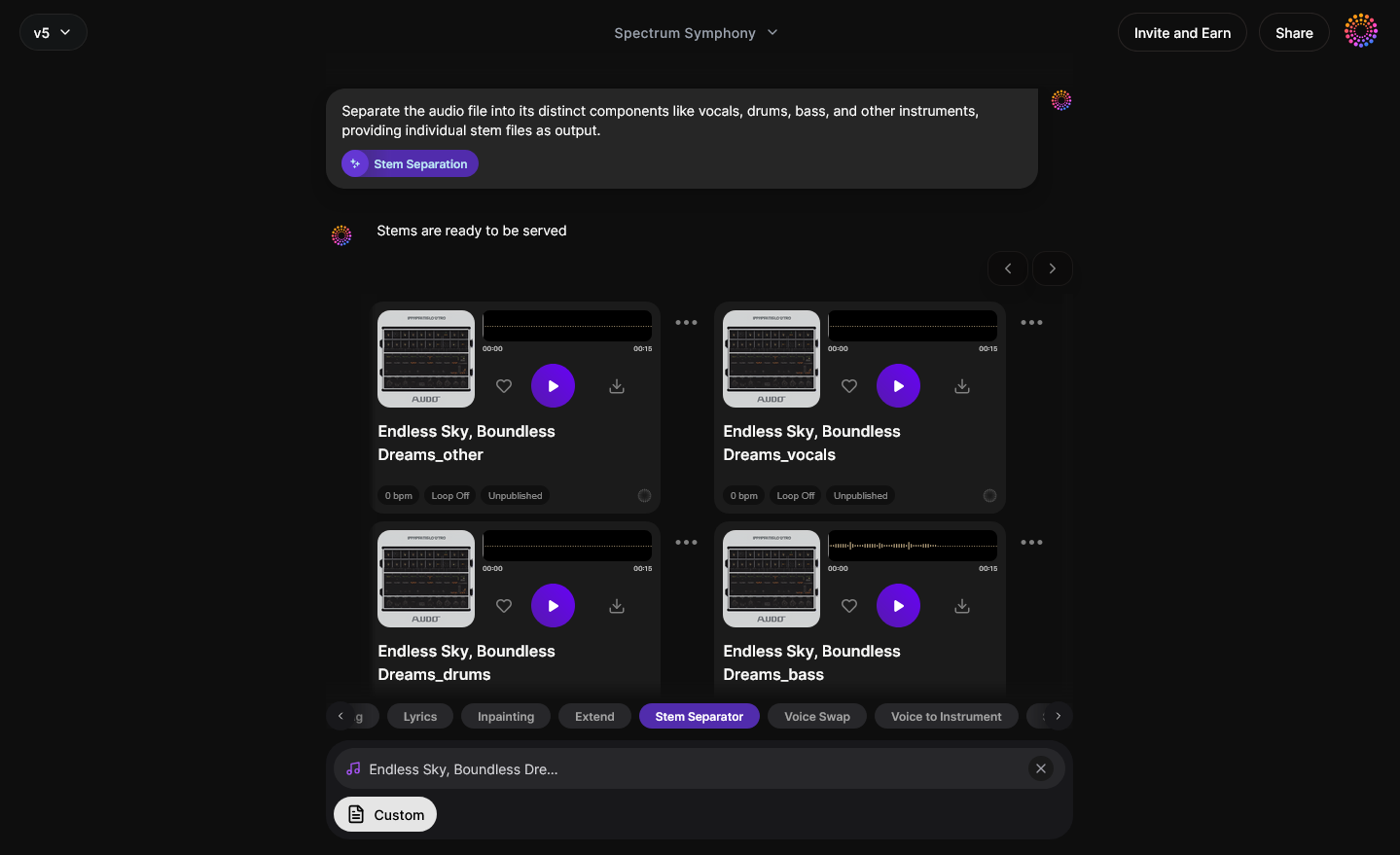
Once you’ve applied filters and adjustments, analyze the separated stems. This helps you decide which instruments to emphasize or modify to boost that calming lofi essence. Typically, drums become softer, vocals are wrapped in reverb, and bass slightly rolls off high frequencies for warmth. Visualization in the stem display shows individual waveforms—bass, drums, vocals, accompaniment—and lets you isolate sections for extra tweaking. You can also watch Soundverse’s tutorial on making music for visual guidance.
Step 4: Download Stems

After editing, export the newly processed stems separately for use in your DAW or sampler. You can combine reprocessed stems, add vinyl textures, and layer ambience for the final lofi version. Once satisfied, download and combine them into the final mix.
What lofi effects should you use?
When learning how to make a song lofi, remember that your effect choices define the character. Here are the top lofi effects to explore:
- Vinyl simulation plugins – These add crackle and mechanical hum.
- Tape emulators – Plugins that replicate analog tape saturation.
- Bit crusher or down-sampling – Adds digital softness.
- Sidechain compression – Creates rhythmic pumping for modern chill beats.
- Stereo narrowing – Makes mixes sound intimate and vintage.
- Ambient reverb – Produces depth suitable for relaxed listening environments.
Producers in 2026 often combine these techniques with AI remastering for precision, following detailed lofi remix tutorial references.
Common mistakes when making lofi remixes
If you’re not careful, your mix might sound muddy instead of mellow. Here’s what to avoid:
- Overuse of noise layers – Too much crackle can drown instruments.
- Excessive EQ cuts – Removing too much brightness makes tracks lifeless.
- Ignoring groove – Lofi doesn’t mean rhythm-less; subtle swing adds personality.
- Ignoring song emotion – Lofi transformation should enhance, not erase, the song’s original feeling.
- Unbalanced volume – A relaxed vibe still needs clarity between bass and mids.
How to make any song lofi with Soundverse Stem Separator
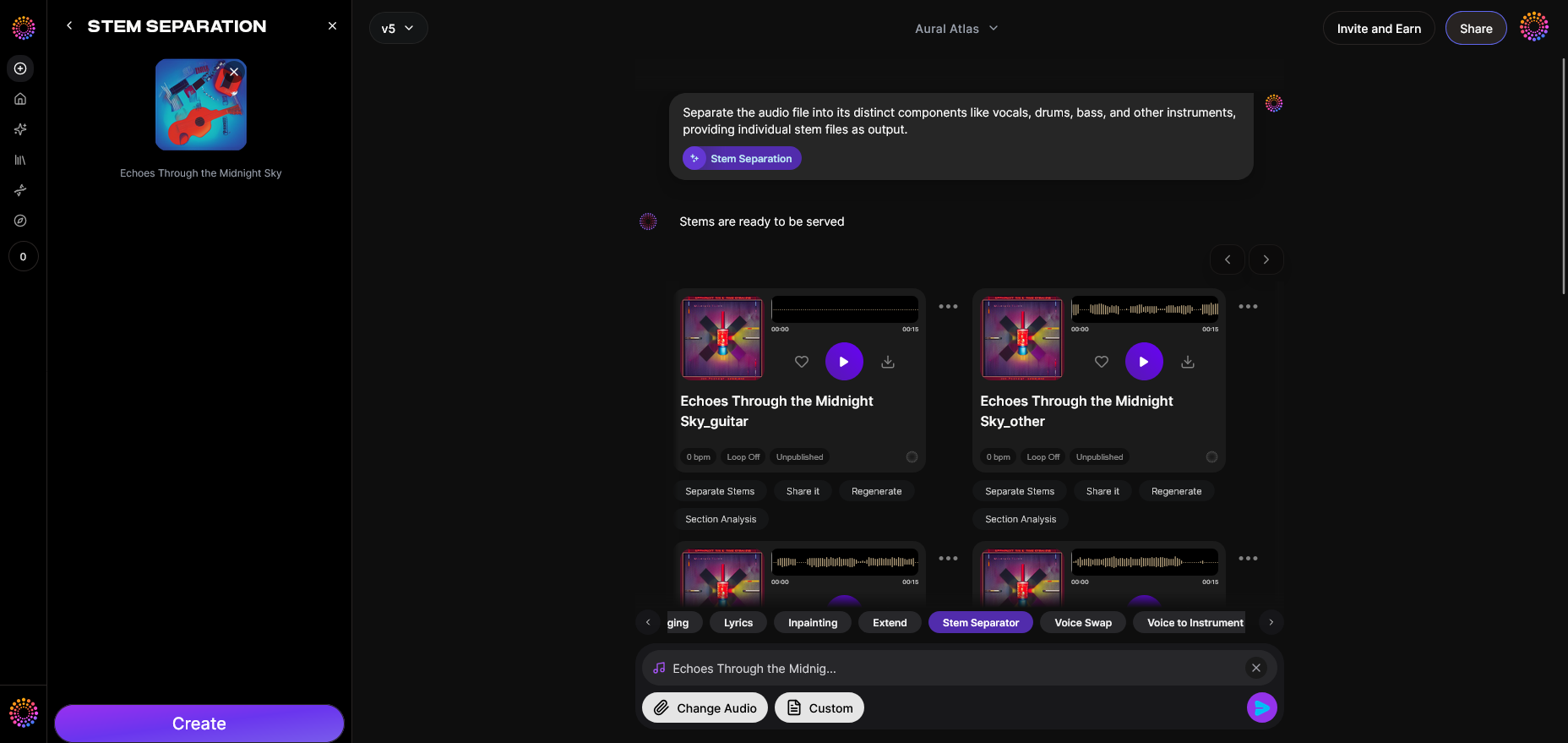
Now that you understand the fundamentals of lofi music production, here’s how you can create it instantly using Soundverse.
Soundverse’s Stem Separator is an advanced AI tool that dissects mixed audio into up to six individual editable stems—Vocals, Drums, Bass, Guitar, and Accompaniment. This feature supports uploads via file, link, or direct recording and provides high-quality isolation. For musicians aiming to turn songs into lofi versions, this is invaluable.
Start by uploading your track through the Upload Interface. Soundverse will process your audio and present separated stems in the Results Display, allowing detailed manipulation. You can download each stem individually in high fidelity. These isolated layers make remixing easy—soften drum transients, warm up bass frequencies, add analog effects on vocals, and reassemble the track with your desired vibe.
This same tool is popular among remixers, educators, and creators cleaning up audio for editing or sampling. For professional results, pair your lofi transformation with other Soundverse tools such as Inpainting for keyword-based lyric editing or AI Music Generator for producing similar chill backdrops. Explore these workflow guides at Soundverse AI Revolutionizing Music Creation and Generate AI Music with Soundverse Text to Music.
By using Soundverse Stem Separator together with creative mixing, you can effectively turn any track—from modern pop to classic jazz—into a dreamy lofi version within minutes. It’s an efficient, high-quality approach that merges technology and artistry perfectly for the lofi producers of 2026.
Turn Your Tracks into Lofi Magic Instantly
Create chill, vintage-style music without manual audio editing. With Soundverse AI, you can transform any song into a cozy lofi masterpiece in seconds—perfect for streaming, studying, or relaxing vibes.
Make Your Song Lofi with Soundverse
- 40 Hand-Picked Lofi Text-to-Music Prompts for All Occasions: Explore these curated prompts to instantly generate relaxing and mellow lofi tracks using Soundverse AI.
- Soundverse Introduces Stem Separation AI Magic Tool: Learn how Soundverse’s stem separation feature lets you isolate vocals, drums, and instruments for creative remixing and lofi production.
- Generate AI Music with Soundverse Text-to-Music: Discover how to turn written ideas into full songs effortlessly using Soundverse’s advanced text-to-music technology.
- How to Create Jazz Music with Soundverse AI: Get inspired to blend smooth jazz elements with lofi aesthetics using AI-powered music generation.
Here's how to make AI Music with Soundverse
Video Guide

Here’s another long walkthrough of how to use Soundverse AI.
Text Guide
- To know more about AI Magic Tools, check here.
- To know more about Soundverse Assistant, check here.
- To know more about Arrangement Studio, check here.
Soundverse is an AI Assistant that allows content creators and music makers to create original content in a flash using Generative AI.
With the help of Soundverse Assistant and AI Magic Tools, our users get an unfair advantage over other creators to create audio and music content quickly, easily and cheaply.
Soundverse Assistant is your ultimate music companion. You simply speak to the assistant to get your stuff done. The more you speak to it, the more it starts understanding you and your goals.
AI Magic Tools help convert your creative dreams into tangible music and audio. Use AI Magic Tools such as text to music, stem separation, or lyrics generation to realise your content dreams faster.
Soundverse is here to take music production to the next level. We're not just a digital audio workstation (DAW) competing with Ableton or Logic, we're building a completely new paradigm of easy and conversational content creation. TikTok: https://www.tiktok.com/@soundverse.ai Twitter: https://twitter.com/soundverse_ai Instagram: https://www.instagram.com/soundverse.ai LinkedIn: https://www.linkedin.com/company/soundverseai Youtube: https://www.youtube.com/@SoundverseAI Facebook: https://www.facebook.com/profile.php?id=100095674445607
Join Soundverse for Free and make Viral AI Music

We are constantly building more product experiences. Keep checking our Blog to stay updated about them!