How to Make an AI Sing: A Step-by-Step Guide for 2026 Music Creators
Learn how to make an AI sing with the Soundverse AI Singing Generator and create realistic AI vocals today.
How to Make an AI Sing
Artificial intelligence is no longer limited to generating beats or automated playlists. In 2026, AI singing technology has become a powerful creative ally for artists, producers, and developers who want to create authentic vocal performances without hiring singers or booking studio time. This comprehensive guide explains how to make an AI sing using Soundverse’s cutting-edge AI Singing Generator and explores how vocal synthesis, machine learning in music, and synthetic voice technology are transforming digital music creation.
Why is AI Singing Important in 2026?
AI singing is reshaping the music ecosystem. By converting text into sung performances, creators can instantly produce vocals for demos, jingles, or even full-length songs. In previous years, tools like auto-tune and voice sampling dominated digital production. But in 2026, intelligent vocal generation powered by deep neural networks provides fluid, expressive performances that closely resemble human singers.
Musicians use AI singing to experiment with genres, create multilingual songs, or produce background vocals in pop, rock, rap, or even opera styles. AI enthusiasts and developers integrate it into creative apps, games, and interactive storytelling environments. The technology’s speed and accessibility also attract video creators and podcasters looking for unique vocal textures. This evolution emphasizes AI music generation as a central force in modern creativity, building upon earlier advancements discussed in Soundverse’s feature on how AI-generated music is transforming the industry. For visual learners, watch the Soundverse Tutorial Series - How to Make Music to see how generative AI fits into music creation workflows.
How to Make AI Singing Work: Understanding Vocal Synthesis
At the heart of AI singing lies vocal synthesis—a machine learning approach that reproduces the nuances of human voice performance. AI models trained on massive datasets of recorded vocals learn to mimic pitch changes, vibrato, and emotional tone. When users input lyrics and select a vocal style, the system maps phonemes and rhythm to generate lifelike performances.
Synthetic voice technology now handles multilingual tasks, experimental textures like whispering or humming, and even fantasy-style voices used for games or virtual avatars. In 2026, this technology has advanced to a point where subtle emotional expressions, like joy or sorrow, can be reflected through tone shaping algorithms. The growth of these algorithms is closely tied to developments in neural audio processing and text-to-speech innovations pioneered between 2024 and 2025.
For creators, this means more than convenience—it’s creative freedom. Instead of outsourcing every vocal recording, artists can try lyric variations, pacing changes, and background harmonies instantly. This flexibility parallels the growing interest in AI music generation tools that help create genre-based compositions. For additional guidance, you can check our tutorial on the “Explore” tab from the Soundverse series.
How to Make AI Singing with Soundverse AI Singing Generator
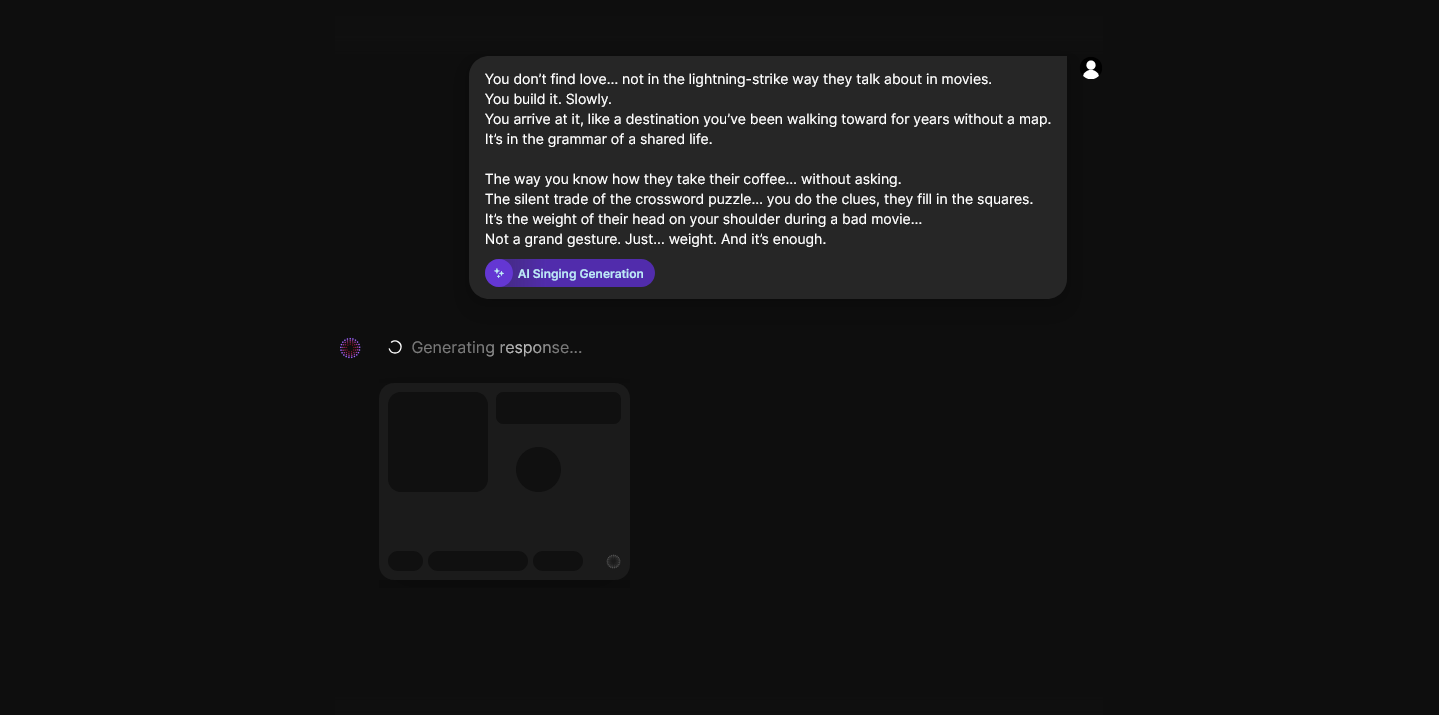
Soundverse’s AI Singing Generator is designed to give professionals and hobbyists access to professional-quality acapella vocals directly from text input. Let’s explore what makes this feature special before we dive into the step-by-step process.
Feature Overview:
The Soundverse AI Singing Generator transforms written lyrics into natural sung performances. It supports popular singing styles such as Pop, Rock, Rap, and Opera, along with experimental textures like whispering and “Meow Meow” cat sounds—making it versatile for both conventional and creative tasks.
Core Capabilities:
- Text-to-singing conversion: Users enter lyrics or text that the AI interprets as a melody and performance.
- Diverse vocal styles: Choose between clean modern pop vocals, gritty rock tones, operatic resonance, or even ASMR-style breathy voices.
- Reference audio support: Users can upload an audio clip to guide style and tone matching.
- Clean acapella output: Download separate vocal tracks ready for mixing or sampling in any DAW.
Primary Use Cases:
- Producers generate vocal references before hiring singers.
- Electronic musicians chop vocals for creative effects.
- Game and animation designers create character voices.
- Multilingual artists produce versions of songs in different languages.
Now, let’s walk through how to make an AI sing using Soundverse step-by-step.
Step 1: Feature Overview — Access AI Singing Generator
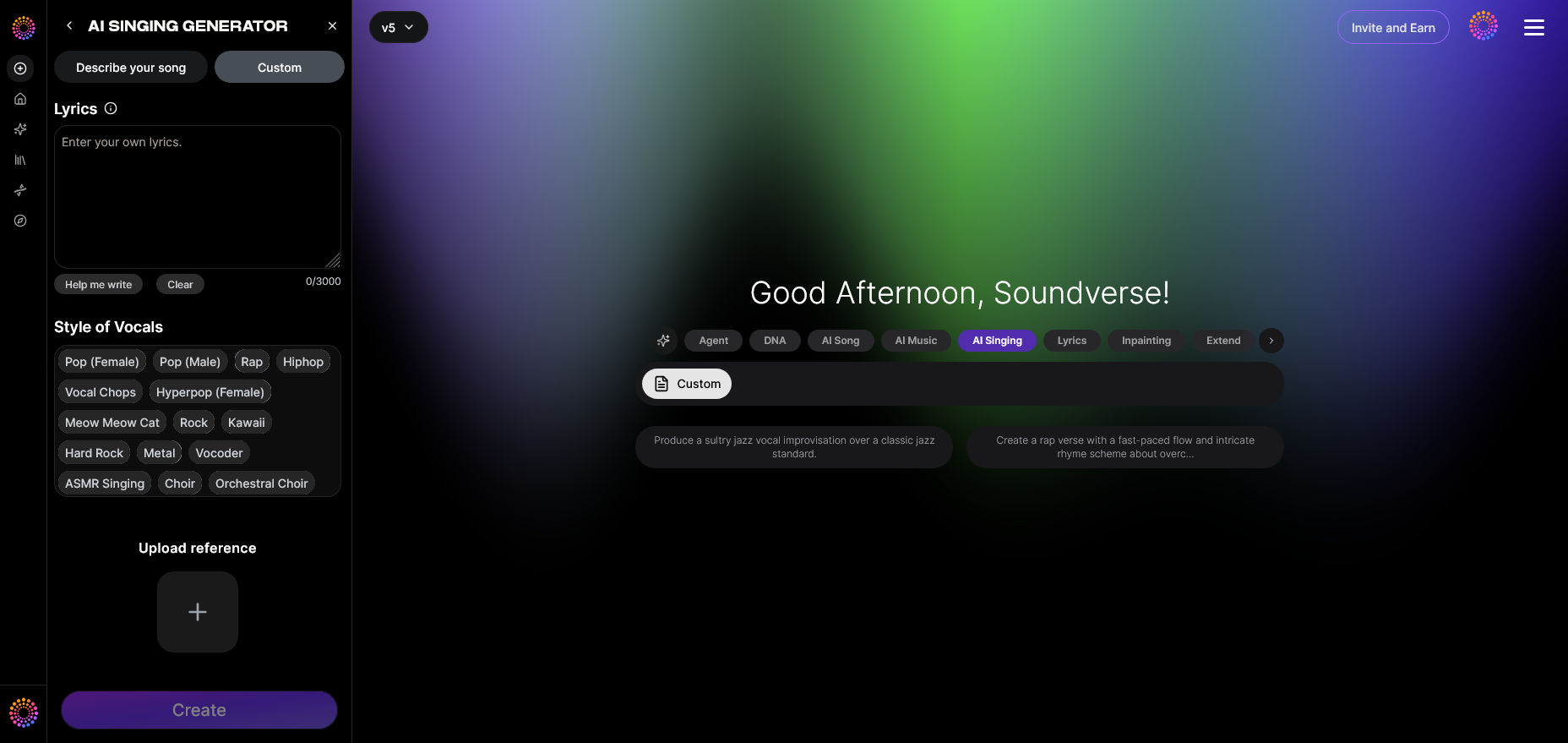
Begin by signing in to Soundverse and selecting the AI Singing Generator tool. It’s listed under the vocal creation category. The feature operates asynchronously: upload or input your content, let the system process it, and then receive the completed audio output. There is no real-time preview—processing and playback happen after generation is complete.
Step 2: Lyrics/Text Input — Enter Lyrics or Text to Sing
Here, type or paste the lyrics you want the AI to sing. You can provide simple phrases, full verses, or experimental non-verbal sounds. The AI interprets text rhythmically, applying melodic phrasing automatically. To evoke dynamic performances, think about syllable pacing and expressive punctuation. Musicians often use this stage to test lyrical flow before composing accompanying music. You can explore examples of genre-specific lyric crafting techniques in this Soundverse rap lyric writing guide.
Step 3: Voice Selection — Choose Voice Style and Characteristics
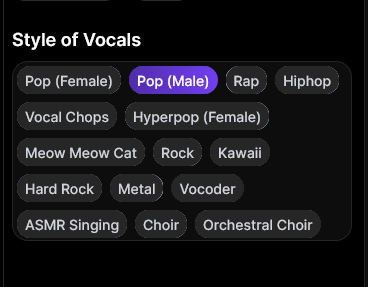
Select your desired singing style from the menu. Options include Pop, Rock, Rap, Opera, and ASMR, among others. If you have a sample reference voice, upload it to guide the AI in tone matching. This step helps maintain consistency when creating character voices or recurring virtual personas across songs or media. Vocal style matching is one of the key innovations influencing new voice production trends discussed in Soundverse’s 2026 music industry trends report.
Step 4: Generation — Generate Singing Vocals from Text
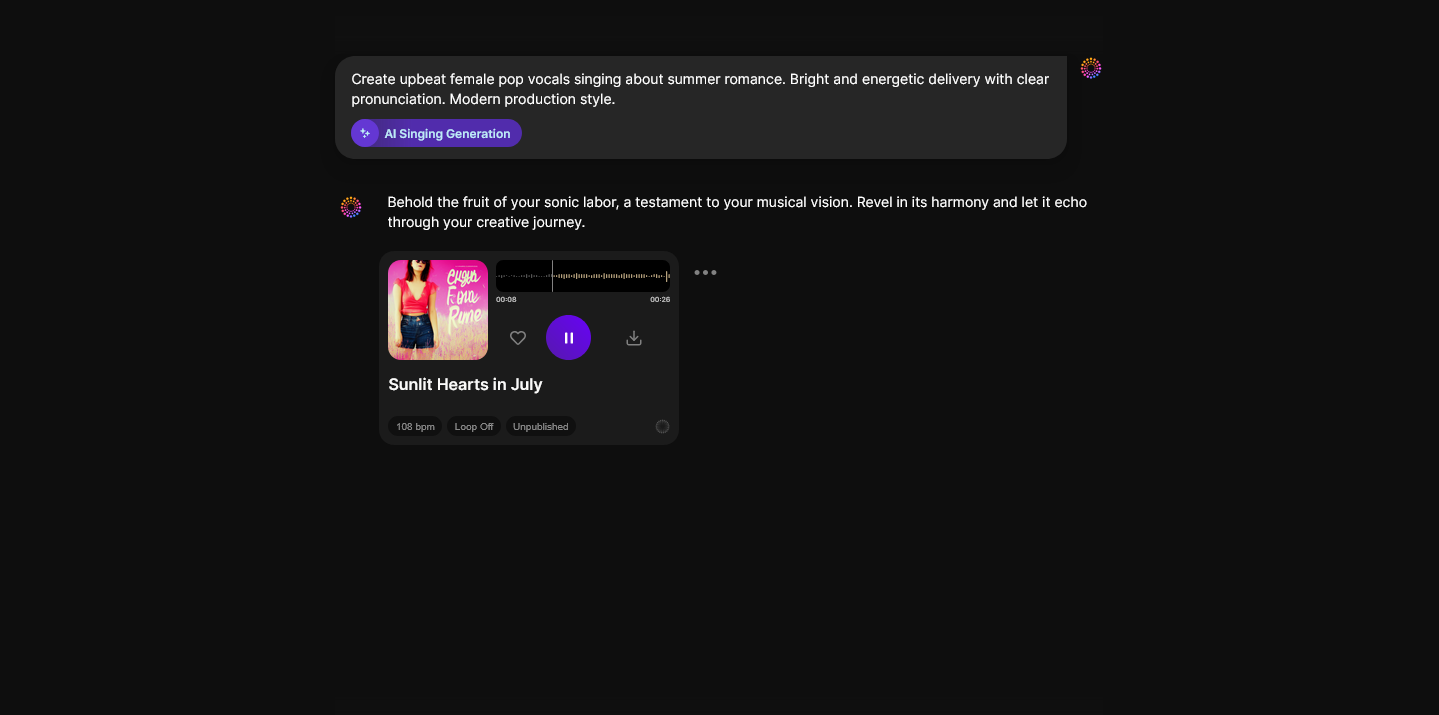
Click Generate to initiate processing. The AI converts the input text and style preferences into a finished acapella performance. The algorithm balances melody dynamics and phonetic accuracy to deliver realistic articulation. Depending on complexity, generation may take several seconds to complete. Once done, Soundverse provides a playback option for reviewing output quality. See practical examples in the Soundverse Tutorial - Make Deep House Music.
Step 5: Download Vocals — Export Generated Singing Vocals
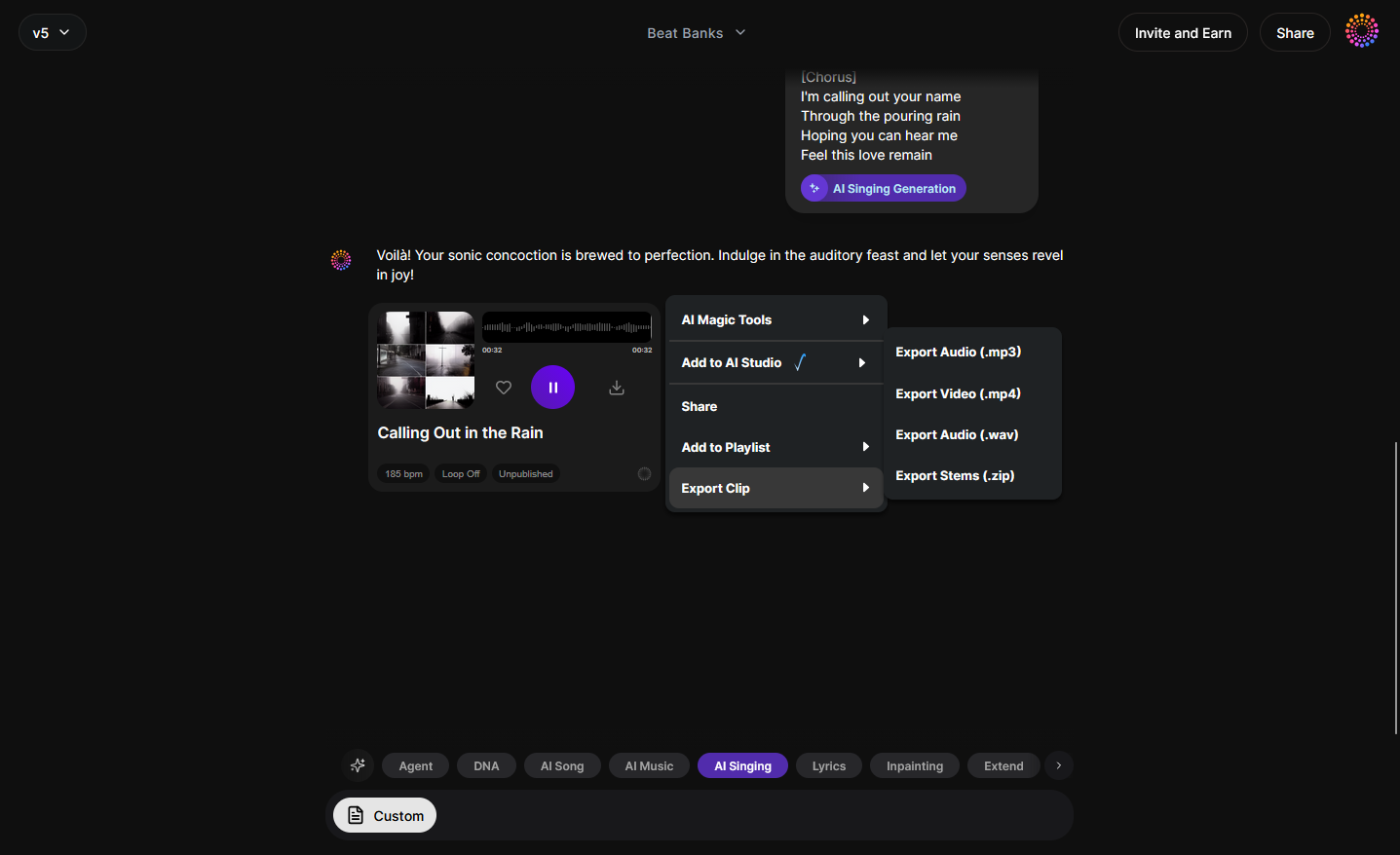
After you review the result, you can download the acapella vocals. These files are provided as clean stems, ready for mixing in a digital audio workstation (DAW). Producers often combine them with Soundverse’s AI Song Generator to complete full tracks. The exported files can also be reused for AI songwriting exercises, remix projects, and character voice layering.
Pro Tips for Better AI Singing Results
- Craft expressive lyrics: Consider the rhythm and syllable count. Short, punchy lines work great for rap vocals; elongated phrases work better for ballads or opera styles.
- Use reference audio: Matching a tone or energy gives the AI directional context. It mimics your chosen example’s phrasing and emotion.
- Experiment with textures: Try whispering or pseudo-animal sounds for avant-garde electronic music.
- Mix creatively: Combine generated vocals with effects such as reverb, chorus, or pitch shifting to add uniqueness.
- Respect output timing: Since Soundverse operates asynchronously, plan generation time into your workflow—perfect for composers working on multiple track layers.
Where Does AI Singing Fit in the Broader Music Creation Process?
In modern AI-driven workflows, singing synthesis is the final layer of personalization. It transforms text into emotional sound. Tools such as the Similar Singing Generator expand this capability by cloning delivery styles based on existing performances—ideal for creating multiple songs featuring the same character voice. Combined with the Soundverse AI Song Generator, creators can now design entire albums or soundtracks exclusively through AI-assisted processes.
AI singing doesn’t replace artists—it amplifies creative experimentation. Independent musicians and video producers use it to prototype vocal parts, while AI developers embed it in interactive applications. The combination of voice synthesis and machine learning in music promotes accessibility, helping talent without recording facilities still express their artistry.
For deeper inspiration, explore how the Soundverse AI Magic Tools enable fast content creation. These expansions streamline everything from melody generation to stem separation, creating a seamless production pipeline.
Start Creating AI-Generated Vocals Today
Bring your lyrics to life with AI singing tools that turn text into expressive, customizable vocal performances. Unleash your creativity and compose songs effortlessly with Soundverse’s AI Magic Studio.
Sign Up Free
Related Articles
- AI Ranks Soundverse’s AI Singer #1: The Ultimate AI Singing Platform Dominating 2025 — Discover why Soundverse’s AI Singer is setting new benchmarks in AI-powered vocal generation.
- Generate AI Music with Soundverse Text-to-Music — Learn how Soundverse turns simple text prompts into fully produced music tracks in seconds.
- Soundverse Assistant: Your AI Music Co-Producer — Meet the AI Assistant that enhances your workflow by helping you compose smarter and faster.
- What AI Can Generate Songs? — Explore different AI music tools and how they create original songs from lyrics and ideas.
Here's how to make AI Music with Soundverse
Video Guide
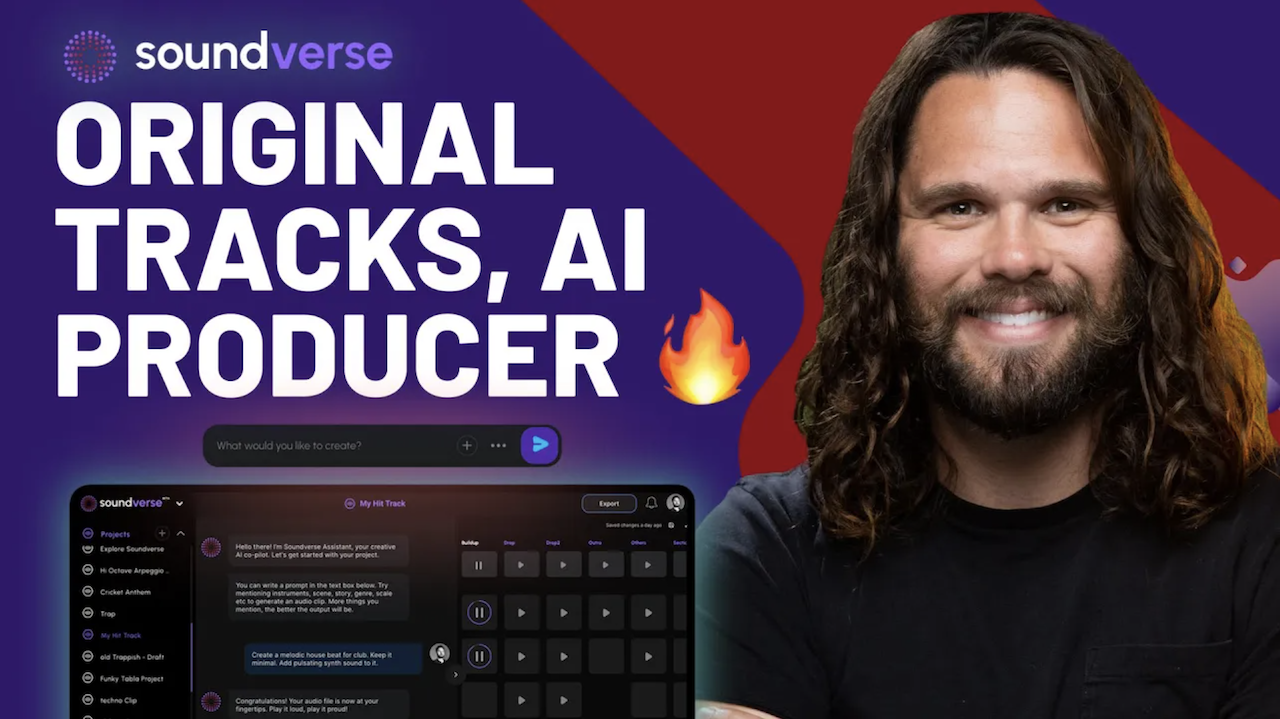
Here’s another long walkthrough of how to use Soundverse AI.
Text Guide
- To know more about AI Magic Tools, check here.
- To know more about Soundverse Assistant, check here.
- To know more about Arrangement Studio, check here.
Soundverse is an AI Assistant that allows content creators and music makers to create original content in a flash using Generative AI.
With the help of Soundverse Assistant and AI Magic Tools, our users get an unfair advantage over other creators to create audio and music content quickly, easily and cheaply.
Soundverse Assistant is your ultimate music companion. You simply speak to the assistant to get your stuff done. The more you speak to it, the more it starts understanding you and your goals.
AI Magic Tools help convert your creative dreams into tangible music and audio. Use AI Magic Tools such as text to music, stem separation, or lyrics generation to realise your content dreams faster.
Soundverse is here to take music production to the next level. We're not just a digital audio workstation (DAW) competing with Ableton or Logic, we're building a completely new paradigm of easy and conversational content creation.
TikTok: https://www.tiktok.com/@soundverse.ai
Twitter: https://twitter.com/soundverse_ai
Instagram: https://www.instagram.com/soundverse.ai
LinkedIn: https://www.linkedin.com/company/soundverseai
Youtube: https://www.youtube.com/@SoundverseAI
Facebook: https://www.facebook.com/profile.php?id=100095674445607
Join Soundverse for Free and make Viral AI Music

We are constantly building more product experiences. Keep checking our Blog to stay updated about them!