How to Make AI Sing: A Step-by-Step Guide to Creating Vocal AI Music
Learn how to make AI sing using vocal synthesis AI tools and create stunning AI-generated music.
How to Make AI Sing: A Step-by-Step Guide to Creating Vocal AI Music
Artificial intelligence has rapidly evolved from powering text generators and image models to transforming how we make music. In 2026, musicians are increasingly exploring vocal synthesis technologies to create lifelike, expressive singing voices. If you’ve ever wondered how to make AI sing, this guide will walk you through everything — from understanding the fundamentals of AI singing to generating complete acapella performances using Soundverse’s AI Singing Generator.
What Does “AI Singing” Mean in 2026?
AI singing refers to the use of machine learning models capable of generating human-like singing voices from text, lyrics, or melodic patterns. These systems combine deep neural networks, voice modeling, and natural language processing to produce vocals that sound professional and emotionally convincing.
In 2026, AI singing systems can imitate real singers, generate entirely new voices, or experiment with non-traditional vocal textures. Whether you’re producing pop, rap, opera, or experimental electronic music, AI-generated vocals can become an integral part of your creative toolkit.
Why Is AI Singing Popular Among Musicians and Producers?
The trend toward AI-driven music creation started before 2025 but became mainstream in 2026. Artists now rely on AI to:
- Save time on vocal production and demos.
- Experiment with styles and languages they can’t sing themselves.
- Generate inspiration through new sound textures.
- Create character voices for games, animations, or indie projects.
- Enhance creativity by blending machine learning singing with traditional songwriting.
These capabilities make the concept of an AI singing voice generator more accessible than ever.
How Does Vocal Synthesis AI Work?
Vocal synthesis AI operates through a complex process involving several key stages:
- Text Analysis: The model reads the lyrics or input text to understand phonemes, rhythm, and word placement.
- Voice Modeling: Using trained voice datasets, the AI generates a tone profile resembling human vocal cords.
- Melody Mapping: The text is then aligned to musical notes using probabilistic models.
- Performance Rendering: The system modulates volume, pitch, and emotional timbre to make the singing realistic.
- Audio Output: Finally, a clean singing voice (acapella) is produced ready for post-production mixing.
In basic terms, this is how machines learn to sing — by mimicking the rhythmic and expressive qualities of human vocal behavior.
For a deeper look into how AI is shaping the music industry, visit Music Industry Trends and How AI-Generated Music Is Transforming the Music Industry.
You can also explore the Soundverse YouTube series, including the tutorial on how to make music and the Deep House creation guide, for a practical overview of workflow setups.
Step-by-Step Guide: How to Make AI Sing
Now that you understand the mechanics behind vocal synthesis, let’s look at how you can start creating vocal AI music yourself. We’ll break it down using an intuitive workflow that mirrors professional-grade platforms like Soundverse.
Step 1: Feature Overview — Access AI Singing Generator
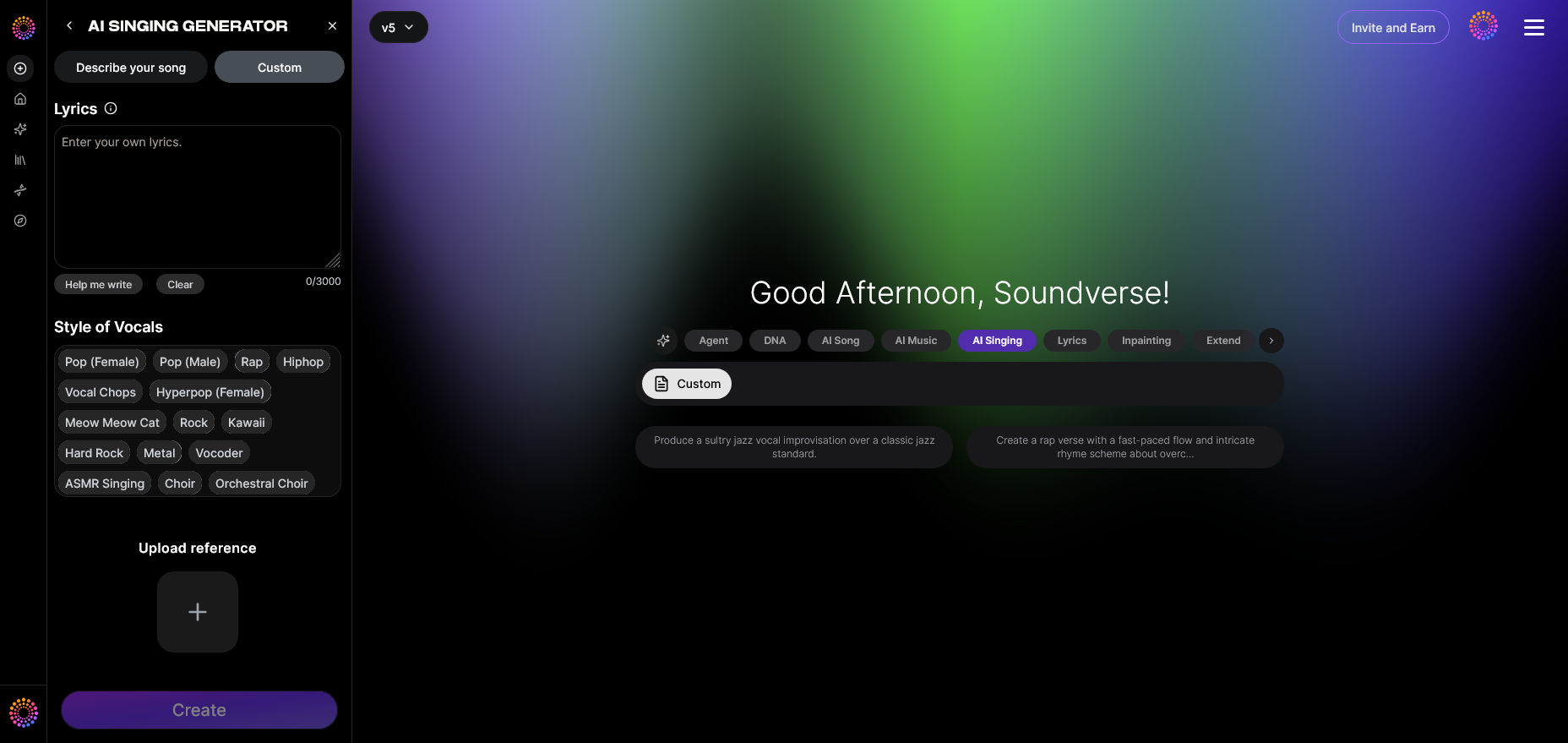
Before you start, open your chosen AI singing platform. Tools like Soundverse’s AI Singing Generator allow creators to generate acapella vocal performances from written text. This is where you’ll begin the process of making an AI sing.
Look for a feature labeled “AI Singing Generator,” “Vocal Synthesis,” or “AI Song Creator.” Each tool varies, but the concept is similar — enter input data, let the model process it, and receive generated vocals.
Step 2: Lyrics/Text Input — Enter Lyrics or Text to Sing
Next, input your lyrics. The AI reads your words and breaks them down into syllables and expressive segments. If you’re experimenting with melodic AI compositions, aim for written lines that have rhythmic flow since this enhances singing quality.
Avoid copyrighted material or existing song lyrics. Use your own original text or improvisational prompts for creative freedom.
If you’re interested in structuring lyrics effectively for AI generation, see How to Make Good Rap Lyrics for inspiration.
Step 3: Voice Selection — Choose Voice Style and Characteristics
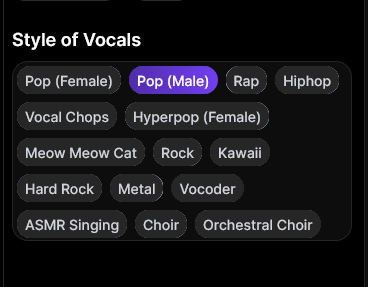
Once your lyrics are ready, pick a voice type. Most AI singing platforms let you choose from genres and styles like Pop, Rock, Rap, Opera, or even ASMR textures. Some advanced systems allow multilingual vocal output or reference audio matching for tone consistency.
If you want to continue working with thematic AI song ideas beyond vocals, check out Generate AI Music with Soundverse Text-to-Music.
Step 4: Generation — Generate Singing Vocals from Text
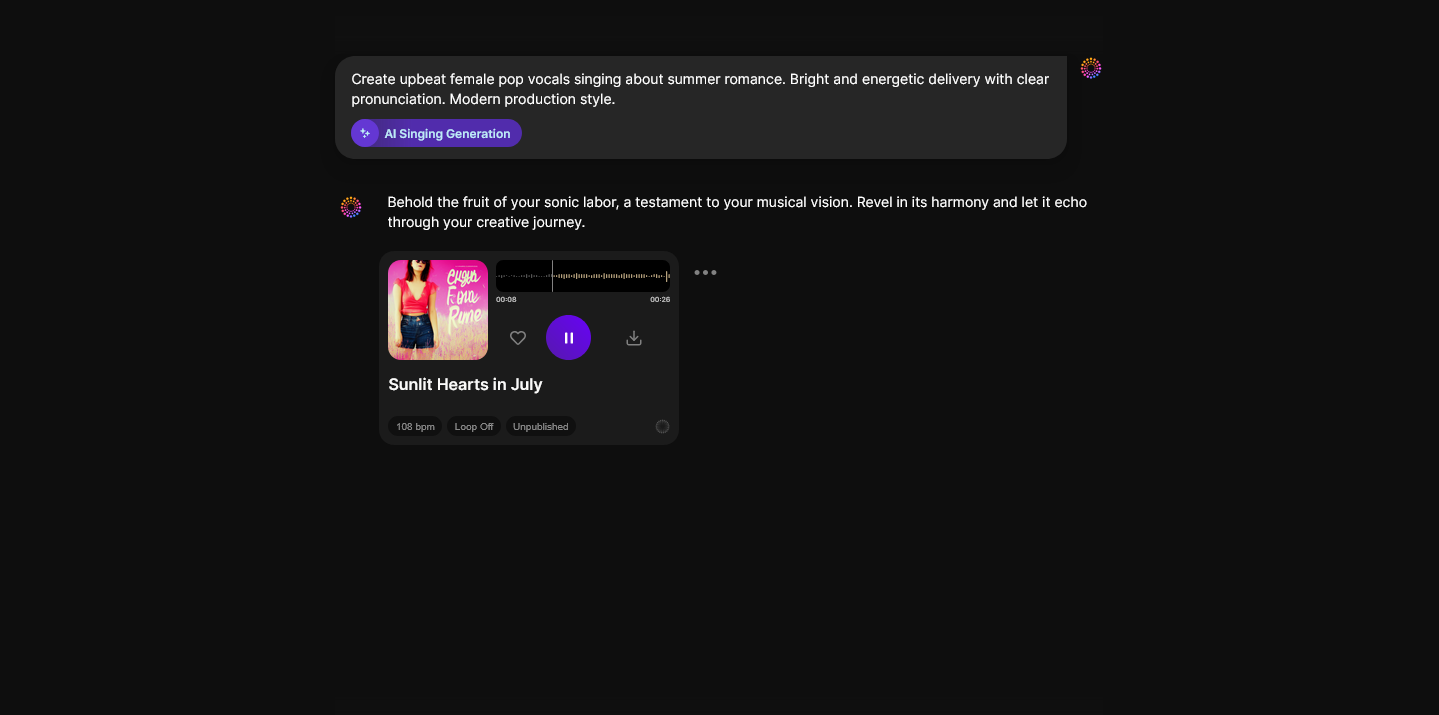
After selecting the voice, it’s time to hit “Generate.” The AI converts your lyrics into an acoustic vocal performance. Since the workflow is asynchronous, the audio is processed in the cloud before being returned to you. This ensures optimal sound quality and balanced vocal expression.
Depending on complexity and voice style, generation can take a few seconds or several minutes. You’ll receive a downloadable acapella vocal file afterward.
You can also watch the Soundverse Explore Tab walkthrough to understand project workflow and interactive features.
Step 5: Download Vocals — Export Generated Singing Vocals
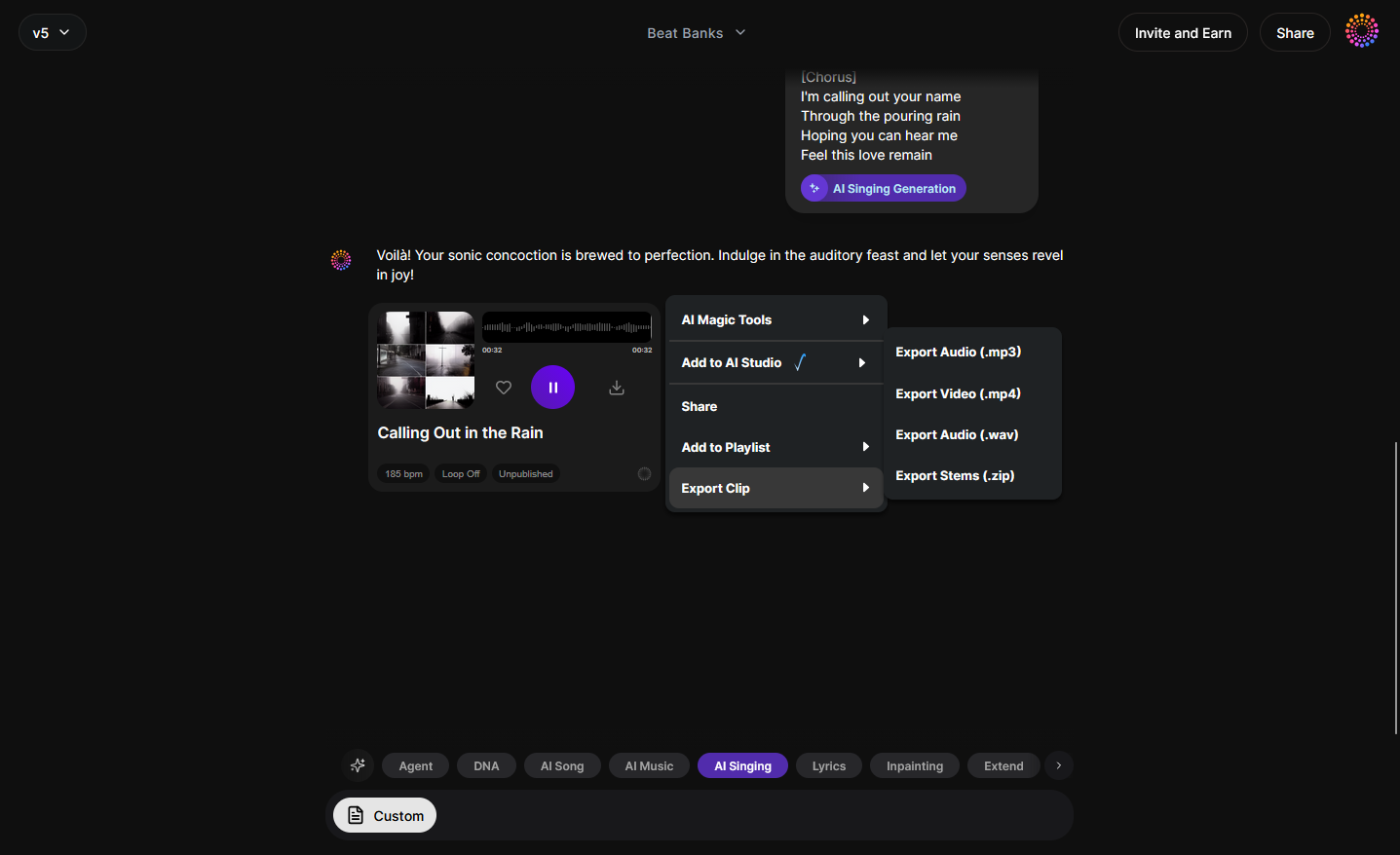
Finally, download the generated performance. You can use it for your productions, remix sessions, or vocal sampling. Many creators combine AI vocals with beats or instrumentals produced through other AI music tools.
To further integrate vocals with full arrangements, read Soundverse AI Magic Tools Create Content Quickly with AI and Soundverse Introduces Stem Separation AI Magic Tool.
Challenges and Ethical Considerations in AI Singing
While AI singing opens creative frontiers, it also introduces discussions around identity and authenticity. In 2026, the focus has shifted from imitation to collaboration — using AI as an assistant rather than a replacement.
Musicians must ensure:
- Originality: Avoid copyrighted lyrics or melodies.
- Transparency: Disclose AI involvement when publishing works.
- Consent: Do not replicate someone’s vocal likeness without authorization.
As with all emerging technologies, ethical creation helps AI music remain sustainable and inspiring.
How to Make AI Sing with Soundverse AI Singing Generator
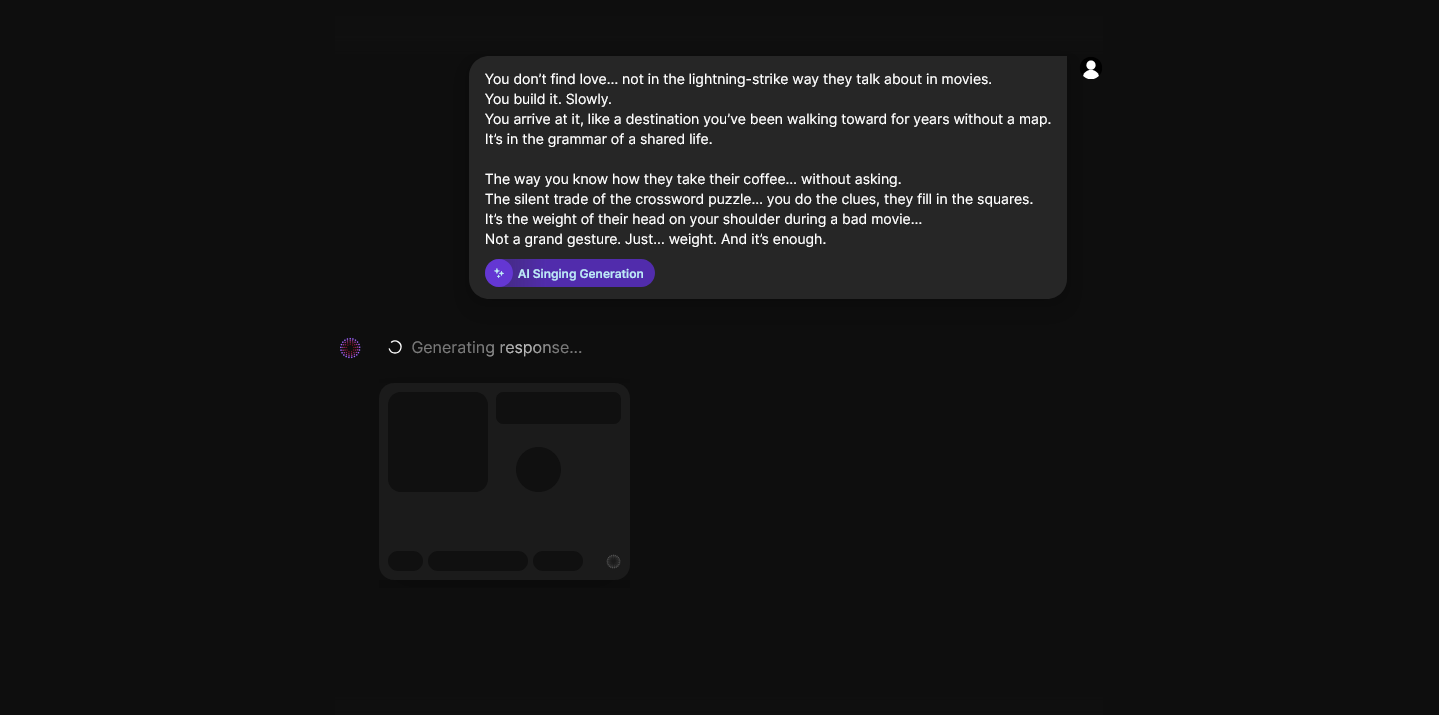
Now that you understand how AI singing works in principle, here’s how you can create it instantly using Soundverse’s AI Singing Generator.
Soundverse’s AI Singing Generator allows users to generate professional-quality acapella performances directly from text or lyrics. It supports various singing styles — Pop, Rock, Rap, Opera, and even whisper or 'Meow Meow' experimental sounds. You can also upload reference audio to match emotion and tone, enabling seamless continuity in projects.
Key Capabilities:
- Text-to-singing conversion.
- Multiple vocal styles and emotions.
- Clean acapella output for easy mixing.
- Multilingual singing support.
- Reference audio imitation for consistent vocal aesthetics.
Common Use Cases:
- Music producers can generate vocal references or hooks.
- Creators can build character voices for games and animations.
- Artists can experiment with multilingual vocals or unconventional textures.
- Sound designers can craft vocal elements for ambient soundscapes.
The Soundverse ecosystem extends to AI Song Generator for full track production and Similar Singing Generator for consistent voice replication. Together, they offer a comprehensive suite for AI music creation, seamless workflow management, and endless creative possibilities.
Whether you’re making ambient pieces, rap verses, or cinematic scores, Soundverse gives you the technical power to transform your words into a singing performance. Start experimenting today and discover the next frontier of machine learning singing.
In 2026, AI doesn’t just assist your creativity — it becomes part of your artistic identity.
That’s how you make AI sing.
Start Making AI-Generated Vocals Today
Transform your creative ideas into singing tracks powered by AI. Explore Soundverse’s intuitive AI music tools to produce lifelike vocals, harmonies, and unique sound experiences in minutes.
Try Soundverse Free
Related Articles
- AI Ranks Soundverse’s AI Singer #1 – The Ultimate AI Singing Platform Dominating 2025: Discover why Soundverse’s AI Singer is setting new standards in vocal generation and creative production.
- Generate AI Music with Soundverse Text-to-Music: Learn how Soundverse’s text-to-music feature lets you turn words into stunning, AI-crafted melodies in seconds.
- Soundverse Assistant: Your AI Music Co-Producer: Meet your virtual co-producer — an intelligent assistant that helps refine and structure your AI-generated tracks effortlessly.
- How to Make AI-Generated Music: Follow a step-by-step guide to mastering AI tools for music creation and exploring the future of audio innovation.
Here's how to make AI Music with Soundverse
Video Guide
Here’s another long walkthrough of how to use Soundverse AI.
Text Guide
- To know more about AI Magic Tools, check here.
- To know more about Soundverse Assistant, check here.
- To know more about Arrangement Studio, check here.
Soundverse is an AI Assistant that allows content creators and music makers to create original content in a flash using Generative AI. With the help of Soundverse Assistant and AI Magic Tools, our users get an unfair advantage over other creators to create audio and music content quickly, easily and cheaply. Soundverse Assistant is your ultimate music companion. You simply speak to the assistant to get your stuff done. The more you speak to it, the more it starts understanding you and your goals. AI Magic Tools help convert your creative dreams into tangible music and audio. Use AI Magic Tools such as text to music, stem separation, or lyrics generation to realise your content dreams faster. Soundverse is here to take music production to the next level. We're not just a digital audio workstation (DAW) competing with Ableton or Logic, we're building a completely new paradigm of easy and conversational content creation.
TikTok: https://www.tiktok.com/@soundverse.ai
Twitter: https://twitter.com/soundverse_ai
Instagram: https://www.instagram.com/soundverse.ai
LinkedIn: https://www.linkedin.com/company/soundverseai
Youtube: https://www.youtube.com/@SoundverseAI
Facebook: https://www.facebook.com/profile.php?id=100095674445607
Join Soundverse for Free and make Viral AI Music
We are constantly building more product experiences. Keep checking our Blog to stay updated about them!